

The back squat is not a test of ego. Done well, it is a useful expression of leg strength, trunk control, balance, coordination, and the ability to create force through a large range of motion. Those qualities matter more after 30, when long periods of sitting, inconsistent training, old injuries, and reduced weekly activity can quietly erode lower body capacity.
That does not mean every man over 30 needs to chase an elite powerlifting number. Your body mass, training history, mobility, injury history, and goals all matter. It does mean that building a strong squat is worth your time. Resistance training improves maximal strength in healthy adults, while lower body strength and power are strongly linked with physical function across adulthood. A sensible squat target gives your training direction and helps you build capacity you can use in sport, work, and everyday life.


The three milestones below are not medical clearance tests and they are not promises that everyone should load a bar to the same level. They are practical long term goals for healthy men who have learned solid technique and trained consistently. Complete each lift with a controlled descent, a stable torso, knees tracking in line with the feet, and a depth that brings the hip crease at least level with the top of the knee, provided your anatomy and comfort allow it. If pain appears, stop and get qualified guidance rather than trying to push through it.
Why Squat Strength Matters After 30
Strength protects your capacity to do more
Muscle strength is a major part of physical reserve. It supports walking uphill, climbing stairs, carrying awkward objects, accelerating in sport, and recovering from a stumble. Research consistently shows that resistance training increases strength in adults, with meaningful gains possible in both younger and older populations. The squat is not the only exercise that can produce those benefits, but it lets you train the hips, knees, and trunk together with a load that can be progressed gradually.
As the years pass, maintaining muscle mass and force production becomes increasingly valuable. Age related loss of muscle mass and strength does not begin suddenly at a fixed birthday, but inactive adults tend to lose capacity over time. Regular resistance exercise is an effective countermeasure. Training the squat can be a straightforward way to make lower body work a nonnegotiable part of your week.
A milestone is more useful than a random heavy day
Without a target, many lifters either add weight too quickly or stay with the same comfortable load for months. Milestones solve both problems. They give you a destination while keeping the focus on the process: add small amounts of load, accumulate good repetitions, improve your technique, sleep enough, and recover well enough to train again.

For these benchmarks, use a conventional high bar or low bar back squat. Keep the variation consistent while you are testing progress. A front squat, safety bar squat, box squat, belt squat, or goblet squat can all be excellent training choices, but their numbers cannot be compared directly with a back squat. Your heaviest repetition should look like a squat, not a good morning that happened to reach the required depth.
Milestone 1: Squat Your Bodyweight for One Clean Rep
For a 180 pound man, this means a 180 pound back squat. For a 220 pound man, it means 220 pounds. The number includes the bar. This is the first milestone because it is challenging enough to require real strength and technical competence, yet attainable for many healthy beginners who train patiently.
A bodyweight squat demonstrates that you can organize your whole body under a meaningful external load. Your legs need to drive out of the bottom position, but your trunk also needs to resist collapse and transfer force efficiently. Squat mechanics are affected by limb lengths, ankle range of motion, hip structure, and bar position, so there is no single perfect stance. The goal is a stable, repeatable pattern that you can control.
Do not rush this target by attempting maximal singles every week. Evidence from resistance training research supports using multiple sets and progressive loading to build strength. Spend most of your work in manageable rep ranges, such as three to six repetitions per set, and leave a small margin before technical failure. A simple approach is to squat twice weekly, with one day focused on moderately heavy sets and a second day focused on lighter, higher quality practice.
If you are new to barbell squatting, build the movement first. A goblet squat can teach you to sit between the hips and maintain a braced torso. From there, an empty bar, a light barbell, or a safety bar can help you gradually learn the back squat. The milestone counts when the load is controlled, not when it is merely stood up.
Milestone 2: Squat 1.5 Times Your Bodyweight
The second goal is a one repetition back squat equal to 1.5 times your bodyweight. A 180 pound man would aim for 270 pounds. This is a substantial recreational strength benchmark. Reaching it usually requires months or years of consistent training, enough food to support progress, and a technique that remains reliable as the bar gets heavier.
At this level, the difference between training hard and training intelligently becomes clear. You cannot rely only on enthusiasm. You need a plan that manages stress. Research on strength training indicates that a range of loading strategies can improve strength, but heavier loads are particularly specific to improving one repetition maximum performance. That is why your program should include some moderately heavy work as you approach this goal, while still retaining enough volume to build muscle and rehearse the movement.
Muscle size matters because a larger, stronger quadriceps and hip extensor system has more potential to produce force. However, a bigger muscle is not the full story. Neural coordination, skill, bracing, confidence under load, and exposure to heavier weights all influence a maximal lift. Treat the 1.5 times bodyweight squat as a performance skill as well as a muscle building project.
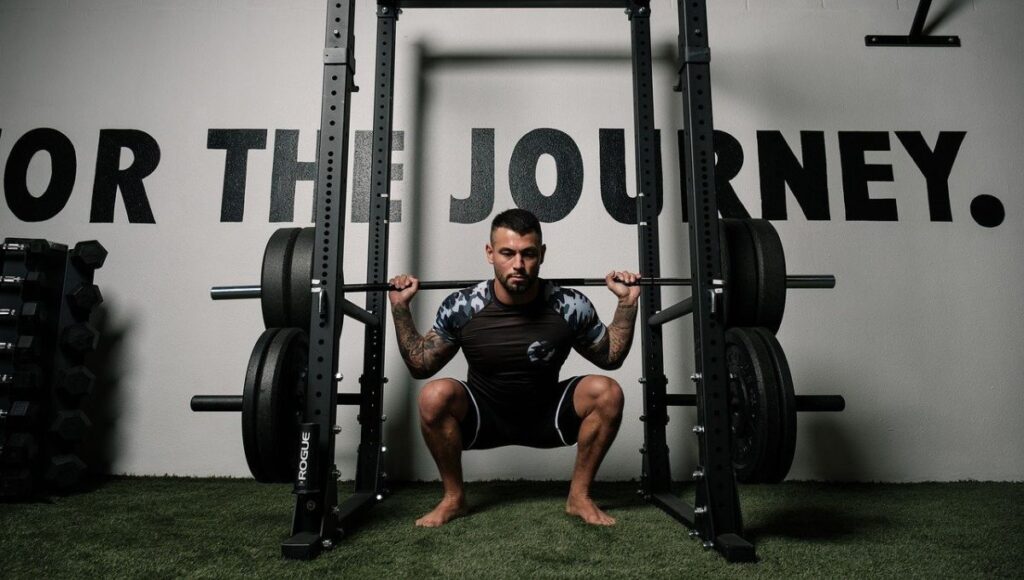
It is also the point at which recovery habits become more obvious. Poor sleep can impair physical performance, and inadequate energy intake can make hard training feel far harder than it should. You do not need a perfect lifestyle, but you do need enough consistency. Keep the load increases small, use a spotter or safety pins when appropriate, and repeat a weight rather than forcing an increase after a poor session.
Milestone 3: Squat Double Your Bodyweight
Squatting double bodyweight for one controlled repetition is an advanced long term goal for a recreational lifter. For a 180 pound man, this is 360 pounds. It is not a requirement for health, and it is not the right goal for everyone. For a healthy, experienced man who enjoys barbell training, though, it is a meaningful display of lower body strength, technical efficiency, and sustained commitment.
This milestone deserves patience. As strength rises, progress slows because each added plate represents a larger demand on the body and the skill. The training process should become more deliberate, not more reckless. Most of your time should still be spent with loads you can control for multiple quality repetitions. Heavier singles can be useful practice, but they should support your training rather than replace it.
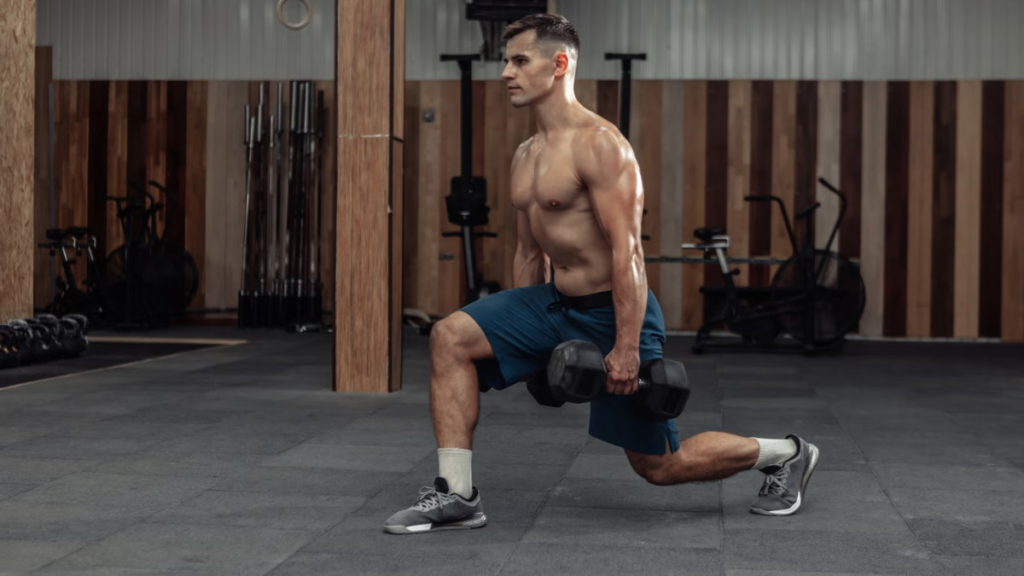
Variation can help keep progress moving when it serves a clear purpose. Paused squats can improve comfort and control in the bottom position. Tempo squats can reveal whether you lose bracing on the descent. Split squats can build unilateral leg strength and expose side to side differences. Romanian deadlifts can develop the hip extensors and help you maintain a stronger hinge position. These are assistance tools, not compulsory exercises. Choose the smallest number that addresses the weakest link in your own squat.
3 Best Cable Back Exercises for a More Attractive V Shaped Torso
The strongest lifter is not always the one who loads the bar most often. Long term progress also requires managing fatigue. Planned reductions in training volume or load can help you return to harder work with better movement quality and motivation. If the same warmup weights feel unusually heavy for several sessions, your joints are constantly irritated, or your form deteriorates, adjust the plan before a small problem becomes a long interruption.
How to Build Toward the Milestones Safely
Earn depth and control before chasing plates
Depth should be consistent, but it does not need to look identical for every lifter. The important point is to use a range of motion that is controlled, repeatable, and appropriate for your body. Research comparing squat depths suggests that deeper squats can produce strong adaptations in lower body strength and muscle development when they are performed tolerably and with sound technique. Do not force a painful position simply to satisfy a photo standard.
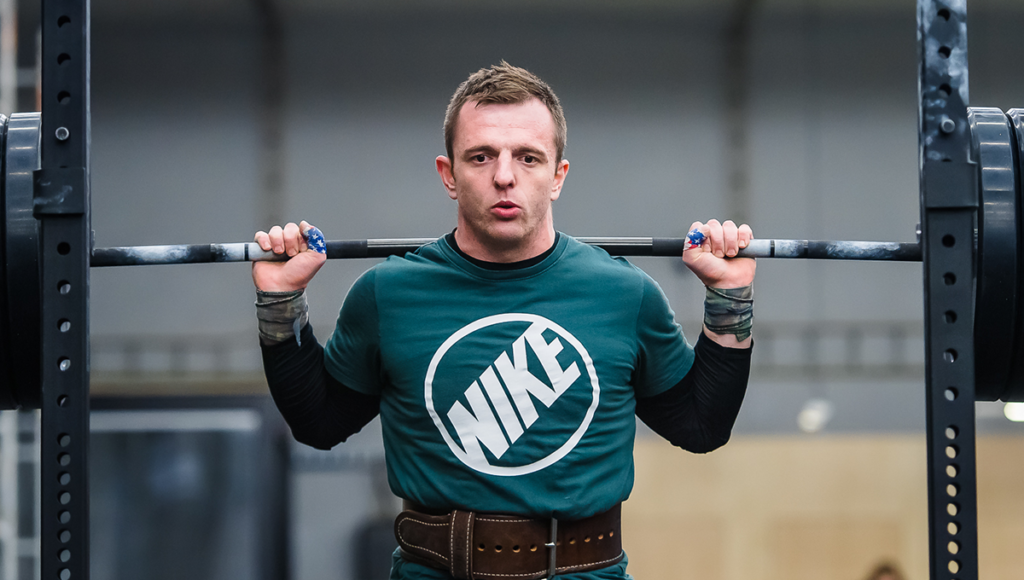
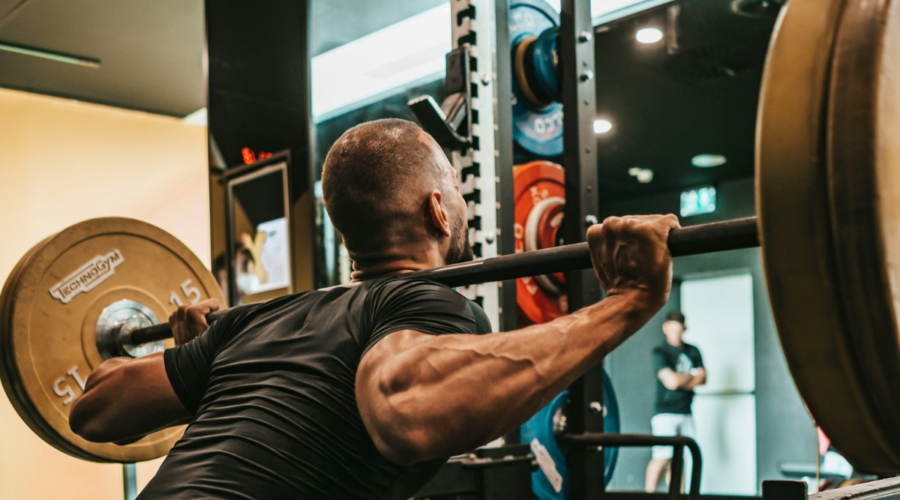
Before each work set, create tension through the upper back, take a breath into the trunk, brace as if preparing for a firm punch, and keep pressure spread across the whole foot. On the way down, keep the bar balanced over the middle of the foot. On the way up, drive the floor away while keeping the torso and hips rising together. These simple cues reduce the chance that a heavy rep turns into a chaotic one.
Use a realistic weekly structure
Two squat exposures per week suit many people. One session can include heavier sets of three to five repetitions, while the other uses lighter sets of five to eight repetitions or a controlled variation. This provides frequent practice without requiring you to test your maximum constantly. Strength gains respond to progressive resistance training, and training volume can be distributed across the week in a way that fits your recovery and schedule.
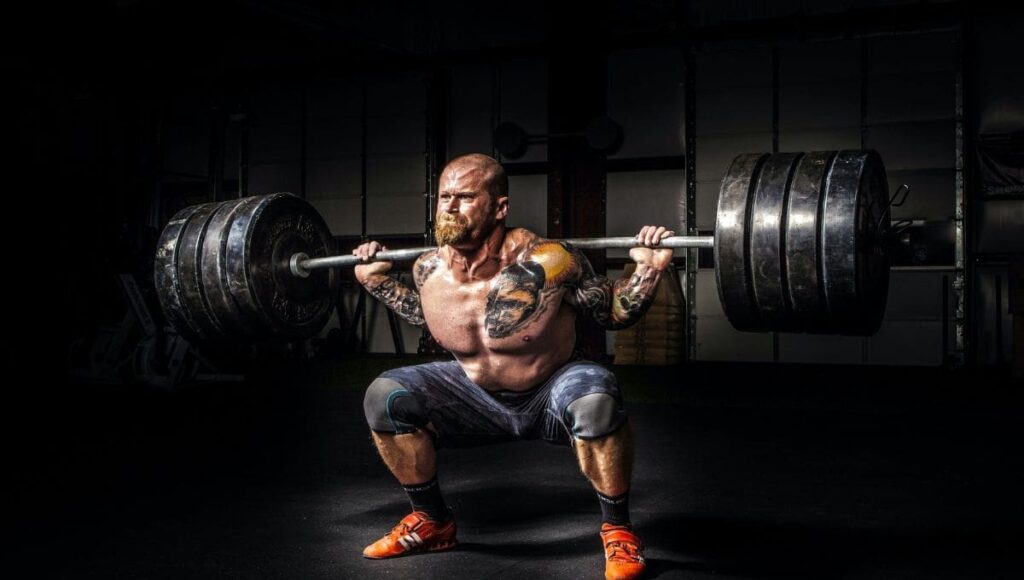
Progress does not have to mean adding weight every workout. Add a repetition within the planned range, improve depth, make the same load move more smoothly, or complete an extra high quality set. Those improvements accumulate. Once you can perform the top end of a planned rep range with good form, add a small amount of weight and repeat the process.
Know when to choose a different target
Some men should not prioritize a double bodyweight back squat, and that is completely fine. Previous hip, knee, back, or shoulder issues may make another variation more comfortable. Long femurs, limited shoulder mobility, or a sporting goal may also make a front squat, safety bar squat, trap bar deadlift, or single leg exercise a better main lift. The underlying aim is robust lower body strength, not loyalty to one bar position.
If you have been inactive, have a medical condition, or are returning after an injury, get individual advice before starting a demanding program. The right starting point may be bodyweight squats, supported split squats, or light machine work. Progression is still possible, but it should match your present capacity.
The Bottom Line
The bodyweight squat, 1.5 times bodyweight squat, and double bodyweight squat create a useful ladder for men over 30 who want measurable lower body strength. The first milestone establishes competence under load. The second shows serious recreational strength. The third is an advanced achievement that rewards years of well managed training.
Do not let the final number distract you from the qualities that make it valuable. A strong squat should be controlled, repeatable, and built without persistent pain. Train consistently, keep the technique honest, and make small progress for a long time. That is how a milestone lift becomes more than a number on a bar.
References
- American College of Sports Medicine (2009) ‘American College of Sports Medicine position stand. Progression models in resistance training for healthy adults’, Medicine and Science in Sports and Exercise, 41(3), pp. 687 to 708.
- Grgic, J., Schoenfeld, B.J., Skrepnik, M., Davies, T.B. and Mikulic, P. (2018) ‘Effects of rest interval duration in resistance training on measures of muscular strength: A systematic review’, Sports Medicine, 48(1), pp. 137 to 151.
- Krzyszkowski, J. and Kipp, K. (2020) ‘Biomechanical analysis of the back squat: The effects of barbell location and stance width’, Journal of Strength and Conditioning Research, 34(10), pp. 2868 to 2875.
- Morton, R.W., Oikawa, S.Y., Wavell, C.G., Mazara, N., McGlory, C., Quadrilatero, J., Baechler, B.L., Baker, S.K., Phillips, S.M. and McKellar, S.R. (2016) ‘Neither load nor systemic hormones determine resistance training mediated hypertrophy or strength gains in resistance trained young men’, Journal of Applied Physiology, 121(1), pp. 129 to 138.
- Schoenfeld, B.J., Grgic, J., Ogborn, D. and Krieger, J.W. (2017) ‘Strength and hypertrophy adaptations between low versus high load resistance training: A systematic review and meta analysis’, Journal of Strength and Conditioning Research, 31(12), pp. 3508 to 3523.
- Schoenfeld, B.J., Grgic, J., Van Every, D.W. and Plotkin, D.L. (2021) ‘Loading recommendations for muscle strength, hypertrophy, and local endurance: A re examination of the repetition continuum’, Sports, 9(2), 32.
- Steele, J., Fisher, J., Giessing, J. and Gentil, P. (2017) ‘Clarity in reporting terminology and definitions of set endpoints in resistance training’, Muscle and Nerve, 56(3), pp. 368 to 374.
- Suchomel, T.J., Nimphius, S. and Stone, M.H. (2016) ‘The importance of muscular strength in athletic performance’, Sports Medicine, 46(10), pp. 1419 to 1449.
- Wernbom, M., Augustsson, J. and Thomee, R. (2007) ‘The influence of frequency, intensity, volume and mode of strength training on whole muscle cross sectional area in humans’, Sports Medicine, 37(3), pp. 225 to 264.
Key Takeaways
| Milestone | What it means | Best focus |
|---|---|---|
| Bodyweight back squat | A controlled one repetition lift equal to your bodyweight | Learn consistent depth, bracing, and stable bar control |
| 1.5 times bodyweight back squat | A serious recreational strength target | Build muscle, practice moderately heavy sets, and manage recovery |
| Double bodyweight back squat | An advanced long term strength achievement | Progress patiently, refine weak points, and avoid constant maximum attempts |