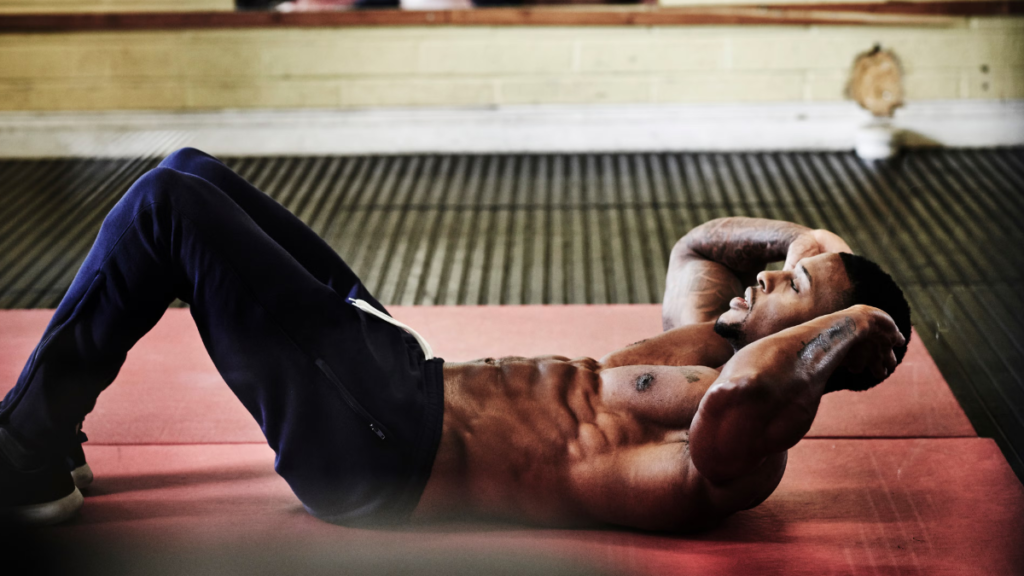
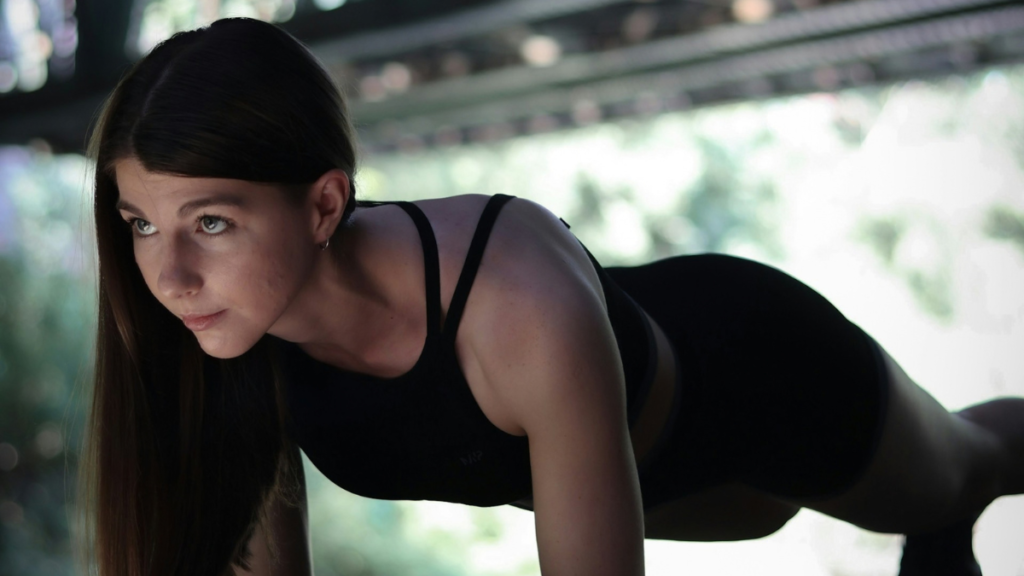
The plank is one of the simplest exercises in fitness, but it is also one of the most misunderstood. Many people think it is only an abdominal exercise, while others believe that holding a plank for several minutes is the ultimate sign of a strong core. The truth is more interesting.
A properly performed plank measures much more than abdominal endurance. It tests the coordinated strength of your entire core, including your deep abdominal muscles, lower back, shoulders, chest, hips, and glutes. It also reflects your ability to stabilize your spine, which is one of the most important functions of the human body.


As you age, maintaining this type of muscular endurance becomes increasingly important. A strong core improves posture, reduces the risk of back pain, enhances athletic performance, and helps preserve independence later in life.
So how long should you actually be able to hold a plank at your age? The answer depends on your age, fitness level, and technique. Here is what the latest scientific evidence tells us.
Why the Plank Matters
The primary purpose of your core is not to create movement. Instead, its main role is resisting movement and stabilizing the spine while your arms and legs perform other tasks.
Research shows that exercises emphasizing spinal stability activate the abdominal wall and deep trunk muscles effectively while placing relatively low stress on the spine. This makes planks one of the safest and most effective core exercises for healthy adults. Unlike endless crunches, which repeatedly flex the spine, the plank trains your core to maintain a neutral position. That is exactly what your muscles must do during lifting, running, jumping, carrying groceries, or simply standing upright.
A stronger core is associated with better balance, improved movement efficiency, reduced injury risk, and enhanced athletic performance.
What Happens to Core Strength as You Age?
Beginning around age 30, adults gradually lose muscle mass and muscular endurance if they do not continue strength training regularly. This process, known as sarcopenia, accelerates after approximately age 60. Core muscles are no exception.

The decline is not only due to muscle loss. Changes in nerve function, connective tissue, and physical activity levels also contribute to reduced endurance.
Is the Spanish Squat the Perfect Lower Body Exercise for Stronger Legs?
Fortunately, research consistently shows that resistance training and core specific exercises significantly slow these declines, even in adults well into their seventies and eighties. That means your chronological age matters far less than your training habits.
How Long Should You Hold a Plank?
There is no universally accepted medical standard for plank times.
However, combining findings from sports science, military fitness testing, rehabilitation research, and large fitness assessments allows us to create realistic benchmarks for healthy adults using a standard forearm plank with excellent technique.
Ages 18 to 29
- Excellent: More than 2 minutes
- Very Good: 90 seconds to 2 minutes
- Average: 60 to 90 seconds
- Needs Improvement: Less than 60 seconds
Young adults generally possess the highest muscular endurance. Competitive athletes often exceed three or even four minutes, but longer is not necessarily better.
Ages 30 to 39
- Excellent: More than 2 minutes
- Very Good: 90 seconds to 2 minutes
- Average: 60 to 90 seconds
- Needs Improvement: Less than 60 seconds
Most healthy adults in this age range should still be capable of holding a technically perfect one minute plank. Those who train consistently should comfortably exceed ninety seconds.
Ages 40 to 49
- Excellent: More than 90 seconds
- Very Good: 75 to 90 seconds
- Average: 45 to 75 seconds
- Needs Improvement: Less than 45 seconds
Muscular endurance often begins to decline if training volume decreases, but regular strength training can largely offset these changes.
Ages 50 to 59
- Excellent: More than 90 seconds
- Very Good: 60 to 90 seconds
- Average: 40 to 60 seconds
- Needs Improvement: Less than 40 seconds
At this stage, maintaining good technique becomes more important than chasing long durations.
Ages 60 to 69
- Excellent: More than 75 seconds
- Very Good: 45 to 75 seconds
- Average: 30 to 45 seconds
- Needs Improvement: Less than 30 seconds
A thirty second plank performed correctly demonstrates useful functional core endurance for most healthy adults.
Ages 70 and Older
- Excellent: More than 60 seconds
- Very Good: 30 to 60 seconds
- Average: 20 to 30 seconds
- Needs Improvement: Less than 20 seconds
Even relatively short holds can provide meaningful benefits for posture, balance, and daily function.
Why Technique Is More Important Than Time
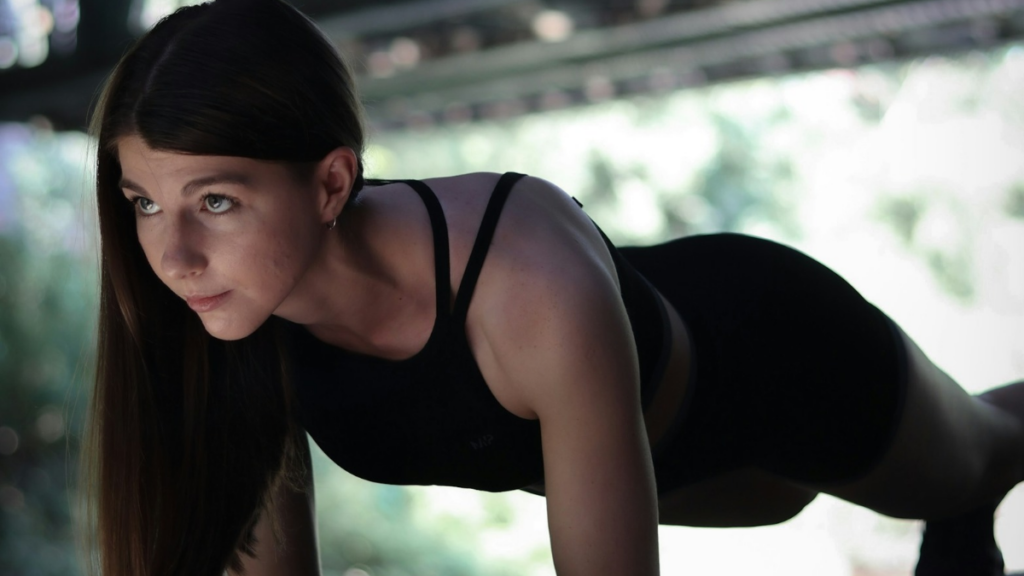
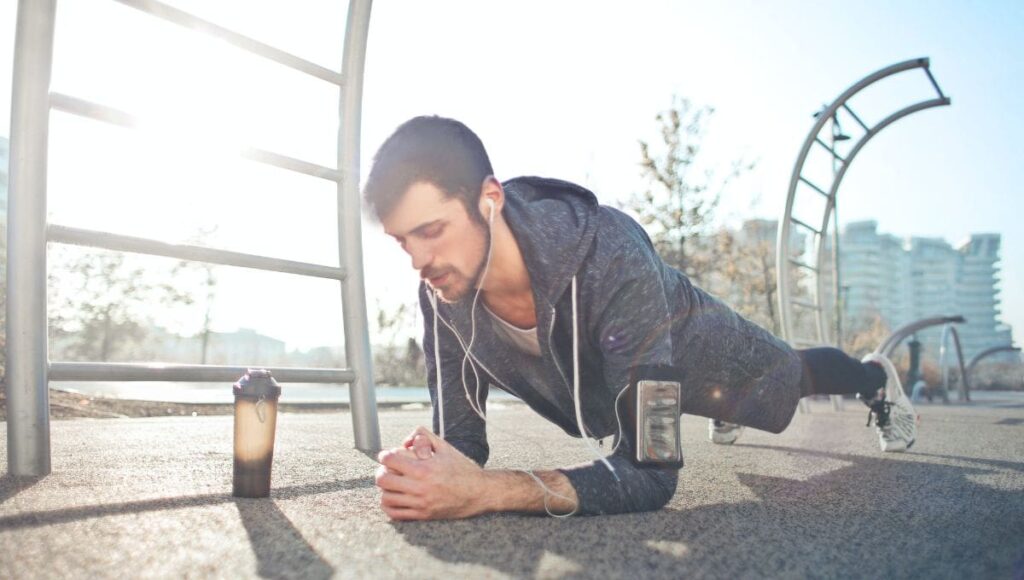
One of the biggest mistakes people make is allowing technique to deteriorate simply to increase their plank time. A two minute plank with poor posture is far less valuable than a forty five second plank performed correctly. A proper plank should include several key positions.
- Your head should remain aligned with your spine.
- Your shoulders should stay directly over your elbows.
- Your ribs should remain pulled down instead of flaring upward.
- Your hips should stay level without sagging or rising.
- Your glutes should remain squeezed throughout the exercise.
- Your legs should stay fully engaged.
- Your breathing should remain steady.
The moment you lose any of these positions, the exercise has effectively ended.
Can You Hold a Plank for Too Long?
Many fitness enthusiasts treat the plank as an endurance contest. Some people hold planks for five, ten, or even twenty minutes. While impressive, this is not necessarily the most productive use of training time.
Professor Stuart McGill, one of the world’s leading spine researchers, has long argued that prolonged plank holds produce diminishing returns. Once you can comfortably maintain excellent technique for around one to two minutes, increasing resistance or progressing to more challenging variations generally produces better strength gains than simply holding longer.
Progressive overload remains one of the fundamental principles of exercise science.
The Benefits of Strong Plank Performance
Reduced Back Pain
Weak trunk muscles are associated with chronic lower back pain in many adults. Core stabilization exercises consistently reduce pain and improve function in individuals suffering from nonspecific lower back pain. A stronger core helps distribute forces more evenly throughout the body during movement.
Better Athletic Performance
Every athletic movement transfers force through the trunk. Running, jumping, sprinting, throwing, lifting, rowing, and swimming all depend on efficient force transfer between the upper and lower body. Athletes with stronger core endurance often demonstrate greater movement efficiency and improved balance.
Improved Balance
Core muscles contribute significantly to postural control. Better trunk endurance allows faster reactions to unexpected movements, helping reduce fall risk in older adults.
Better Posture
Maintaining an upright posture throughout the day requires muscular endurance. Although posture depends on many factors, stronger trunk muscles help reduce fatigue during prolonged sitting and standing.
Why Some People Struggle With Planks
If you cannot hold a plank for thirty seconds, it usually does not mean your abdominal muscles are weak. More often, one or more of the following muscles fatigue first.
- The shoulders frequently become the limiting factor.
- The glutes often fail to stay engaged.
- The deep abdominal muscles lose tension.
- The lower back begins compensating.
- Poor breathing mechanics increase fatigue.
Improving overall strength through compound exercises like squats, deadlifts, carries, and push ups often improves plank performance naturally.
How to Improve Your Plank Time
Improving your plank is remarkably straightforward.
- Focus on quality before duration.
- Begin with sets lasting twenty to thirty seconds.
- Perform three to five sets.
- Rest between each effort.
Gradually increase each hold by five to ten seconds every week while maintaining perfect form. Once you comfortably reach ninety seconds with excellent technique, move on to more challenging variations instead of simply extending the hold indefinitely.
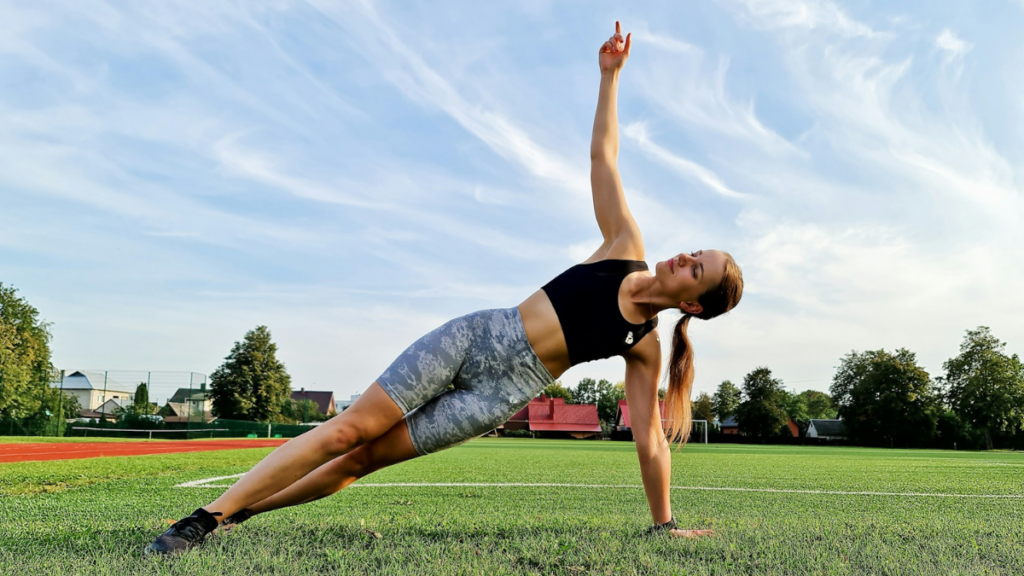
Side planks, weighted planks, body saw planks, and stability ball planks all increase the challenge while continuing to build functional core strength.
Other Exercises That Build Core Strength
Although the plank is excellent, no single exercise develops every aspect of core function. Research suggests combining multiple movement patterns creates the strongest overall trunk.
- Dead bugs teach spinal stability while moving the limbs.
- Bird dogs improve coordination and spinal control.
- Farmer carries develop whole body stability under load.
- Side planks strengthen the lateral core.
- Pallof presses improve resistance to rotational forces.
Combining these movements with regular strength training creates a more resilient and athletic core than relying on planks alone.
When Should You Stop a Plank?
The goal is controlled muscular fatigue. You should stop immediately if your hips begin sagging, your lower back starts hurting, your shoulders collapse, your breathing becomes uncontrolled, or you find yourself shaking so violently that proper positioning is impossible.
Fatigue itself is normal. Poor movement quality is not.
The Bottom Line
Your ability to hold a plank offers a useful snapshot of your core endurance, but it is only one piece of the overall fitness puzzle. For most healthy adults, maintaining a technically sound plank for sixty to ninety seconds represents good functional core endurance. Younger individuals and well trained athletes may exceed two minutes, while older adults can still demonstrate excellent fitness with shorter but technically sound holds.
Rather than chasing marathon plank times, focus on mastering technique, improving gradually, and incorporating a variety of core exercises into your training. Your spine, posture, athletic performance, and long term health will benefit far more from quality than quantity.
Recommended Plank Benchmarks by Age
| Age Group | Excellent | Very Good | Average | Needs Improvement |
|---|---|---|---|---|
| 18 to 29 | Over 2 minutes | 90 seconds to 2 minutes | 60 to 90 seconds | Under 60 seconds |
| 30 to 39 | Over 2 minutes | 90 seconds to 2 minutes | 60 to 90 seconds | Under 60 seconds |
| 40 to 49 | Over 90 seconds | 75 to 90 seconds | 45 to 75 seconds | Under 45 seconds |
| 50 to 59 | Over 90 seconds | 60 to 90 seconds | 40 to 60 seconds | Under 40 seconds |
| 60 to 69 | Over 75 seconds | 45 to 75 seconds | 30 to 45 seconds | Under 30 seconds |
| 70 and older | Over 60 seconds | 30 to 60 seconds | 20 to 30 seconds | Under 20 seconds |
References
- Akuthota, V. and Nadler, S.F. (2004). Core strengthening. Archives of Physical Medicine and Rehabilitation, 85(Suppl. 3), S86 to S92.
- Behm, D.G., Drinkwater, E.J., Willardson, J.M. and Cowley, P.M. (2010). Canadian Society for Exercise Physiology position statement. Applied Physiology, Nutrition, and Metabolism, 35(1), 109 to 112.
- Granacher, U., Gollhofer, A., Hortobagyi, T., Kressig, R.W. and Muehlbauer, T. (2013). The importance of trunk muscle strength for balance, functional performance, and fall prevention in older adults. Sports Medicine, 43(7), 627 to 641.
- Hibbs, A.E., Thompson, K.G., French, D., Wrigley, A. and Spears, I. (2008). Optimizing performance by improving core stability and core strength. Sports Medicine, 38(12), 995 to 1008.
- Hodges, P.W. and Richardson, C.A. (1996). Inefficient muscular stabilization of the lumbar spine associated with low back pain. Spine, 21(22), 2640 to 2650.
- McGill, S.M. (2010). Ultimate Back Fitness and Performance. 4th ed. Waterloo: Backfitpro Inc.
- McGill, S.M., Childs, A. and Liebenson, C. (1999). Endurance times for low back stabilization exercises. Archives of Physical Medicine and Rehabilitation, 80(8), 941 to 944.
- Nelson, M.E., Rejeski, W.J., Blair, S.N., Duncan, P.W., Judge, J.O., King, A.C., Macera, C.A. and Castaneda Sceppa, C. (2007). Physical activity and public health in older adults. Medicine and Science in Sports and Exercise, 39(8), 1435 to 1445.
- Steele, J., Bruce Low, S. and Smith, D. (2014). A review of the specificity of exercises designed for conditioning the lumbar extensors. Strength and Conditioning Journal, 36(3), 10 to 18.
- Willardson, J.M. (2007). Core stability training. Applications to sports conditioning programs. Journal of Strength and Conditioning Research, 21(3), 979 to 985.