

Core training has evolved far beyond endless crunches and sit ups. Coaches, physical therapists, and sports scientists now recognize that the best core exercises teach the body to resist movement rather than simply create it. One exercise that has gained significant attention over the past decade is the Copenhagen plank.
Originally developed as part of injury prevention research in soccer, the Copenhagen plank has become a favorite among strength coaches working with athletes from nearly every sport. Unlike a traditional side plank, it places a heavy demand on the hip adductors while simultaneously challenging the core, shoulders, glutes, and stabilizing muscles throughout the body.


But does that make it the perfect exercise for improving athleticism?
The answer depends on what you expect from a core exercise. Research suggests the Copenhagen plank develops lateral core strength, improves hip stability, strengthens often neglected muscles, and may even reduce injury risk. However, like every exercise, it also has limitations. Here is what the science says.
What Is the Copenhagen Plank?
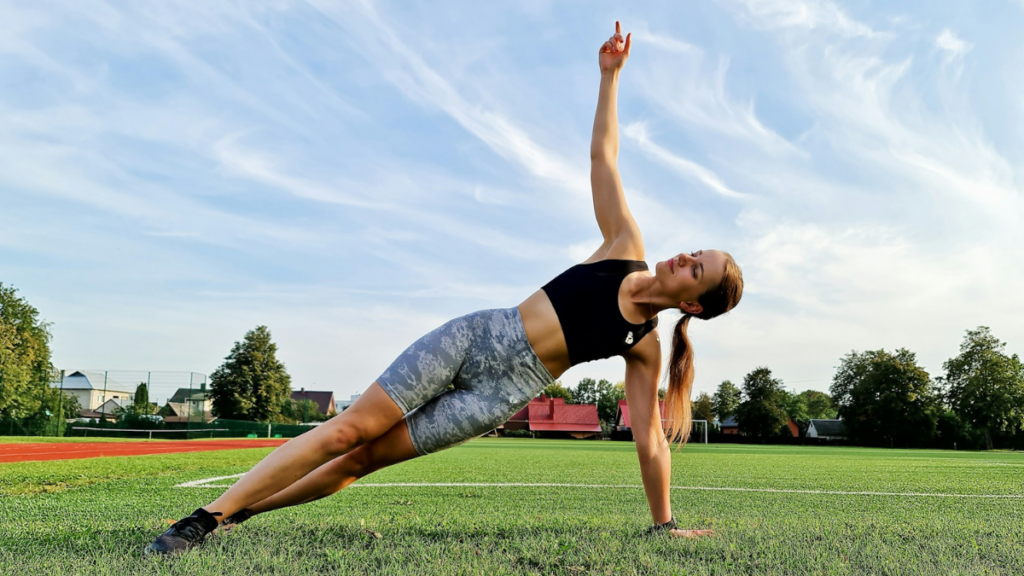
The Copenhagen plank is an advanced variation of the side plank.
Instead of placing both feet on the floor, the athlete supports their upper leg on a bench, box, or similar elevated surface. The lower leg hangs beneath while the body is held in a straight line from head to foot.
The exercise creates significant tension throughout the body, particularly in the muscles responsible for pulling the leg toward the body’s midline. The primary muscles involved include the adductor longus, adductor magnus, adductor brevis, gracilis, gluteus medius, quadratus lumborum, internal and external obliques, transverse abdominis, rectus abdominis, shoulder stabilizers, and gluteus maximus.
Unlike many traditional abdominal exercises, the Copenhagen plank teaches the body to resist unwanted movement rather than generate spinal flexion. This reflects the way the core functions during sprinting, jumping, cutting, throwing, lifting, and virtually every athletic movement.
Why Core Stability Matters for Athletic Performance
The core is often misunderstood as simply the abdominal muscles. In reality, it includes the muscles surrounding the spine, pelvis, hips, and trunk. Their primary role is to transfer force efficiently between the upper and lower body while protecting the spine. Athletes rarely perform movements that isolate their abs. Instead, they sprint, rotate, change direction, absorb impacts, and generate force through the entire kinetic chain.
Research consistently shows that improved trunk stability contributes to better balance, movement efficiency, force production, and injury prevention.
How Long Should You Be Able to Dead Hang Based on Your Age?
A stable core allows athletes to express strength more effectively because less energy is lost through unwanted movement. This becomes particularly important during explosive actions such as sprinting, jumping, Olympic lifting, and changing direction.
The Copenhagen Plank Is Much More Than a Core Exercise
One reason the Copenhagen plank stands out is that it combines multiple training goals into one exercise.
Exceptional Adductor Strength
Most gym programs overlook the hip adductors. These muscles contribute far more than simply squeezing the legs together. They play an essential role during sprinting, accelerating, decelerating, changing direction, and stabilizing the pelvis.
Research using electromyography has shown the Copenhagen plank produces extremely high activation of the adductor muscles, often exceeding traditional strengthening exercises. This high muscular demand helps explain why it has become popular in sports medicine.
Lateral Core Strength
Many athletes spend excessive time training movements that occur in the forward and backward direction. Sports rarely work that way.
Most field and court sports involve resisting side to side forces while remaining stable. The Copenhagen plank specifically strengthens the muscles responsible for resisting lateral bending. These include the obliques and quadratus lumborum, both of which contribute to efficient movement and spinal stability.

Hip Stability
The pelvis serves as the connection between the upper and lower body. Weakness around the hips often leads to inefficient movement patterns and unnecessary stress elsewhere. The Copenhagen plank simultaneously strengthens the adductors, abductors, glutes, and trunk stabilizers, creating better pelvic control during athletic movement.
Athletic Movements That Benefit
Sprinting
During sprinting, the adductors contribute substantially to hip extension and force production. Many people assume only the glutes and hamstrings drive sprint speed. In reality, the adductor magnus functions similarly to the hamstrings during powerful hip extension. Stronger adductors may therefore contribute to more effective sprint mechanics.
Cutting and Direction Changes
Changing direction places enormous stress on the inside of the hip. Athletes must rapidly decelerate before accelerating in another direction.
The Copenhagen plank strengthens the muscles responsible for controlling these forces. Improved eccentric strength may help athletes maintain better joint alignment during these demanding movements.
Jumping and Landing
Landing safely requires excellent pelvic and trunk stability. Weakness around the hips often allows excessive knee movement, increasing stress on surrounding structures. Improved lateral stability helps athletes absorb landing forces more effectively while maintaining efficient movement patterns.
Contact Sports
Sports such as rugby, football, wrestling, Brazilian Jiu Jitsu, hockey, and basketball all involve unpredictable external forces. A stronger trunk improves the body’s ability to resist these forces without losing balance or posture.
How Does It Compare With Traditional Planks?
Traditional front planks remain excellent exercises. They improve anterior core endurance while teaching proper spinal alignment. However, they produce relatively low activation of the hip adductors.
Side planks increase lateral stability but still lack the significant adductor demand created by the Copenhagen variation. Research comparing different plank exercises consistently shows that the Copenhagen plank creates substantially greater activation of the adductor muscles while maintaining high activation throughout the trunk.
This makes it a more complete exercise when the goal includes athletic performance rather than simply abdominal endurance. That does not mean traditional planks should disappear from training. Each variation develops different qualities. The Copenhagen plank simply addresses several areas simultaneously.
Is It Better Than Crunches?
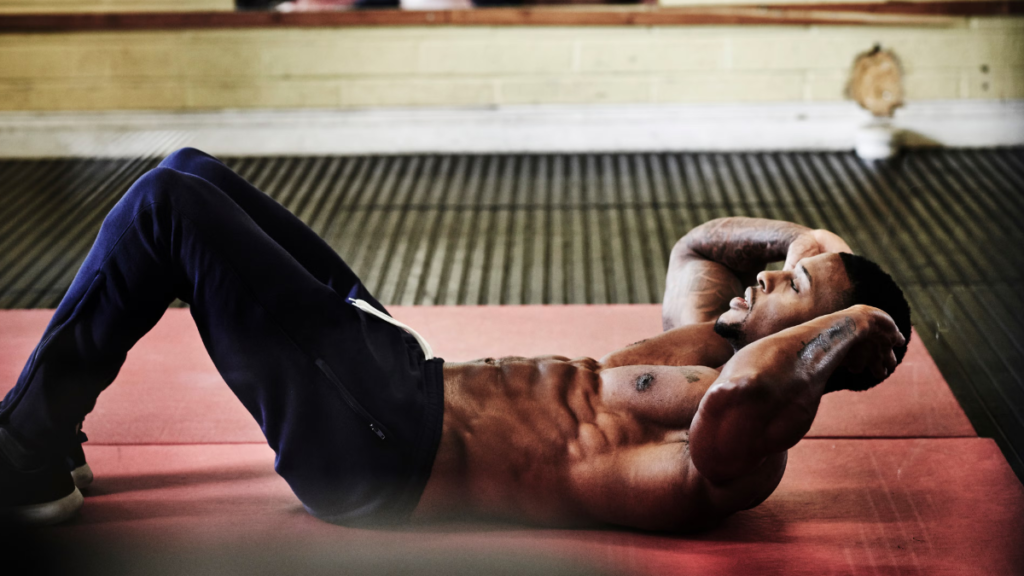
For athletic performance, the answer is generally yes. Crunches primarily train spinal flexion.
Athletic movement usually requires resisting spinal movement while transferring force between the hips and shoulders. The Copenhagen plank develops isometric strength, pelvic control, shoulder stability, and hip strength simultaneously. These qualities translate much more directly to running, jumping, lifting, and changing direction.
Crunches may still have value for bodybuilding or rehabilitation under specific circumstances, but they should not form the foundation of athletic core training.
Why Is It So Difficult?
Many people underestimate the exercise until they try it. Several factors contribute to its difficulty.
- The adductors work near maximum intensity to support body weight.
- The obliques must prevent the trunk from collapsing sideways.
- The shoulder stabilizers support nearly half of the body’s weight.
- The glutes maintain hip extension.
- The nervous system coordinates all these muscles simultaneously.
Few exercises demand this level of full body integration.
Progressions for Beginners
The full Copenhagen plank is not suitable for everyone immediately. Fortunately, the movement is highly scalable. A beginner can support the knee rather than the foot on the bench. This shortens the lever and reduces the force placed on the adductors.
As strength improves, athletes can gradually move toward supporting the ankle instead. Eventually, advanced athletes can perform dynamic versions by raising and lowering the bottom leg. Longer holds, additional external resistance, or unstable surfaces further increase difficulty. Progressive overload remains essential, just as it does with traditional strength training.
Who Should Use the Copenhagen Plank?
The exercise offers benefits for many populations.
- Field sport athletes can improve groin strength and cutting ability.
- Runners may develop greater pelvic stability during stride.
- Weightlifters and powerlifters benefit from stronger lateral trunk stability during heavy lifts.
- Combat sport athletes gain improved control during grappling and rotational movements.
- Even recreational lifters can address muscular imbalances often ignored in traditional gym programs.
Individuals recovering from recent groin injuries should only perform the exercise under professional guidance, since loading tolerance varies considerably throughout rehabilitation.
Who Should Avoid It?
People with acute groin injuries, severe shoulder pain, or limited side plank strength should first build a foundation using simpler exercises. There is no advantage in forcing advanced movements before developing adequate strength. Mastering conventional side planks, glute bridges, and basic hip strengthening provides a safer progression.

Conclusion
The Copenhagen plank has earned its growing reputation for good reason. It is far more than an abdominal exercise. It develops lateral core stability, powerful hip adductors, pelvic control, shoulder endurance, and total body coordination in one movement. Scientific research supports its effectiveness for improving adductor strength and reducing the risk of groin injuries, particularly in sports that involve sprinting and rapid changes of direction.
While it is not the only core exercise athletes need, it may be one of the most efficient. If your goal is better athleticism rather than simply stronger abs, adding Copenhagen planks to your weekly training routine is a smart, evidence based decision.
Key Takeaways
| Topic | Key Point |
|---|---|
| Primary Benefit | Simultaneously strengthens the core, adductors, hips, shoulders, and glutes |
| Athletic Value | Improves lateral stability, force transfer, and movement efficiency |
| Injury Prevention | Strong scientific evidence supports reducing groin injury risk in athletes |
| Best For | Field sports, runners, lifters, combat athletes, and recreational exercisers |
| Difficulty | Advanced exercise that should be progressed gradually |
| Recommended Volume | Two to three sets of ten to thirty second holds per side, two to three times per week |
| Limitation | Should complement, not replace, other core exercises |
References
- Bishop, C., Turner, A. and Read, P. (2018). Effects of inter limb asymmetries on physical and sports performance. Sports, 6(4), 113.
- Ekstrand, J., Hägglund, M. and Waldén, M. (2011). Injury incidence and injury patterns in professional football. British Journal of Sports Medicine, 45(7), 553 to 558.
- Harøy, J., Clarsen, B., Wiger, E.G., Øyen, M.G., Serner, A., Thorborg, K., Hölmich, P., Bahr, R. and Andersen, T.E. (2019). The Adductor Strengthening Programme prevents groin problems among male football players. British Journal of Sports Medicine, 53(3), 150 to 157.
- Kibler, W.B., Press, J. and Sciascia, A. (2006). The role of core stability in athletic function. Sports Medicine, 36(3), 189 to 198.
- McGill, S.M. (2010). Core training evidence translating to better performance and injury prevention. Strength and Conditioning Journal, 32(3), 33 to 46.
- Serner, A., Jakobsen, M.D., Andersen, L.L., Hölmich, P., Sundstrup, E. and Thorborg, K. (2014). EMG evaluation of hip adduction exercises for soccer players. British Journal of Sports Medicine, 48(14), 1108 to 1114.
- Thorborg, K., Reiman, M.P., Weir, A., Kemp, J.L., Serner, A., Mosler, A.B. and Hölmich, P. (2017). Clinical examination, diagnostic imaging, and testing of athletes with groin pain. British Journal of Sports Medicine, 52(16), 1074 to 1077.
- Vera Garcia, F.J., Elvira, J.L., Brown, S.H., McGill, S.M. and Grenier, S.G. (2007). Effects of abdominal stabilization maneuvers on the control of spine motion and stability. Journal of Electromyography and Kinesiology, 17(5), 556 to 567.