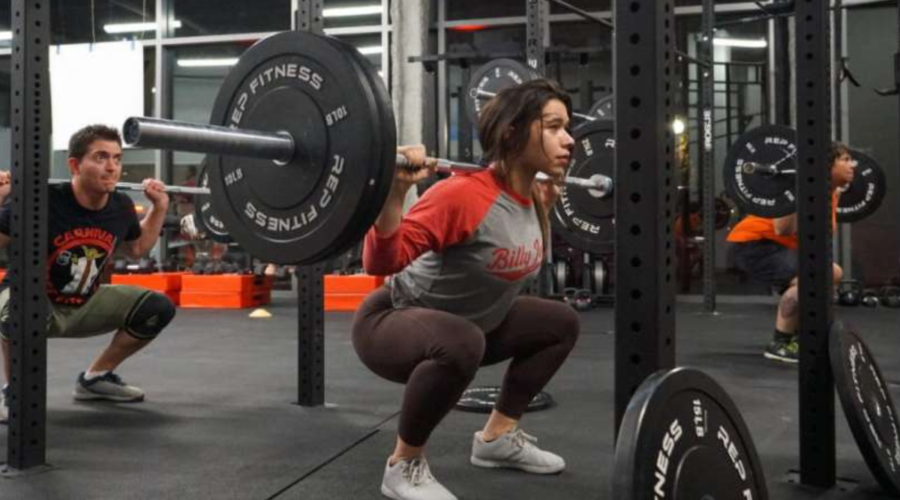


Walk into any gym and you will see a wide range of training styles, body types, goals, and experience levels. Some people are chasing a bigger squat. Others want to lose fat, improve health, or simply feel better in daily life. Because fitness goals vary so much, many gym-goers struggle to answer a simple question: am I actually doing well?
The fitness industry often pushes extreme standards. Social media feeds are filled with elite athletes, fitness influencers, and genetically gifted individuals who represent a tiny fraction of the population. Comparing yourself to these outliers can create the false impression that your progress is inadequate, even when you are doing significantly better than most people who step into a gym.


The reality is that success in fitness is not defined solely by how much weight you lift or how lean you look. Scientific research shows that long term progress depends on consistency, recovery, strength development, body composition improvements, movement quality, and sustainable habits. Many of the most important markers of success are not always obvious in the mirror.
If you recognize the signs below, there is a good chance you are performing better than the average gym-goer. More importantly, these indicators are backed by scientific evidence and linked to improved health, longevity, athletic performance, and quality of life.
Why Most Gym-Goers Struggle to Progress
Before looking at the signs of success, it helps to understand why so many people fail to achieve their fitness goals. Research consistently shows that exercise adherence is one of the biggest challenges in fitness. Many people start training with enthusiasm but struggle to maintain a structured routine over time. Others train regularly but fail to apply progressive overload, manage recovery, or follow basic nutritional principles.
Another common problem is focusing on short term outcomes instead of long term development. People often expect dramatic changes within weeks. When those changes do not appear quickly enough, motivation drops and training quality declines.
Successful gym-goers tend to avoid these traps. They develop habits that allow them to accumulate months and years of productive training. Over time, this creates results that separate them from the average person in the gym.
Sign 1: You Consistently Show Up Week After Week
Consistency Beats Perfection
The most powerful predictor of fitness success is not a perfect workout program. It is consistency. Many people underestimate how difficult regular exercise actually is. Public health data shows that a large percentage of adults fail to meet recommended physical activity guidelines. Even among gym members, attendance often declines significantly after the first few months.
If you have maintained a structured training routine for six months, one year, or longer, you are already ahead of many people who start and stop repeatedly.

Consistency allows physiological adaptations to accumulate. Muscle growth, strength gains, improved cardiovascular fitness, and metabolic health all depend on repeated exposure to training stimuli over time.
Habits Create Long Term Results
Research on behavior change shows that habits are often more important than motivation. Motivation fluctuates. Habits remain. People who continue training when they are busy, stressed, or not feeling particularly motivated usually make greater long term progress than those who rely on enthusiasm alone.
5 Signs Your Fitness is Better than Average for Your Age
If going to the gym feels like a normal part of your weekly routine rather than a constant internal battle, you have developed one of the most valuable skills in fitness.
Why This Puts You Ahead
The average gym-goer often experiences long interruptions in training. Vacations, work pressures, family commitments, and loss of motivation can create gaps that erase previous progress.
If you consistently train throughout the year and rarely miss sessions without a valid reason, you are building a foundation that many others never establish.
Sign 2: Your Strength Keeps Gradually Increasing
Progressive Overload Is Working
Strength gains are one of the clearest indicators that your training is effective.

The human body adapts to stress. When muscles, connective tissues, and the nervous system are challenged appropriately, they become stronger over time.
You do not need to set world records. You simply need to demonstrate gradual improvement.
Maybe you can perform more pull-ups than you could six months ago. Maybe your squat has increased by 20 pounds. Maybe you are using heavier dumbbells for the same number of repetitions.
These improvements indicate successful adaptation.
Strength Is Linked to Better Health
Strength is not just about athletic performance. Scientific evidence shows that muscular strength is strongly associated with lower mortality risk, better metabolic health, improved functional capacity, and greater independence later in life.
Higher levels of strength are linked to improved insulin sensitivity, better bone density, and reduced risk of chronic disease. This means that getting stronger is not merely a gym achievement. It is a meaningful health achievement.
Strength Progress Does Not Need to Be Fast
One mistake many gym-goers make is expecting rapid increases indefinitely. Beginners often gain strength quickly. As training age increases, progress naturally slows. This is completely normal.
If you continue adding small amounts of weight, performing additional repetitions, or improving exercise quality over time, you are moving in the right direction. Small improvements accumulated over months often produce dramatic changes over years.
Why This Puts You Ahead
Many people spend years exercising without a structured progression plan. They perform the same exercises with the same weights and repetitions month after month.
If your training log shows measurable improvement, you are doing something that a large number of gym-goers never consistently achieve.
Sign 3: Your Recovery Is Improving Instead of Getting Worse
Recovery Reflects Adaptation
A common misconception is that feeling exhausted all the time means training is effective.
In reality, successful training creates adaptation. Over time, your body should become more capable of handling physical stress.
When recovery improves, it usually indicates that your fitness level is increasing.
You may notice that you are less sore after workouts. You might recover faster between training sessions. You may feel more energetic throughout the day.
These are positive signs.
Fitness Improves Work Capacity
Exercise science describes work capacity as the ability to perform and recover from physical work. As your conditioning improves, activities that once felt challenging become easier.
A workout that left you exhausted six months ago may now feel manageable. Your heart rate may return to normal more quickly after intense effort. Daily activities may require less effort. These adaptations reflect genuine improvements in physical fitness.
Sleep and Recovery Matter
Research consistently demonstrates the importance of sleep for performance, recovery, muscle growth, and overall health. Successful gym-goers typically learn to prioritize recovery behaviors alongside training. They understand that adaptation occurs between workouts, not only during them.
If your training supports better sleep quality, more stable energy levels, and improved recovery, your program is likely working effectively.
Why This Puts You Ahead
Many recreational exercisers push hard but neglect recovery. Chronic fatigue, poor sleep, and persistent soreness can limit progress. If your body is adapting well and recovering efficiently, you are managing training stress better than many people in the gym.
Sign 4: Your Body Composition Is Improving Even If the Scale Is Not Moving Much
The Scale Does Not Tell the Whole Story
One of the biggest mistakes in fitness is using body weight as the only measure of progress. Body composition refers to the proportion of fat mass and lean mass in the body. Changes in body composition often provide more useful information than changes in scale weight alone.
For example, someone may gain muscle while losing fat. Their body weight might remain relatively stable even though their physique, health markers, and performance improve significantly.

Muscle Mass Matters
Research shows that skeletal muscle plays an important role in metabolic health, glucose regulation, physical function, and healthy aging. Increasing lean muscle mass can improve body composition even when total body weight changes very little.
You may notice that clothes fit better, your waist circumference decreases, or your muscles appear more defined despite minimal changes on the scale. These outcomes often indicate meaningful progress.
Fat Loss Is Not Always Linear
Fat loss rarely follows a perfectly predictable pattern. Water retention, hormonal fluctuations, dietary changes, and training stress can temporarily influence body weight. Successful gym-goers focus on broader trends rather than daily fluctuations.
Progress photos, circumference measurements, strength gains, and physical performance often provide valuable context that the scale cannot capture.
Why This Puts You Ahead
Many people become discouraged when scale weight stalls and abandon effective programs prematurely. If you understand the difference between body weight and body composition, and you can recognize improvements beyond the scale, you are approaching fitness with a more sophisticated and effective mindset.
Sign 5: Exercise Has Become Part of Your Identity

The Psychology of Long Term Success
One of the strongest indicators of lasting fitness success is psychological rather than physical. People who sustain healthy behaviors for years often begin to view those behaviors as part of who they are.
Instead of thinking, “I am trying to work out,” they think, “I am someone who trains.” This shift may seem subtle, but behavioral science suggests it can have a profound effect on long term adherence.
Identity Drives Behavior
When exercise becomes part of your identity, decisions become easier.
You do not constantly negotiate with yourself about whether to train. You do not view workouts as punishment for eating too much. You do not depend entirely on short bursts of motivation. Training becomes a normal expression of who you are. This mindset often creates consistency, resilience, and long term success.
Fitness Extends Beyond the Gym
People who integrate fitness into their identity often make healthier choices in other areas of life. They may prioritize sleep, nutrition, stress management, and physical activity outside the gym.
Research suggests that health behaviors often cluster together. Positive habits in one area frequently support positive habits in another.
Why This Puts You Ahead
Many gym-goers approach exercise as a temporary project. Those who make fitness part of their lifestyle are far more likely to maintain results over the long term. If regular exercise feels like a normal and permanent component of your life, you have developed a characteristic shared by highly successful exercisers.
Additional Indicators That You Are Progressing Well
You Move Better Than Before
Improved mobility, coordination, balance, and movement efficiency are often overlooked markers of progress. Many people discover they can squat deeper, climb stairs more comfortably, carry groceries with less effort, or participate in recreational sports more effectively.
These changes reflect improvements in functional fitness that can enhance daily life.
Your Health Markers Are Improving
Regular exercise is associated with improvements in blood pressure, cardiovascular fitness, insulin sensitivity, blood lipid profiles, and overall health. You may not see these changes in the mirror, but they represent some of the most valuable benefits of training.
You Are More Resilient
Exercise has powerful effects on mental health. Research demonstrates that regular physical activity can reduce symptoms of anxiety and depression while improving mood and psychological well-being.
If you feel more confident, energetic, and mentally resilient than before you started training, those improvements matter.
What Truly Separates High Performers From Average Gym-Goers
The most successful gym-goers rarely focus on shortcuts. They do not chase every new trend. They do not constantly switch programs. They do not expect overnight transformation.
Instead, they focus on principles that consistently work:
- They train regularly.
- They gradually get stronger.
- They recover effectively.
- They improve body composition over time.
- They build an identity around health and fitness.
- These behaviors create a compounding effect. Small improvements accumulate into significant results.
Fitness is not about being perfect. It is about becoming slightly better, week after week, month after month, and year after year.
Final Thoughts
Many people underestimate how well they are actually doing. If you train consistently, continue getting stronger, recover effectively, improve your body composition, and view exercise as a permanent part of your lifestyle, you are likely performing better than the average gym-goer.
The most important lesson is that progress is not always obvious. It does not always appear on the scale, in the mirror, or on social media.
Real fitness success is built through sustainable habits, gradual improvement, and long term commitment. When viewed through that lens, many dedicated gym-goers are doing far better than they realize.
Key Takeaways
| Sign | Why It Matters | What It Indicates |
|---|---|---|
| Consistent training | Regular exercise drives long term adaptation | Strong adherence and sustainable habits |
| Increasing strength | Progressive overload improves performance and health | Effective training program |
| Better recovery | Faster adaptation to training stress | Improved fitness and work capacity |
| Improved body composition | More muscle and less fat support health and performance | Meaningful progress beyond scale weight |
| Fitness as part of identity | Strong behavioral foundation for long term success | High likelihood of maintaining results |
References
- American College of Sports Medicine. (2021) ACSM’s Guidelines for Exercise Testing and Prescription. 11th ed. Philadelphia: Wolters Kluwer.
- Biddle, S.J.H., Mutrie, N. and Gorely, T. (2021) Psychology of Physical Activity: Determinants, Well-Being and Interventions. 4th ed. London: Routledge.
- Blair, S.N., Kohl, H.W., Paffenbarger, R.S., Clark, D.G., Cooper, K.H. and Gibbons, L.W. (1989) ‘Physical fitness and all-cause mortality. A prospective study of healthy men and women’, Journal of the American Medical Association, 262(17), pp. 2395-2401.
- Chtourou, H. and Souissi, N. (2012) ‘The effect of training at a specific time of day: a review’, Journal of Strength and Conditioning Research, 26(7), pp. 1984-2005.
- Dishman, R.K., Heath, G.W. and Lee, I.M. (2013) Physical Activity Epidemiology. 2nd ed. Champaign: Human Kinetics.
- Ekelund, U., Tarp, J., Steene-Johannessen, J., Hansen, B.H., Jefferis, B., Fagerland, M.W., Whincup, P., Diaz, K.M., Hooker, S.P., Chernofsky, A., Larson, M.G., Spartano, N., Vasan, R.S., Dohrn, I.M., Hagstromer, M., Edwardson, C., Yates, T., Shiroma, E., Anderssen, S.A. and Lee, I.M. (2019) ‘Dose-response associations between accelerometry measured physical activity and sedentary time and all cause mortality’, British Medical Journal, 366, l4570.