Many people judge their health by the number on a scale, their latest blood test, or whether they have visible muscles. While those measures can provide useful information, they do not always reflect how well your body actually functions in daily life.
Health is about resilience. It is your body’s ability to move, recover, adapt, and perform ordinary tasks without excessive effort. Researchers increasingly recognize that functional capacity is one of the strongest indicators of long term health, independence, and even lifespan.



The encouraging news is that you do not need expensive medical equipment or laboratory testing to gain a rough idea of your current health. There are several simple physical abilities that reflect the condition of your cardiovascular system, muscles, joints, nervous system, and metabolism. If you can comfortably perform these tasks, there is a good chance you are healthier than you might think.
Of course, none of these replace medical evaluations or professional advice. However, each has strong scientific support as a meaningful marker of overall health and healthy aging.
Why Functional Fitness Matters More Than Appearance
It is easy to assume that someone with visible abs or a low body fat percentage is automatically healthier than everyone else. Reality is much more complicated. Research consistently shows that physical function predicts disease risk, disability, and mortality more accurately than appearance alone. Strength, aerobic fitness, mobility, and balance all reflect how effectively the body’s major systems work together.
Someone who can move efficiently, recover well, and perform everyday tasks with ease often has a healthier cardiovascular system, stronger muscles and bones, better metabolic health, and greater resilience against illness than someone who simply looks fit. With that in mind, here are five surprisingly simple abilities that suggest your health is on the right track.
You Can Easily Get Up From the Floor Without Using Your Hands
One of the simplest tests of whole body fitness is also one of the most revealing. The sitting rising test asks you to sit down on the floor and then stand back up using as little support as possible. Completing this movement requires a combination of mobility, flexibility, coordination, balance, core stability, and lower body strength.
Researchers from Brazil found that lower scores on this test were strongly associated with higher mortality over several years of follow up. Participants who could complete the movement smoothly without using their hands, knees, or other supports generally had much better long term survival than those who struggled.
This does not mean the test predicts exactly how long someone will live. Instead, it captures multiple aspects of physical function that tend to decline together with age and chronic disease. Being able to rise from the floor comfortably also has important practical value. Falls become more dangerous when people cannot get back up independently. Maintaining this ability supports confidence, independence, and everyday movement throughout life.

If you can sit down and stand back up under control without needing your hands, you are demonstrating healthy joint mobility, functional strength, and good neuromuscular coordination.
Why It Matters
The movement requires strength in the hips and legs, adequate ankle and hip mobility, spinal control, and balance. These qualities are all associated with healthy aging and reduced risk of disability.
You Can Walk Briskly for 30 Minutes Without Feeling Exhausted
Walking may seem too simple to reveal much about health, but it is one of the best indicators of cardiovascular fitness. A brisk walk that slightly increases your breathing while still allowing conversation reflects healthy heart and lung function. People who can comfortably maintain this pace for around half an hour generally have better aerobic capacity than sedentary individuals.
Large studies have consistently shown that cardiorespiratory fitness is one of the strongest predictors of longevity. In fact, low aerobic fitness has been associated with a greater risk of death than several traditional cardiovascular risk factors.
Walking also improves insulin sensitivity, blood pressure, cholesterol levels, and mental health. Regular walking has been linked with lower risks of heart disease, type 2 diabetes, certain cancers, and premature death. If you can finish a brisk 30 minute walk without needing prolonged recovery afterward, your cardiovascular system is likely functioning well.
Why It Matters
Healthy aerobic fitness reflects efficient oxygen delivery, strong heart function, healthy circulation, and good metabolic health.
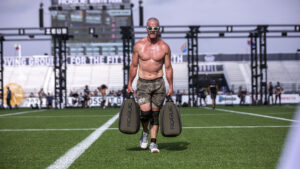
You Can Carry Heavy Grocery Bags Without Struggling
Grip strength has become one of the most studied measures of overall health. Although it only measures the force generated by the hands and forearms, grip strength strongly reflects total body muscle function. It is associated with bone health, mobility, metabolic health, and healthy aging.
One of the largest international studies, known as the PURE study, found that lower grip strength predicted higher risks of heart attack, stroke, disability, and death. You do not need a specialized dynamometer to get a rough sense of your strength. Think about carrying several reasonably heavy grocery bags from your car to your kitchen. If this task feels manageable without significant strain or needing frequent breaks, you probably have useful levels of functional strength.
Maintaining muscle strength becomes increasingly important with age because muscle naturally declines after middle adulthood unless it is challenged through resistance exercise or physically demanding activities.
Strong muscles also improve blood sugar regulation, support healthy joints, reduce injury risk, and help preserve independence later in life.
Why It Matters
Functional strength reflects healthy muscle mass, nervous system efficiency, and overall physical resilience.
You Can Balance on One Leg for at Least 10 Seconds
Balance may not seem important until it begins to disappear. Standing on one leg requires the brain, muscles, joints, inner ear, and visual system to work together continuously. Small declines in any of these systems become obvious during balance tasks.
Researchers have found that an inability to balance on one leg for 10 seconds in middle aged and older adults was associated with a substantially higher risk of death during follow up compared with those who could successfully complete the task. While balance naturally declines with age, maintaining this skill suggests healthy neuromuscular function and lower fall risk.
You can try this at home by standing near a wall for safety. Lift one foot and see whether you can remain stable for at least 10 seconds without grabbing support. If you can, your nervous system, muscles, and balance mechanisms are likely working together effectively.
Why It Matters
Good balance reflects coordination, lower body strength, sensory function, and healthy brain body communication.
You Recover Quickly After Climbing Several Flights of Stairs
Recovery often tells us more than the effort itself. Climbing stairs rapidly increases heart rate and breathing. A healthy cardiovascular system responds efficiently by delivering oxygen to working muscles and then returning heart rate toward normal once the activity stops. Heart rate recovery has become an important marker of cardiovascular health because it reflects healthy autonomic nervous system function. Slower recovery has been associated with increased cardiovascular risk and higher mortality.
If climbing two or three flights of stairs leaves you only mildly out of breath and you recover comfortably within a minute or two, your heart and lungs are probably functioning efficiently. This simple observation aligns with research showing that higher exercise capacity is associated with substantially lower risks of cardiovascular disease and early death.
Recovery also reflects regular physical activity. People who exercise consistently generally regain normal breathing and heart rate much faster than inactive individuals.
Why It Matters
Efficient recovery reflects cardiovascular fitness, healthy autonomic function, and good aerobic conditioning.
What If You Cannot Do All Five?
There is no need to panic if one or more of these tasks feels difficult. Health exists on a spectrum rather than as a pass or fail test. Age, injuries, arthritis, neurological conditions, and previous surgeries can all influence performance without necessarily reflecting poor overall health.
The real value of these functional abilities lies in tracking progress over time. Someone who could barely walk for ten minutes six months ago but now comfortably walks for thirty has made meaningful improvements in cardiovascular fitness. Someone who gradually develops the strength to stand from the floor without assistance has improved mobility, muscle function, and independence.
Is the Bench Press the Perfect Chest Exercise for Stronger Pecs?
Nearly all of these abilities respond positively to regular exercise. Resistance training increases muscle strength and bone density. Aerobic exercise improves heart and lung function. Balance exercises reduce fall risk. Mobility training helps maintain joint function and flexibility.
Even modest improvements can produce meaningful reductions in disease risk while making everyday life noticeably easier.
The Bigger Picture
Modern medicine often focuses on diagnosing disease, but maintaining health requires attention to function. Being able to move confidently, recover efficiently, carry everyday loads, and maintain balance are practical signs that your body is working as it should. These abilities represent the combined health of your cardiovascular system, muscles, nervous system, metabolism, and joints. They are not perfect measurements, but they provide valuable clues about overall physical well being.
If you can comfortably perform most or all of these five tasks, you are probably healthier than you give yourself credit for. That does not mean there is no room for improvement. Regular exercise, quality sleep, nutritious food, stress management, and avoiding smoking remain among the most effective ways to protect long term health.
Still, it is worth recognizing that health is not defined by appearance alone. Sometimes the strongest evidence that you are doing well is simply how easily your body handles the demands of everyday life.
Key Takeaways
| Ability | What It Suggests | Why It Matters |
|---|---|---|
| Stand up from the floor without using your hands | Good mobility, strength, balance, and coordination | Associated with healthier aging and lower mortality risk |
| Walk briskly for 30 minutes comfortably | Healthy cardiovascular fitness | Linked to lower risks of chronic disease and premature death |
| Carry heavy grocery bags without excessive effort | Functional muscle strength | Strong predictor of independence and lower disease risk |
| Balance on one leg for at least 10 seconds | Healthy neuromuscular function | Lower fall risk and better long term health outcomes |
| Recover quickly after climbing stairs | Efficient heart and lung function | Reflects strong cardiovascular fitness and healthy autonomic function |
References
- Araújo, C.G.S., Porto, A.G., Freitas, E.V., Nogueira, P.A., Gouvêa, A.L.M. and Valério, B.C., 2012. Sitting rising test. European Journal of Preventive Cardiology, 19(5), pp.1075 to 1082.
- Celis Morales, C.A., Welsh, P., Lyall, D.M., Steell, L., Petermann, F., Anderson, J., Iliodromiti, S., Sillars, A., Graham, N., Mackay, D.F. and Pell, J.P., 2018. Associations of grip strength with cardiovascular, respiratory, and cancer outcomes. British Medical Journal, 361, k1651.
- Kodama, S., Saito, K., Tanaka, S., Maki, M., Yachi, Y., Asumi, M., Sugawara, A., Totsuka, K., Shimano, H., Ohashi, Y. and Yamada, N., 2009. Cardiorespiratory fitness as a quantitative predictor of all cause mortality and cardiovascular events. Journal of the American Medical Association, 301(19), pp.2024 to 2035.
- Myers, J., Prakash, M., Froelicher, V., Do, D., Partington, S. and Atwood, J.E., 2002. Exercise capacity and mortality among men referred for exercise testing. New England Journal of Medicine, 346(11), pp.793 to 801.
- Ribeiro, F., Oliveira, N.L., Silva, G., Sousa, N. and Oliveira, J., 2022. Successful 10 second one leg stance performance predicts survival. British Journal of Sports Medicine, 56(17), pp.975 to 980.
- Studenski, S., Perera, S., Patel, K., Rosano, C., Faulkner, K., Inzitari, M., Brach, J., Chandler, J., Cawthon, P., Connor, E.B. and others, 2011. Gait speed and survival in older adults. Journal of the American Medical Association, 305(1), pp.50 to 58.
- Warburton, D.E.R. and Bredin, S.S.D., 2017. Health benefits of physical activity. Current Opinion in Cardiology, 32(5), pp.541 to 556.