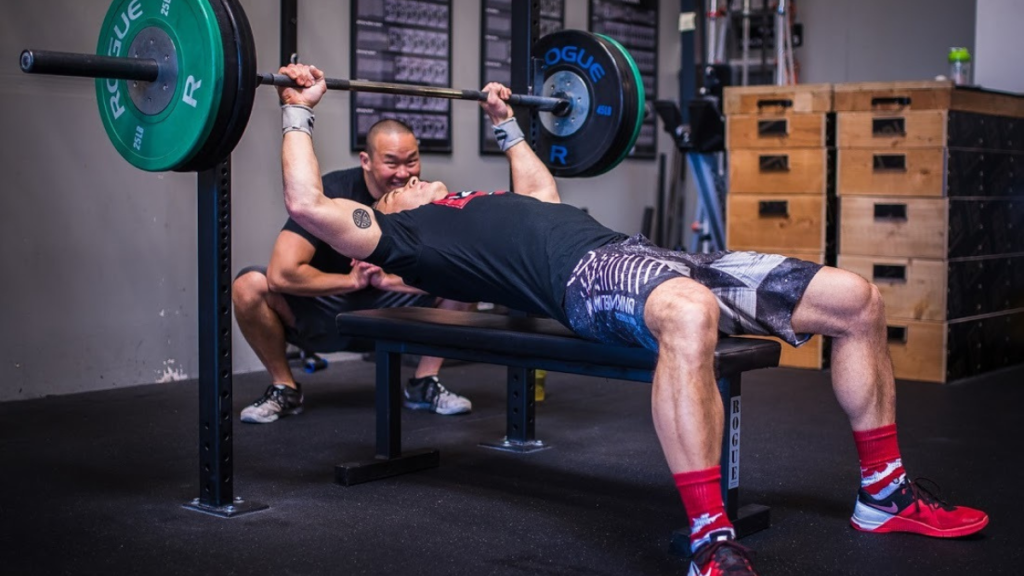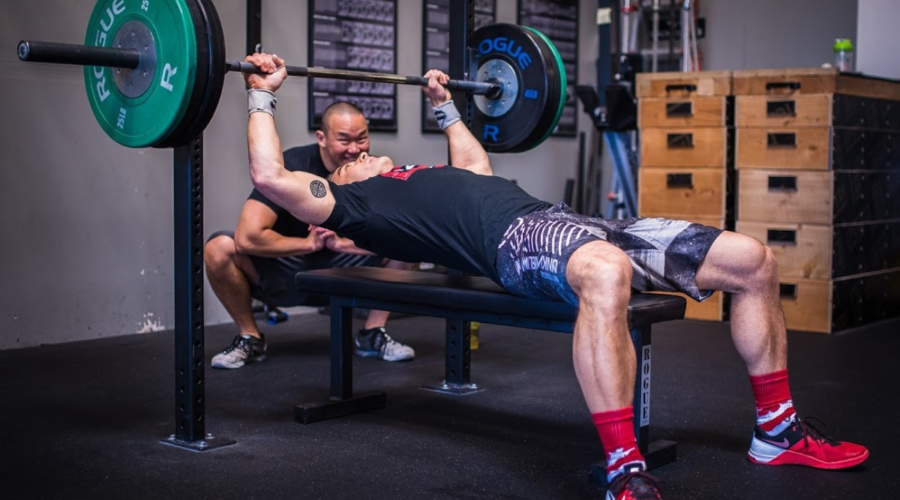


The bench press is one of the most popular strength exercises in the world. Walk into almost any commercial gym and you will probably see someone asking, “How much do you bench?” It has become the unofficial measure of upper body strength, even though it is only one lift among many.
For beginners, the bench press can feel intimidating. Some people compare themselves to experienced lifters, while others worry they are too weak to even start. The truth is that everyone begins somewhere, and strength develops surprisingly quickly during the first months of consistent training. So how much should you actually be able to bench press as a beginner?

The answer depends on your body weight, sex, training experience, and technique. More importantly, your progress matters far more than your starting point. Science shows that beginners can make rapid improvements in strength through proper resistance training, good nutrition, and adequate recovery.
This guide explains realistic beginner benchmarks, why strength varies between individuals, how quickly you can expect to improve, and what really determines success on the bench press.
Why the Bench Press Is Such a Good Measure of Strength
The bench press is a compound exercise, meaning it involves several joints and multiple muscle groups working together.
During the movement, the primary muscles involved include the pectoralis major, anterior deltoids, and triceps brachii. Stabilizing muscles throughout the shoulders, upper back, and core also contribute to maintaining proper position throughout the lift. Because so much muscle mass is involved, the bench press is an effective exercise for increasing overall upper body strength and muscle size.
3 Best Dumbbell Exercises for Beginners to Build a Jacked and Muscular Torso
Research has consistently shown that multi joint exercises such as the bench press produce significant improvements in muscular strength and hypertrophy when performed progressively over time.
Unlike isolation exercises, the bench press also teaches coordination between multiple muscle groups, making it valuable for athletes and recreational lifters alike.
What Counts as a Beginner?
A beginner is not simply someone who recently joined a gym. In strength training research, beginners are generally considered people with less than one year of consistent resistance training experience. Even someone who trained years ago but has taken a long break may regain strength quickly due to muscle memory, but they still need to rebuild technique and conditioning.
Most beginners are still learning proper movement patterns, breathing, bar path, and how to apply progressive overload effectively. This means comparing yourself to experienced lifters is rarely useful.
How Much Should Beginner Men Bench Press?
There is no single number that applies to everyone because body weight has a major influence on strength.
For an average healthy man beginning resistance training, realistic one repetition maximum ranges often look like this.
- A man weighing around 150 pounds may initially bench approximately 85 to 115 pounds.
- A man weighing around 180 pounds may bench approximately 95 to 135 pounds.
- A man weighing around 200 pounds may bench approximately 110 to 155 pounds.
Some individuals will start considerably stronger because of previous sports participation, manual labor, or naturally higher muscle mass. Others may begin with only the empty 45 pound barbell, which is completely normal.
If the empty bar feels challenging, using dumbbells or a lighter fixed barbell is an excellent way to build strength safely before progressing.
How Much Should Beginner Women Bench Press?
Women generally have lower absolute upper body strength than men because of differences in muscle mass and hormone levels. However, women gain strength at similar relative rates when they begin resistance training.
Typical beginner benchmarks include the following.
- A woman weighing around 120 pounds may initially bench 35 to 55 pounds.
- A woman weighing around 140 pounds may bench 45 to 70 pounds.
- A woman weighing around 160 pounds may bench 55 to 85 pounds.
Many women begin with dumbbells before progressing to the barbell. This allows them to develop confidence, shoulder stability, and balanced strength.

Studies consistently show that women respond extremely well to progressive resistance training and can dramatically improve both strength and muscle mass.
Is Benching Your Body Weight Necessary?
Many beginners believe bench pressing your own body weight is the first major milestone. While this is an excellent long term goal, it is not something most beginners should expect immediately.
For recreational lifters, benching your body weight often takes several months of structured training. Smaller individuals may achieve it sooner because they have less total mass to lift, while larger individuals may require considerably more absolute strength.
Instead of focusing entirely on body weight multiples, beginners should prioritize steady improvements from week to week. Adding five pounds to the bar every few weeks represents meaningful progress.
Why Beginners Gain Strength So Quickly
One of the most encouraging aspects of beginner training is how rapidly strength increases during the first several months. This happens because early strength gains are primarily neurological rather than muscular. Your nervous system becomes better at recruiting muscle fibers.
The muscles learn to work together more efficiently. Movement patterns become smoother. Technique improves. Confidence under the bar increases. Research shows these neural adaptations account for much of the early improvement seen during the first weeks of resistance training. Actual muscle growth gradually becomes a larger contributor as training continues.
Technique Matters More Than Weight
Many beginners focus entirely on how much weight they can lift while ignoring technique. Good bench press form reduces injury risk while allowing greater strength development over time.
A proper bench press starts with the feet planted firmly on the floor. The shoulders should remain retracted throughout the lift while maintaining a stable upper back. The wrists should remain stacked over the forearms, and the bar should travel in a slightly curved path from the chest toward the shoulders.
The elbows should generally remain at an angle that allows comfortable shoulder positioning rather than flaring directly outward. Controlled lowering followed by a strong, explosive press typically produces the best results. Learning proper technique early prevents bad habits that become difficult to correct later.
Progressive Overload Builds Strength
The principle behind all successful strength training is progressive overload. This simply means gradually asking your muscles to do slightly more work over time. Progressive overload can involve increasing weight, performing additional repetitions, adding more sets, improving technique, or shortening rest periods.
Research consistently identifies progressive overload as one of the fundamental drivers of muscular strength and hypertrophy. Without increasing training demands over time, the body has little reason to continue adapting. For beginners, adding five pounds to the bar whenever all prescribed repetitions are completed with good technique often works extremely well.
How Much Muscle Can Beginners Build?
Although the bench press primarily measures strength, increasing muscle size contributes substantially to long term improvements. Research shows that novice lifters can experience significant muscle growth during their first year of resistance training. Actual gains vary depending on genetics, nutrition, sleep quality, training consistency, and protein intake.
Most healthy beginners following a structured resistance program can expect meaningful increases in lean muscle mass over several months. These improvements gradually translate into higher bench press numbers.
Sleep Is Essential for Recovery
Many beginners underestimate the importance of sleep. Strength improvements occur during recovery, not during the workout itself. Poor sleep reduces muscle protein synthesis, increases fatigue, and negatively affects performance.
Research has shown that sleep deprivation impairs strength performance, reaction time, recovery, and hormonal regulation involved in muscle growth. Most adults should aim for seven to nine hours of quality sleep each night.
Realistic Beginner Bench Press Goals
Instead of chasing arbitrary numbers, beginners should establish realistic milestones.
- Learning excellent technique is the first priority.
- Consistently completing two quality bench press sessions each week is another excellent goal.
- Gradually increasing weight while maintaining proper form demonstrates successful progression.
- Eventually bench pressing half your body weight represents a solid early achievement for many people.
- Reaching three quarters of body weight indicates substantial progress.
- Benching your full body weight is often considered an important intermediate milestone rather than a beginner standard.
Each of these achievements reflects months of consistent training rather than overnight success.
The Bottom Line
The amount you should bench press as a beginner depends on your body size, sex, previous activity level, and technical skill. Most beginner men start somewhere between approximately 85 and 155 pounds depending on body weight. Most beginner women begin between approximately 35 and 85 pounds.
These numbers are only starting points. Scientific research consistently demonstrates that beginners improve rapidly through progressive overload, quality technique, sufficient protein intake, and proper recovery.
Rather than worrying about matching someone else’s numbers, focus on lifting slightly more than you could a few weeks ago while maintaining excellent form.
Strength is built through consistency, patience, and intelligent training. The lifters who ultimately become the strongest are rarely those who start with the biggest bench press. They are the ones who keep showing up week after week and continue improving over time.
Key Takeaways
| Topic | Key Takeaway |
|---|---|
| Beginner bench press | Starting strength varies widely based on body weight, sex, and previous activity level. |
| Beginner men | Most begin with approximately 85 to 155 pounds depending on body weight. |
| Beginner women | Most begin with approximately 35 to 85 pounds depending on body weight. |
| Body weight benchmark | Bench pressing your body weight is an intermediate milestone rather than a beginner expectation. |
| Early progress | Initial strength gains come primarily from improvements in the nervous system and technique. |
| Training frequency | Bench pressing twice per week is effective for most beginners. |
| Progressive overload | Gradually increasing training demands is essential for continued strength gains. |
| Technique | Good form improves performance while reducing injury risk. |
| Nutrition | Adequate protein and total calorie intake support muscle growth and recovery. |
| Recovery | Seven to nine hours of sleep each night helps maximize strength development. |
References
- American College of Sports Medicine. (2009). Progression models in resistance training for healthy adults. Medicine & Science in Sports & Exercise, 41(3), 687 to 708.
- Grgic, J., Schoenfeld, B.J., Orazem, J. and Sabol, F. (2020). Effects of resistance training performed to repetition failure or non failure on muscular strength and hypertrophy. Journal of Sport and Health Science, 10(3), 263 to 273.
- Kraemer, W.J. and Ratamess, N.A. (2004). Fundamentals of resistance training. Medicine & Science in Sports & Exercise, 36(4), 674 to 688.
- Morton, R.W., Murphy, K.T., McKellar, S.R., Schoenfeld, B.J., Henselmans, M., Helms, E., Aragon, A.A., Devries, M.C., Banfield, L., Krieger, J.W. and Phillips, S.M. (2018). A systematic review, meta analysis and meta regression of protein supplementation on resistance training induced gains in muscle mass and strength. British Journal of Sports Medicine, 52(6), 376 to 384.
- Ralston, G.W., Kilgore, L., Wyatt, F.B. and Baker, J.S. (2017). The effect of weekly set volume on strength gain. Sports Medicine, 47(12), 2585 to 2601.
- Schoenfeld, B.J., Ogborn, D. and Krieger, J.W. (2016). Effects of resistance training frequency on measures of muscle hypertrophy. Sports Medicine, 46(11), 1689 to 1697.
- Suchomel, T.J., Nimphius, S. and Stone, M.H. (2016). The importance of muscular strength in athletic performance. Sports Medicine, 46(10), 1419 to 1449.