

The bench press is one of the most recognizable strength exercises in the world. Whether you train for general fitness, CrossFit, powerlifting, or muscle growth, someone will eventually ask one question: how much do you bench?
The answer is not as simple as a single number. Your ideal bench press depends on your body weight, training experience, sex, age, technique, and goals. A beginner who weighs 140 pounds should not compare themselves to an advanced athlete weighing 220 pounds. Likewise, someone training for muscle growth does not need the same numbers as a competitive powerlifter.


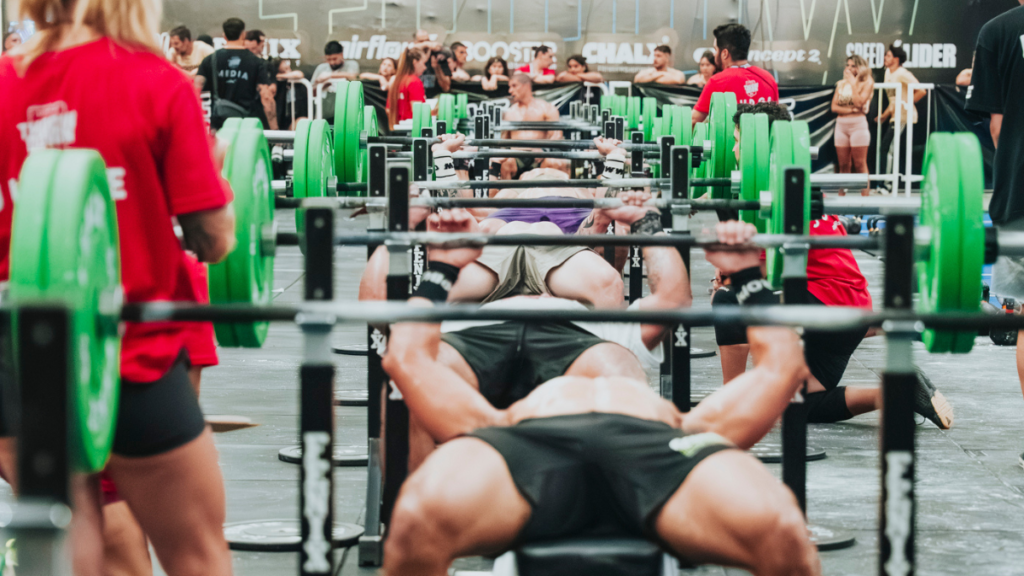
Instead of chasing arbitrary standards, it makes more sense to understand what constitutes a good bench press for your situation and how to improve it safely over time. Scientific research shows that muscular strength is strongly associated with better physical function, improved sports performance, greater bone health, and even lower risk of premature mortality. Building a stronger bench press is not only about lifting impressive numbers. It can also contribute to better long term health when combined with a balanced strength training program.
Why the Bench Press Matters
The barbell bench press is a compound exercise that primarily targets the pectoralis major, anterior deltoids, and triceps brachii. Secondary muscles including the latissimus dorsi, rotator cuff, and upper back help stabilize the movement.
Researchers consistently use the bench press to assess upper body strength because it is highly reliable when performed with standardized technique. Maximum bench press strength is closely related to upper body power production, athletic performance, and muscular development.
Strength training itself produces numerous health benefits. Regular resistance exercise increases muscle mass, improves insulin sensitivity, enhances bone mineral density, and reduces the risk of chronic disease. While the bench press is only one exercise, improving performance in it usually reflects meaningful gains in upper body strength.
What Is a Good Bench Press?
A good bench press depends on relative strength rather than absolute weight. Relative strength compares the amount you lift with your body weight.
Someone weighing 160 pounds who benches 225 pounds demonstrates greater relative strength than someone weighing 250 pounds who benches the same weight.
Many strength coaches use body weight multiples to classify performance. Although individual variation exists, these standards provide useful benchmarks for healthy adults with proper technique.
Men
- A beginner typically benches around 65 to 75 percent of body weight.
- An intermediate lifter often reaches a bench press equal to body weight.
- An advanced recreational lifter commonly benches around 1.5 times body weight.
- Highly trained athletes and competitive powerlifters may exceed twice their body weight.
Women
- A beginner often benches approximately 35 to 45 percent of body weight.
- Intermediate lifters frequently bench around 65 to 75 percent of body weight.
- Advanced recreational lifters commonly reach body weight for one repetition.
- Elite female powerlifters may bench well above 1.5 times body weight.
These ranges reflect years of consistent training rather than natural talent alone. Genetics certainly influence strength potential, but training quality, nutrition, sleep, and consistency remain the largest factors under your control.
How Training Experience Changes Expectations
Training age matters far more than calendar age. Someone who has lifted consistently for five years should not compare themselves with someone who started six months ago.
Beginners
During the first year of resistance training, strength typically increases rapidly. Much of this improvement comes from neurological adaptations rather than muscle growth. The nervous system becomes more efficient at recruiting muscle fibers and coordinating movement.
How Long Should You Be Able to Hold a Plank?
This explains why beginners often see dramatic improvements without major increases in muscle size.
Intermediate Lifters
After the first year, progress slows. Muscle hypertrophy becomes increasingly important, and programming must become more structured. Progressive overload, adequate protein intake, and recovery become critical for continued gains.
Advanced Lifters
Experienced lifters often spend months improving their bench press by only a few pounds. At this level, improvements require careful manipulation of training volume, intensity, exercise variation, and recovery strategies.
Does Body Weight Matter?
Body weight strongly influences absolute bench press performance because larger individuals usually possess more muscle mass.
However, simply gaining weight does not guarantee a stronger bench press. Research shows that increases in lean muscle mass contribute far more to strength gains than increases in body fat. Athletes competing in weight class sports often aim to maximize relative strength by increasing muscle while minimizing unnecessary fat gain.
For recreational lifters, gradual muscle gain combined with progressive training generally leads to better bench press performance than rapid weight gain.
Technique Can Make a Huge Difference
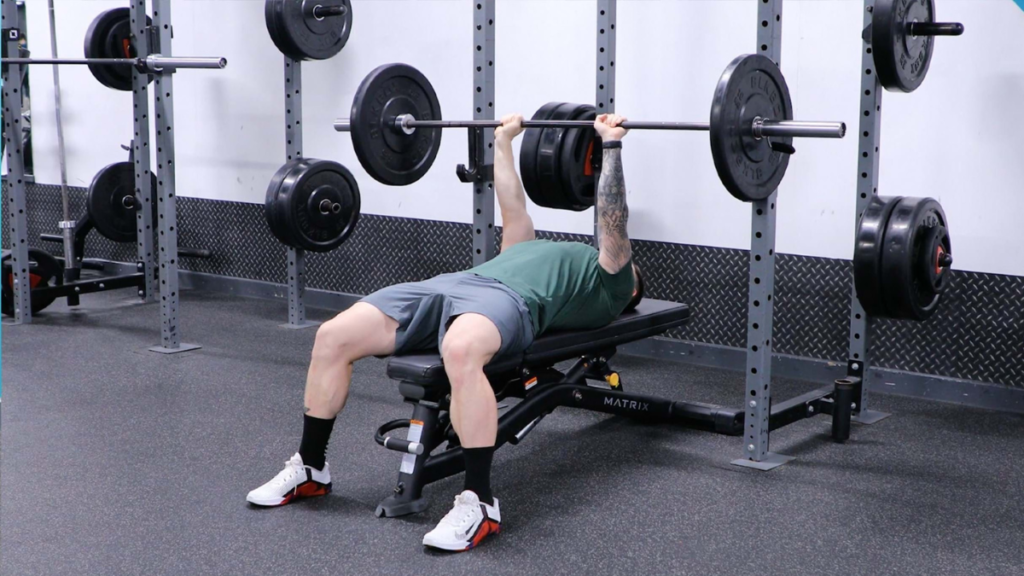
Two people with identical muscle mass may lift very different weights because of technical skill. An effective bench press begins with stable positioning. The feet remain firmly planted on the floor, allowing force transfer through the entire body. The shoulder blades stay retracted and depressed to create a stable base while reducing stress on the shoulder joint.
A moderate natural arch in the lower back helps position the shoulders safely without excessive spinal extension. The bar should travel in a slightly curved path rather than perfectly straight, typically touching the lower portion of the chest before returning over the shoulders.
Grip width also influences performance. Research suggests that a grip around 1.5 to 2 times shoulder width often allows the greatest force production while maintaining joint safety for most individuals. Poor technique not only limits strength but also increases injury risk.
What Muscles Limit Your Bench Press?
Most failed bench press attempts occur because one muscle group cannot keep up with the others.
- If the bar struggles near the chest, the pectoral muscles often need further development.
- If the lift stalls midway, both the chest and shoulders may require additional strength.
- If lockout becomes the problem, weak triceps frequently limit performance.
Upper back strength is another overlooked factor. Strong scapular stabilizers improve bar control and create a more stable pressing platform. This explains why balanced training programs include rowing movements alongside pressing exercises.
How Often Should You Bench Press?
Research indicates that training each muscle group at least twice per week generally produces greater improvements in strength and muscle growth than once weekly training when total volume is matched.
Many successful strength programs include bench pressing two or three times each week using different intensities. One session may emphasize heavy strength work with low repetitions, while another focuses on moderate loads and higher training volume for muscle growth. Adequate recovery remains essential. Muscles adapt during recovery rather than during the workout itself.
How Much Muscle Is Enough?
Many people assume a larger chest automatically means a stronger bench press. Muscle size certainly contributes to strength because larger muscles generally possess greater force producing capacity. However, muscle size explains only part of the equation.
Neural adaptations, tendon stiffness, technique, coordination, and training specificity all influence maximal strength. Bodybuilders often possess impressive chest development while powerlifters with similar muscle mass outperform them on the bench because they train specifically for maximal strength.
Nutrition Supports Strength Development
Training alone cannot maximize strength without proper nutrition. Protein intake plays a central role in muscle repair and growth. Current evidence suggests that physically active adults seeking strength and muscle gains benefit from consuming approximately 1.4 to 2.2 grams of protein per kilogram of body weight daily.
Total calorie intake also matters. Individuals attempting to gain strength while eating in a prolonged calorie deficit usually experience slower progress. Carbohydrates provide energy for high intensity training sessions, while healthy dietary fats support hormone production and overall health. Hydration also influences performance. Even mild dehydration can impair muscular endurance and reduce training quality.
Sleep Is a Strength Multiplier
Many athletes underestimate sleep. Strength gains depend on recovery, and sleep plays a major role in muscle protein synthesis, hormonal regulation, learning movement patterns, and nervous system recovery.
Studies show that sleep restriction reduces physical performance, reaction time, motivation, and recovery capacity. Adults should generally aim for seven to nine hours of quality sleep each night to support strength development.
Common Bench Press Mistakes
One of the biggest mistakes is increasing weight before mastering technique. Poor movement patterns become harder to correct once heavier loads are introduced. Another common error is neglecting pulling exercises. Weak upper back muscles reduce shoulder stability and limit pressing performance.
Many lifters also train the bench press too frequently without adequate recovery or too infrequently to stimulate meaningful adaptation. Ignoring progressive overload is another problem. Strength improves only when the body receives a gradually increasing challenge through heavier weights, additional repetitions, or increased training volume.
Finally, many people compare themselves with elite athletes on social media instead of tracking their own progress. Individual improvement is a far more meaningful measure of success than arbitrary comparisons.
Is Bench Press Strength Linked to Better Health?
Strength itself appears to predict important health outcomes. Large reviews have found that greater muscular strength is associated with lower all cause mortality, reduced cardiovascular disease risk, and better functional independence throughout life.

The bench press alone does not determine health, but developing upper body strength as part of a comprehensive resistance training program contributes to healthier aging and improved quality of life. For older adults, maintaining muscle strength becomes increasingly important because it helps preserve mobility, balance, and the ability to perform daily activities independently.
So How Much Should You Bench Press?
The best answer is that you should strive to become stronger than you were last year. If you are new to lifting, reaching a bench press equal to your body weight represents an excellent long term milestone for many men and a highly impressive achievement for many women. More experienced lifters can aim for progressively higher standards depending on their training goals.
Rather than chasing someone else’s numbers, focus on consistent training, excellent technique, balanced nutrition, sufficient sleep, and gradual progression. Scientific evidence consistently shows that these habits produce better long term results than shortcuts or unrealistic expectations.
A stronger bench press is not simply about bragging rights. It reflects improved muscular strength, better physical capacity, and a body that is more capable of handling the demands of everyday life.
Key Takeaways
| Topic | Main Point |
|---|---|
| Bench press standards | Strength should be judged relative to body weight, experience, and individual goals. |
| Beginners | Rapid strength gains occur primarily through neurological adaptations during the first year. |
| Technique | Proper setup, bar path, and shoulder stability significantly improve performance and safety. |
| Training frequency | Training the bench press or chest muscles at least twice weekly generally supports better strength gains. |
| Nutrition | Consuming sufficient protein and calories supports muscle growth and recovery. |
| Recovery | Seven to nine hours of sleep each night helps maximize strength development. |
| Health | Greater muscular strength is associated with improved long term health and lower mortality risk. |
| Long term goal | Consistent progress over time is more meaningful than comparing yourself with others. |
References
- Ahtiainen, J.P., Pakarinen, A., Alen, M., Kraemer, W.J. and Häkkinen, K. (2003) ‘Muscle hypertrophy, hormonal adaptations and strength development during strength training in strength trained and untrained men’, European Journal of Applied Physiology, 89(6), pp. 555 to 563.
- American College of Sports Medicine (2009) ‘Progression models in resistance training for healthy adults’, Medicine & Science in Sports & Exercise, 41(3), pp. 687 to 708.
- Grgic, J., Schoenfeld, B.J., Davies, T.B., Lazinica, B., Krieger, J.W. and Pedisic, Z. (2018) ‘Effect of resistance training frequency on gains in muscular strength’, Sports Medicine, 48(5), pp. 1207 to 1220.
- Kraemer, W.J. and Ratamess, N.A. (2004) ‘Fundamentals of resistance training: Progression and exercise prescription’, Medicine & Science in Sports & Exercise, 36(4), pp. 674 to 688.
- Leidy, H.J., Clifton, P.M., Astrup, A., Wycherley, T.P., Westerterp Plantenga, M.S., Luscombe Marsh, N.D., Woods, S.C., Mattes, R.D. and St Jeor, S. (2015) ‘The role of protein in weight loss and maintenance’, American Journal of Clinical Nutrition, 101(6 Suppl), pp. 1320S to 1329S.
- Lopez, P., Celis Morales, C.A., Ruilope, L.M., Zempo, H., Yates, T., Mota, J., De Rezende, L.F.M., Lee, D.C., Martinez Vizcaino, V., Sui, X. and Ramirez Velez, R. (2022) ‘Association between muscular strength and mortality in adults’, British Journal of Sports Medicine, 56(10), pp. 550 to 558.
- Morton, R.W., Murphy, K.T., McKellar, S.R., Schoenfeld, B.J., Henselmans, M., Helms, E., Aragon, A.A., Devries, M.C., Banfield, L., Krieger, J.W. and Phillips, S.M. (2018) ‘A systematic review, meta analysis and meta regression of protein supplementation on resistance training induced gains in muscle mass and strength in healthy adults’, British Journal of Sports Medicine, 52(6), pp. 376 to 384.