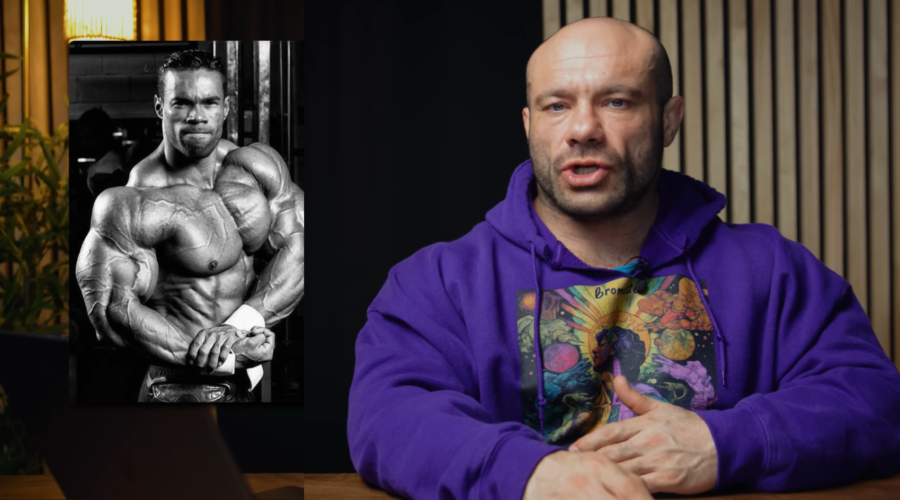


Kevin Levrone remains one of bodybuilding’s most iconic physiques. A four-time Mr. Olympia runner-up, “The Maryland Muscle Machine” built a reputation not only for his massive shoulders and chest but also for an unconventional approach that saw him step away from bodybuilding for months before rapidly rebuilding his competition physique.
In a recent Renaissance Periodization YouTube video, exercise scientist Dr. Mike Israetel analyzed Levrone’s famous training philosophy, explaining which lessons modern lifters should adopt and which are unique to one of bodybuilding’s greatest genetic outliers.


Muscle Memory Is Real, But Don’t Rush the Comeback
One of the biggest topics discussed was Levrone’s unusual offseason routine. Rather than training year-round, Levrone often stopped lifting after the Mr. Olympia, lost 40 to 50 pounds, and returned roughly six months before his next contest to rebuild his physique.
Dr. Israetel said this demonstrates just how powerful muscle memory can be.
“Once you achieve a certain muscularity and a certain leanness, getting back to that muscularity and leanness is like an order of magnitude… easier than getting it for the first time.”
However, he also warned against trying to regain strength too quickly after a long layoff. “Your muscles will grow stronger rapidly… your tendons adapt much slower. Resist the temptation to go heavy early.”
Genetics Matter More Than Most People Admit
Levrone’s ability to bench 405 pounds naturally at around 190 pounds before becoming a professional bodybuilder impressed Israetel, but he cautioned viewers against treating it as a realistic benchmark.
“The spectrum of human genetics is a lot wider than most people think.”
According to Israetel, Levrone possessed extraordinary muscle-building potential, particularly in his shoulders, chest, and triceps. While his achievements are inspiring, they are not necessarily attainable for the average lifter. Instead, Israetel encouraged athletes to focus on improving relative to their own starting point rather than comparing themselves to genetic exceptions.
Big Weights Aren’t Always Better for Building Muscle
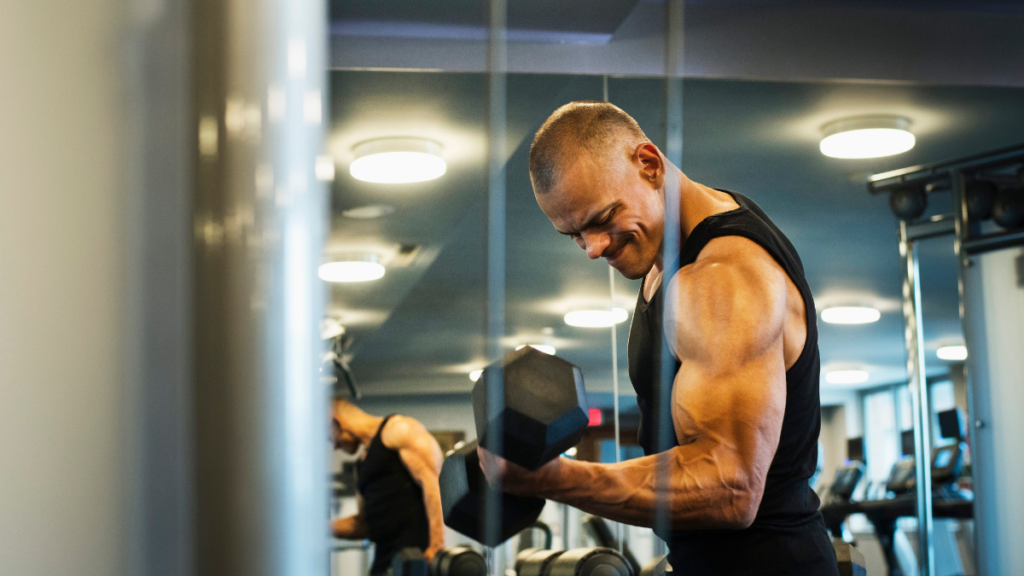
Watching footage of Levrone curling 100-pound dumbbells and pressing more than 450 pounds with impressive technique, Israetel acknowledged the remarkable displays of strength while explaining why most bodybuilders shouldn’t copy them.
“The 100-pound dumbbell curls are the most insane stuff… but is there some kind of magic? No.”
Likewise, he noted that Levrone’s enormous bench press numbers were more evidence of his already exceptional muscularity than the reason he developed such a legendary upper body. For most people, Israetel argued that moderate loads performed with controlled technique provide similar muscle-building benefits while reducing injury risk.
There Is No Perfect Rep Range
Levrone often preferred heavy sets of six to eight repetitions because of his fast metabolism and fast-twitch muscle fibers. Dr. Israetel agreed that some athletes naturally respond better to certain rep ranges, but emphasized that no single prescription works for everyone.
“You have to try every single rep range… and see where you get the best responses.”
Rather than blindly copying bodybuilding legends, he recommended paying attention to factors like muscle pumps, soreness, recovery, and long-term progress to determine what works best for each muscle group.
Great Athletes Still Follow the Same Scientific Principles
Although Levrone trained differently from most elite bodybuilders, Israetel concluded that his success came from an extraordinary combination of genetics, hard work, consistency during contest preparation, and exceptional execution in the gym.
His methods may not be directly transferable, but the underlying lessons remain valuable. Muscle memory is remarkably powerful, genetics shape individual potential, and intelligent programming will almost always outperform simply trying to imitate the routines of bodybuilding legends.
About the Author
Jeremiah Oliva

Jeremiah Oliva is a writer passionate about fitness, sports, and active living. He has experience in songwriting and managing content and social media for online radio and magazine platforms.
He covers HYROX, CrossFit®, and competitive fitness, with a focus on performance, mindset, and athlete development.
Outside of writing, Jeremiah trains in boxing, cycles, explores the outdoors with his kids, and plays the guitar.