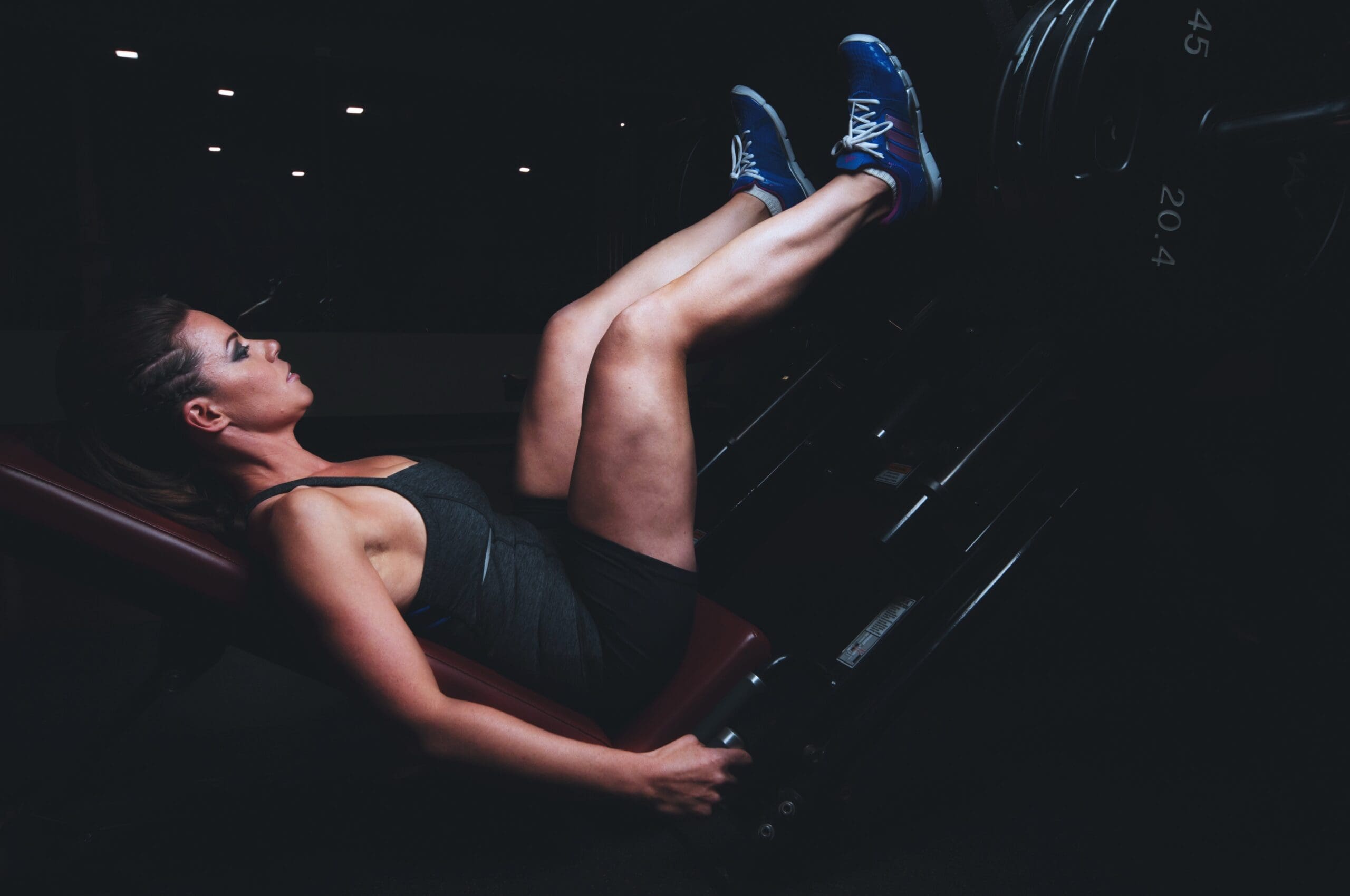


The leg press has been a staple in commercial gyms for decades. It allows people to load up heavy weight, train the lower body with minimal balance demands, and often feels safer than free weight exercises. It certainly has value, especially for muscle growth and for people who cannot tolerate certain standing exercises.
However, the leg press is not the only way to build bigger, stronger legs. In fact, several free weight movements provide similar muscle building benefits while also improving balance, coordination, athletic performance, and functional strength. Research consistently shows that exercises requiring greater stabilization activate more muscles throughout the body while developing movement patterns that transfer better to sports and everyday life.


If you are looking to replace the leg press completely or simply want more effective alternatives, these three exercises deserve a place in your training program.
Why Replace the Leg Press?
The leg press primarily targets the quadriceps while also involving the glutes and hamstrings. Because the machine supports your torso and guides the movement, there is little demand on the core or stabilizing muscles.
This makes it useful in some situations, but it also limits the amount of coordination and balance required. Free weight exercises challenge the nervous system to stabilize the body while producing force, creating adaptations that extend beyond muscle size alone.
3 Best Dead Stop Exercises for Muscular Legs
Studies comparing machine based and free weight training have found that both methods increase strength and muscle mass. However, free weight exercises generally improve balance, movement efficiency, and performance in athletic tasks to a greater degree. They also recruit more stabilizing musculature throughout the trunk and hips. Replacing the leg press with compound movements can therefore help you build muscle while also becoming more capable outside the gym.
What Makes a Good Leg Press Alternative?
The best replacement should accomplish several goals at once. It should heavily train the quadriceps, glutes, and hamstrings while allowing progressive overload over time. It should also challenge coordination and stability without becoming so technical that progression becomes difficult.
The following three movements satisfy those requirements while offering unique benefits that the leg press cannot provide.
1. Barbell Back Squat
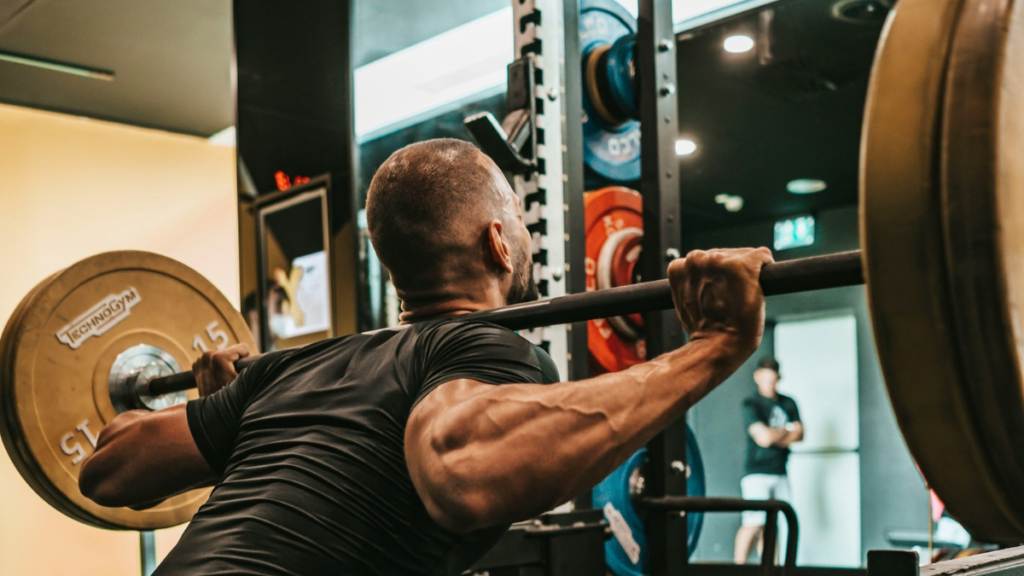
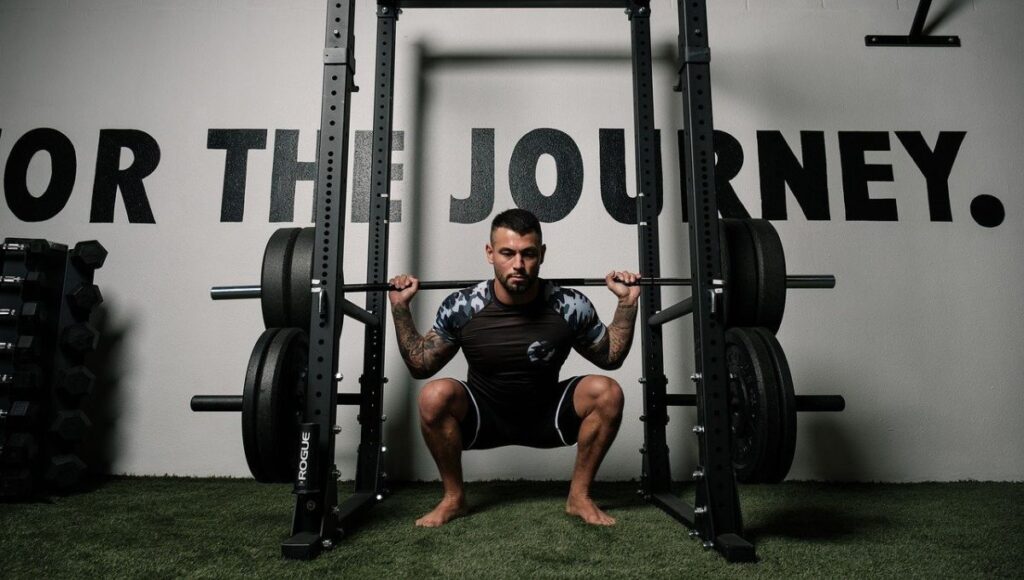
The back squat remains one of the most effective lower body exercises ever studied. It trains nearly every muscle from the waist down while demanding stability from the trunk, hips, and upper back. Unlike the leg press, the squat requires the body to stabilize under load throughout the entire movement. This increases activation of the spinal erectors, abdominal muscles, hip stabilizers, and ankle musculature while still heavily loading the quadriceps and glutes.
Research using electromyography has shown that squats produce high levels of activation in the quadriceps and gluteus maximus while also engaging the hamstrings as stabilizers. Although the hamstrings are not activated to the same extent as during hip hinge exercises, the overall muscle recruitment is substantial.
Strength improvements from squats also transfer well to sprinting, jumping, and change of direction performance. These movement qualities are less likely to improve with machine based exercises because athletic tasks require force production while balancing the body rather than pushing against a fixed platform.
Proper squat technique begins with standing with feet approximately shoulder width apart. The descent should involve simultaneous bending at the hips and knees while maintaining a neutral spine. Depth should be determined by mobility and comfort, although reaching at least parallel generally increases muscle recruitment.
Progressive overload remains the key to continued improvement. Increasing weight, repetitions, or total training volume over time drives strength and hypertrophy adaptations.
Why It Can Replace the Leg Press
The back squat loads the same primary muscles as the leg press while adding substantial demands on core stability, posture, coordination, and balance. For many healthy lifters, it provides a more complete lower body training stimulus.
2. Bulgarian Split Squat
The Bulgarian split squat has earned a reputation as one of the most challenging lower body exercises available. It places nearly the entire training load onto one leg while requiring continuous stabilization throughout the movement.
This unilateral emphasis helps identify and correct strength imbalances between sides. Such imbalances are common among recreational lifters and athletes and may negatively affect movement quality and performance. The exercise strongly recruits the quadriceps and gluteus maximus while also challenging the gluteus medius, which plays a major role in hip stability. Improved hip stability has been associated with better movement mechanics during running, jumping, and landing.
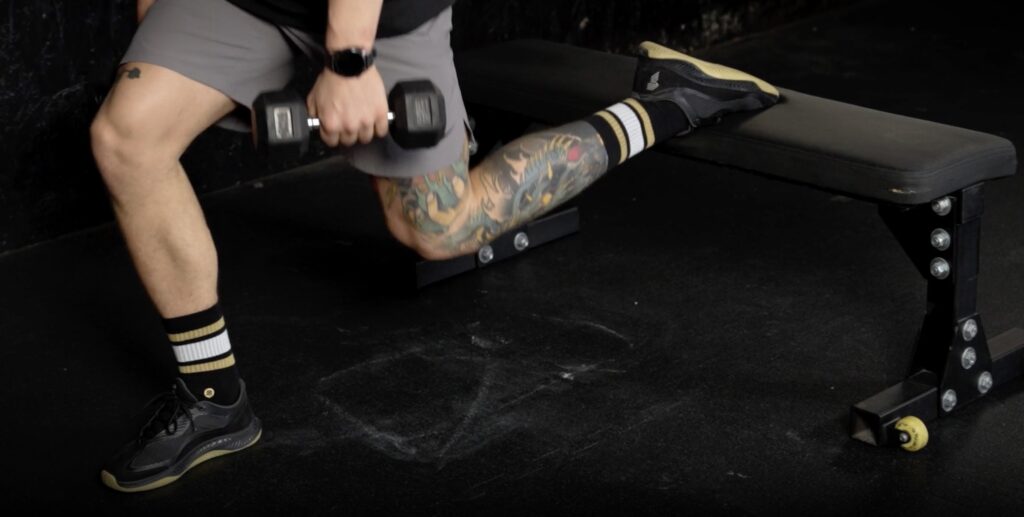
Another advantage is reduced spinal loading compared with heavy bilateral squats. Because less total weight is needed to create a significant muscular challenge, the Bulgarian split squat can provide an intense training stimulus without exposing the spine to extremely heavy compressive loads.
To perform the movement, place the rear foot on a bench or elevated surface while standing several feet in front of it. Lower the body by bending the front knee and hip while keeping the torso relatively upright. Push through the entire front foot to return to the starting position.
Many people find dumbbells easier than a barbell for this exercise because they simplify balance and reduce upper body fatigue.
Why It Can Replace the Leg Press
The Bulgarian split squat creates high levels of muscle tension in the quadriceps and glutes while improving unilateral strength, balance, and coordination. For many lifters, it provides an equally demanding stimulus using much lighter loads than the leg press.
3. Front Foot Elevated Reverse Lunge
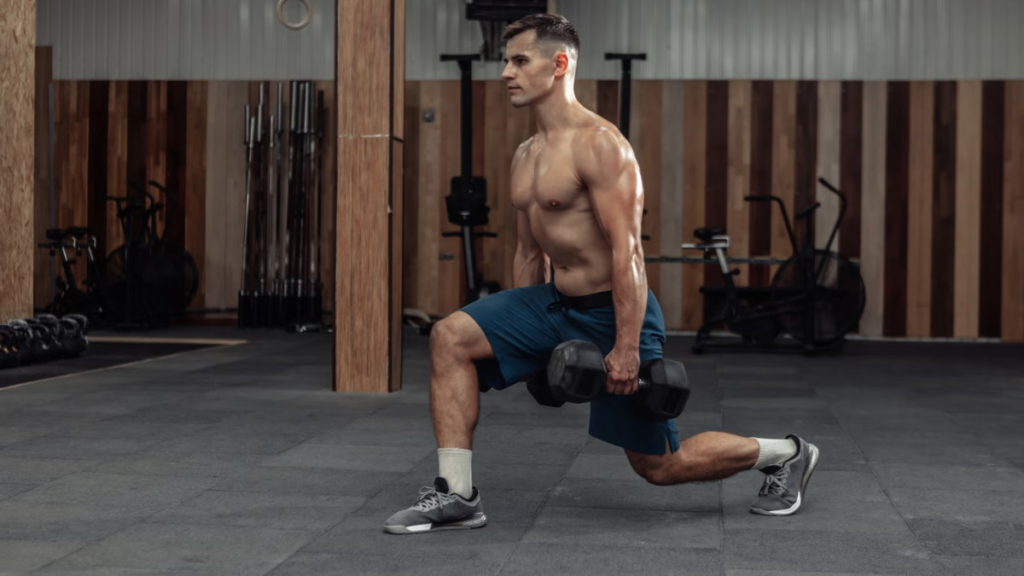
The reverse lunge is already an outstanding lower body exercise, but elevating the front foot slightly increases the range of motion and creates greater knee and hip flexion during the descent. This can increase muscular demand on both the quadriceps and glutes while improving mobility. Unlike forward lunges, stepping backward generally places less stress on the knee joint while making balance easier to control. This makes reverse lunges an excellent option for many recreational lifters.
The elevated front foot allows the working leg to travel through a greater range of motion, increasing mechanical tension across the lower body musculature. Mechanical tension is considered one of the primary drivers of muscle hypertrophy.
Lunges also improve single leg stability, coordination, and force production. These qualities contribute directly to walking, climbing stairs, recreational sports, and many athletic activities. To perform the exercise, stand on a low platform with one foot while holding dumbbells at your sides. Step backward under control until the rear knee approaches the floor. Push through the front foot to return to standing without allowing the knee to collapse inward.
The exercise can be progressed by increasing load, adding repetitions, slowing the lowering phase, or pausing briefly at the bottom position.
Why It Can Replace the Leg Press
The front foot elevated reverse lunge trains the quadriceps, glutes, and hamstrings through a large range of motion while simultaneously improving balance and single leg strength. It closely matches the muscular demands of the leg press while offering greater functional benefits.
Which Muscles Do These Exercises Target?
Although all three exercises emphasize the lower body, each distributes stress slightly differently.
- The back squat provides balanced development across the quadriceps, glutes, adductors, spinal erectors, and core.
- The Bulgarian split squat places particularly high demands on the quadriceps and glutes while heavily recruiting the hip stabilizers responsible for pelvic control.
- The front foot elevated reverse lunge strongly develops the quadriceps and glutes while encouraging improved ankle mobility and single leg coordination.
Together, these exercises create a comprehensive lower body program capable of replacing the leg press entirely for most healthy trainees.
Can They Build as Much Muscle?
Yes, provided training volume, effort, and progressive overload are similar. Research consistently demonstrates that muscle growth depends primarily on sufficient mechanical tension, adequate training volume, and proximity to muscular failure rather than whether an exercise is performed on a machine or with free weights.
Several studies comparing machine based and free weight resistance training have found similar improvements in muscle size when total workload is matched. The difference lies in the additional benefits. Free weight exercises develop stabilizing muscles, improve intermuscular coordination, and enhance movement skills that carry over into daily activities and sports.
That means replacing the leg press with these exercises is unlikely to reduce muscle growth while potentially increasing overall athleticism.
Who Should Keep the Leg Press?
Despite its limitations, the leg press still has legitimate uses. Individuals recovering from certain injuries may temporarily benefit from the added stability provided by the machine. Bodybuilders seeking additional quadriceps volume after compound lifts can also use it effectively because fatigue from balance is removed.
Older adults with balance limitations or beginners learning movement patterns may also find the leg press useful before progressing toward more complex free weight exercises. The goal is not to eliminate the machine completely but to recognize that it is not essential for building strong, muscular legs.
Final Thoughts
The leg press remains an effective exercise, but it is far from irreplaceable. Free weight movements often provide equal muscle building potential while delivering additional improvements in balance, coordination, athletic performance, and functional strength.
The back squat stands out as the most comprehensive lower body exercise available. The Bulgarian split squat builds impressive unilateral strength while correcting muscular imbalances. The front foot elevated reverse lunge develops powerful legs through a greater range of motion while enhancing stability and movement quality.
For anyone seeking stronger, more athletic legs, these three exercises offer everything needed to replace the leg press while building strength that extends well beyond the gym.
Key Takeaways
| Exercise | Primary Benefits | Main Muscles Worked | Best For |
|---|---|---|---|
| Barbell Back Squat | Maximum total body strength, muscle growth, core stability | Quadriceps, glutes, adductors, spinal erectors, core | Overall lower body development |
| Bulgarian Split Squat | Corrects strength imbalances, improves balance, reduces spinal loading | Quadriceps, glutes, hip stabilizers | Unilateral strength and muscle growth |
| Front Foot Elevated Reverse Lunge | Greater range of motion, improved stability, functional strength | Quadriceps, glutes, hamstrings | Athletic performance and everyday movement |
| Overall Conclusion | Comparable muscle growth to the leg press with added functional benefits | Entire lower body | Most healthy lifters seeking complete lower body development |
References
- Andersen, L.L., Magnusson, S.P., Nielsen, M., Haleem, J., Poulsen, K. and Aagaard, P., 2006. Neuromuscular activation in conventional therapeutic exercises and heavy resistance exercises. Physical Therapy, 86(5), pp.683 to 697.
- Behm, D.G. and Colado, J.C., 2012. The effectiveness of resistance training using unstable surfaces and devices for rehabilitation. International Journal of Sports Physical Therapy, 7(2), pp.226 to 241.
- Escamilla, R.F., 2001. Knee biomechanics of the dynamic squat exercise. Medicine & Science in Sports & Exercise, 33(1), pp.127 to 141.
- Kubo, K., Ikebukuro, T., Yata, H., Tsunoda, N. and Kanehisa, H., 2019. Effects of squat and leg press training on muscle mass and strength. Journal of Strength and Conditioning Research, 33(4), pp.1074 to 1083.
- McCurdy, K., Langford, G., Doscher, M., Wiley, L. and Mallard, K., 2005. The effects of short term unilateral and bilateral lower body resistance training on measures of strength and power. Journal of Strength and Conditioning Research, 19(1), pp.9 to 15.
- Schoenfeld, B.J., 2010. The mechanisms of muscle hypertrophy and their application to resistance training. Journal of Strength and Conditioning Research, 24(10), pp.2857 to 2872.
- Schick, E.E., Coburn, J.W., Brown, L.E., Judelson, D.A., Khamoui, A.V., Tran, T.T. and Uribe, B.P., 2010. A comparison of muscle activation between a Smith machine and free weight bench press. Journal of Strength and Conditioning Research, 24(3), pp.779 to 784.
- Wirth, K., Hartmann, H., Mickel, C., Szilvas, E., Keiner, M. and Sander, A., 2016. Core stability in athletes and its relationship to athletic performance. Sports Medicine, 47(3), pp.401 to 414.