Building bigger and stronger legs is not only about lifting heavy weights or doing more repetitions. How you perform each repetition also matters. One training method that has gained attention from both strength coaches and researchers is the dead stop repetition. Instead of relying on momentum or the stretch shortening cycle, a dead stop forces you to generate force from a complete pause.
This approach makes each repetition more demanding and can expose weaknesses that traditional repetitions often hide. It also improves force production, increases muscular recruitment, and develops strength that transfers well to athletic performance and everyday movement.


If your goal is to build muscular legs while improving strength and movement quality, these three dead stop exercises deserve a place in your training.
What Are Dead Stop Exercises?
A dead stop exercise includes a deliberate pause where the weight comes to a complete stop before the next repetition begins. Instead of immediately reversing the movement, you eliminate momentum and start every repetition from zero velocity.
This changes the demands placed on your muscles. During continuous repetitions, elastic energy stored in muscles and tendons helps initiate the next repetition. This is known as the stretch shortening cycle. When you remove that stored energy through a pause, your muscles must produce more force on their own.

Dead stop repetitions also improve technical consistency because every repetition starts from the same position. This makes it easier to identify weaknesses while encouraging better movement mechanics.
Research has consistently shown that minimizing reliance on the stretch shortening cycle increases concentric force demands and promotes greater neuromuscular activation.
Why Dead Stop Training Builds Bigger Legs
Muscle growth depends on several factors, including mechanical tension, motor unit recruitment, and training effort. Dead stop training influences all three.
When momentum disappears, high threshold motor units must contribute more force to move the weight. This increases muscular involvement, especially during the most difficult part of the lift. The pause also encourages greater control and reduces the temptation to bounce through difficult positions. This increases time spent producing meaningful muscular tension rather than relying on passive elastic structures.
Dead stop training is also valuable for developing starting strength. Athletes who can generate force rapidly from a static position often perform better in jumping, sprinting, and change of direction tasks because they have improved rate of force development.
Although dead stop repetitions often require lighter weights than touch and go repetitions, the increased muscular demand frequently produces comparable or greater training stimulus.
1. Dead Stop Box Squat
Why It Works
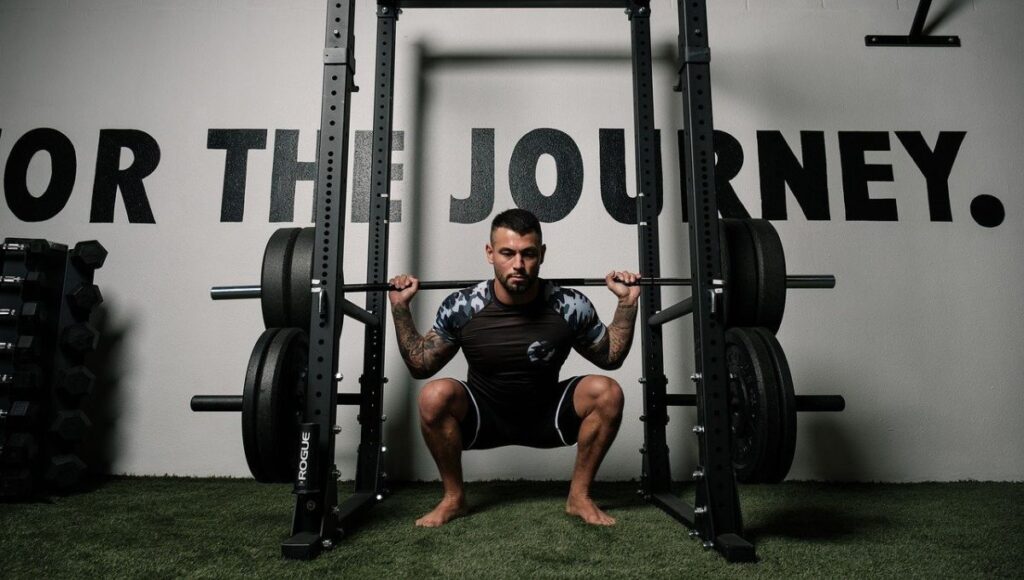
The dead stop box squat is one of the best lower body strength builders available. Unlike a traditional box squat where lifters lightly touch the box before standing, the dead stop version requires you to fully settle on the box while maintaining tension before driving upward.
The pause removes elastic rebound from the bottom position. Every repetition begins from complete stillness, forcing your quadriceps, glutes, adductors, and hamstrings to create force without assistance. Because the box provides a consistent depth, the exercise also improves squat technique while reinforcing proper hip mechanics.
Research has shown that box squats alter joint loading patterns while maintaining high muscle activation throughout the lower body. The pause increases emphasis on concentric force production and starting strength.
How to Perform It
- Set a sturdy box or bench so your thighs reach approximately parallel to the floor.
- Position the barbell across your upper back as you would for a back squat.
- Lower under control until you sit gently on the box.
- Remain tight through your torso without relaxing your core.
- Pause for one to three seconds.
- Drive forcefully through your feet and stand up explosively.
- Avoid rocking backward or using momentum to initiate the lift.
Best Training Strategy
Moderate repetitions work best because each repetition is demanding. Sets of four to eight repetitions provide an excellent balance between strength and hypertrophy.
Longer pauses increase difficulty without requiring additional weight.
2. Dead Stop Romanian Deadlift
Why It Works
Traditional Romanian deadlifts maintain continuous tension because the bar never touches the floor. While effective, they allow elastic energy to accumulate between repetitions.
A dead stop Romanian deadlift changes this completely. Every repetition finishes with the plates resting on the floor. The lifter pauses briefly before initiating the next lift. Starting from a dead stop places much greater emphasis on hip extension strength while forcing the posterior chain to create force without assistance.
The glutes, hamstrings, spinal erectors, and adductors all contribute significantly during this movement. Since the bar begins from a stationary position, proper bracing and positioning become even more important.
Studies examining posterior chain training consistently show Romanian deadlifts produce high hamstring activation, making them one of the best exercises for muscular development and injury prevention.
How to Perform It
- Stand with the barbell held in front of your thighs.
- Push your hips backward while maintaining a neutral spine.
- Lower the bar until the plates rest completely on the floor.
- Pause for one second.
- Reset your brace without losing position.
- Drive your hips forward and stand tall.
- Avoid bouncing the plates or rushing into the next repetition.
Best Training Strategy
Use controlled repetitions with moderate to heavy loads. Five to eight repetitions per set allow sufficient loading while maintaining excellent technique. Focus on creating maximum force from the floor instead of simply lifting the weight.
3. Anderson Front Squat
Why It Works
The Anderson squat was originally popularized by Olympic champion Paul Anderson. Instead of lowering into the squat first, the bar begins on safety pins inside a power rack.
The front squat variation increases demands on the quadriceps, upper back, and core while completely eliminating the eccentric phase before every repetition. Without the descent to preload the muscles, the body must generate enormous concentric force from the bottom position.
Starting from pins also exposes weaknesses in mobility, positioning, and bracing that often remain hidden during traditional squats. Research on concentric only resistance training suggests that beginning from static positions improves force production while allowing athletes to specifically target sticking points in compound lifts.
How to Perform It
- Set the safety pins slightly below your normal front squat depth.
- Position the barbell across the front of your shoulders.
- Brace your core and lift the bar from the pins.
- Stand fully upright.
- Lower the bar back under control until it settles completely on the pins.
- Pause briefly.
- Reset your position before performing the next repetition.
- Never allow the bar to bounce off the safety pins.
Best Training Strategy
Since every repetition starts from the hardest position, lighter loads than traditional front squats are usually appropriate. Three to six repetitions per set work exceptionally well for building strength while stimulating muscle growth.
Programming Dead Stop Exercises
Dead stop exercises are demanding because every repetition requires maximum effort from the start. Most lifters benefit from performing them early in the workout when fatigue is low. They work particularly well as the primary compound movement of a lower body session.
A balanced lower body workout could begin with dead stop box squats followed by conventional accessory exercises such as Bulgarian split squats, leg curls, calf raises, and walking lunges. Another session might start with Anderson front squats before progressing to Romanian deadlifts, step ups, and leg extensions.
Because dead stop repetitions reduce assistance from momentum, the loads used will usually be lower than during continuous repetitions. This should not be viewed as a disadvantage. Relative effort remains extremely high, and the quality of muscular work often improves. Progressive overload should still guide programming. Increase weight gradually while maintaining complete pauses and excellent technique.
Common Mistakes to Avoid
Many lifters accidentally remove the very feature that makes dead stop exercises effective. One common mistake is rushing the pause. The weight should come to a complete stop before beginning the next repetition. Even a brief bounce reintroduces stored elastic energy.
Another mistake is relaxing completely during the pause. Although the weight stops moving, the body should remain braced. Maintaining trunk stiffness protects the spine while improving force production. Choosing excessive weight is another frequent problem. Dead stop exercises expose weaknesses quickly, so loads often need to be reduced compared with conventional versions.
Finally, avoid sacrificing technique to move heavier weights. Proper joint positioning remains the priority throughout every repetition.
Final Thoughts
Dead stop exercises offer a simple but highly effective way to make your lower body training more productive. By eliminating momentum and forcing every repetition to begin from complete stillness, they increase muscular recruitment, improve force production, and build strength that transfers beyond the gym.
The dead stop box squat develops powerful quadriceps and glutes while improving squat mechanics. The dead stop Romanian deadlift strengthens the entire posterior chain and teaches explosive hip extension from a static position. The Anderson front squat builds exceptional leg strength, core stability, and starting power by forcing every repetition to begin from the hardest point of the lift.
Combined with progressive overload, proper nutrition, and sufficient recovery, these exercises can become powerful tools for building muscular legs that are not only bigger but also stronger and more athletic.
Key Takeaways
| Exercise | Primary Benefits | Best Rep Range |
|---|---|---|
| Dead Stop Box Squat | Builds quadriceps and glutes, improves squat mechanics, increases starting strength | 4 to 8 reps |
| Dead Stop Romanian Deadlift | Develops hamstrings, glutes, and posterior chain while improving hip power | 5 to 8 reps |
| Anderson Front Squat | Increases quadriceps strength, core stability, and concentric force production | 3 to 6 reps |
| Overall Benefit | Reduces momentum, increases muscular recruitment, and improves force generation | Use early in lower body workouts |
References
- Aagaard, P., Simonsen, E.B., Andersen, J.L., Magnusson, P. and Dyhre Poulsen, P. (2002) ‘Increased rate of force development and neural drive of human skeletal muscle following resistance training’, Journal of Applied Physiology, 93(4), pp. 1318 to 1326.
- Andersen, L.L., Andersen, J.L., Magnusson, S.P., Suetta, C., Madsen, J.L., Christensen, L.R. and Aagaard, P. (2005) ‘Changes in the human muscle force velocity relationship in response to resistance training and subsequent detraining’, Journal of Applied Physiology, 99(1), pp. 87 to 94.
- Cormie, P., McGuigan, M.R. and Newton, R.U. (2011) ‘Developing maximal neuromuscular power. Part 2. Training considerations for improving maximal power production’, Sports Medicine, 41(2), pp. 125 to 146.
- Escamilla, R.F., Fleisig, G.S., Lowry, T.M., Barrentine, S.W. and Andrews, J.R. (2001) ‘A three dimensional biomechanical analysis of the squat during varying stance widths’, Medicine and Science in Sports and Exercise, 33(6), pp. 984 to 998.
- Komi, P.V. (2000) ‘Stretch shortening cycle. A powerful model to study normal and fatigued muscle’, Journal of Biomechanics, 33(10), pp. 1197 to 1206.
- McBride, J.M., Triplett McBride, T., Davie, A. and Newton, R.U. (2002) ‘The effect of heavy versus light load jump squats on the development of strength, power, and speed’, Journal of Strength and Conditioning Research, 16(1), pp. 75 to 82.
- Schoenfeld, B.J. (2010) ‘The mechanisms of muscle hypertrophy and their application to resistance training’, Journal of Strength and Conditioning Research, 24(10), pp. 2857 to 2872.
- Schoenfeld, B.J., Ogborn, D. and Krieger, J.W. (2017) ‘Dose response relationship between weekly resistance training volume and increases in muscle mass’, Journal of Sports Sciences, 35(11), pp. 1073 to 1082.
- Vigotsky, A.D., Halperin, I., Lehman, G.J., Trajano, G.S. and Vieira, T.M. (2018) ‘Interpreting signal amplitudes in surface electromyography studies in sport and rehabilitation sciences’, Frontiers in Physiology, 8, Article 985.