

The deadlift is one of the most respected strength exercises for a reason. It builds muscle across the entire posterior chain, develops grip strength, improves athletic performance, and teaches the body how to lift heavy objects safely from the ground. Whether you are a beginner, a CrossFit athlete, a powerlifter, or someone focused on general fitness, one question comes up again and again. How much should you be able to deadlift?
The answer is not as simple as a single number. Your ideal deadlift depends on your body weight, training age, sex, goals, and technical proficiency. A beginner who has trained consistently for six months should not compare themselves to a competitive powerlifter with a decade of experience.


Instead of chasing arbitrary numbers, it is far more useful to understand what constitutes a good deadlift for your current level and why increasing your strength matters for both performance and long term health.
Why the Deadlift Matters
The deadlift is one of the few exercises that recruits almost every major muscle group in the body. During a heavy lift, the glutes, hamstrings, quadriceps, spinal erectors, lats, trapezius, forearms, and core all contribute to moving the weight safely.
Research consistently shows that multi joint resistance exercises produce significant improvements in maximal strength, muscle mass, bone health, and functional performance. Heavy compound lifts such as the deadlift are especially effective because they allow the use of large loads while challenging coordination between multiple muscle groups.
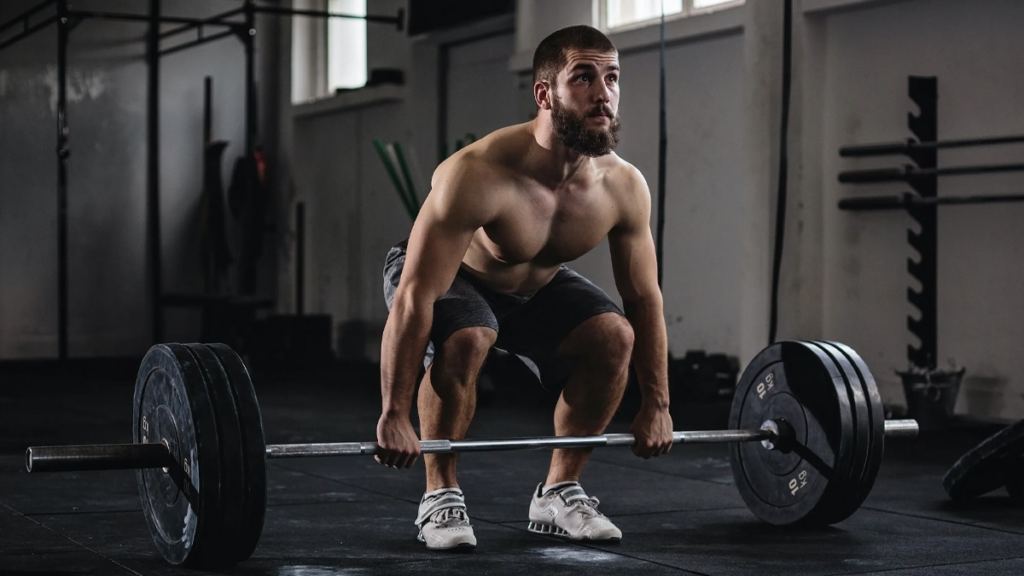
Deadlifting also carries over into daily life. Picking up boxes, moving furniture, carrying groceries, and lifting children all rely on movement patterns that resemble a properly executed deadlift. Studies have also shown that resistance training helps reduce age related declines in muscle mass and strength while improving physical function and independence.
What Determines How Much You Should Deadlift?
There is no universal standard because several important factors influence strength.
Body Weight
Larger individuals generally lift more absolute weight because they possess more muscle mass. However, relative strength often tells a different story.
For example, a 150 pound athlete deadlifting 300 pounds is demonstrating twice their body weight. A 240 pound athlete lifting 400 pounds is stronger in absolute terms but is lifting less relative to body weight. Both measures are useful depending on the goal.
Training Experience
Strength improves rapidly during the first year of consistent training because the nervous system becomes more efficient at recruiting muscle fibers. Beginners often double their deadlift within their first year through improved technique and progressive overload.
After the novice stage, progress slows as muscle growth and neurological adaptations become more gradual.
Sex
Men typically develop greater absolute strength than women because they possess more lean muscle mass and higher testosterone levels.
However, women often display similar or even greater strength relative to lean body mass. Well trained female athletes can achieve excellent deadlift numbers that greatly exceed population averages.
Age
Peak strength generally occurs between the late twenties and late thirties, although well trained individuals can maintain high levels of strength well into older adulthood.
Research shows that regular resistance training significantly slows age related declines in muscle mass and force production.
Deadlift Standards by Body Weight
The following ranges represent realistic goals for healthy adults using a conventional deadlift with good technique. They are general benchmarks rather than strict rules.
Men
| Training Level | Relative Deadlift |
|---|---|
| Beginner | 0.75 to 1.0 times body weight |
| Novice | 1.25 times body weight |
| Intermediate | 1.75 times body weight |
| Advanced | 2.25 times body weight |
| Elite | 2.75 to 3.5 times body weight |
A man weighing 180 pounds might reasonably aim for these milestones.
| Level | Deadlift |
|---|---|
| Beginner | 135 to 185 pounds |
| Novice | 225 pounds |
| Intermediate | 315 pounds |
| Advanced | 405 pounds |
| Elite | 500 pounds or more |
Women
| Training Level | Relative Deadlift |
|---|---|
| Beginner | 0.5 to 0.75 times body weight |
| Novice | 1.0 times body weight |
| Intermediate | 1.5 times body weight |
| Advanced | 2.0 times body weight |
| Elite | 2.5 times body weight or more |
For a woman weighing 140 pounds, these milestones might look like this.
| Level | Deadlift |
|---|---|
| Beginner | 70 to 105 pounds |
| Novice | 140 pounds |
| Intermediate | 210 pounds |
| Advanced | 280 pounds |
| Elite | 350 pounds or more |
These figures align closely with competitive lifting data and large strength databases collected from recreational and competitive lifters.
Is a Two Times Body Weight Deadlift Good?
Yes. Deadlifting twice your body weight is an outstanding achievement for most recreational athletes. Reaching this milestone usually requires several years of structured training, proper nutrition, consistent recovery, and excellent lifting technique.
Among the general population, very few people ever develop this level of strength. For athletes, a double body weight deadlift represents an excellent balance between strength and athleticism without necessarily requiring the body weight increases often seen in elite powerlifting.
Does Everyone Need to Deadlift Heavy?
Not necessarily. The amount you should deadlift depends on your goals.
If your objective is general health, maintaining muscle mass, improving bone density, and reducing injury risk, there is no requirement to pull maximal weights. Research shows that muscle hypertrophy and strength improve across a broad range of loading strategies, provided training is challenging and progressively overloaded.
Someone performing sets of five repetitions at 80 percent of one repetition maximum will become stronger. Someone performing sets of twelve repetitions at lighter loads can also gain significant muscle if the effort is sufficiently high. Heavy lifting simply provides the greatest improvements in maximal strength.
Benefits of Increasing Your Deadlift
More Muscle Mass
The deadlift stimulates some of the largest muscles in the human body. Heavy resistance training increases muscle protein synthesis, leading to long term muscle growth when combined with adequate dietary protein and recovery.

The glutes, hamstrings, spinal erectors, quadriceps, and upper back all receive substantial training during conventional deadlifts.
Stronger Bones
Resistance exercise creates mechanical loading that stimulates bone remodeling. Research demonstrates that heavy resistance training helps preserve or improve bone mineral density, particularly in older adults who are at increased risk of osteoporosis.
Improved Athletic Performance
Many sports require rapid force production from the hips. Sprint acceleration, jumping ability, tackling, throwing, and Olympic lifting all rely on powerful hip extension. Studies have shown strong relationships between maximal lower body strength and sprint performance, jump height, and overall athletic ability.
Better Grip Strength
Grip strength is one of the strongest predictors of healthy aging. Numerous studies have found that stronger grip strength is associated with lower risks of disability, frailty, and even all cause mortality. Heavy deadlifts naturally develop crushing grip strength because the hands must support significant external loads.
What Limits Your Deadlift?
Improving your deadlift is not always about building bigger muscles. Several common factors often become limiting.
Technique
- Poor positioning wastes energy and increases injury risk.
- Keeping the bar close to the body, maintaining a neutral spine, engaging the lats, and generating tension before lifting all improve efficiency.
- Small technical improvements often produce immediate increases in lifting performance.
Grip
Many lifters fail because their hands lose the bar before their legs and back reach their maximum potential. Specific grip training, farmer carries, and static barbell holds can improve grip strength over time.
Recovery
- Strength develops during recovery rather than during training itself.
- Sleep, nutrition, hydration, and stress management all influence performance.
- Research consistently demonstrates that insufficient sleep impairs strength, recovery, and athletic performance.
Common Mistakes When Chasing Bigger Deadlifts
- Many athletes plateau because they focus exclusively on lifting heavier every session.
- Strength improves through consistent progressive overload, but recovery capacity has limits.
- Adding weight too quickly often causes technical breakdown, increases fatigue, and raises injury risk.
- Ignoring accessory exercises can also become problematic. Weak hamstrings, glutes, upper back muscles, or abdominal strength frequently limit deadlift performance.
- Another mistake is neglecting mobility. Limited hip mobility, poor ankle movement, or insufficient thoracic extension can prevent efficient lifting mechanics.
- Finally, testing one repetition maximum too frequently interferes with productive training. Building strength through structured programming usually produces better long term results than repeatedly attempting personal records.
The Bottom Line
There is no perfect number that everyone should deadlift. For most healthy adults, pulling your own body weight demonstrates a solid foundation of strength. Reaching one and a half times body weight places you well above average. A double body weight deadlift represents an excellent achievement that reflects years of disciplined training. Beyond that point, additional strength becomes increasingly specific to competitive strength sports.
Ultimately, the best deadlift is one performed with excellent technique, appropriate progression, and consistency over time. Building strength safely will improve muscle mass, bone health, athletic performance, and functional capacity throughout life. Whether your goal is lifting your first 135 pounds or breaking the 500 pound barrier, steady progress remains the most important benchmark.
Key Takeaways
| Topic | Key Point |
|---|---|
| Good beginner goal | Deadlift approximately your body weight with solid technique. |
| Strong recreational benchmark | One and a half times body weight is well above average. |
| Excellent strength | A two times body weight deadlift is an outstanding achievement for most lifters. |
| Most important factor | Consistent training with progressive overload matters more than comparing yourself with others. |
| Health benefits | Deadlifting improves strength, muscle mass, bone health, grip strength, and functional capacity. |
| Long term success | Prioritize technique, recovery, nutrition, and patience over chasing rapid increases in weight. |
References
- American College of Sports Medicine. (2009) ‘Progression models in resistance training for healthy adults’, Medicine & Science in Sports & Exercise, 41(3), pp. 687 to 708.
- Borde, R., Hortobágyi, T. and Granacher, U. (2015) ‘Dose response relationships of resistance training in healthy old adults’, Sports Medicine, 45(12), pp. 1693 to 1720.
- Cormie, P., McGuigan, M.R. and Newton, R.U. (2011) ‘Developing maximal neuromuscular power’, Sports Medicine, 41(1), pp. 17 to 38.
- Delmonico, M.J., Harris, T.B., Visser, M., et al. (2009) ‘Longitudinal study of muscle strength, quality, and adipose tissue infiltration’, American Journal of Clinical Nutrition, 90(6), pp. 1579 to 1585.
- Fragala, M.S., Cadore, E.L., Dorgo, S., et al. (2019) ‘Resistance training for older adults. Position statement from the National Strength and Conditioning Association’, Journal of Strength and Conditioning Research, 33(8), pp. 2019 to 2052.
- Grgic, J., Schoenfeld, B.J., Orazem, J. and Sabol, F. (2018) ‘Effects of resistance training performed to repetition failure or non failure on muscular strength and hypertrophy’, Journal of Sport and Health Science, 10(3), pp. 275 to 283.
- Keogh, J.W.L., Winwood, P.W. and Pearson, S.N. (2021) ‘Retrospective analysis of injuries in powerlifting and strongman athletes’, Sports, 9(1), pp. 1 to 16.
- Leong, D.P., Teo, K.K., Rangarajan, S., et al. (2015) ‘Prognostic value of grip strength. Findings from the Prospective Urban Rural Epidemiology study’, The Lancet, 386(9990), pp. 266 to 273.
- Morton, R.W., Murphy, K.T., McKellar, S.R., et al. (2018) ‘A systematic review, meta analysis and meta regression of protein supplementation on resistance training induced gains in muscle mass and strength in healthy adults’, British Journal of Sports Medicine, 52(6), pp. 376 to 384.