

Burpees are one of the most demanding bodyweight exercises you can perform without equipment. One repetition asks you to squat, support your body through your hands and chest, move into a plank position, return to your feet, and stand up with control. When the movement is repeated for one minute, it becomes a useful test of whole body conditioning.
A one minute burpee test does not measure one quality in isolation. Your result reflects cardiovascular fitness, leg strength, upper body muscular endurance, trunk control, movement efficiency, body mass, coordination, and pacing. It can also show whether your training is preparing you to repeatedly move your body under fatigue.


There is no universal medical norm that says every person of a particular age must complete an exact number of burpees. Fitness varies enormously according to training history, body size, injury history, health status, and the standard of burpee used. Still, research on aging, muscular endurance, high intensity exercise, and functional fitness can help provide sensible performance ranges.
The most useful goal is not to chase a number at the expense of technique. It is to complete high quality repetitions, understand where your current fitness sits, and improve gradually.
How to Perform the One Minute Burpee Test
Before comparing your score, use the same movement standard every time. Otherwise, a faster score may simply reflect shorter repetitions.
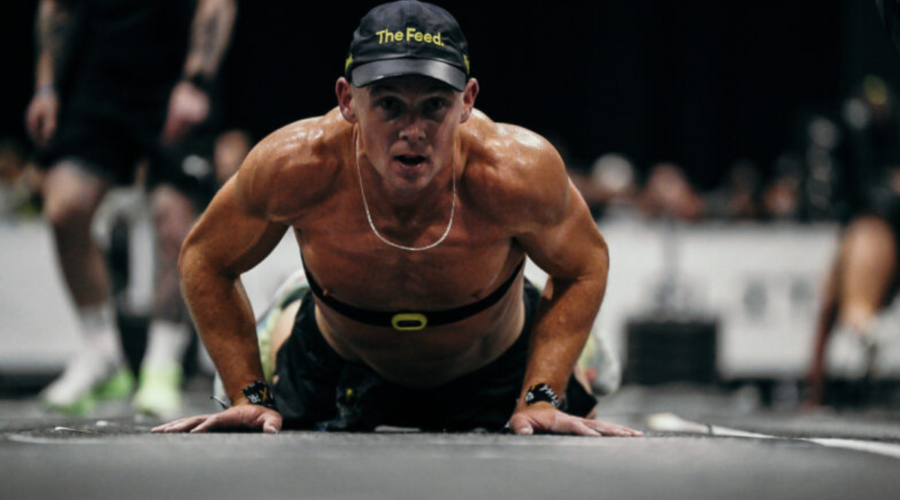
Start standing tall with your feet roughly hip width apart. Squat down and place both hands on the floor. Move your feet back into a straight arm plank position. Your chest should touch the floor, or come very close to it if you are using the non chest to floor version. Return your feet underneath your body, stand up fully, and finish with your hips extended.
A jump at the top is optional for this test, but you must choose one version and keep it consistent. For a more accessible test, stand tall without jumping. For a more athletic test, include a small vertical jump with both feet leaving the floor.
Set a timer for 60 seconds. Count only repetitions completed with your chosen standard. If form breaks down, pause, reset your position, and continue. A score built on rushed half repetitions does not tell you much about your actual fitness.
The test is intense. If you have chest pain, dizziness, uncontrolled high blood pressure, a recent injury, or a medical condition that affects exercise tolerance, seek advice from a qualified health professional before attempting maximal effort exercise. Preparticipation screening and appropriate exercise progression are especially important when vigorous activity is new to you.
Why Burpees Get Hard So Quickly
Burpees recruit a large amount of muscle mass at the same time. Your quadriceps and glutes help you squat and stand, your chest, shoulders, and triceps support the floor phase, while your trunk muscles help prevent your hips from collapsing in the plank position. The movement also repeatedly raises and lowers your body, increasing the energy cost of each repetition.
High intensity functional exercise can create substantial cardiovascular and metabolic stress because it combines whole body movements with little rest. Research on high intensity functional training shows that workout structure, exercise selection, and duration meaningfully affect heart rate, oxygen demand, and perceived effort. Burpees are demanding because the body must repeatedly transition from the floor to standing while multiple muscle groups work together.

This is why a strong runner may initially find burpees difficult, while a strong lifter may struggle to sustain a fast pace. The test rewards a broad base of fitness rather than excellence in one isolated quality.
Your technique also matters. A smooth, controlled movement uses less unnecessary energy than a frantic one. Athletes who can keep their hips stable, place their feet efficiently, and breathe steadily will usually maintain their pace better than people who sprint the opening 15 seconds and then stop.
Burpee Benchmarks by Age
The ranges below are practical coaching benchmarks for healthy adults using a consistent chest to floor burpee with full standing extension and no required jump. They are informed by research showing that aerobic capacity, muscular strength, power, and physical function tend to decline with age, particularly when physical activity levels fall. They should not be treated as clinical norms or a judgment of your health.
Someone who is new to exercise may score below the beginner range. That is completely normal. The right response is to train consistently and improve your movement quality, not to force fast repetitions.
Ages 18 to 29
This age group often has the greatest potential for rapid speed and recovery, although training status remains far more important than age alone. A healthy, active adult should be able to perform repeated bodyweight movements well when technique has been practiced.
A beginner score is around 10 to 16 burpees in one minute. A solid general fitness score is 17 to 24. A very good score is 25 to 32, while more than 32 high quality repetitions indicates excellent burpee specific conditioning.
Ages 30 to 39
Many adults in their thirties can maintain or improve their fitness substantially through regular training. However, work demands, reduced daily movement, sleep disruption, and inconsistent recovery often begin to affect performance more than biological aging itself.
A beginner score is around 8 to 14 burpees. A solid general fitness score is 15 to 22. A very good score is 23 to 29, while 30 or more controlled repetitions is an excellent result.
Ages 40 to 49
Aerobic capacity, muscle power, and recovery can gradually decline through middle age, but regular aerobic and resistance training can preserve a high level of function. The goal in this decade should be to remain powerful, mobile, and confident moving from the floor to standing.
A beginner score is around 6 to 12 burpees. A solid general fitness score is 13 to 19. A very good score is 20 to 26, while 27 or more strong repetitions is excellent.
Ages 50 to 59
The ability to get down to the floor and stand back up efficiently remains highly useful for everyday function. At this age, movement quality becomes especially important. A fast score has little value if the lower back rounds excessively, the shoulders hurt, or balance is compromised.
A beginner score is around 5 to 10 burpees. A solid general fitness score is 11 to 17. A very good score is 18 to 23, while 24 or more high quality repetitions is excellent.
Ages 60 and Over
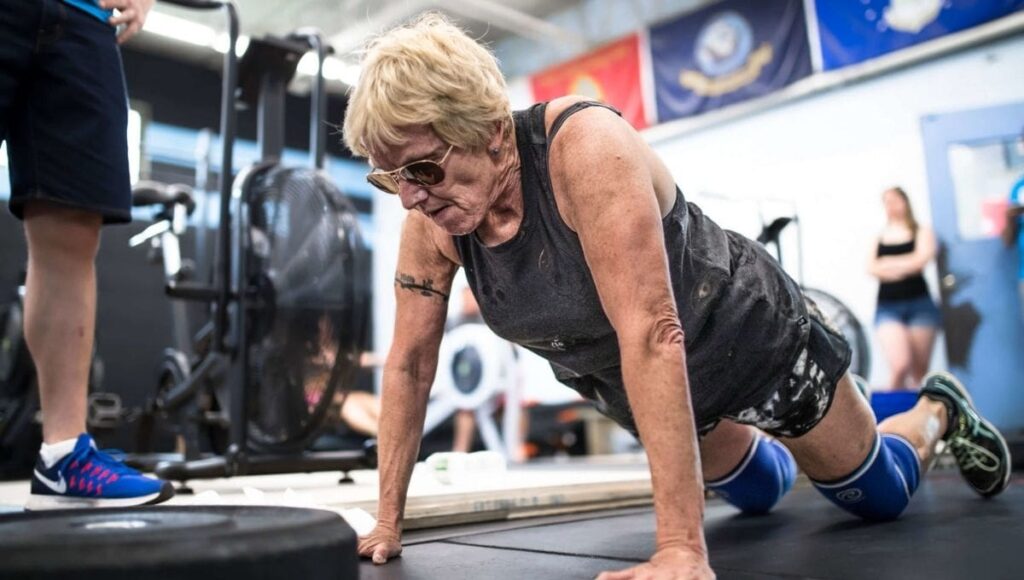
There is no reason to assume that adults over 60 cannot train hard, but exercise selection should reflect individual health, mobility, bone health, and confidence on the floor. A modified burpee using a bench, raised platform, or step back can provide a safer and still challenging alternative.
For a full floor burpee, 4 to 8 repetitions is a useful beginner range. A solid general fitness score is 9 to 14, and 15 to 20 represents very good conditioning and movement capacity. More than 20 full, controlled burpees is an excellent result for a trained older adult.
Table: One Minute Burpee Performance Guide
| Age group | Beginner | Solid general fitness | Very good | Excellent |
|---|---|---|---|---|
| 18 to 29 | 10 to 16 | 17 to 24 | 25 to 32 | 33 or more |
| 30 to 39 | 8 to 14 | 15 to 22 | 23 to 29 | 30 or more |
| 40 to 49 | 6 to 12 | 13 to 19 | 20 to 26 | 27 or more |
| 50 to 59 | 5 to 10 | 11 to 17 | 18 to 23 | 24 or more |
| 60 and over | 4 to 8 | 9 to 14 | 15 to 20 | 21 or more |
What Your Score Actually Tells You
Your burpee score is useful when you compare it with your own previous scores under the same conditions. If you completed 12 clean burpees last month and can now complete 16 with similar effort, your fitness has improved. That is more meaningful than comparing yourself with an athlete who has trained functional fitness for years.
A low score can reveal different limiting factors. If your breathing becomes overwhelming first, cardiovascular conditioning may need work. If your arms fail during the floor phase, upper body endurance and pressing strength may be the issue. If standing from the squat becomes slow, lower body strength and power may be limiting you. If your lower back feels uncomfortable, your plank control, hip mobility, or technique may need attention.
Burpees also expose pacing errors. Many people start far too quickly. They complete several explosive repetitions, then need long breaks because their breathing is out of control. A more sustainable strategy is to move quickly but smoothly from the first repetition, using brief breaths at the top rather than stopping completely.
How to Improve Your One Minute Burpee Score
The best approach is to improve the movement itself while also developing the physical qualities that support it. Practice burpees once or twice per week, leaving at least one day between demanding sessions. You do not need to perform a maximum test every workout.
Start with short sets that allow good technique. For example, perform six rounds of five burpees with 30 to 45 seconds of rest. As this becomes easier, reduce the rest period or increase the repetitions slightly. This builds familiarity without turning every session into an all out test.
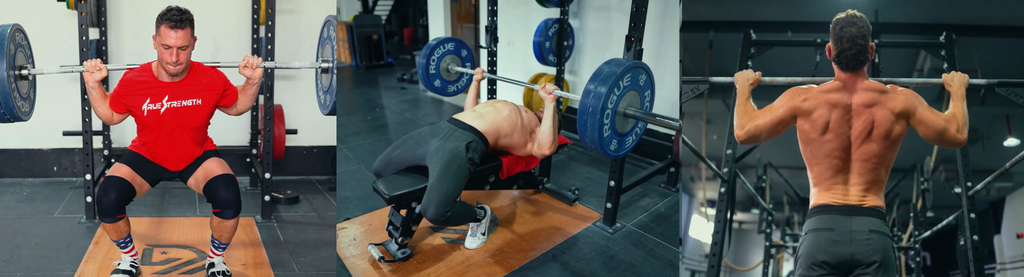
Strength training can also help. Squats, split squats, push ups, rows, and plank variations develop the legs, pressing muscles, upper back, and trunk control used during each repetition. Progressive resistance training improves muscular strength and physical function across adulthood, including in older adults.
Aerobic training is equally valuable. Brisk walking, cycling, rowing, swimming, and easy running can improve the aerobic base that helps you recover between hard efforts. Once you have that foundation, short intervals can improve your ability to tolerate intense work. The most effective program is usually one you can repeat consistently, recover from, and progress over time.
If full burpees are too difficult, modify the movement rather than avoiding it. Place your hands on a bench or sturdy box, step your feet back one at a time, and remove the floor phase if needed. As your strength and confidence improve, gradually lower the hand position and increase the range of motion.
The Bottom Line
A one minute burpee test is a challenging but practical way to assess whole body fitness. Your result is influenced by age, but it is shaped even more by your current training, body composition, movement skill, and consistency.
Use the age ranges as a guide, not a verdict. Focus on clean repetitions, a repeatable pace, and gradual progress. Whether your current score is five burpees or 30, building strength, aerobic fitness, and confidence in the movement can improve your result and your overall physical capacity.
Key Takeaways
| Key takeaway | What it means |
|---|---|
| Burpees test multiple fitness qualities | Your score reflects conditioning, muscular endurance, strength, coordination, and technique. |
| Age affects performance, but does not determine it | Regular training can preserve and improve fitness throughout adulthood. |
| Consistent standards matter | Use the same burpee variation, range of motion, and timing method whenever you retest. |
| Form comes before speed | Count only controlled repetitions with a stable plank, full standing extension, and comfortable movement. |
| Progress is the main target | Compare your current score with your own previous results and improve gradually. |
References
- American College of Sports Medicine (2021) ACSM’s Guidelines for Exercise Testing and Prescription. 11th edn. Philadelphia: Wolters Kluwer.
- Borde, R., Hortobágyi, T. and Granacher, U. (2015) ‘Dose response relationships of resistance training in healthy old adults: A systematic review and meta analysis’, Sports Medicine, 45(12), pp. 1693 to 1720.
- Garber, C.E., Blissmer, B., Deschenes, M.R., Franklin, B.A., Lamonte, M.J., Lee, I.M., Nieman, D.C. and Swain, D.P. (2011) ‘American College of Sports Medicine position stand. Quantity and quality of exercise for developing and maintaining cardiorespiratory, musculoskeletal, and neuromotor fitness in apparently healthy adults’, Medicine and Science in Sports and Exercise, 43(7), pp. 1334 to 1359.
- Grgic, J., Schoenfeld, B.J., Davies, T.B., Lazinica, B., Krieger, J.W. and Pedisic, Z. (2018) ‘Effect of resistance training frequency on gains in muscular strength: A systematic review and meta analysis’, Sports Medicine, 48(5), pp. 1207 to 1220.
- Milanović, Z., Sporiš, G. and Weston, M. (2015) ‘Effectiveness of high intensity interval training versus continuous moderate intensity exercise for health outcomes in adults: A meta analysis of controlled trials’, Sports Medicine, 45(10), pp. 1469 to 1481.
- Otero, E., Salgado, J.M., González, M., Barcala Furelos, R., Abelairas Gómez, C., Rodríguez Núñez, A. and Varela Casal, C. (2024) ‘Physiological responses to volume matched high intensity functional training protocols with varied time domains’, Frontiers in Physiology, 15, 1511961.
- Peterson, M.D., Rhea, M.R., Sen, A. and Gordon, P.M. (2010) ‘Resistance exercise for muscular strength in older adults: A meta analysis’, Ageing Research Reviews, 9(3), pp. 226 to 237.
- Steib, S., Schoene, D. and Pfeifer, K. (2010) ‘Dose response relationship of resistance training in older adults: A meta analysis’, Medicine and Science in Sports and Exercise, 42(5), pp. 902 to 914.