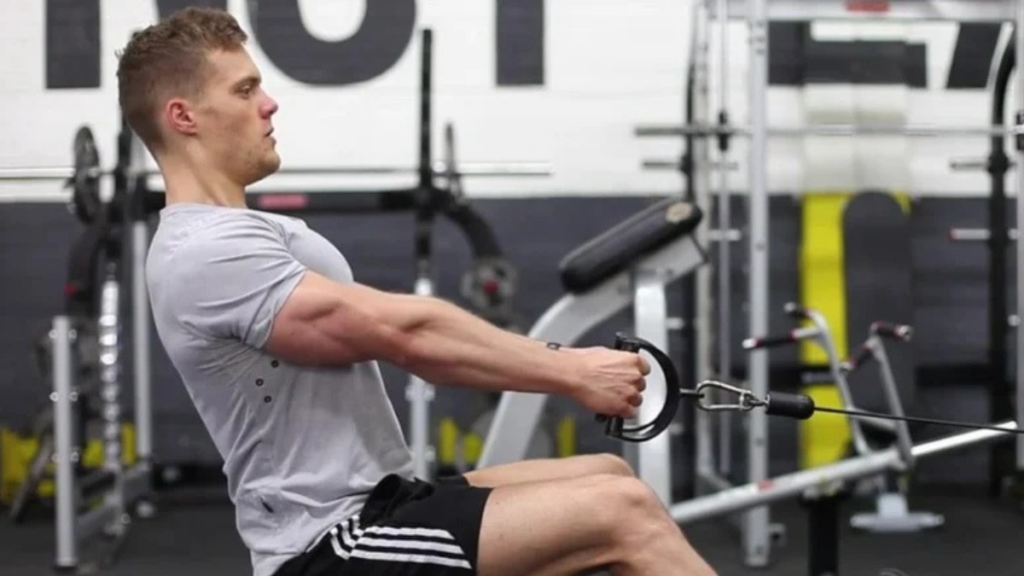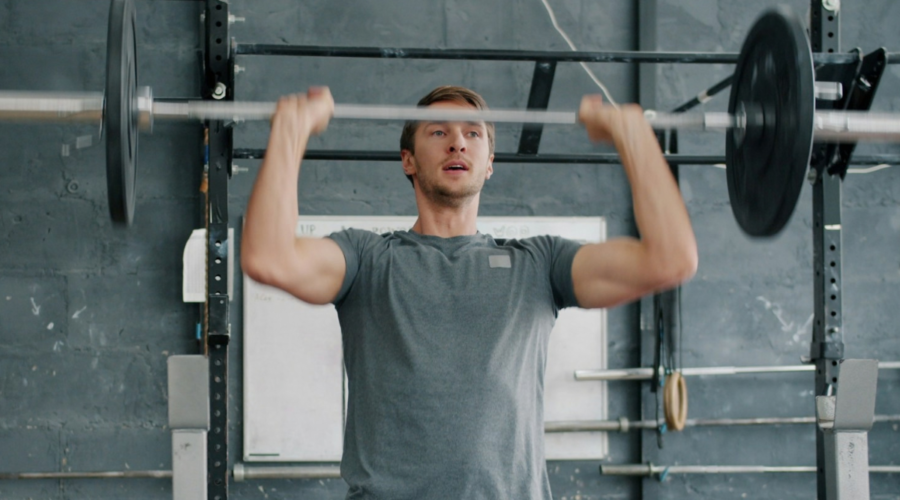


The military press is a classic shoulder exercise for a reason. You press a barbell from around shoulder height to overhead, using your shoulders and arms to move the load while your torso helps keep you steady. It can look intimidating when experienced lifters are moving heavy weights, but beginners can learn the exercise with a light bar or dumbbells and build up gradually.
A military press can help develop shoulder strength and muscle, but it is useful to be clear about what it can and cannot do. The exercise works the front of the shoulders particularly well, and it also involves the side deltoids and triceps. However, no single exercise guarantees wider shoulders. Your overall shoulder shape depends on your body structure, muscle development, and training choices. The military press works best as part of a balanced program that includes exercises such as lateral raises.


Here are three evidence based benefits that make the military press a useful exercise for beginners who want stronger, more developed shoulders.
1. It trains the shoulders with a challenging compound movement
The deltoid is the rounded muscle that covers the shoulder. It has front, side, and rear portions, and each portion contributes differently as the arm moves. In a military press, the front deltoid helps raise the arm forward and overhead. The side deltoid also contributes, while the triceps straighten the elbows to finish the press.
Research measuring muscle activity during shoulder exercises found that the shoulder press produced substantial activity in the front deltoid. The exercise also recruited the side deltoid, though lateral raises produced greater activity in that portion in the study. That makes the press a strong shoulder building choice, while also showing why it should not be your only shoulder exercise.
A compound movement uses more than one joint and muscle group to complete a repetition. In the military press, the shoulders move the upper arms while the elbows extend to push the weight upward. Because several muscles contribute, you can train the shoulders and triceps together in one exercise. This is useful for beginners who want a straightforward movement that covers more than one part of the upper body.
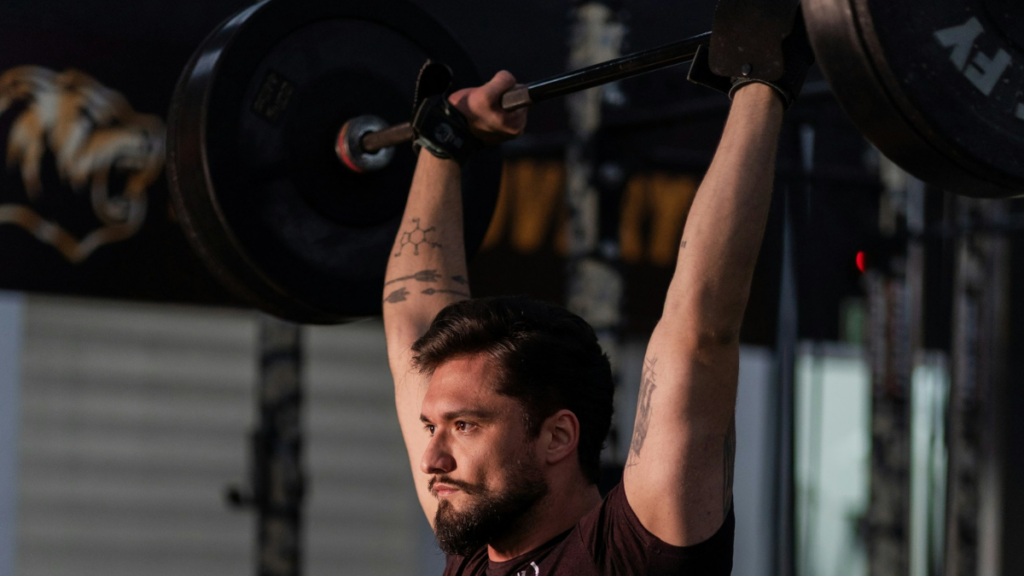
The press also gives you a clear way to track progress. You can start with an empty bar, dumbbells, or a light training bar, then gradually add weight when you can complete your planned repetitions with steady technique. Adding weight is only one way to progress. You might first improve your control, add a repetition, or use a fuller range of motion before increasing the load.
For beginners, the goal is not to test a maximum lift. Start with a weight that lets you press smoothly without leaning back or struggling through the last repetition. A common starting point is two or three sets of eight to twelve repetitions, performed once or twice per week as part of a broader resistance training routine. The right amount depends on the rest of your program and how well you recover. Consistent resistance training can improve strength and muscle size, and progressive training helps you continue adapting over time.
Why it can help your shoulders look more developed
Building the deltoids can contribute to a more muscular shoulder outline. The military press provides a challenging way to train them, especially the front deltoid, and it also involves the side portion. As you get stronger, you can gradually use a greater load while keeping your technique controlled.
The press does not isolate the side deltoid, which is important to remember if your main goal is a wider appearance. In one study comparing shoulder exercises, the lateral raise produced more activity in the side deltoid than the shoulder press. A balanced shoulder routine can therefore include both movements: use the military press to build pressing strength and train the shoulders as a whole, then add lateral raises to give the side deltoids more direct work.
Muscle activity measurements are not the same as measurements of long term muscle growth. They show how much electrical activity researchers recorded during a particular exercise under specific test conditions. They cannot prove that one exercise will produce more muscle growth over time. Still, this research helps explain which muscles take part in the press and why a separate lateral raise can complement it.
2. It builds pressing strength in the shoulders and arms
A second benefit is that the military press helps beginners practice and build upper body pushing strength. The movement asks you to press a load overhead while coordinating the shoulders, elbows, and torso. Repeating the movement under an appropriate load can improve your ability to produce force in that pattern.
The triceps play an important role because they extend the elbows as the bar travels upward. This means the exercise challenges both the shoulder muscles and the back of the upper arms. You do not need to add lots of weight for the press to be useful. A load that allows controlled repetitions can provide a meaningful training stimulus, especially for someone who is new to resistance training.
A strong press can also give you a simple benchmark for progress. You can record the weight, sets, and repetitions you perform, then compare them over time. If your technique stays consistent and you gradually complete more repetitions or lift a little more, you have a practical sign that your pressing strength is improving. Avoid treating every workout as a test. Beginners often make steady progress by repeating good quality sessions and increasing the challenge in small steps.
Standing presses also ask you to keep your trunk stable while your arms move. Your abdominal and back muscles help hold your torso in position, but they are not the main muscles pressing the bar. The exercise should not become a standing backbend. Keep your ribs stacked over your hips, brace your abdomen, and avoid using momentum from your legs if you are performing a strict military press.
The standing and seated versions can feel different. In a study comparing shoulder presses with barbells and dumbbells, and in standing and seated positions, researchers recorded differences in muscle activity between the variations. That does not mean one version is best for every beginner. A seated version with back support may help you focus on the pressing motion, while a standing version asks you to stabilize your body as well. Choose the variation that lets you move comfortably and maintain control.
3. It gives you a practical way to practice reaching overhead
The military press trains a movement pattern that appears in everyday tasks, such as placing an item on a high shelf. The gym exercise is more structured and usually uses a heavier load than those daily activities, but the basic action of pressing overhead is similar. Practicing it can help you become more familiar with controlling a weight above your head.
The shoulder joint and shoulder blade need to coordinate as the arm moves overhead. A military press involves this coordination, along with elbow extension and a stable torso. It is a useful skill to practice when you can raise your arms comfortably and perform the movement without pain. If pressing overhead causes discomfort, reduce the load or try a variation with a lighter dumbbell or a back supported position. Persistent pain is a reason to get advice from a qualified health professional.
A beginner does not need to force a specific bar path or grip width if it feels awkward. Set your hands so your forearms are close to vertical when the bar is near shoulder height. Begin with the bar in front of your shoulders, press upward in a controlled path, and move your head slightly back as the bar passes your face. Once the bar is overhead, bring your head through so the weight is balanced over your body. Lower it under control to the starting position.
Keep the range of motion comfortable and repeatable. Do not turn the movement into a push press by bending your knees and driving the bar upward unless you are deliberately learning that separate exercise. A strict press uses the upper body to move the load, while a push press adds leg drive. Beginners benefit from knowing which movement they are practicing so they can track progress consistently.
How to include military presses in a beginner routine
Begin with a few practice repetitions using a very light load. Keep your feet steady, brace your torso, and press without excessive leaning. If a barbell feels awkward, dumbbells can be a comfortable starting option because each arm can move independently. Start with a weight that leaves you able to finish each set with good control.
You might perform two or three sets of eight to twelve repetitions once or twice per week, leaving at least a day between hard shoulder sessions. As you become more comfortable, increase the load gradually when you can complete all planned repetitions without losing control. General resistance training guidance supports progressive training and shows that many combinations of load and training structure can improve muscle size and strength. Beginners do not need complicated programming to get started.
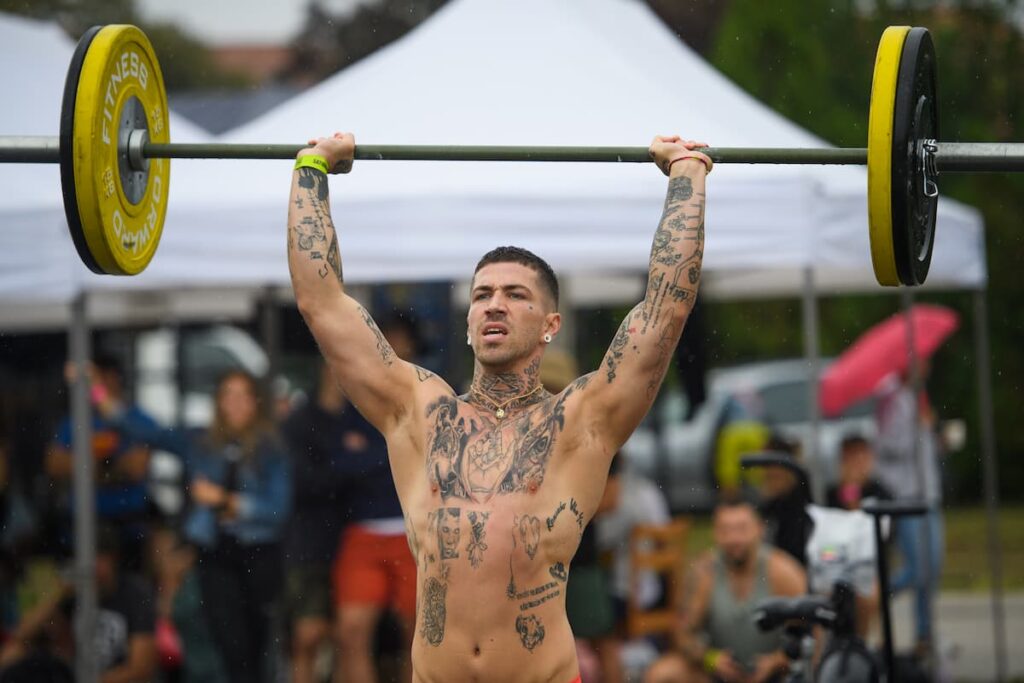
To build balanced shoulders, pair the military press with lateral raises and pulling exercises such as rows. The press trains the shoulders and triceps through an overhead push, while lateral raises more directly challenge the side deltoids. Rows train the upper back and rear shoulder region. Together, these movements cover more of the shoulder area than repeated pressing alone.
The military press is not a shortcut to wider shoulders, and it cannot change your bone structure. It is a practical way to train shoulder and arm strength, build experience with resistance training, and progressively challenge the muscles that contribute to a more developed upper body. Use it consistently, learn the movement with a manageable load, and combine it with exercises that train the sides and rear of your shoulders.
Key Takeaways
| Benefit | What it means for beginners |
|---|---|
| Trains the shoulders | The press works the deltoids, especially the front portion, and also involves the side deltoids. |
| Builds pressing strength | The shoulders and triceps work together to move the load overhead. |
| Practices overhead movement | You learn to control a weight overhead while keeping your body steady. |
| Supports shoulder development | Pair presses with lateral raises and pulling exercises for more balanced training. |
| Allows gradual progress | Begin with a manageable load and add repetitions or weight while maintaining control. |
References
- Campos, Y.A.C., Vianna, J.M., Guimarães, M.P., Oliveira, J.L.D., Hernández-Mosqueira, C., da Silva, S.F. and Marchetti, P.H. (2020) ‘Different shoulder exercises affect the activation of deltoid portions in resistance-trained individuals’, Journal of Human Kinetics, 75, pp. 5–14.
- Coratella, G., Tornatore, G., Longo, S., Esposito, F. and Cè, E. (2022) ‘Front vs back and barbell vs machine overhead press: An electromyographic analysis and implications for resistance training’, Frontiers in Physiology, 13, 825880.
- Currier, B.S., D’Souza, A.C., Singh, M.A.F., Lowisz, C.V., Rawson, E.S., Schoenfeld, B.J., Smith-Ryan, A.E., Steen, J.P., Thomas, G.A., Triplett, N.T., Washington, T.A., Werner, T.J. and Phillips, S.M. (2026) ‘American College of Sports Medicine position stand. Resistance training prescription for muscle function, hypertrophy, and physical performance in healthy adults: An overview of reviews’, Medicine & Science in Sports & Exercise, 58(4), pp. 851–872.
- Saeterbakken, A.H. and Fimland, M.S. (2013) ‘Effects of body position and loading modality on muscle activity and strength in shoulder presses’, Journal of Strength and Conditioning Research, 27(7), pp. 1824–1831.