

A bigger, stronger chest does not require a barbell, dumbbells, or a fully equipped gym. Your bodyweight can provide a highly effective training stimulus when you choose the right movements, use a full range of motion, and make exercises progressively more challenging over time.
The chest is primarily made up of the pectoralis major, a large muscle that helps bring the upper arm across the body and move it forward. It works alongside the triceps and front deltoids during pressing movements. To build a chest that looks powerful and athletic, you need exercises that challenge this pressing pattern through a meaningful range of motion.


Bodyweight training can build muscle and strength when it is performed with sufficient effort. Research comparing low load and high load resistance training has found that muscle growth can be similar when sets are taken close to muscular failure. That matters because push ups, dips, and their harder variations can all become demanding enough to stimulate the chest, even without external weights.
The following three exercises are the best place to start if you want to build a jacked and strong chest with your own bodyweight.
Why Bodyweight Chest Training Can Build Muscle
Muscle growth is driven by repeated mechanical tension, enough challenging training volume, and progressive overload. Mechanical tension is created when your muscle produces force under load, particularly when it is challenged through a controlled range of motion. Your bodyweight provides that load during pressing exercises.
The important point is that you cannot perform the same comfortable set of ten push ups forever and expect your chest to keep changing. As you get stronger, you need to increase the challenge. You can add repetitions, slow the lowering phase, pause at the bottom, elevate your feet, increase the range of motion, use a more difficult variation, or perform more hard sets across the week.
Studies have shown that push up training can produce improvements in upper body strength and muscle thickness that are comparable with bench press training when the exercises are matched for relative intensity. This makes bodyweight chest training especially useful for beginners, people training at home, athletes who travel, and experienced lifters who want an additional pressing option without placing more load on their joints.
3 Best Beginner Dumbbell Exercises for a Muscular and Thick Back
Good technique also matters. Your chest does more work when you control the movement instead of rushing through shallow repetitions. Every rep should have a stable trunk, a controlled descent, and a strong press back to the start.
1. The Push Up
The standard push up is the foundation of effective bodyweight chest training. It trains the pectoralis major, triceps, front deltoids, serratus anterior, and core at the same time. It also teaches you how to create full body tension while pressing, which is useful for strength training, sport, and everyday movement.
A properly performed push up is not a beginner only exercise. It can be made extremely challenging by changing the tempo, range of motion, hand position, or foot position. It also gives you a simple way to track progress. If you can perform more high quality repetitions with the same technique, your pressing strength and muscular endurance are improving.
How to Perform the Push Up
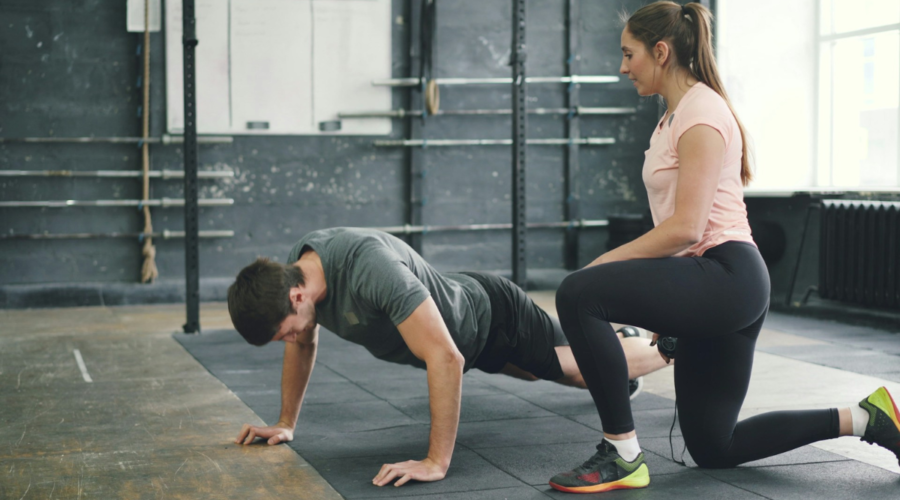
Start in a high plank position with your hands on the floor slightly wider than shoulder width. Your body should form a straight line from your head to your heels. Brace your abs, squeeze your glutes, and keep your neck relaxed.
Lower your chest toward the floor by bending your elbows. Keep your elbows angled roughly halfway between your sides and a fully flared position. This allows the chest, shoulders, and triceps to contribute while keeping the movement controlled and comfortable for most people.
Descend until your chest is close to the floor, then press through your palms until your elbows are straight. At the top, actively push the floor away and allow your shoulder blades to move naturally around your rib cage.
Avoid allowing your lower back to sag or your hips to rise before your chest. Both errors reduce the quality of the exercise and shift the movement away from a strong, full body press.
How to Make Push Ups Better for Chest Growth
For muscle growth, choose a variation that brings you close to failure within a practical rep range. If standard push ups are too easy, a slower lowering phase is one of the simplest upgrades. Take around three seconds to lower yourself, pause briefly near the bottom, then press up powerfully.
You can also use a deficit by placing your hands on stable push up handles or parallettes. This allows your chest to travel slightly lower than your hands, potentially increasing the range of motion at the shoulder. Training through a longer range of motion can increase the stimulus placed on the working muscles, provided your shoulders tolerate the position comfortably.
If standard push ups are still too difficult, elevate your hands on a stable bench, countertop, or bar. This reduces the percentage of bodyweight you need to press while keeping the same pattern. As you improve, gradually lower the height of the surface until you can perform floor push ups.
2. The Feet Elevated Push Up
The feet elevated push up is a harder version of the standard movement that shifts more bodyweight onto your hands. It increases the pressing demand and can place greater emphasis on the upper portion of the chest and front shoulders because the angle of the body changes.
This exercise is particularly valuable when regular push ups no longer provide enough resistance. By elevating your feet, you make every repetition more demanding without needing equipment beyond a stable bench, step, or chair.
The exercise should feel noticeably harder than a regular push up, but your form should remain controlled. If raising your feet causes your lower back to arch or your shoulders to feel painful, reduce the height of the platform. A small elevation can be enough to create a meaningful progression.
How to Perform the Feet Elevated Push Up
Place your feet on a stable surface behind you and position your hands on the floor slightly wider than shoulder width. Begin with a lower platform before progressing to a higher one. Your body should remain in a straight line, with your ribs pulled down and glutes engaged.
Lower yourself under control until your chest approaches the floor. Do not rush into the bottom position or let your head drop forward. Press back up by driving your hands into the floor and keeping your body rigid.
Your elbows should not be forced into one exact angle, but they should generally track in a position that feels strong and pain free. For many people, an angle of around 30 to 60 degrees from the torso works well. This creates a stable pressing position while allowing the chest to contribute strongly.
Why This Variation Builds Strength
Increasing the percentage of bodyweight lifted is a direct form of progressive overload. The feet elevated push up demands more force from the chest, triceps, and shoulders than a standard floor push up. Over time, this can help you build the strength needed for more advanced bodyweight pressing exercises.
Research on resistance training consistently shows that muscle and strength adaptations depend on progressively challenging the muscles. The exact tool is less important than the effort and overload applied. In practical terms, if you can perform twenty clean standard push ups but only eight to twelve feet elevated push ups, the feet elevated version is likely the better muscle building choice.
Use a controlled descent and avoid bouncing out of the bottom. The lowering phase is a productive part of the repetition because the chest produces force while lengthening. This eccentric action can contribute to muscle growth and is one reason why rushed repetitions leave results on the table.
3. The Chest Dip
The chest dip is one of the most effective bodyweight pressing exercises for building a powerful upper body. It challenges the chest through a deep range of motion and also develops the triceps, front deltoids, and muscles that stabilize the shoulder girdle.
Unlike a push up, the dip places your body between parallel bars. This means you can lower your torso below the level of your hands, creating a long range of motion for the chest and shoulders. It is demanding, so it is best introduced gradually, especially if you are new to bodyweight training or have a history of shoulder discomfort.
Dips can be adjusted by using an assisted dip machine, resistance bands, or a foot assisted setup. The goal is not to force yourself through deep painful repetitions. The goal is to steadily earn stronger and more comfortable reps over time.
How to Perform the Chest Dip
Support yourself on parallel bars with your elbows straight and your shoulders held down away from your ears. Begin by creating tension through your abs and glutes so your lower body does not swing.
To emphasize the chest, lean your torso slightly forward as you descend. Bend your elbows and lower yourself under control until you reach a depth that feels strong and comfortable. Your upper arms should usually move at least close to parallel with the floor, although some people can safely go deeper.
Press the bars down and away from you to return to the top. Keep the movement smooth and avoid aggressively locking your shoulders forward at the bottom. The repetition should feel like a controlled press, not a drop followed by a desperate attempt to get back up.
Building Up to Strong Dips
If full dips are currently too difficult, start with support holds. Simply hold yourself at the top of parallel bars for short sets while keeping your elbows straight and shoulders controlled. This develops familiarity with the position and improves the stability needed for later repetitions.
You can then use assisted dips with a band or machine, choosing enough assistance to complete controlled reps through a comfortable range. As you gain strength, reduce the assistance over time. Negative repetitions are another option. Start at the top, lower slowly for several seconds, then use your feet or a box to return to the start.

Once you can perform clean bodyweight dips, gradually add repetitions and sets. Later, a weighted belt can provide further overload, but bodyweight alone can take you a long way when repetitions remain strict and challenging.
How to Program These Exercises for Chest Growth
Train your chest two or three times per week, with at least a day between hard sessions when possible. This gives you regular practice while allowing time for recovery and adaptation.
A simple approach is to perform push ups first as a warm up or technique focused movement, then use feet elevated push ups and dips as your more demanding exercises. You do not need to take every set to absolute failure. However, your working sets should finish with only a small number of good repetitions left in reserve.
For example, begin each session with two or three controlled sets of standard push ups. Then perform three to four hard sets of feet elevated push ups and two to four sets of dips or assisted dips. Choose rep ranges that allow strong technique. Many people will make excellent progress with sets of roughly six to fifteen repetitions, although higher repetition push up sets can also build muscle when they are difficult enough.
Progress one variable at a time. Add a rep before adding a more difficult variation. Increase the height of your feet only when you can control the current version. Use a greater range of motion only if it remains comfortable. This patient approach is how bodyweight training becomes a long term muscle building system rather than a random workout.
Nutrition, sleep, and consistency also influence your results. Building muscle is easier when you eat enough protein, consume sufficient overall calories for your goal, and recover well between sessions. Training provides the signal, but recovery is when your body adapts to that signal.
The Bottom Line
Push ups, feet elevated push ups, and chest dips can build a strong, muscular chest when you perform them with full range of motion, controlled technique, and progressive overload. The best exercise is the one that is challenging enough for your current strength level while allowing you to train without pain.
Start with strict push ups, progress to harder elevated variations, and build toward strong chest dips. Track your repetitions, stay patient, and make your training slightly more demanding over time. You do not need a chest press machine to build a powerful chest. You need high quality repetitions that give your muscles a reason to grow.
References
- Calatayud, J., Borreani, S., Colado, J.C., Martin, F., Rogers, M.E., Behm, D.G. and Andersen, L.L. (2015) ‘Muscle activation during the bench press and push up at different load intensities’, Journal of Strength and Conditioning Research, 29(6), pp. 1663 to 1670.
- Calatayud, J., Colado, J.C., Borreani, S., Martin, F., Rogers, M.E., Behm, D.G. and Andersen, L.L. (2017) ‘Bench press and push up at comparable levels of muscle activity results in similar strength gains’, Journal of Strength and Conditioning Research, 31(1), pp. 246 to 253.
- Grgic, J., Schoenfeld, B.J., Orazem, J. and Sabol, F. (2022) ‘Effects of resistance training performed to repetition failure or non failure on muscular strength and hypertrophy: A systematic review and meta analysis’, Journal of Sport and Health Science, 11(2), pp. 202 to 211.
- Lasevicius, T., Schoenfeld, B.J., Silva Batista, C., Barros, T.S., Aihara, A.Y., Brendon, H., Longo, A.R., Tricoli, V. and Teixeira, E.L. (2018) ‘Muscle failure promotes greater muscle hypertrophy in low load but not in high load resistance training’, Journal of Strength and Conditioning Research, 36(2), pp. 346 to 351.
- Schoenfeld, B.J., Grgic, J., Ogborn, D. and Krieger, J.W. (2017) ‘Strength and hypertrophy adaptations between low versus high load resistance training: A systematic review and meta analysis’, Journal of Strength and Conditioning Research, 31(12), pp. 3508 to 3523.
- Schoenfeld, B.J., Ogborn, D. and Krieger, J.W. (2017) ‘Dose response relationship between weekly resistance training volume and increases in muscle mass: A systematic review and meta analysis’, Journal of Sports Sciences, 35(11), pp. 1073 to 1082.
- Wolf, M., Eblen, S. and Wilson, G. (2023) ‘Effects of range of motion on muscle development during resistance training interventions: A systematic review’, Sports Medicine, 53(7), pp. 1379 to 1405.
Key Takeaways
| Takeaway | What it means for your training |
|---|---|
| Strict push ups are highly effective | Use a full range of motion and keep your torso rigid to train the chest, triceps, and shoulders effectively. |
| Feet elevated push ups provide overload | Raising your feet increases the portion of bodyweight you press and gives you a harder chest building variation. |
| Chest dips are a powerful advanced option | A slight forward lean and controlled depth can make dips a highly demanding bodyweight chest exercise. |
| Effort drives results | Choose variations that bring your working sets close to muscular failure with clean form. |
| Progression is essential | Add reps, range of motion, slower eccentrics, or harder variations as your strength improves. |