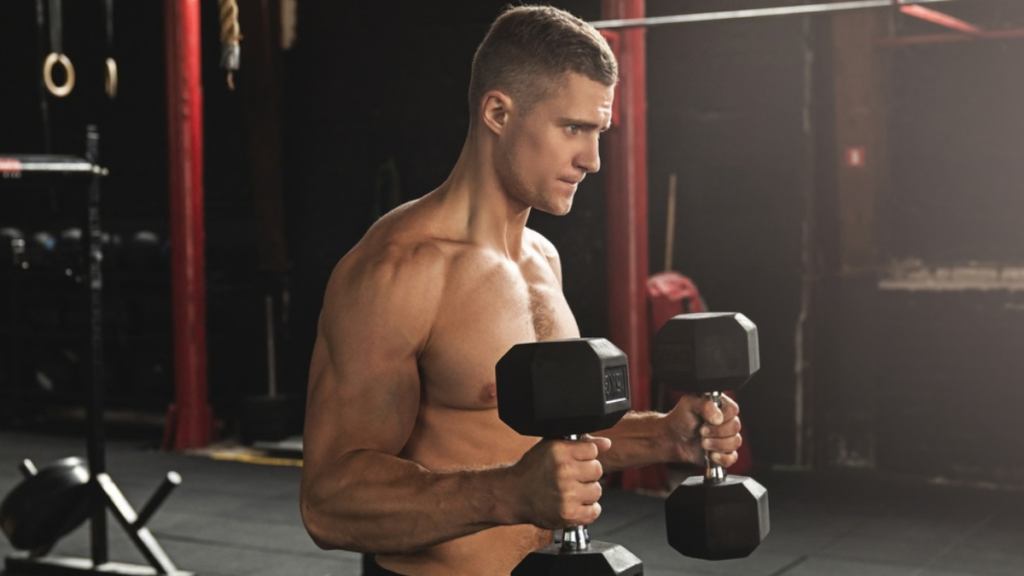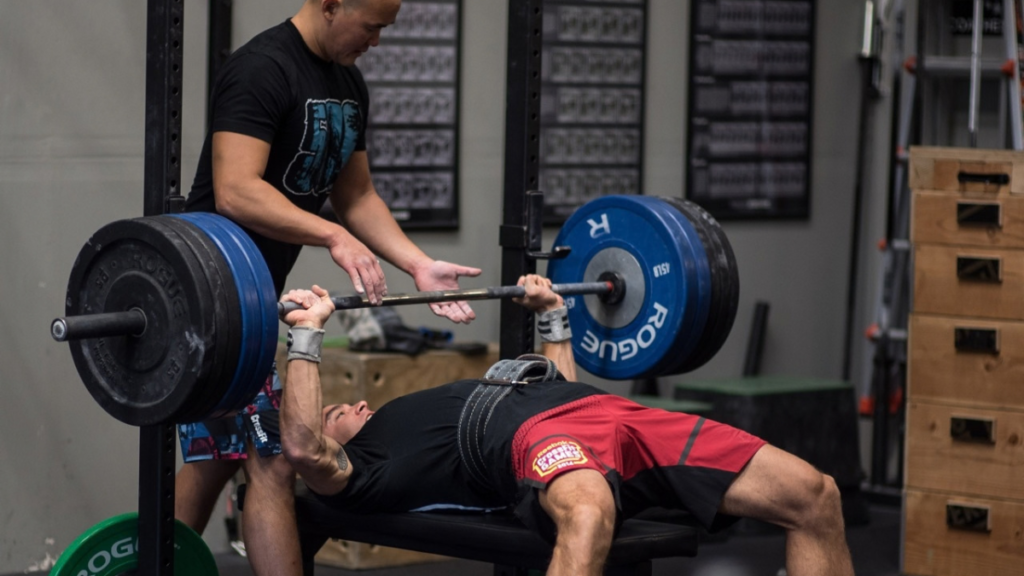


Building a more muscular upper body does not require a barbell. Barbells are useful, but they are only one way to create the mechanical tension, effort, and training volume that drive muscle growth. Dumbbells, cables, machines, and bodyweight movements can all produce excellent results when you use them consistently and challenge your muscles over time.
For most people, the smartest approach is to choose exercises that train a large amount of muscle at once, allow a stable and comfortable range of motion, and are easy to progress. You do not need a complicated routine filled with dozens of isolation movements. A strong pressing movement, a strong pulling movement, and a vertical press can cover most of the major muscles that create a muscular upper body.


The three exercises below train the chest, back, shoulders, triceps, and biceps without a barbell. They also suit beginners because they are straightforward to learn, adaptable to different strength levels, and easy to load progressively.
What Builds a Muscular Upper Body?
Muscle growth happens when resistance training provides a repeated challenge that your muscles must adapt to. That challenge needs to be hard enough to require effort, but it does not have to involve maximal weights or extremely low repetitions.
Research shows that muscle can grow across a wide range of loads when sets are performed with sufficient effort. This is particularly useful when training without barbells because dumbbells, cable stacks, and machines make it easy to use moderate or lighter loads while still making a set challenging.
3 Squat Milestones Every Man 30+ Should Aim For
The most important principle is progression. Over time, aim to perform more repetitions with the same weight, use slightly more weight, improve your technique, or complete more high quality sets. Your upper body will not change because an exercise has a clever name. It changes because you give your muscles a reason to become stronger and larger.
Weekly training volume also matters. More challenging sets generally create more opportunity for growth, although doing far more work than you can recover from is not productive. Start with an amount you can perform consistently, then gradually add work as your strength, skill, and recovery improve.
1. Dumbbell Bench Press
The dumbbell bench press is one of the most effective barbell free exercises for adding size to your chest, triceps, and front shoulders. It gives you a strong horizontal pressing pattern while allowing each arm to work independently.
Unlike a fixed bar, dumbbells allow you to choose a grip and arm path that feels natural for your shoulders. This can make the exercise more comfortable for lifters who find barbell pressing awkward or restrictive. The separate dumbbells also make it harder for one stronger side to dominate the lift.
Why It Works
Your chest is the primary muscle responsible for bringing your upper arm toward the center of your body during a pressing movement. The dumbbell bench press trains that action while the triceps straighten the elbows and the front portion of the shoulder contributes to the press.
Because the exercise uses both the shoulder and elbow joints, it lets you load several large upper body muscles at once. That makes it an efficient choice when your goal is overall upper body size rather than simply improving one small area.
A full, controlled range of motion is valuable here. Lower the dumbbells until your upper arms are close to parallel with the floor, or slightly below if your shoulders remain comfortable and stable. Then press the dumbbells upward without aggressively slamming them together at the top. You should feel a stretch in the chest near the bottom and a strong contraction as you press.
How to Do It
Lie on a flat bench with a dumbbell in each hand. Plant your feet firmly on the floor and create a stable base by lightly arching your upper back. Keep your shoulder blades pulled back and down against the bench.
Start with the dumbbells above your chest, with your palms facing forward or turned slightly inward. Lower the weights under control until your elbows are roughly level with your torso. Press the dumbbells back up by driving your upper arms toward the center of your body.
Avoid letting your elbows flare directly out to the sides, especially if this makes your shoulders feel irritated. A moderate angle between your upper arms and torso will usually feel stronger and more comfortable.
For muscle growth, perform two to four hard sets of six to 15 repetitions. Choose a weight that lets you maintain control throughout the set while still making the final repetitions demanding.
2. Chest Supported Dumbbell Row
A muscular upper body needs a strong back. The chest supported dumbbell row is an excellent choice because it trains the lats, upper back, rear shoulders, and biceps while reducing the temptation to use momentum.
Many people turn rows into a lower back exercise by swinging their torso and rushing each repetition. Chest support removes much of that problem. It allows you to focus on pulling with the muscles of your back instead of using body movement to lift the dumbbells.
Why It Works
The back is made up of several large muscles that contribute significantly to upper body size. The latissimus dorsi creates much of the width through the sides of your back, while the trapezius, rhomboids, rear deltoids, and other upper back muscles add thickness and detail.
Rowing movements train the shoulder extension and shoulder blade movement needed to develop these areas. The biceps also contribute by bending the elbow, meaning a well performed row provides valuable arm training alongside back work.
This exercise is especially useful for balancing pressing volume. If you regularly train chest and shoulders but neglect horizontal pulling, your training can become one sided. Rows help create a more complete upper body and can improve your ability to control your shoulder blades during pressing exercises.
How to Do It
Set an adjustable bench to a low incline. Hold a dumbbell in each hand and lie face down with your chest supported by the pad. Let your arms hang naturally toward the floor.
Begin each repetition by drawing your shoulder blades slightly back. Then pull your elbows toward your hips while keeping your chest in contact with the bench. Pause briefly when the dumbbells reach the sides of your torso, then lower them slowly until your arms are straight again.
Do not turn the movement into a shrug. Your shoulders should not climb toward your ears. Keep your neck relaxed and think about driving your elbows back rather than curling the dumbbells upward.
A neutral grip, with palms facing each other, often feels comfortable and allows a strong pulling path. You can also use a more pronated grip, with palms facing behind you, to place more emphasis on the upper back and rear shoulders.
Perform two to four hard sets of eight to 15 repetitions. Use a load that allows you to feel your back doing the work rather than your arms taking over every repetition.
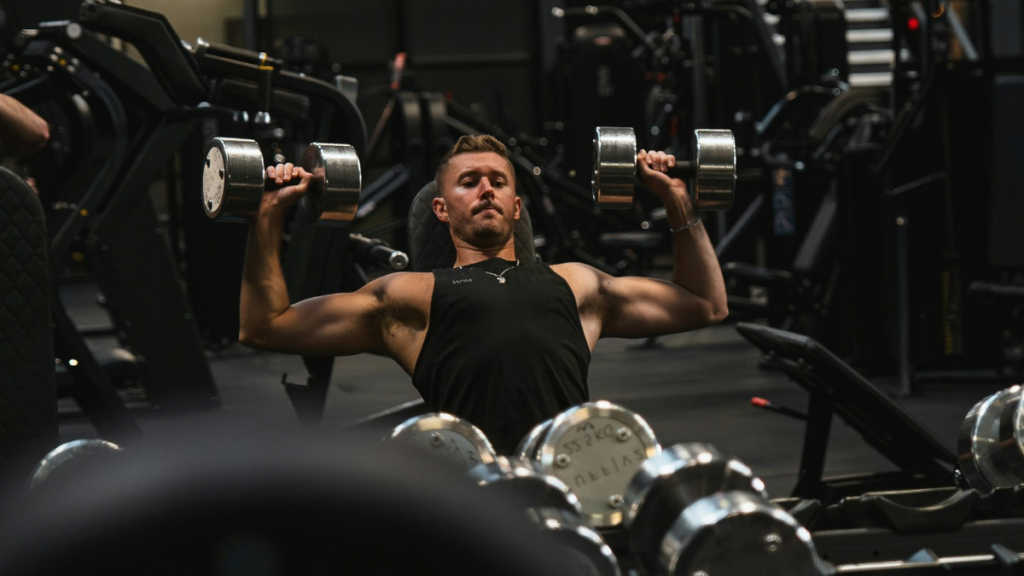
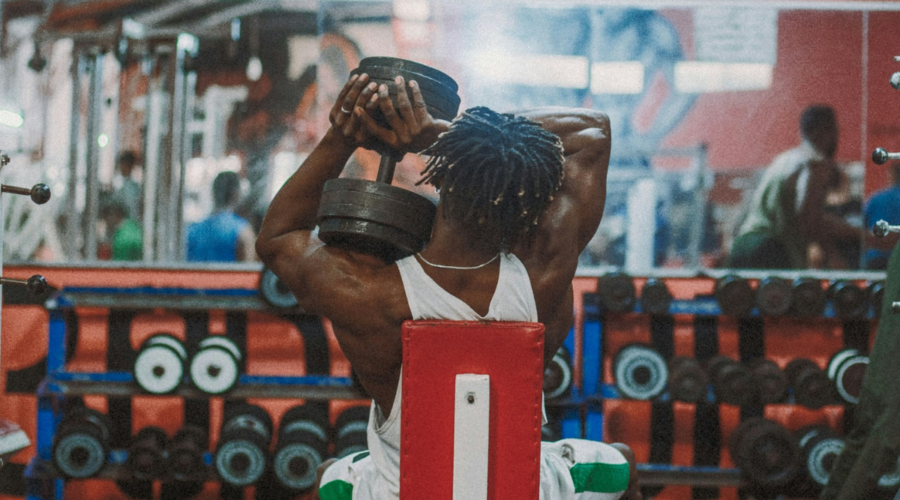
3. Seated Dumbbell Overhead Press
The seated dumbbell overhead press is a highly effective movement for building larger shoulders and stronger triceps. It trains the deltoids through a large range of motion and gives the upper body a more athletic, muscular appearance.
Well developed shoulders can change the visual shape of your physique. They add width to the upper body, make the arms look more substantial, and create a stronger contrast with the waist. While no single exercise builds every part of the shoulders equally, overhead pressing is a reliable foundation for overall shoulder development.
Why It Works
The main muscles trained during an overhead press are the front and side portions of the deltoids, with the triceps assisting as the elbows straighten. The upper chest and upper back also contribute to stabilizing the movement.
Dumbbells are useful here because each arm can move independently. This gives you freedom to use a slightly angled grip and press in a path that suits your shoulder structure. For many lifters, this feels more natural than forcing both arms to move around a fixed bar.
Seating yourself with back support can make the exercise easier to control. You can focus on the shoulders and triceps without using a large amount of leg drive or lower body movement. This is particularly helpful when your goal is muscle growth rather than lifting the biggest possible weight.
How to Do It
Set an adjustable bench to a nearly upright position. Sit with your feet planted firmly on the floor and the dumbbells held around shoulder height. Keep your wrists stacked over your elbows and your forearms close to vertical.
Press the dumbbells upward until your arms are straight overhead. You do not need to force the weights to crash together. Lower them slowly back to shoulder level while keeping your torso stable against the bench.
Keep your ribs controlled as you press. Excessive lower back arching can shift the movement away from the shoulders and make it harder to maintain good position. If you have to lean far back to finish each repetition, reduce the weight.
Perform two to four hard sets of six to 15 repetitions. Moderate loads are often ideal because they allow you to train the shoulders with control and accumulate quality repetitions.
How to Put These Exercises Together
You can build an effective upper body session around these three movements. Start with the dumbbell bench press when you are fresh, then perform the chest supported dumbbell row, and finish with the seated dumbbell overhead press.
Train this session once or twice per week, depending on your schedule and recovery. If you train it twice weekly, avoid trying to make every session an all out test. The goal is to accumulate productive work over time, not to exhaust yourself in one workout.
For example, you could use three sets of eight to 12 repetitions for the dumbbell bench press, three sets of eight to 12 repetitions for the chest supported dumbbell row, and three sets of 10 to 15 repetitions for the seated dumbbell overhead press. Start conservatively if you are new to structured lifting, then add repetitions before increasing the load.
Try to finish most sets with one to three repetitions left in reserve. This means you are working hard without regularly sacrificing technique or recovery by taking every set to complete failure. As you become more experienced, some sets can be pushed closer to your limit, provided your form remains solid.
Do Not Neglect Recovery
Training creates the stimulus for muscle growth, but recovery allows that growth to happen. Eat enough food to support your goal, include sufficient protein in your diet, sleep consistently, and give sore muscles time to recover before training them hard again.
You also need patience. Visible muscle growth takes months of regular training, not a few intense workouts. The people who make the best progress are usually the ones who repeat the basics for long enough to become genuinely strong at them.
Dumbbells may look simpler than barbells, but simple does not mean ineffective. If you progressively improve your dumbbell bench press, chest supported row, and seated overhead press, you will train nearly every major muscle in your upper body with a practical and effective routine.
References
- Baz Vallee, E., Balsalobre Fernandez, C., Alix Fages, C. and Santos Concejerо, J. (2022) ‘A systematic review of the effects of different resistance training volumes on muscle hypertrophy’, Journal of Human Kinetics, 81, pp. 199–210.
- Grgic, J., Schoenfeld, B.J., Orazem, J., Sabol, F., Bishop, D.J. and Pedisic, Z. (2021) ‘Effects of resistance training performed to repetition failure or non failure on muscular strength and hypertrophy: A systematic review and meta analysis’, Journal of Sport and Health Science, 11(2), pp. 202–211.
- Kassiano, W., Costa, B., Nunes, J.P., Ribeiro, A.S., Schoenfeld, B.J. and Cyrino, E.S. (2023) ‘Which ranges of motion lead to muscle hypertrophy? A systematic review of the effects of range of motion on muscle hypertrophy’, Journal of Strength and Conditioning Research, 37(5), pp. 1135–1144.
- Schoenfeld, B.J., Grgic, J., Ogborn, D. and Krieger, J.W. (2017) ‘Strength and hypertrophy adaptations between low load and high load resistance training: A systematic review and meta analysis’, Journal of Strength and Conditioning Research, 31(12), pp. 3508–3523.
- Schoenfeld, B.J., Ogborn, D. and Krieger, J.W. (2017) ‘Dose response relationship between weekly resistance training volume and increases in muscle mass: A systematic review and meta analysis’, Journal of Sports Sciences, 35(11), pp. 1073–1082.
Key Takeaways
| Focus | Main takeaway |
|---|---|
| Best chest exercise | The dumbbell bench press trains the chest, triceps, and front shoulders with a natural range of motion. |
| Best back exercise | The chest supported dumbbell row builds the lats, upper back, rear shoulders, and biceps while reducing momentum. |
| Best shoulder exercise | The seated dumbbell overhead press develops the shoulders and triceps while helping create a broader upper body. |
| Progression | Add repetitions, load, or high quality sets gradually as your strength improves. |
| Muscle growth | Consistent hard training, sufficient recovery, and progressive overload matter more than using a barbell. |