

It’s a universal and fun test that almost every human has tried at some stage in their life, but what does it actually mean? Is it important and relevant to the rest of your fitness?
Find out more now.
Why The Toe Touch Became The Universal Flexibility Test
The standing toe touch and the sit-and-reach protocol rose to prominence in mid-twentieth-century physical education because they offered a fast, inexpensive way to screen large groups of people without needing goniometers, motion-capture cameras, or specialized medical training. Since touching your toes requires hinging forward at the hips while keeping the knees extended, coaches and clinicians naturally assumed the movement provided a direct, isolated readout of hamstring extensibility.
In practical terms, if the muscles running down the back of your thighs were long and compliant, your pelvis would tilt forward smoothly and your hands would easily reach the floor.
Over decades of widespread testing, that convenient assumption hardened into everyday fitness dogma. Whenever runners, CrossFit athletes, or desk workers struggled to reach past their knees, the automatic prescription became static hamstring stretching. While hamstring length certainly plays a role in forward bending, biomechanical analyses of multi-joint movements show that any test involving multiple body segments simultaneously cannot isolate a single muscle group cleanly.
What Touching Your Toes Actually Measures
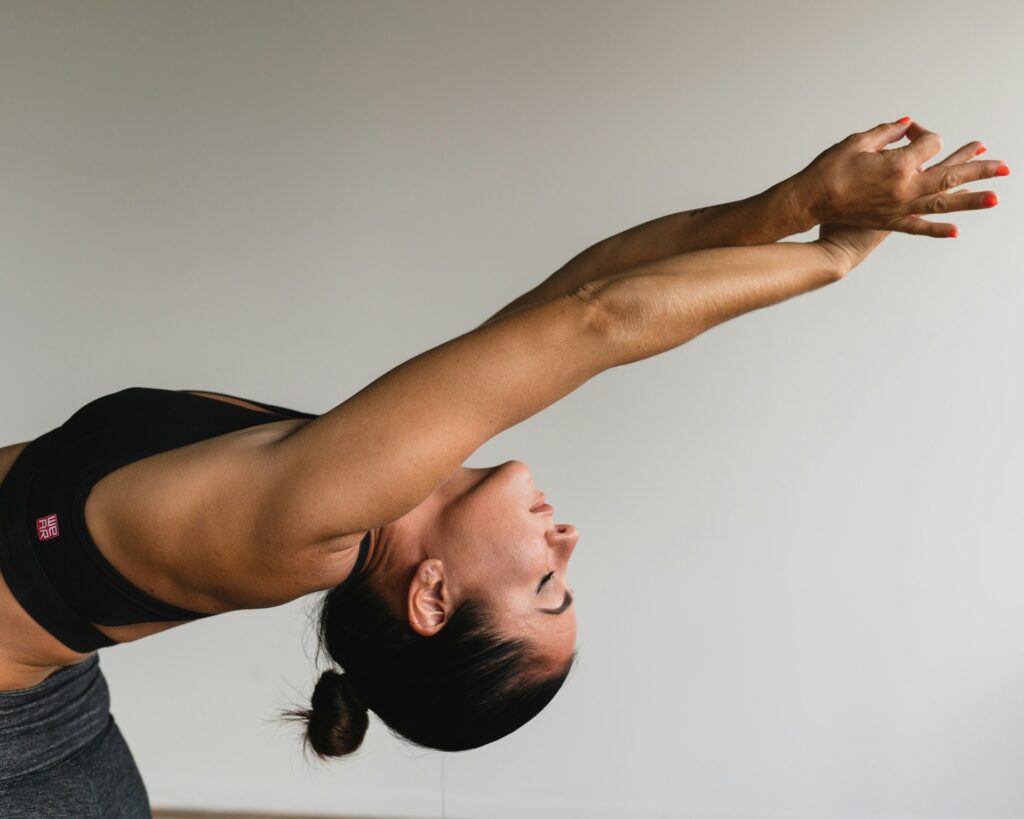
When you stand upright and bend forward toward your feet, your body distributes that motion across three primary anatomical regions: hip flexion driven by pelvic rotation, lumbar and thoracic spinal flexion, and scapular protraction as your arms reach downward. Kinematic studies analyzing the toe-touch movement demonstrate that a large portion of the fingertip distance gained during a forward fold comes from flexion of the lumbar and thoracic spine rather than pure hip flexion alone. In fact, someone with genuinely stiff hamstrings can often touch their toes easily if they possess high spinal flexion mobility or relatively long arms and a long torso compared to their legs.
Conversely, a lifter with well-developed hip mobility and healthy hamstring extensibility might fall inches short of their toes if their thoracic spine is stiff, their ankles shift their center of mass awkwardly, or their limb proportions feature long legs paired with shorter arms. Anthropometric research examining the sit-and-reach and standing toe-touch tests confirms that arm-to-leg length ratios significantly influence reach scores independently of actual hip or hamstring flexibility.
Anatomical Contributors to the Standing Toe Touch
| Body Segment or Factor | Role During Forward Fold | How It Influences Your Score |
| Hamstring Musculature | Controls anterior pelvic tilt during hip flexion | Restricts pelvic rotation if stiff or guarded |
| Lumbar and Thoracic Spine | Rounds forward to bring the torso closer to the thighs | Can compensate heavily for limited hip flexion |
| Sciatic Nerve and Neural Tension | Glides and lengthens along the posterior leg and spine | Triggers protective tightness before true muscle end-range |
| Limb and Torso Proportions | Determines mechanical reach geometry from shoulder to floor | Long arms and torso make touching toes noticeably easier |
What Scientific Research Reveals About Neural Tension And Stretch Tolerance
One of the most fascinating discoveries in modern flexibility science is that the burning, pulling sensation behind your knees during a toe touch is not always caused by short muscle fibers. Running from your lower back down through your hips and behind your knees is the sciatic nerve and its tibial and common peroneal branches. Neurodynamic research shows that bending the spine forward while keeping the knees straight places substantial mechanical tension on the posterior neural tract. When the nervous system senses rapid or unfamiliar tension along the sciatic nerve, it triggers protective muscular guarding in the hamstrings and calves long before those muscles reach their actual anatomical length limits.
Furthermore, longitudinal studies investigating how static stretching improves toe-touch performance reveal that short-term and medium-term gains in reach distance are primarily driven by increased stretch tolerance rather than permanent structural lengthening of muscle fascicles. In other words, your nervous system gradually becomes less reactive to the sensation of tension at end range, allowing you to relax deeper into the fold without necessarily altering the resting architecture of your muscle-tendon units.
Why Passing The Test Does Not Guarantee Injury Protection
Another persistent myth surrounding the toe touch is that reaching your palms flat to the floor proves you are protected against hamstring strains or lower back pain. Prospective sports medicine research examining flexibility scores and injury incidence shows that static toe-touch performance alone is a poor standalone predictor of future lower-body injury. Moreover, if an athlete achieves a toe touch primarily by flexing heavily through their lower lumbar spine while their pelvis barely tilts forward, they may actually place repetitive bending stress on spinal discs rather than demonstrating healthy hip-hinge mechanics.
What The Toe Touch Completely Misses About Real-World Mobility
Even if you pass the standing toe touch with flying colors, the test tells you almost nothing about the other joint motions required for athletic performance and daily comfort. Because the movement occurs strictly in the sagittal plane with straight knees and unloaded bodyweight, it provides zero information about hip internal and external rotation, hip extension, ankle dorsiflexion, or thoracic extension. An athlete can easily palm the floor during a forward fold while still lacking the ankle mobility needed for an upright squat or the hip extension required for efficient sprinting mechanics.

Equally important, the toe touch measures passive end-range reach rather than active strength and neuromuscular control throughout a joint’s range of motion. In dynamic sports, weightlifting, and functional fitness, controlling a muscle under load as it lengthens is far more protective and useful than passively hanging on ligaments and neural tissue.
What the Toe Touch Reveals Versus What It Misses
| Assessment Dimension | What the Toe Touch Reveals | What the Toe Touch Misses |
| Posterior Chain Reach | Combined sagittal-plane reach of spine, hips, and hamstrings | Isolated true hamstring length independent of spinal rounding |
| Joint Direction | Forward flexion in a single standing plane | Hip rotation, hip extension, ankle dorsiflexion, and upper-back extension |
| Muscle Control | Passive tolerance to stretch sensation at end range | Active eccentric strength and stability under external load |
| Movement Quality | Whether fingertips can reach floor level | Whether motion comes cleanly from the hips or excessive spine flexion |
How To Actually Improve Your Forward Fold And Posterior Mobility
If your goal is to move smoothly into a forward fold while building genuine, resilient hip and posterior chain mobility, you need to address both pelvic mechanics and nervous system tolerance rather than yanking blindly on your hamstrings. Start by practicing controlled hip-hinge patterns such as Romanian deadlifts or bodyweight good mornings with a neutral spine, teaching your brain that lengthening the hamstrings under light-to-moderate load is safe and stable.
Eccentric strength training through full ranges of motion has been shown in controlled trials to simultaneously increase fascicle length, improve flexibility, and build protective strength in the hamstrings.
Is the Zottman Curl the Perfect Missing Exercise for Bigger Biceps and Forearms?
You can also pair loaded eccentric work with gentle neurodynamic sliders or contract-relax stretching techniques that calm protective neural guarding without forcing painful end-range tension. Focus on initiating every forward fold by tilting your pelvis forward and pushing your hips back first, letting your spine follow naturally rather than collapsing immediately through your lower back. Within a few weeks of consistent, intelligent practice, your reach will improve alongside real hip control that carries directly into squats, deadlifts, and everyday movement.
Key Takeaways on the Toe Touch Flexibility Test
| Key Takeaway | Practical Application |
| Multi-Joint Test Not Isolated | Touching your toes combines spinal flexion, hip flexion, and arm reach rather than testing hamstrings alone. |
| Body Proportions Influence Scores | Arm-to-leg length ratios can make a toe touch easy or difficult regardless of muscle stiffness. |
| Neural Guarding Limits Reach | Sciatic nerve tension often stops a forward fold before muscle fibers reach their physical end range. |
| Stretch Tolerance Drives Early Gains | Stretching improves reach largely by teaching your nervous system to tolerate end-range tension. |
| Train Loaded Eccentric Control | Movements like Romanian deadlifts build true hamstring length and strength simultaneously. |
References
- Ayala, F., Sainz de Baranda, P., De Ste Croix, M. and Santonja, F., 2012. Absolute reliability of five clinical tests for assessing hamstring flexibility in professional futsal players. Journal of Science and Medicine in Sport, 15(2), pp.142-147.
- Freitas, S.R., Mendes, B., Le Sant, G., Andrade, R.J., Nordez, A. and Milanovic, Z., 2018. Can chronic stretching change the muscle-tendon mechanical properties? A review. Scandinavian Journal of Medicine and Science in Sports, 28(3), pp.794-806.
- Hoeger, W.W.K., Hopkins, D.R., Button, S. and Palmer, T.A., 1990. Comparing the sit and reach with the modified sit and reach in measuring flexibility in adolescents. Pediatric Exercise Science, 2(2), pp.156-162.
- Kippers, V. and Parker, A.W., 1987. Toe-touch test: a measure of its validity. Physical Therapy, 67(11), pp.1680-1684.
- Magnusson, S.P., Simonsen, E.B., Aagaard, P., Sørensen, H. and Kjaer, M., 1996. A mechanism for altered flexibility in human skeletal muscle. The Journal of Physiology, 497(1), pp.291-298.
- O’Sullivan, K., McAuliffe, S. and DeBurca, N., 2012. The effects of eccentric training on lower limb flexibility: a systematic review. British Journal of Sports Medicine, 46(12), pp.838-845.
- Shacklock, M., 1995. Neurodynamics. Physiotherapy, 81(1), pp.9-16.