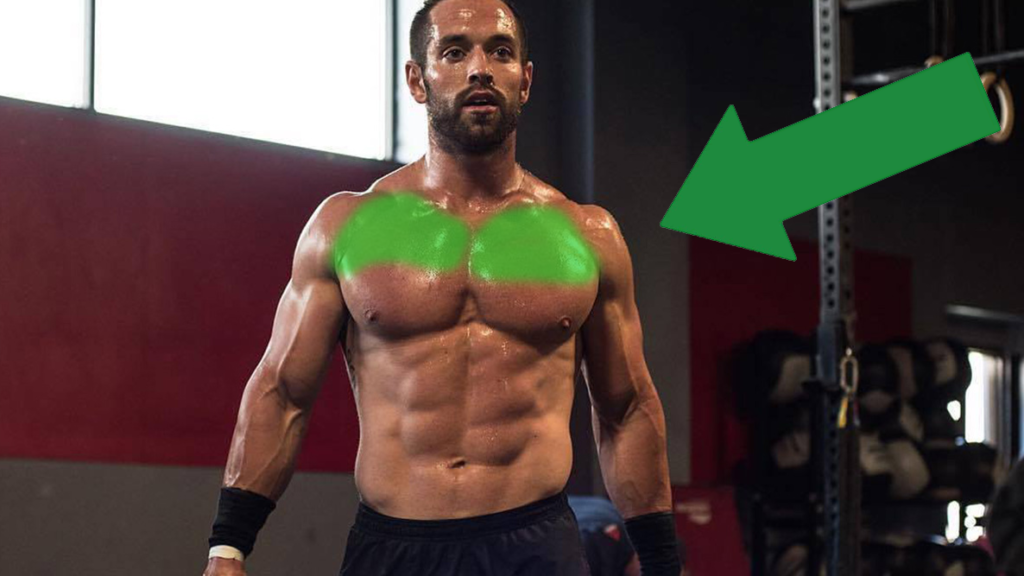
A drastically underrated exercise, the Dumbbell Pullover has enormous potential when it comes to developing your chest and back.
Find out how to use it, how to do it, and why it works.
Why The Dumbbell Pullover Sparks So Much Confusion
Most strength exercises fit cleanly into a single mechanical category because the moving joint travels in one clear direction against gravity. Bench presses push weight away from the torso to train the chest, while rows and pulldowns pull weight toward the torso to train the back.
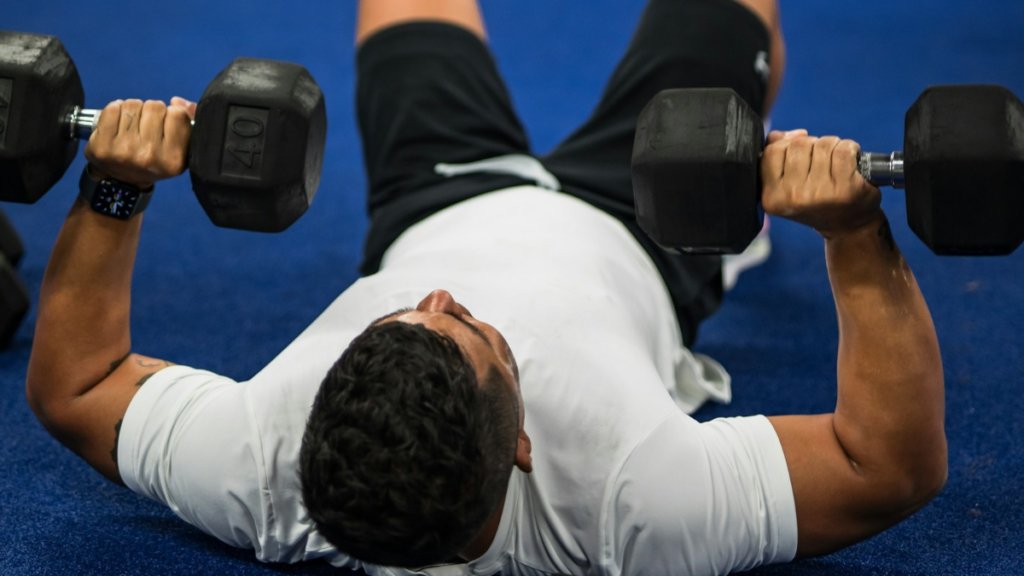
The dumbbell pullover breaks that simple rule because you lie supine on a bench, hold a single dumbbell above your chest with slightly bent elbows, and lower it backward behind your head before sweeping it back up over your torso.
Because your upper arm moves through a broad arc of shoulder extension from an overhead flexed position back toward your hips, lifters experience deep tension across both the front and the back of the upper body simultaneously. That shared sensation makes it genuinely hard to tell which muscle is doing the primary work just by feel alone.
Adding to the confusion, decades of gym lore claimed that heavy pullovers could physically stretch costal cartilage and expand the bony rib cage in adults, a claim that modern anatomy has shown does not occur once skeletal maturity is reached.
The Biomechanics Of Shoulder Extension And Dual Muscle Recruitment
To understand how one exercise can challenge both the chest and the back, you have to look closely at the anatomy of the shoulder joint and the muscles that cross it. During a dumbbell pullover, the primary joint action is shoulder extension, which occurs when your upper arms move downward from an overhead position beside your ears toward the front of your hips. Two powerhouse muscles are anatomically positioned to generate torque during this exact motion: the sternocostal head of the pectoralis major on the front of the torso and the latissimus dorsi on the back.
When your arms are stretched far overhead at the bottom of the pullover, the clavicular fibers of the upper chest actually oppose shoulder extension, whereas the lower sternocostal fibers of the pectoralis major are stretched into a position where they can assist powerfully in pulling the humerus downward.
At the exact same time, the latissimus dorsi and teres major wrap from the back and side of the torso onto the upper arm, giving them strong mechanical leverage to pull the arm down from overhead toward the trunk. Meanwhile, the long head of the triceps brachii crosses the shoulder joint and works to stabilize the elbow while assisting in early shoulder extension, and the serratus anterior contracts vigorously to stabilize and rotate the shoulder blade against the rib cage.
Anatomical Roles of Key Muscles During the Dumbbell Pullover
| Muscle Group | Anatomical Location | Mechanical Role During the Pullover |
| Pectoralis Major (Sternal Head) | Anterior chest wall | Assists forcefully in pulling the humerus down from overhead flexion |
| Latissimus Dorsi | Broad back and lateral torso | Primary shoulder extensor driving the arm from overhead toward the hip |
| Teres Major | Lateral border of the scapula | Works alongside the latissimus dorsi to extend and adduct the shoulder |
| Long Head of Triceps Brachii | Posterior upper arm | Stabilizes elbow angle and assists with shoulder extension under stretch |
| Serratus Anterior | Lateral rib cage under scapula | Anchors and upwardly rotates the shoulder blade throughout the arc |
What Scientific Research Reveals About Chest Versus Back Activation
Sports scientists have used surface electromyography to measure exactly how hard the pectoralis major and latissimus dorsi work during the dumbbell pullover, and the findings challenge simplistic gym labels.
In a well-known electromyographic investigation comparing muscle activity during the barbell pullover, researchers found that the pectoralis major consistently demonstrated higher normalized electrical activation than the latissimus dorsi throughout the movement. Even though lifters often associate pullovers with back training, the sternal fibers of the chest fire intensely to initiate and control the upward sweep of the weight from the stretched overhead position.
However, electromyographic amplitude alone does not tell the whole hypertrophy story, because muscle architecture, moment arms, and stretch-mediated tension all influence how a muscle adapts to training. Biomechanical analyses of shoulder moment arms show that the latissimus dorsi possesses a substantial mechanical advantage for shoulder extension across mid-range angles, even when its normalized electrical reading appears lower than that of the pectoralis major.
Furthermore, modern hypertrophy research demonstrates that loading a muscle in a deeply stretched, lengthened position stimulates robust increases in muscle size, and the dumbbell pullover places both the sternal pectoralis major and the latissimus dorsi under considerable stretch at the bottom of every repetition.
Why Technique Shifts Tension Between Chest And Lats
Small adjustments in how you set up and execute the dumbbell pullover can subtly shift mechanical emphasis between your chest and your back. Keeping your elbows slightly tucked inward and focusing on driving your upper arms downward with a soft, fixed bend tends to heighten sensation and tension across the sternal chest fibers.
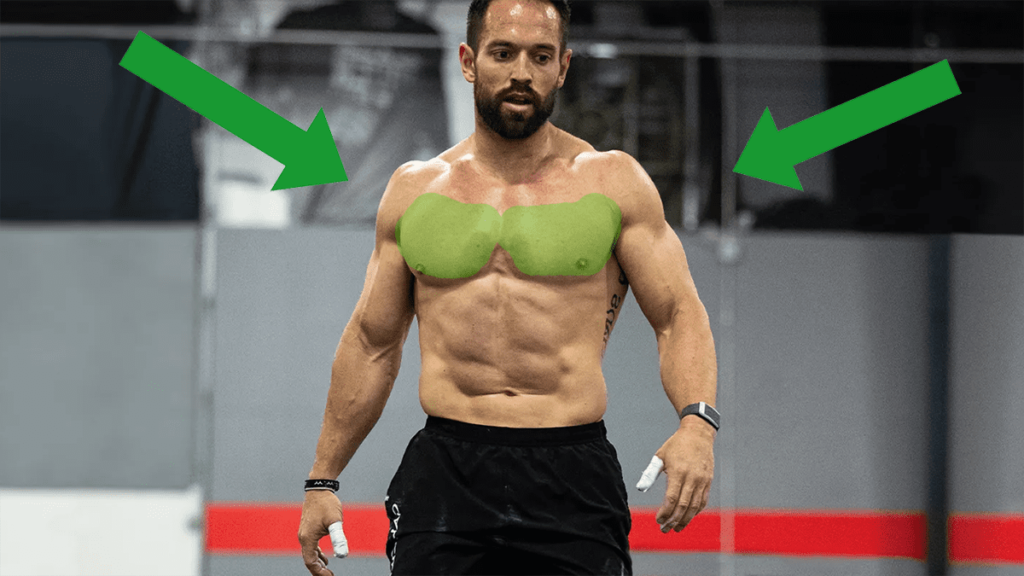
Conversely, allowing a slightly wider elbow angle while initiating the pull by depressing your shoulder blades and driving your elbows toward your hips recruits the latissimus dorsi and teres major more noticeably.
Can It Actually Build Both Muscles Effectively
The honest, evidence-based answer is that the dumbbell pullover can genuinely contribute to hypertrophy in both the chest and the back, provided you treat it as a strategic accessory movement rather than a complete replacement for heavy compound presses and pulls. Because a single dumbbell held with both hands limits how much absolute external load you can safely control over your face and head, it cannot match the raw mechanical overload of a heavy barbell bench press, weighted dip, pull-up, or barbell row.
In addition, the resistance curve of a free-weight pullover drops off significantly once the dumbbell passes vertically above your shoulders, meaning tension is highest in the stretched bottom half and much lighter near the top.
Despite those limitations, that intense tension in the stretched overhead position makes the pullover an exceptional complement to traditional chest and back exercises. Most pressing and rowing movements challenge muscles heavily in their mid-range or shortened positions, whereas the pullover overloads shoulder extension right where both the lower chest and the lats are elongated. When programmed alongside foundational multi-joint lifts, it adds high-value stretch stimulus, builds serratus anterior stability, and connects the upper torso musculature in a way few other exercises can match.
How To Perform And Program The Dumbbell Pullover Safely
Executing the dumbbell pullover effectively requires strict control and respect for your individual shoulder mobility rather than chasing heavy ego weights. Lie either lengthwise along a flat bench so your head, upper back, and hips are fully supported, or rest your upper back perpendicular across the bench with your feet planted firmly on the floor and your hips slightly lower than your shoulders.
Hold a single dumbbell above your chest by cupping the inside of the top weight plate with both hands, keeping a slight, consistent bend of roughly fifteen to twenty degrees in your elbows throughout the entire set.
Brace your abdominal muscles firmly so your lower back does not arch excessively off the pad, then lower the dumbbell backward over your head in a smooth, controlled arc lasting two to three seconds.
How to Get a Jacked Chest Without Using Barbell Bench Press
Stop lowering as soon as your upper arms reach parallel with the floor or your torso, stopping immediately before your rib cage flares upward or your shoulders feel pinched. From that deep stretched position, pull the dumbbell smoothly back up over your upper chest until the weight sits directly above your collarbone, stopping just short of vertical so tension stays active on the working muscles before starting the next repetition.
Practical Programming Guide for the Dumbbell Pullover
| Programming Variable | Recommended Approach | Practical Purpose |
| Session Placement | End of a chest, back, or upper-body workout | Adds stretch-focused volume without fatiguing grip before main lifts |
| Sets and Repetitions | Three to four sets of ten to fifteen controlled reps | Accumulates metabolic stress and tension with manageable joint loads |
| Eccentric Tempo | Two to three seconds lowering behind the head | Protects the anterior shoulder capsule and maximizes lengthened tension |
| Range of Motion | Stop when upper arms align with the torso | Prevents lumbar hyperextension and excessive shoulder impingement |
Key Takeaways for Using the Dumbbell Pullover
| Key Takeaway | Practical Application |
| Dual Muscle Recruitment Is Real | Shoulder extension recruits both the sternal pectoralis major and the latissimus dorsi together. |
| Chest Activation Often Leads | Electromyography shows strong pectoralis major firing, while lats leverage mid-range extension. |
| Stretched Tension Drives Growth | The bottom overhead position loads elongated chest and back fibers that standard lifts miss. |
| Use It As An Accessory Lift | Pair pullovers with heavy presses and rows rather than relying on them as a sole builder. |
| Control Depth And Core Brace | Keep your ribs down and stop once arms align with your torso to protect your shoulders. |
References
- Ackland, D.C., Pak, P., Richardson, M. and Pandy, M.G., 2008. Moment arms of the muscles crossing the anatomical shoulder. Journal of Anatomy, 213(4), pp.383-390.
- Hik, F. and Ackland, D.C., 2019. The moment arms of the muscles spanning the glenohumeral joint: a systematic review. Journal of Anatomy, 234(1), pp.1-15.
- Kassiano, W., Costa, B., Kunevaliki, G., Soares, D., Tricoli, V., Francsuel, J., Neves, M.F., Melo, X., Gentil, P. and Cyrino, E.S., 2023. Greater gastrocnemius muscle hypertrophy after partial range of motion training performed at long muscle lengths. Journal of Strength and Conditioning Research, 37(9), pp.1746-1752.
- Marchetti, P.H. and Uchida, M.C., 2011. Effects of the pullover exercise on the pectoralis major and latissimus dorsi muscles as evaluated by EMG. Journal of Applied Biomechanics, 27(4), pp.380-384.
- Schoenfeld, B.J. and Grgic, J., 2020. Effects of range of motion on muscle development during resistance training interventions: A systematic review. SAGE Open Medicine, 8, pp.1-11.
- Wolf, M., Androulakis-Korakakis, P., Wang, Y., Fisher, J.P. and Steele, J., 2023. Partial vs full range of motion resistance training: a systematic review and meta-analysis. International Journal of Strength and Conditioning, 3(1), pp.1-44.