























3 Best Shoulder Exercises for Beginners in The Gym

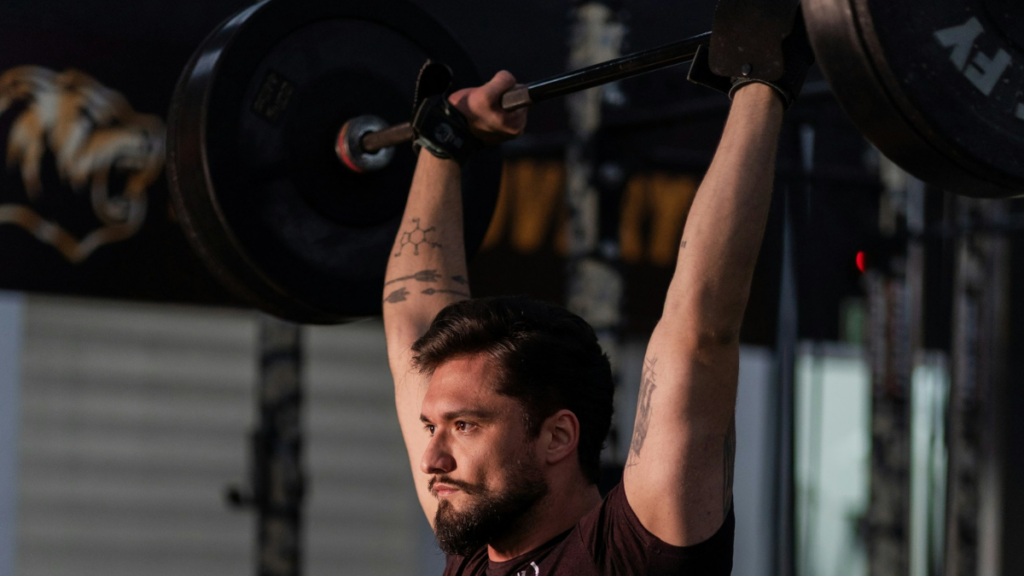
Building stronger shoulders starts with learning a few useful movements and practicing them consistently. You do not need a complicated routine or a long list of exercises. A shoulder press, a lateral raise, and a reverse fly train the deltoid from different directions and give beginners a practical place to start.
The deltoid has three portions: the anterior, or front, portion; the middle portion; and the posterior, or rear, portion. Each contributes to different shoulder movements. Research comparing shoulder exercises finds that presses recruit the front deltoid, while raising the arms out to the sides emphasizes the middle portion. Reverse fly movements can recruit the rear portion. The exact amount of activity varies with exercise setup and the person performing it, so no single movement trains every part equally well.
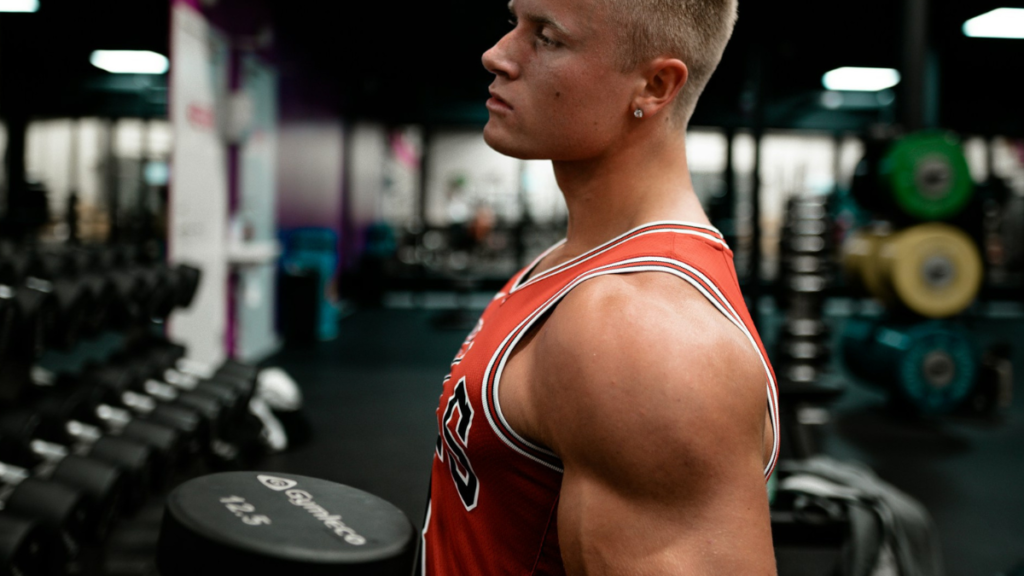
Electromyography, or EMG, studies measure electrical activity in muscles during exercise. They can help compare which muscles are active during a movement, but they do not prove that an exercise will produce the most muscle growth over time. Long term results also depend on factors such as training consistency, effort, and progression. The three exercises below are useful beginner options because they cover complementary movement patterns and can be adjusted as your control improves.
1. Seated Dumbbell Shoulder Press
Why it is a good choice
The seated dumbbell shoulder press is a straightforward way to practice pressing overhead. The front deltoid helps raise the arm, while the middle deltoid and triceps also contribute to the movement. Pressing studies have measured activity in all three portions of the deltoid, though the amount can change with the type of weight and whether the exercise is performed seated or standing.
Dumbbells let each arm move independently, which can make it easier to find a comfortable hand position. A bench with back support also gives you a stable starting position while you learn the movement. In a study comparing shoulder press variations, standing dumbbell presses produced greater deltoid EMG activity than some other tested options, but the study examined immediate muscle activity and strength in trained men. It does not show that standing presses build more shoulder muscle for every beginner. For a new lifter, the seated version can be a manageable way to learn the pattern.
How to perform it
Set an adjustable bench so the back support is upright or only slightly reclined. Sit with your feet flat on the floor and hold a light dumbbell in each hand near shoulder height. Keep your wrists stacked over your elbows and your palms facing forward or slightly toward each other, whichever feels comfortable.
Press the dumbbells upward under control until your arms are nearly straight. Avoid forcefully locking your elbows or shrugging your shoulders toward your ears. Lower the weights slowly to the starting position, keeping the movement smooth and within a range you can control. Use a load that lets you maintain your position without leaning back or bouncing the weights.
Start with two sets of eight to 12 repetitions. When you can complete all repetitions with steady technique and still feel in control, increase the weight by a small amount. This approach follows general resistance training guidance for beginners, which recommends moderate loads that can be lifted for a controlled set of repetitions.
2. Dumbbell or Cable Lateral Raise
Why it is a good choice
The lateral raise trains shoulder abduction, which means lifting the arms out to the sides. This movement makes it a useful option for the middle portion of the deltoid, an area that contributes to the rounded appearance of the shoulders. A systematic review of deltoid exercise research found that abduction exercises, including lateral raises, generally produced high activation of the middle deltoid.
You can perform lateral raises with dumbbells or a cable. Dumbbells are easy to set up and are available in most gyms. A cable provides resistance through more of the movement, although neither version is automatically better for every beginner. Choose the option that allows you to move smoothly without swinging or shrugging.
How to perform it
Stand tall with a light dumbbell in each hand and let your arms hang beside your body. Keep a slight bend in your elbows. Raise your arms out to the sides until your hands reach around shoulder height, or stop earlier if that is the range you can control comfortably. Lower the weights slowly instead of letting them drop.
Think about moving your upper arms rather than lifting your hands as high as possible. Keep your torso steady and use a light load, since the exercise can become difficult quickly when the weight is too heavy. You do not need to turn your thumbs down or raise the weights above your shoulders to make the movement effective.
A cable version can be performed one arm at a time with the pulley set low. Stand side on to the machine, hold the handle with the hand farthest from the pulley, and lift your arm out to the side. Use the same controlled path and stop at a comfortable height.
Try two sets of 10 to 15 repetitions. Lateral raises are an isolation exercise, so the weight will usually be much lighter than the dumbbells used for a press. Keep the repetitions controlled and add weight gradually when you can complete the set without changing your posture.
3. Reverse Pec Deck or Dumbbell Rear Delt Fly
Why it is a good choice
The rear deltoid helps move the arm backward and out to the side. It can be easy for beginners to overlook this portion of the shoulder because pressing movements emphasize the front of the body. A reverse pec deck or rear delt fly gives you a direct way to practice a horizontal arm movement that recruits the rear deltoid.
Studies measuring muscle activity have found substantial rear deltoid involvement during reverse fly movements. A study comparing several exercises found greater posterior deltoid activity during the reverse pec deck than during the seated row and inclined lat pulldown it tested. These findings support including the movement in a balanced shoulder routine, while recognizing that EMG activity alone cannot predict long term muscle growth.
The reverse pec deck is often simpler to learn than a bent over dumbbell fly because the machine supports your body and guides the movement. If the machine is unavailable, light dumbbells and a hip hinge provide a reasonable alternative.
How to perform it
For the reverse pec deck, adjust the seat so the handles are roughly level with your shoulders. Sit facing the machine and hold the handles with a slight bend in your elbows. Move your arms out and back in a controlled arc until they are roughly in line with your torso. Pause briefly, then return to the start without letting the weight stack crash.
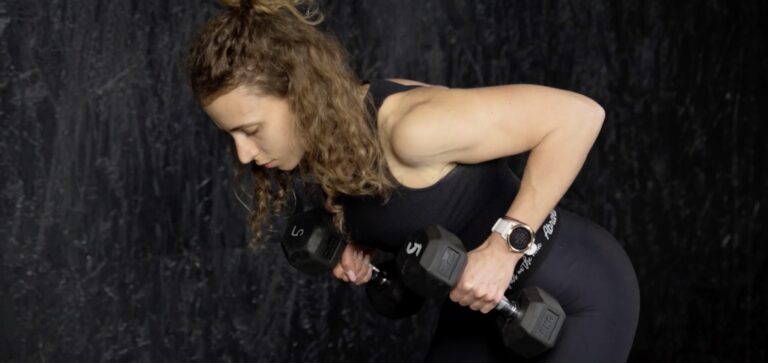
For a dumbbell rear delt fly, hold light weights, hinge at your hips, and keep your back in a comfortable neutral position. Let the dumbbells hang beneath your shoulders, then raise them out to the sides. Keep the movement smooth and avoid using momentum to lift the weights.
Start with two sets of 10 to 15 repetitions. If you feel the movement mostly in your neck or upper traps, reduce the load and focus on keeping your shoulders away from your ears. The goal is a controlled repetition, not the heaviest weight you can swing.
How to Put the Exercises Together
A beginner can perform these three exercises in one shoulder focused session, or include them in a full body workout. A simple starting point is two sets of each exercise, using eight to 12 repetitions for the press and 10 to 15 repetitions for the raises and reverse fly. Rest long enough between sets to repeat the movement with good control.

You do not need to take every set to complete failure. Choose a weight that makes the final repetitions challenging while allowing you to keep your technique steady. When the same weight feels manageable across all sets, add a small amount of resistance or complete a few more repetitions within the suggested range. Progressive increases in training volume or load are commonly used to improve strength and muscle size, while a recent review found that multiple resistance training prescriptions can support these outcomes.
Give yourself time to learn the exercises. At first, a lighter weight can help you practice the movement and notice whether you are using momentum or changing your posture. If a movement causes sharp or persistent pain, stop and seek advice from an appropriately qualified health professional. Ordinary effort and muscle fatigue are different from pain that feels sudden or concerning.
3 Best Muscle Building Exercises for Beginners to Get A More Jacked Physique
The shoulder also works during chest and back exercises, including presses and rows. If your weekly training already contains several of these movements, keep your direct shoulder work modest at first and pay attention to how you recover between sessions. Beginners can make progress with a routine they can repeat consistently, rather than adding many exercises at once.
Key Takeaways
| Exercise | Main training focus | Beginner starting point |
|---|---|---|
| Seated dumbbell shoulder press | Pressing strength and front deltoid involvement | Two sets of eight to 12 controlled repetitions |
| Dumbbell or cable lateral raise | Middle deltoid through arm abduction | Two sets of 10 to 15 controlled repetitions |
| Reverse pec deck or rear delt fly | Rear deltoid through horizontal arm movement | Two sets of 10 to 15 controlled repetitions |
References
- American College of Sports Medicine (2009) ‘Progression models in resistance training for healthy adults’, Medicine & Science in Sports & Exercise, 41(3), pp. 687–708.
- Currier, B.S. et al. (2023) ‘Resistance training prescription for muscle strength and hypertrophy in healthy adults: a systematic review and Bayesian network meta-analysis’, British Journal of Sports Medicine, 57(18), pp. 1211–1220.
- Franke, R. de A. et al. (2015) ‘Analysis of anterior, middle and posterior deltoid activation during single and multijoint exercises’, The Journal of Sports Medicine and Physical Fitness, 55(7–8), pp. 714–721.
- Jakobsen, M.D., Sundstrup, E., Andersen, C.H., Zebis, M.K., Mortensen, P. and Andersen, L.L. (2012) ‘Evaluation of muscle activity during a standardized shoulder resistance training bout in novice individuals’, Journal of Strength and Conditioning Research, 26(9), pp. 2515–2522.
- Rabello, R. et al. (2024) ‘Activation of the three deltoid muscle portions during common strengthening exercises: a systematic review’, Journal of Bodywork and Movement Therapies, 40, pp. 1309–1325.
- Saeterbakken, A.H. and Fimland, M.S. (2013) ‘Effects of body position and loading modality on muscle activity and strength in shoulder presses’, Journal of Strength and Conditioning Research, 27(7), pp. 1824–1831.
Robbie Wild Hudson
Editor-In-Chief at BOXROX. I come from a background of rugby and weightlifting. Growing up in the English Lake District, I spent a great deal of time swimming in its stunning lakes and rivers. In 2015 my brothers and I became the first people to swim the 145km length of the River Eden, from source to mouth, in 9 days. We also swam the Corryvreckan whirlpool, the third largest in the world, and Crossfit is a huge part of my training for these events.
More from Robbie Wild Hudson