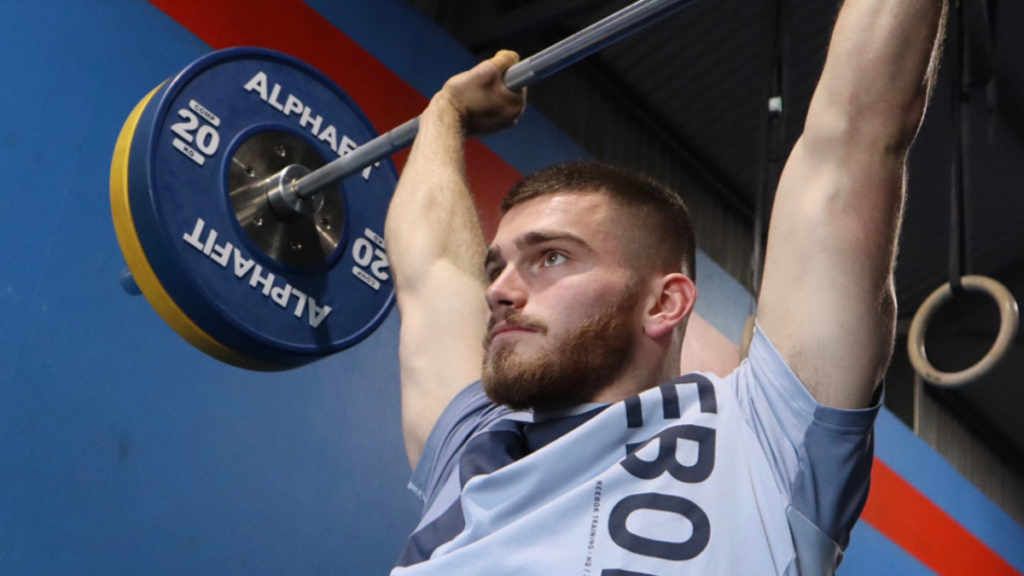


A bigger, stronger chest comes from more than chasing a bigger bench press. The pectoralis major has sections that contribute to different pressing angles, so a well rounded routine can include flat, inclined, and declined barbell presses. These exercises let you train the chest with heavy, measurable resistance while changing the angle of the bench to shift how the movement feels and which areas are emphasized.
The research on bench angles often measures muscle activity during a single workout, which can offer useful clues but does not prove that one angle builds more muscle over time. A small training study also suggests that both flat and incline bench pressing can increase chest muscle thickness. The practical approach is to use each variation for a clear purpose, keep your technique consistent, and gradually increase the challenge as you get stronger.


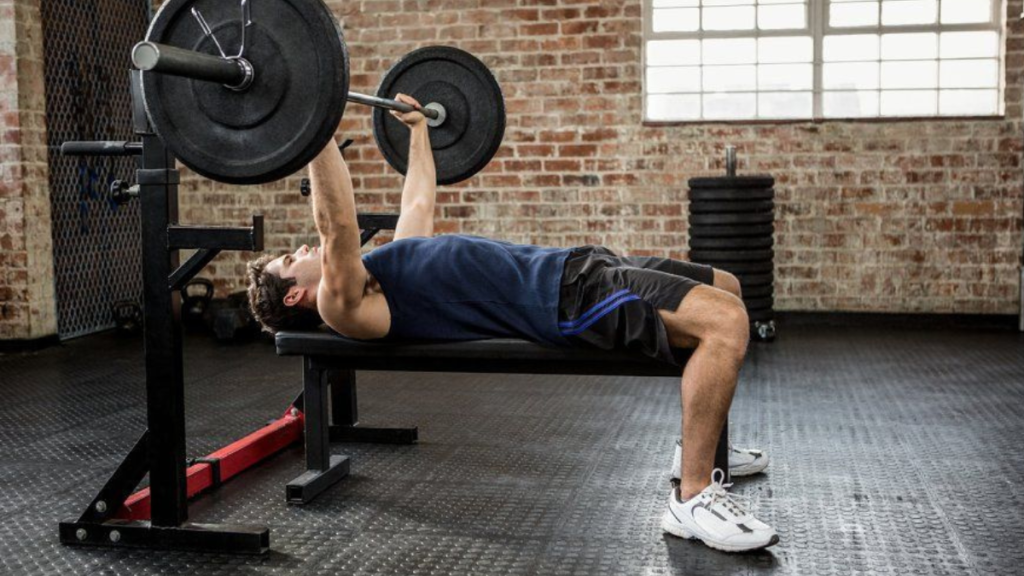
1. Barbell Bench Press
Why it works
The flat barbell bench press is a reliable starting point for building pressing strength and chest size. It trains the pectoralis major alongside the triceps and front of the shoulders. A 10 week training study found that bench press training increased the size of the pectoralis major, as well as several other muscles involved in the lift. This supports the bench press as a useful chest building exercise, although the results do not mean that every lifter will respond identically.
A flat bench also gives you a consistent setup for tracking progress. You can record the weight, repetitions, and sets, then aim to improve gradually while maintaining good form. Strength and muscle growth are related, but they are not the same goal. Heavier loads are especially useful for improving maximal strength, while muscle growth can occur across a range of loads when sets are sufficiently challenging.
How to do it
Lie on the bench with your eyes beneath the bar. Place your feet firmly on the floor and create a stable base by keeping your upper back on the bench. Grip the bar with your hands slightly wider than shoulder width, then unrack it with control and position it above your chest.
Lower the bar toward the middle of your chest while keeping your wrists stacked over your forearms. Keep your elbows at a comfortable angle rather than letting them flare straight out to the sides. Touch the bar lightly to your chest, then press it back up until your arms are extended without forcefully locking your elbows. Use a spotter or properly positioned safety arms when lifting challenging weights.
Training focus
Use the flat bench as your main lift when building overall pressing strength is a priority. Sets of about 4 to 8 repetitions work well for practicing heavier lifting, while sets of about 6 to 12 repetitions can make it easier to accumulate challenging work for muscle growth. These are practical ranges, not strict rules. Choose a load that lets you complete the planned repetitions with controlled technique and finish most sets with one to three good repetitions still possible.
2. Incline Barbell Bench Press
Why it works
The incline bench press changes the direction of the press and can place more emphasis on the clavicular, or upper, portion of the pectoralis major. Studies measuring muscle activity have found that changing the bench angle changes the activity recorded in different portions of the chest and in the front deltoids. The findings do not establish a single perfect incline for everyone, but a modest incline is a sensible place to start.
A very steep incline can turn the exercise into more of a shoulder press. One study comparing several bench inclinations found greater anterior deltoid activity at steeper angles, while chest muscle activity varied by region and angle. For that reason, try a low to moderate incline, often around 15 to 30 degrees, and adjust it if the movement feels uncomfortable or overly shoulder dominant.
How to do it
Set the bench to a low or moderate incline and position yourself so your head, upper back, and hips are supported. Plant your feet firmly on the floor. Grip the bar slightly wider than shoulder width and unrack it above your upper chest.
Lower the bar toward your upper chest with a controlled motion. Keep your elbows below or slightly behind the bar as you descend, and avoid letting them flare sharply outward. Press the bar upward and slightly back toward its starting position. The exact bar path will vary with your body proportions, so use a path that feels steady and pain free.
Training focus
The incline press can be your first lift if developing your upper chest is a priority, or a secondary lift after flat bench pressing. Start with a load you can control through the full range of motion. Sets of 6 to 12 repetitions are a practical choice for most lifters, though other repetition ranges can work if the effort is appropriate.
Pay attention to whether the bench angle and range of motion suit you. If you feel a sharp or persistent shoulder pain, stop the set and adjust the setup or choose another exercise. Do not force a deep bar touch if your mobility or shoulder comfort does not allow it.
3. Decline Barbell Bench Press
Why it works
The decline bench press is a useful third option because it changes the pressing angle and may help some lifters train the lower, sternocostal region of the chest with a comfortable range of motion. Research comparing bench positions has found differences in muscle activity across angles, but surface electromyography measures electrical activity during a movement. It does not directly show how much muscle will grow after months of training.
That makes the decline press a variation to consider, rather than a mandatory exercise for a complete chest. It can offer variety and allow lifters to press from a different position. If you already get productive chest training from flat and incline pressing, adding decline work is optional. Choose it if you enjoy it, can set it up safely, and can perform it without discomfort.
How to do it
Secure your legs under the bench supports and lie back with your shoulders and upper back supported. Take a grip slightly wider than shoulder width, unrack the bar with a spotter if possible, and hold it above your lower chest.
Lower the bar under control toward the lower portion of your chest. Keep your shoulder blades steady against the bench and your wrists aligned with your forearms. Press the bar back up without bouncing it off your chest. Because the declined position can make it harder to move into a safe sitting position after a set, use a spotter and avoid lifting to failure without suitable safety equipment.
Training focus
Use the decline press for moderate repetitions and controlled sets, especially if you want another chest focused barbell movement after your main press. You do not need to use all three exercises in every workout. Two variations may be enough for one session, with the third included on another training day or rotated into your program.
How to Put the Exercises Together
A simple chest session could start with the flat bench press, followed by the incline bench press. You could add the decline press in a later session or use it in place of one of the other variations. For example, perform three or four working sets of your first press and two or three sets of the second. Start with fewer sets if you are new to structured training, then adjust based on your progress and ability to recover.

Keep a training log so you can see whether your performance is improving. When you complete all planned repetitions with steady technique, add a small amount of weight or aim for another repetition in a later workout. Avoid increasing weight when it causes you to shorten the range of motion, bounce the bar, or lose control of the movement.
You do not need to take every set to absolute failure to build muscle. Training close to failure can make sets challenging, but leaving a small number of good repetitions in reserve can help you maintain control, particularly on barbell presses where being trapped under the bar is a risk. Use a spotter or safety arms for demanding sets, and rest long enough between sets to repeat strong, controlled repetitions.
Key Takeaways
| Focus | Takeaway |
|---|---|
| Flat barbell bench press | Use it to build pressing strength and train the chest through a familiar horizontal press. |
| Incline barbell bench press | Use a modest bench angle to add an upper chest focused variation. |
| Decline barbell bench press | Consider it for variety and a different pressing angle if it feels comfortable. |
| Progress | Add repetitions or weight gradually while keeping your technique consistent. |
| Safety | Use a spotter or safety arms when lifting challenging barbell weights. |
References
- Currier, B.S. et al. (2023). Resistance training prescription for muscle strength and hypertrophy in healthy adults: a systematic review and Bayesian network meta-analysis. British Journal of Sports Medicine, 57(18), 1211–1220.
- Lanza, M.B. et al. (2024). Muscle hypertrophy response across four muscles involved in the bench press exercise: randomized 10 weeks training intervention. Journal of Bodywork and Movement Therapies, 40, 1417–1422.
- Lauver, J.D., Cayot, T.E. and Scheuermann, B.W. (2016). Influence of bench angle on upper extremity muscular activation during bench press exercise. European Journal of Sport Science, 16(3), 309–316.
- Schoenfeld, B.J., Grgic, J., Ogborn, D. and Krieger, J.W. (2017). Strength and hypertrophy adaptations between low versus high load resistance training: a systematic review and meta-analysis. Journal of Strength and Conditioning Research, 31(12), 3508–3523.
- Trebs, A.A., Brandenburg, J.P. and Pitney, W.A. (2010). An electromyography analysis of 3 muscles surrounding the shoulder joint during the performance of a chest press exercise at several angles. Journal of Strength and Conditioning Research, 24(7), 1925–1930.
- Chaves, S.F.N. et al. (2020). Effects of horizontal and incline bench press on neuromuscular adaptations in untrained young men. International Journal of Exercise Science, 13(6), 859–872.