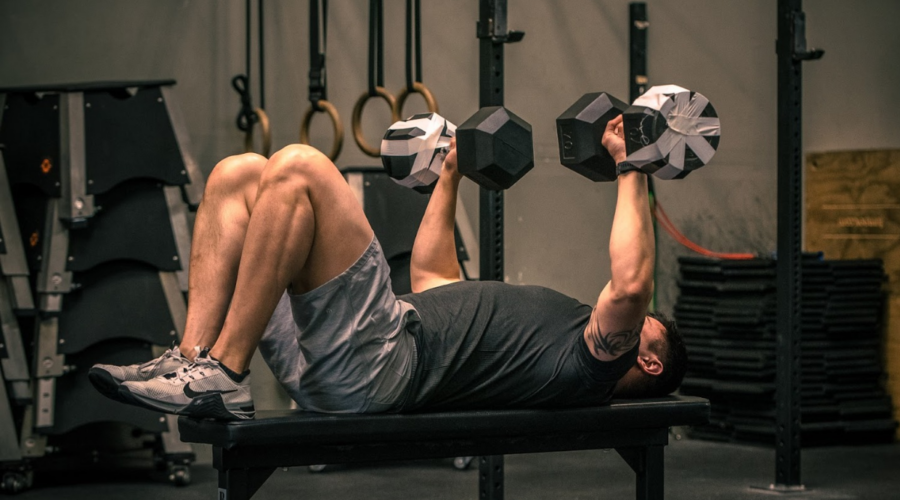


If you want to build a bigger chest, both the dumbbell bench press and the barbell bench press can help. The barbell lets you lift more total weight, while dumbbells let each arm move independently and may feel more comfortable for some lifters. But neither fact proves that one exercise builds more muscle.
There is no strong long term trial showing that the dumbbell bench press consistently grows the chest more than the barbell version, or vice versa. The available research mostly compares muscle activity during a single workout, rather than measuring how much the chest grows over several months.


That evidence suggests the exercises can both train the pectoral muscles effectively. Your results will depend more on how well you train, progress, and recover than on which implement you choose.
What the Research Says About Chest Growth
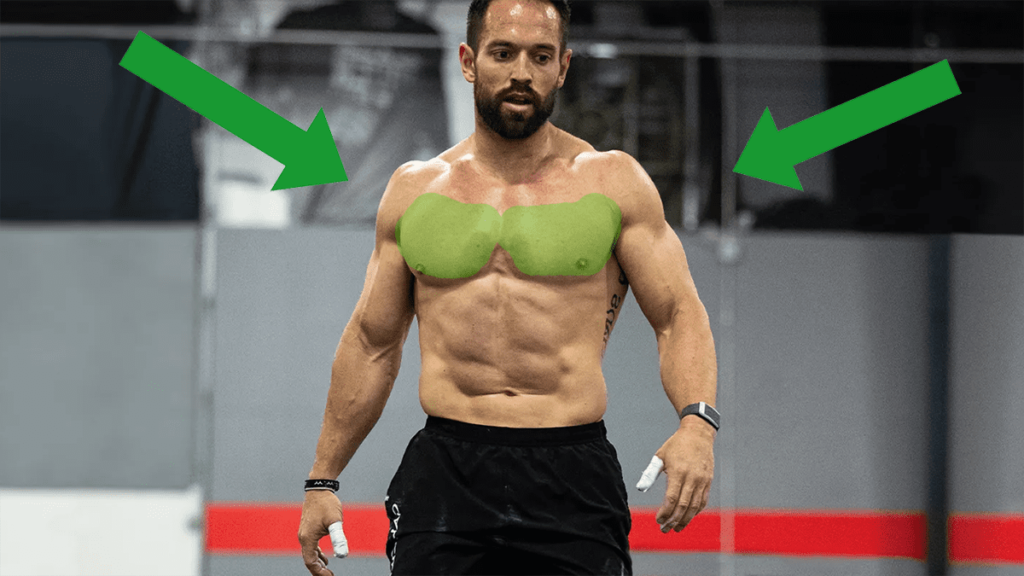
The chest is mainly made up of the pectoralis major, a large muscle that helps bring the upper arm across the body and contributes to pressing movements. Both dumbbell and barbell bench presses involve the chest, shoulders, and triceps. In both lifts, the pectoralis major helps move the weight away from the body.
A small study comparing dumbbell and barbell bench presses measured electrical activity in the chest and front shoulder muscles. It found no significant difference in muscle activation between the two presses. This is useful evidence that both exercises can recruit the chest, but it does not tell us which one produces greater muscle growth over time. A single workout study cannot replace a long term comparison that tracks changes in muscle size.
Muscle activation is also not a direct score for future growth. An exercise that produces a higher reading in one session is not automatically the better muscle building choice. Growth depends on repeated training that gives the muscles a challenging stimulus, alongside enough food and recovery to support adaptation. Research reviews on resistance training show that equipment type has not consistently determined hypertrophy outcomes.
Barbell Bench Press: More Load, More Stability
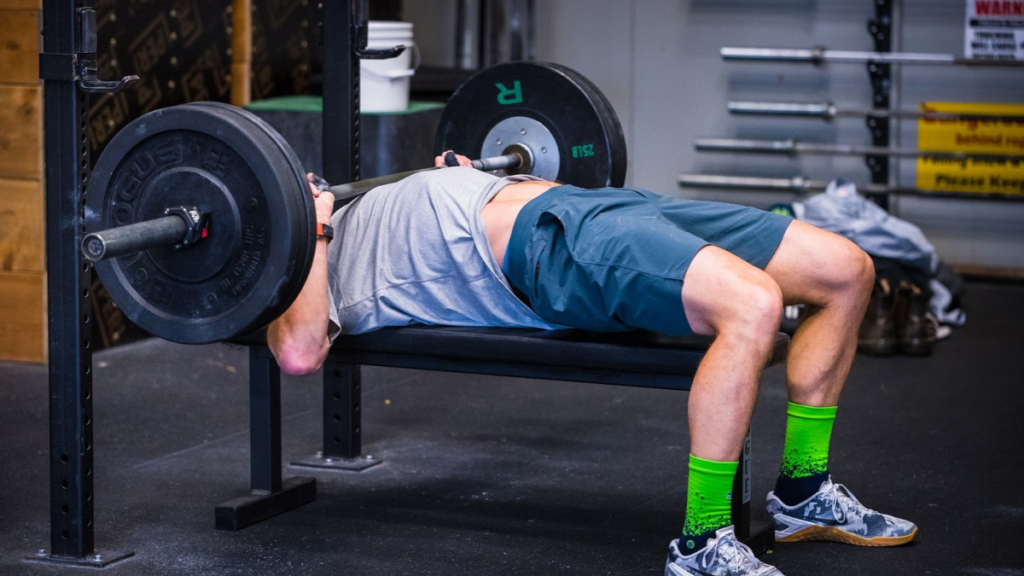
The barbell bench press is often the first exercise people think of for building a stronger chest. The bar connects both hands, which limits how independently each arm has to control the load. This can make it easier to lift more total weight than you can with dumbbells.
Lifting heavier can be useful, especially if you want to improve your barbell bench press strength. It also makes it straightforward to add small amounts of weight over time. When you can complete your target repetitions with solid technique, you can increase the load and continue challenging your muscles.
However, the amount on the bar is not the same as the amount of chest growth you will get. A heavier weight only helps if you can control it, use a suitable range of motion, and perform enough challenging work. Turning every set into a test of your one repetition maximum can make it harder to accumulate quality training volume.
The barbell also fixes your hand position. Some lifters find that comfortable, while others feel that it restricts their wrists or shoulders. Your experience will depend on your proportions, technique, and any discomfort you have during the movement. If the barbell press consistently feels uncomfortable, choosing dumbbells or another pressing variation can help you train your chest more comfortably.
Dumbbell Bench Press: Independent Arms and Flexible Positioning
With dumbbells, each arm controls its own weight. You can adjust your grip slightly and choose a hand position that feels natural, including keeping your palms partly turned toward one another. That flexibility may make dumbbells a better fit for some people, though it does not guarantee they will feel better for everyone.
Dumbbells also require you to control two separate weights. This can make the exercise feel less stable and limit the total load you can use. A study comparing chest press variations found that participants could lift less with dumbbells than with a barbell. That result reflects the demands of the specific test and participants, rather than a rule that applies equally to every lifter.
A dumbbell press can allow the hands to travel through a different path than they do with a barbell. Some lifters can lower the dumbbells farther beside the chest. That extra depth is only useful if you can reach it without losing control or feeling pain. A deeper position is not automatically better, and there is no need to force your shoulders into a range that feels uncomfortable.
The independent movement may also help you notice differences between your sides. If one arm is less coordinated or weaker, the dumbbells make it harder for the stronger side to do more of the work. That can help you pay attention to balanced technique, but it does not mean dumbbells will correct every strength difference.
Which One Builds More Chest Muscle?
For most lifters, neither exercise has been shown to build more chest muscle by default. The best choice is the one you can perform consistently, with good control, through a comfortable range of motion, and with a load that makes your sets challenging.
The barbell may suit you if you enjoy progressing your bench press and feel comfortable with a fixed hand position. It can also be practical when you want to work with heavier loads. Dumbbells may suit you if you prefer the freedom to adjust your grip, want each arm to work independently, or find the barbell uncomfortable.
You do not have to choose just one. Using both in the same training plan can give you variety while keeping a familiar pressing movement in your routine. For example, you could use the barbell for one chest session and dumbbells for another. Or you could make one your main lift and use the other for a smaller amount of additional work.

Exercise variety is useful when it helps you train hard and stay consistent, but switching movements every week is not essential. If your current press feels good and you are gradually improving your repetitions or load, there is no need to replace it simply because another version is popular.
How to Make Either Press Work for Muscle Growth
Choose a load that lets you perform each repetition with control. Lower the weight in a steady way, keep your shoulders and upper back supported against the bench, and press without bouncing the bar or dumbbells off your chest. Stop the set if your technique breaks down or you feel sharp pain.
Your sets should be challenging, but you do not have to reach complete muscular failure every time. A useful approach is to finish most sets when you feel you could complete only a few more clean repetitions. Training research indicates that reaching momentary failure is not consistently necessary for muscle growth, while training effort still needs to be high enough to challenge the target muscles.
Use a range of motion that feels controlled and comfortable. Lower the weight until you feel a strong stretch in your chest without your shoulders rolling forward or losing their position. Your range may differ from someone else’s because of differences in arm length, shoulder mobility, and lifting experience.
4 Best Beginner Exercises for Stronger and More Defined Six Pack Abs Without Sit Ups
Progress gradually. You might add a repetition to a set, improve your control, or increase the load when you can complete all your planned reps with good technique. Keeping a simple record of your exercises, weights, and repetitions makes it easier to see whether your training is moving forward.
Weekly training volume also matters. Current resistance training guidance suggests that higher weekly set volumes can support hypertrophy, with around 10 or more sets per muscle group per week often used as a practical target for people who can recover from that workload. That does not mean everyone needs to start there. Build up over time, and count pressing exercises that train the chest rather than adding sets simply to hit a number.
The Verdict
The dumbbell and barbell bench press can both build chest muscle. Current evidence does not establish that one is universally superior for hypertrophy. The barbell may let you lift more weight and track strength progress easily. Dumbbells provide independent movement and more freedom to adjust your grip. Pick the version that feels controlled and comfortable, and focus on gradually improving your training.
Table 1. Key Takeaways
| Question | Answer |
|---|---|
| Which press has been proven to build more chest muscle? | Neither. There is not strong long term research showing one consistently produces greater chest growth. |
| Why choose the barbell press? | It can make heavier loading and tracking strength progress more practical. |
| Why choose the dumbbell press? | Each arm moves independently, and you can adjust your grip and hand position. |
| Do you need to choose only one? | No. You can use both in the same training plan if they feel good and fit your goals. |
| What matters most for growth? | Consistent, challenging training, gradual progression, a comfortable range of motion, and recovery. |
References
- Currier, B.S., D’Souza, A.C., Fiatarone Singh, M.A., Lowisz, C.V., Rawson, E.S., Schoenfeld, B.J., Smith-Ryan, A.E., Steen, J.P., Thomas, G.A., Triplett, N.T., Washington, T.A., Werner, T.J. and Phillips, S.M. (2026) ‘American College of Sports Medicine Position Stand. Resistance Training Prescription for Muscle Function, Hypertrophy, and Physical Performance in Healthy Adults: An Overview of Reviews’, Medicine & Science in Sports & Exercise, 58(4), pp. 851–872.
- Farias, D.A., Willardson, J.M., Paz, G.A., Bezerra, E.S. and Miranda, H. (2017) ‘Maximal strength performance and muscle activation for the bench press and triceps extension exercises adopting dumbbell, barbell and machine modalities over multiple sets’, Journal of Strength and Conditioning Research, 31(7), pp. 1879–1887.
- Saeterbakken, A.H., van den Tillaar, R. and Fimland, M.S. (2011) ‘A comparison of muscle activity and 1-RM strength of three chest-press exercises with different stability requirements’, Journal of Sports Sciences, 29(5), pp. 533–538.
- Welsch, E.A., Bird, M. and Mayhew, J.L. (2005) ‘Electromyographic activity of the pectoralis major and anterior deltoid muscles during three upper-body lifts’, Journal of Strength and Conditioning Research, 19(2), pp. 449–452.