

Swedish-launched Neko Health opened its first clinic in the United States on September 24. Based in New York, the facility has already attracted a waiting list of over 25,000. The 11,000 square-foot clinic incorporates Neko’s proprietary health-monitoring technology and can be found at 300 Lafayette Street in So-Ho.
Neko was founded by Daniel Ek and Hjalmar Nilsonne. Offering non-invasive and radiation-free scans, visitors receive cardiovascular, metabolic, and other data within 60 minutes. A physician’s review is also part of the process. Speaking on the new clinic, co-founder Nilsonne said:
“New York felt like the right place to bring that idea to the US. It’s a city where people are used to having access to the best of everything, and we think healthcare should be no different. Longevity and health should not be reserved for billionaires. Being evidence-based and accessible to everyday people is the whole point. Otherwise, we are just reinventing luxury medicine.”
How Neko Has Funded Its Expansion
Neko has received financial backing from big names in Hollywood, Silicon Valley, sports, and hospitality. Recognized investors include Mark Zuckerberg, Thierry Henry, Claudia Schiffer, and Maria Sharapova.
The New York clinic will be Neko’s largest and most advanced to date. Spanning two floors, seven scan rooms will be available. The building is owned by Intervest and Ridgebrook Partners, while the deal was brokered by Newmark. Nilsonne also spoke of the work that went into the clinic behind the scenes:
“We spent five years just working on the fundamental premise of what a new physical infrastructure layer of healthcare would look like; where we could provide affordable, high-quality preventive services; and how we could make it an experience people enjoy.”
To date, Neko has made its name in Sweden and the UK. However, plans are afoot to open additional clinics in New York, as well as in Miami and San Francisco.
Why Neko is So Popular
Nilsonne also spoke of Neko’s affordability and benefits:
“An MRI is a very powerful piece of technology that looks inside your body and can see things, but it is just too expensive for most people. We are trying to create a price point that’s 10 times more affordable,” said Nilsonne.
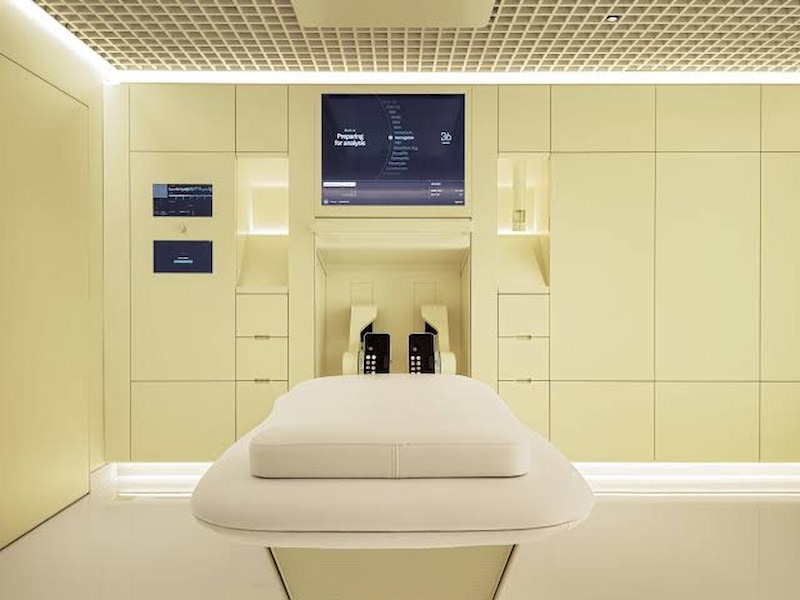
“We’ve spent the last few years asking a simple question: What if a single visit could give you a more complete picture of your health, where it’s heading, and a clear plan from a medical professional to change what happens next?”