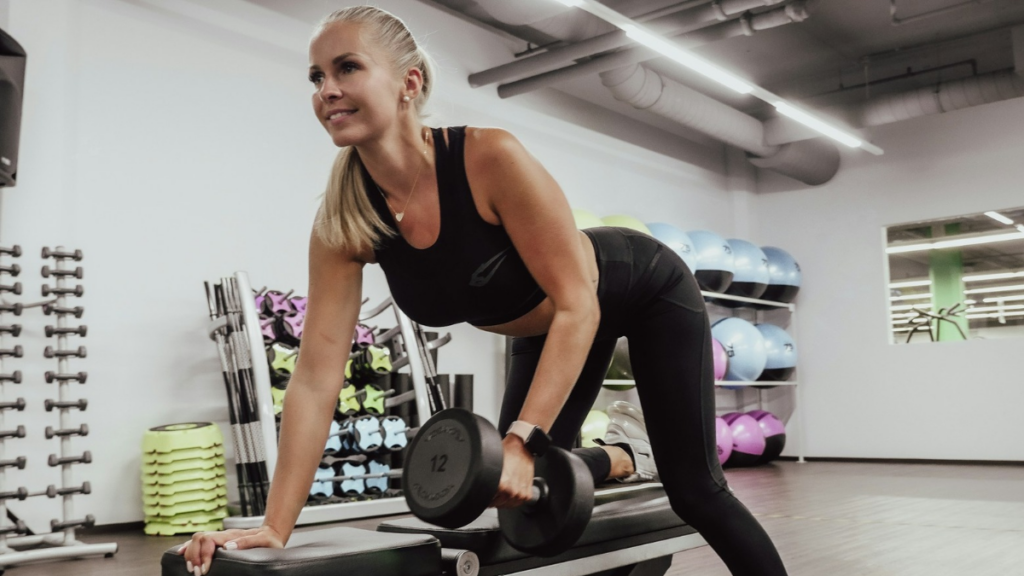
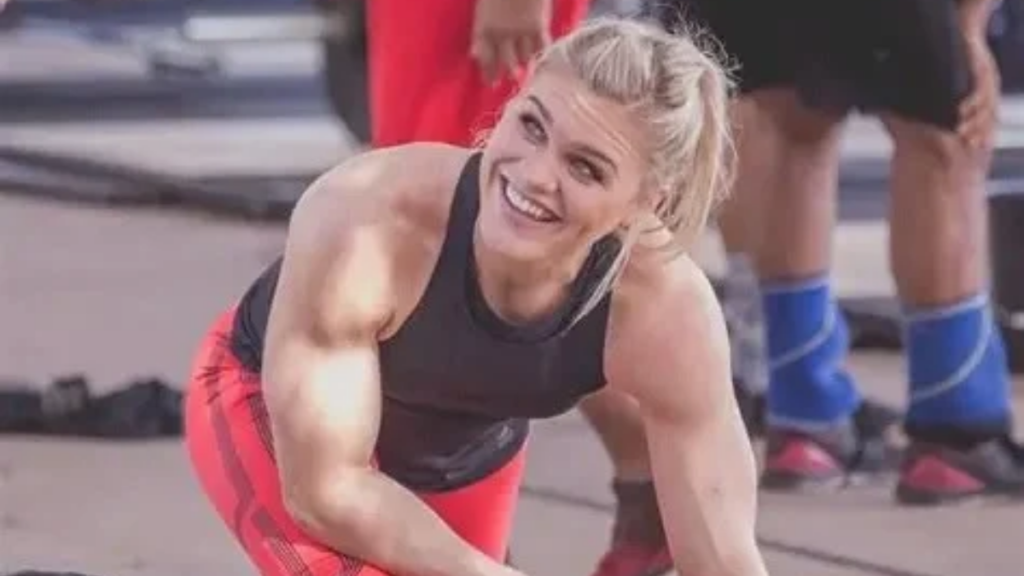
If you want bigger and stronger arms then dumbbells are a great place to start. These three will help you develop in different ways and take your strength and physique to the next level in no time at all.
Why Beginners Do Not Need An Overloaded Arm Routine
When you first begin resistance training, your muscle fibers and neuromuscular system respond strongly to clear, consistent mechanical tension, meaning you do not need high exercise variety or excessive weekly sets to trigger noticeable growth. Research on resistance training volume and hypertrophy shows that moderate, well-managed weekly volume performed with clean form and progressive overload drives substantial increases in muscle cross-sectional area, especially in newer lifters.
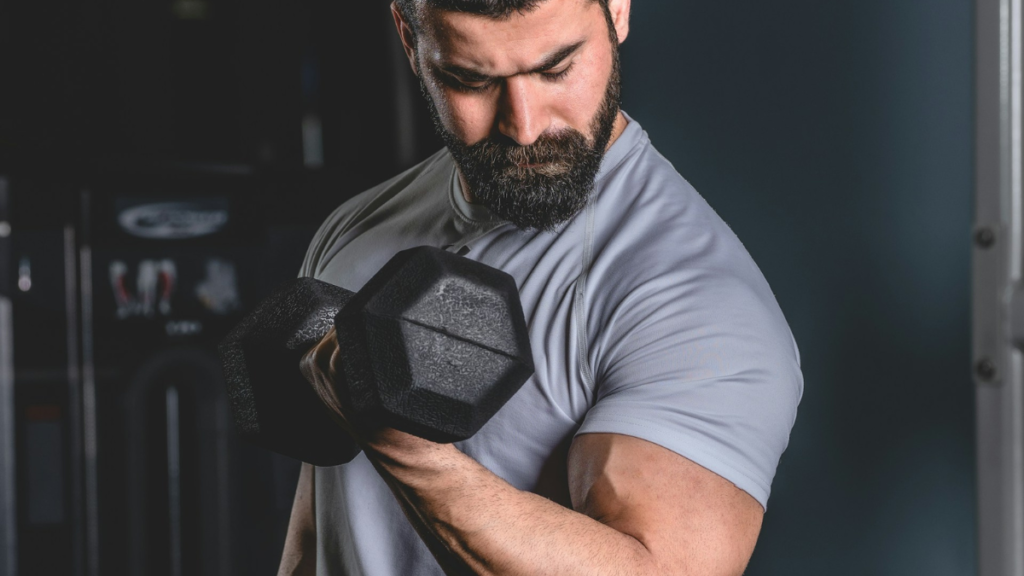
Adding multiple overlapping isolation exercises to a beginner workout often creates unnecessary fatigue without giving you a greater growth signal.
Another common mistake beginners make is focusing almost all their arm attention on basic standing curls while ignoring how shoulder angle and muscle stretch influence growth across both the biceps and triceps. Anatomical measurements show that the triceps brachii accounts for roughly sixty to seventy percent of upper arm muscle mass, while the biceps brachii makes up closer to a third. Using dumbbells lets each arm work independently, helps balance side-to-side effort, and allows natural wrist and elbow alignment as you learn controlled lifting mechanics from day one.
The 3 Dumbbell Exercises For Beginner Arm Growth
To build balanced, muscular arms efficiently as a beginner, you need one exercise that trains the elbow flexors and forearms together through a neutral grip, one exercise that loads the triceps in a deep overhead stretch, and one curling movement that places the biceps under stretch behind the torso. Together, the dumbbell hammer curl, the overhead dumbbell triceps extension, and the incline dumbbell curl target every key region of the upper arm without cluttering your routine.
Exercise One: The Dumbbell Hammer Curl
The dumbbell hammer curl trains elbow flexion with a neutral grip where your palms face each other throughout the lift, targeting the biceps brachii alongside the brachialis and brachioradialis. Electromyographic research on elbow flexion demonstrates that neutral and semi-supinated forearm positions recruit the brachioradialis prominently while still engaging the biceps brachii effectively.
Because the brachialis sits underneath the biceps and the brachioradialis spans the elbow and forearm, developing both adds meaningful thickness to the front and sides of your arms while supporting stronger grip mechanics for your heavier upper-body pulls.
Exercise Two: The Overhead Dumbbell Triceps Extension
Raising a single dumbbell with both hands or holding a pair of dumbbells overhead before bending your elbows places the biarticular long head of the triceps into a deep stretch because that muscle head crosses both the shoulder and elbow joints. Controlled training research comparing overhead versus neutral arm positions for elbow extensions found substantially greater hypertrophy in the triceps brachii, particularly the long head, when trained in the overhead position.
Because the triceps make up the majority of upper arm mass, prioritizing this stretched overhead extension gives beginners a direct path to fuller arms.
Exercise Three: The Incline Dumbbell Curl
Sitting back on an incline bench angled around forty-five to sixty degrees lets your arms hang slightly behind your torso, placing the long head of the biceps brachii into an extended position before you even bend your elbows.
Biomechanical and electromyographic investigations of biceps curl variations show that shoulder extension alters biceps brachii length and maintains meaningful neuromuscular demand across the movement path. Pairing a stretched incline curl with a neutral-grip hammer curl covers both the long head of the biceps and the underlying brachialis and brachioradialis cleanly.
How the Three Dumbbell Exercises Target Complete Arm Development
| Exercise Name | Primary Muscles Targeted | Grip and Joint Focus | Main Role in Beginner Routine |
|---|---|---|---|
| Dumbbell Hammer Curl | Biceps brachii, brachialis, brachioradialis | Neutral palms-in grip with controlled elbow flexion | Builds front arm thickness and forearm strength |
| Overhead Dumbbell Triceps Extension | Triceps brachii long head and overall triceps | Arms raised overhead for a deep stretch under load | Maximizes lengthened-position tension for the largest arm muscle |
| Incline Dumbbell Curl | Biceps brachii, especially the long head | Supinated grip with arms extended behind the torso | Loads the biceps in a stretched shoulder-extended position |
How To Program These Exercises For Steady Beginner Progress
Putting these three movements into your weekly training plan is simple and fits easily into an upper-lower split, a push-pull-legs split, or a full-body routine.
Aim to train these arm movements twice per week on non-consecutive days, performing two to three working sets of eight to twelve controlled repetitions per exercise with roughly ninety seconds to two minutes of rest between sets. Lower the weights smoothly over two to three seconds on every repetition rather than swinging your torso or rushing the descent, and stop each set with about one to two clean repetitions left in reserve so your technique stays sharp.
Is the Zottman Curl the Perfect Missing Exercise for Bigger Biceps and Forearms?
As a beginner, progress comes from mastering control first and then adding small amounts of weight or extra clean repetitions once you hit the top of your target repetition range across all sets. Keep your upper arms steady rather than letting your shoulders heave the weights upward, and pay close attention to how your elbows and shoulders feel so connective tissues adapt comfortably alongside growing muscle.
Practical Beginner Programming Guide for Arm Training
| Programming Variable | Recommended Approach | Practical Purpose |
|---|---|---|
| Weekly Frequency | Two sessions per week on non-consecutive days | Delivers repeated growth stimulus while allowing tissue recovery |
| Sets and Repetitions | Two to three sets of eight to twelve reps | Builds effective mechanical tension without excessive joint strain |
| Repetition Tempo | Two to three seconds lowering under control | Increases time under tension and discourages momentum cheating |
| Progression Method | Add clean reps first, then increase dumbbell weight | Keeps form crisp and supports steady neuromuscular adaptation |
Key Takeaways for Beginner Muscular Arms
| Key Takeaway | Practical Application |
|---|---|
| Keep Arm Routines Focused | Three targeted dumbbell exercises give beginners enough stimulus without wasted fatigue. |
| Triceps Drive Most Arm Size | Prioritizing overhead triceps extensions builds fuller arms faster than curls alone. |
| Hammer Curls Build Thickness | A neutral grip targets the biceps, brachialis, and brachioradialis together. |
| Incline Curls Stretch The Biceps | Sitting on an incline bench places the biceps long head into an effective stretched position. |
| Control Beats Heavy Swinging | Smooth lowering tempos and gradual weight increases build size safely over time. |
References
- Bolgla, L.A., Malone, T.R., Umphlett, B.R. and Vance, M.C., 2008. Electromyographic analysis of the biceps brachii and brachioradialis during various elbow flexion exercises. Journal of Strength and Conditioning Research, 22(5), pp.1489-1495.
- Maeo, S., Wu, Y., Huang, M., Sakurai, H., Kusagawa, Y., Sugiyama, T., Kanehisa, H. and Isaka, T., 2023. Triceps brachii hypertrophy is substantially greater after elbow extension training performed in the overhead versus neutral arm position. European Journal of Sport Science, 23(7), pp.1240-1250.
- Oliveira, L.F., Matta, T.T., Alves, D.S., Garcia, M.A. and Vieira, T.M., 2009. Effect of the shoulder position on the biceps brachii emg in different dumbbell curls. Journal of Sports Science and Medicine, 8(1), pp.24-29.
- Schoenfeld, B.J., Ogborn, D.I. and Krieger, J.W., 2017. Dose-response relationship between weekly resistance training volume and increases in muscle mass: a systematic review and meta-analysis. Journal of Sports Sciences, 35(11), pp.1073-1082.
- Wolf, M., Androulakis-Korakakis, P., Wang, Y., Fisher, J.P. and Steele, J., 2023. Partial vs full range of motion resistance training: a systematic review and meta-analysis. International Journal of Strength and Conditioning, 3(1), pp.1-44.