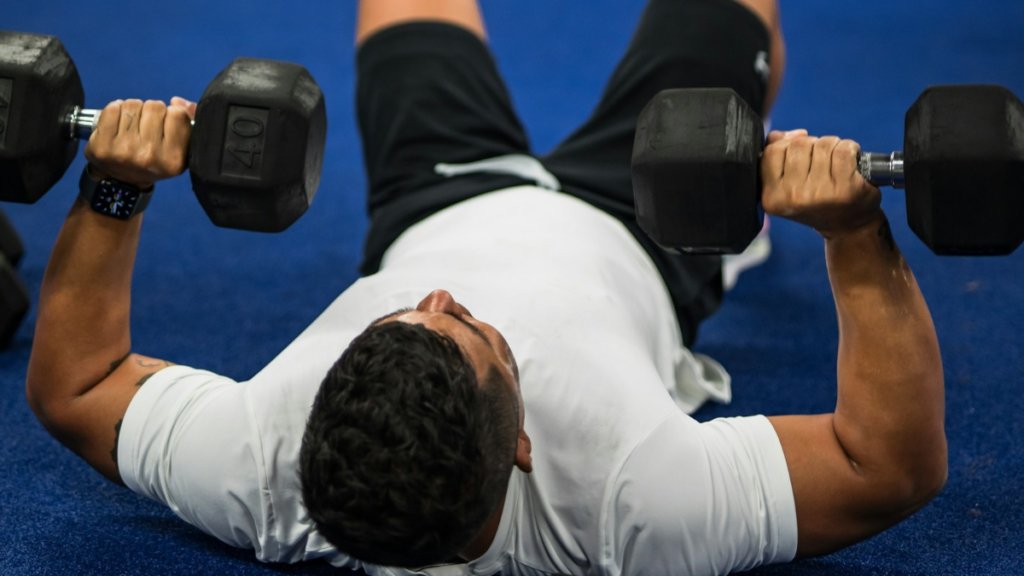
These 3 chest exercises will help you build a stronger, better chest, whilst also switching up your training and keeping things exciting.
Why Your Current Chest Routine Might Be Leaving Size Behind
Most lifters think about chest training strictly in terms of pushing a bar straight up from the middle of the torso, which leaves important mechanical angles underexplored.
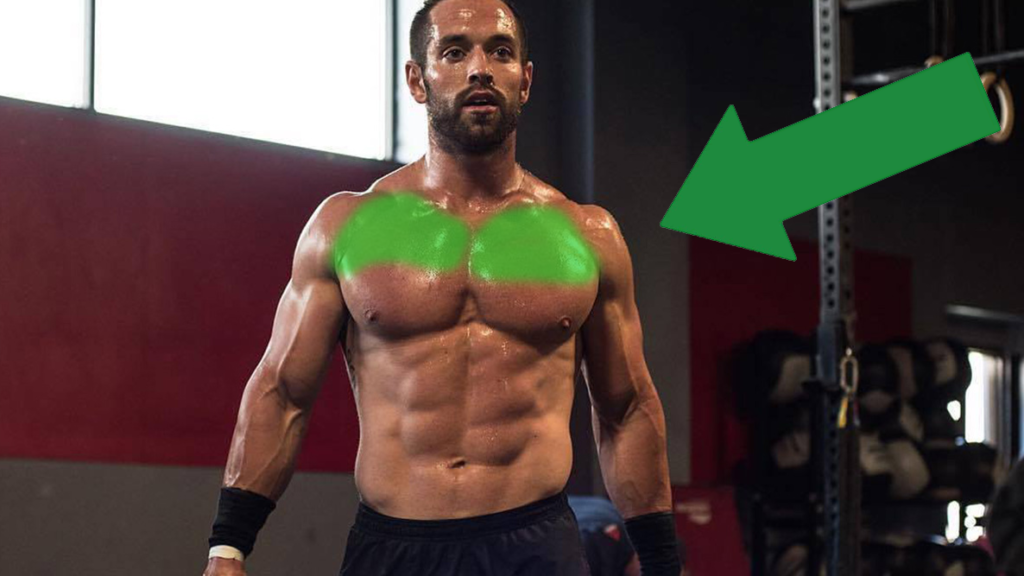
Anatomically, the pectoralis major includes both a clavicular head originating near the collarbone and a much larger sternocostal head spanning the sternum and ribs, with fibers converging onto the upper humerus. Research evaluating shoulder angles and pressing variations shows that changing the path of the upper arm alters regional recruitment across the upper, middle, and lower portions of the chest.

Beyond angle alone, exercise science increasingly highlights the value of loading muscles effectively in lengthened positions while avoiding unnecessary joint irritation. Studies comparing resistance profiles and range of motion demonstrate that training muscles through a deep, controlled stretch supports robust hypertrophy alongside traditional mid-range pressing. When your routine relies exclusively on movements that drop resistance at the top or stop short at the bottom, you miss valuable mechanical tension that builds broader, stronger pectorals.
1. The Slight-Decline Dumbbell Press
Decline pressing fell out of fashion in many gyms because steep decline benches feel awkward to set up and can rush blood to your head during heavy sets. Yet elevating the front end of a flat bench by just one or two weight plates creates a gentle ten to fifteen degree decline that transforms how a dumbbell press loads your chest.
Electromyography research comparing horizontal, incline, and decline pressing positions indicates that decline angles place strong emphasis on the lower sternocostal fibers of the pectoralis major while often reducing front-deltoid dominance compared with steeper angles.
How to Set Up a Slight-Decline Press Safely
Slide one or two sturdy bumper plates under the foot end of a standard flat bench so your torso tilts only slightly downward without feeling upside down.
Plant your feet firmly on the floor, draw your shoulder blades gently back into the pad, and lower a pair of dumbbells until your upper arms reach roughly parallel with your torso or just slightly below. Pressing the dumbbells upward along a smooth, natural arc lets your wrists rotate comfortably and delivers a deep stretch across the outer and lower sweep of your chest without irritating your front shoulders.
2. The Standing Single-Arm Cable Press Around
If you ask ten lifters how to train the inner and outer chest with cables, nine of them will show you a standard two-arm cable crossover performed with a wide sweeping motion. While bilateral crossovers are useful, stepping slightly forward and performing a single-arm cable press around allows your upper arm to travel across the midline of your body with far greater stability and range of motion.
Biomechanical and electromyography studies examining horizontal adduction exercises show that cable-based chest movements maintain continuous external torque across the arc of motion, challenging the pectoralis major even near full contraction where free weights lose horizontal tension.
Executing the Press Around for Maximum Chest Tension
Set a cable pulley to roughly mid-chest height, grab a single D-handle with one hand, and step forward into a staggered athletic stance so your working side is slightly angled away from the stack.
Brace your ribcage down so your torso stays square rather than twisting wildly, and press the handle forward and smoothly across your centerline until your bicep comes close to your upper chest. Controlling the return phase until your elbow drifts slightly behind your torso stretches the sternal fibers under steady cable tension, making sets of twelve to fifteen repetitions feel remarkably productive without needing heavy loads.
3. The Ring or Suspension Push-Up With Deep Stretch
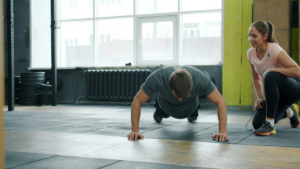
Bodyweight push-ups rarely get respect from lifters chasing serious chest mass, mostly because standard floor push-ups cut the bottom range of motion short the moment your chest touches the ground. Hanging gymnastic rings or suspension straps a few inches above the floor solves both limitations at once by allowing your hands to rotate freely and your chest to sink slightly deeper between your hands under strict control.
Controlled training research comparing progressive push-ups with bench pressing demonstrates that push-up variations can induce comparable gains in pectoralis major muscle thickness when sets are performed with sufficient effort and challenge.
Making Ring Push-Ups Safe and Effective
Adjust the straps so the handles sit roughly six to twelve inches off the floor, adopt a rigid plank position with your glutes and abs braced, and lower your body smoothly until you feel a comfortable stretch across your chest without letting your shoulders roll forward. Press back up while subtly bringing the handles slightly closer together at the top, which adds gentle horizontal adduction to the vertical pressing pattern. Research on suspension push-ups also notes heightened trunk stabilizer engagement, meaning you build pressing endurance, shoulder stability, and deep chest stretch in one simple movement.
Overview of the 3 Forgotten Chest Builders
| Exercise | Primary Mechanical Advantage | Targeted Chest Region | Recommended Sets and Reps |
| Slight-Decline Dumbbell Press | Deep bottom stretch with reduced front-delt takeover | Lower and outer sternocostal pectoralis major | 3 to 4 sets of 8 to 12 reps |
| Single-Arm Cable Press Around | Continuous tension across full horizontal adduction | Sternal and medial pectoralis major fibers | 3 sets of 12 to 15 reps per arm |
| Ring or Suspension Push-Up | Extended bottom range of motion and natural wrist rotation | Overall pectoralis major and shoulder stabilizers | 3 sets of 10 to 15 controlled reps |
How to Add These Movements Into Your Weekly Routine
You do not need to throw away your favorite pressing exercises to benefit from these three overlooked additions. Evidence on resistance training volume and frequency shows that spreading roughly ten to twenty hard weekly sets per muscle group across two weekly sessions provides a reliable stimulus for hypertrophy while keeping fatigue manageable. Pairing one primary compound press with one or two of these forgotten movements gives you a balanced blend of heavy mechanical tension, stretched-position loading, and continuous cable resistance.
Start your chest workout with the slight-decline dumbbell press while your strength and focus are fresh, follow it with your usual incline press or machine press, and finish with either the single-arm cable press around or ring push-ups taken close to muscular failure. Progress gradually by adding clean repetitions within your target range before bumping up the weight or lowering the rings closer to the floor. Over a consistent eight-to-twelve-week block, those overlooked angles can fill out the exact areas that standard bench pressing leaves behind.
Key Takeaways
| Topic | Main Takeaway |
| Angle and Tension Variety | Combining different shoulder angles and resistance curves stimulates stubborn fibers across the entire chest. |
| Slight-Decline Dumbbell Press | A subtle ten to fifteen degree decline loads the lower and outer pecs deeply without awkward setup discomfort. |
| Single-Arm Cable Press Around | Pressing a single cable across your midline delivers constant horizontal adduction tension through peak contraction. |
| Ring Push-Ups | Elevated ring push-ups unlock a deeper bottom stretch and natural joint rotation that floor push-ups cannot match. |
References
- Kikuchi, N. and Nakazato, K., 2017. Low-load bench press and push-up induce similar muscle hypertrophy and strength gain. Journal of Exercise Science and Fitness, 15(1), pp.37-42.
- Lauver, J.D., Cayot, T.E. and Scheuermann, B.W., 2016. Influence of bench angle on upper extremity muscular activation during bench press exercise. European Journal of Sport Science, 16(3), pp.309-316.
- Schoenfeld, B.J., Ogborn, D. and Krieger, J.W., 2017. Dose-response relationship between weekly resistance training volume and increases in muscle mass: A systematic review and meta-analysis. Journal of Sports Sciences, 35(11), pp.1073-1082.
- Snarr, R.L., Esco, M.R., Witte, E.V., Jenkins, C.T. and Brannan, R.M., 2013. Electromyographic activity of rectus abdominis during a suspension push-up compared to traditional exercises. Journal of Exercise Physiologyonline, 16(3), pp.1-8.
- Wolf, M., Androulakis-Korakakis, P., Fisher, J., Schoenfeld, B. and Steele, J., 2023. Partial vs full range of motion resistance training: A systematic review and meta-analysis. International Journal of Strength and Conditioning, 3(1).