


























3 Best Dumbbell Movements Beginners Need for Wider Shoulders


Dumbbells are a fantastic place to start when it comes to strengthening your upper body.
Here is what you need to do to build broad and strong shoulders.
The Anatomy of Shoulder Width
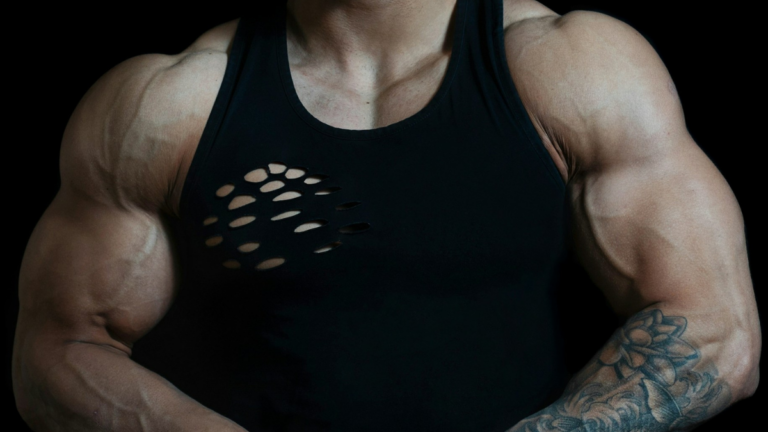
Your shoulder muscle, known anatomically as the deltoid, is made up of three distinct heads that perform completely different functions. The anterior deltoid sits on the front of your shoulder, the lateral deltoid caps the outside edge, and the posterior deltoid covers the back of the joint. While pressing movements heavily stimulate the front deltoid, it is the lateral deltoid that actually pushes your shoulders outward and creates that coveted broad, athletic V-taper.
Electromyography research examining muscle activation across various shoulder exercises reveals that traditional overhead pressing places primary emphasis on the anterior deltoid while leaving the lateral and posterior heads understimulated. Because beginners already work their front deltoids heavily during push-ups, bench presses, and daily pushing tasks, doing even more front-focused work creates muscle imbalances and rounds your posture forward. To build genuine width, your dumbbell selection must isolate the lateral deltoid and balance the rear shoulder without letting stronger muscles steal the workload.
The 3 Best Dumbbell Movements for Wider Shoulders
To maximize lateral deltoid hypertrophy and build balanced, injury-resistant shoulders, perform the following three movements twice per week. Focus on smooth, controlled repetitions rather than chasing heavy weights, and pause briefly at the top of each repetition to eliminate swinging momentum.
Beginner Dumbbell Shoulder Width Routine
| Exercise | Primary Target | Sets | Reps | Rest | Key Execution Cue |
| Seated Scapular-Plane Lateral Raise | Lateral Deltoid | 3 | 12 to 15 | 90 sec | Raise dumbbells 30 degrees forward of your torso with soft elbows |
| Chest-Supported Rear Delt Fly | Posterior Deltoid | 3 | 12 to 15 | 90 sec | Sweep dumbbells outward in a wide arc without pinching shoulder blades together |
| Neutral-Grip Seated Dumbbell Press | Anterior and Lateral Deltoids | 3 | 8 to 12 | 2 min | Keep palms facing each other and press smoothly without arching your lower back |
1. Lateral Raise
The lateral raise is the undisputed king of shoulder width, and performing it seated while moving slightly forward in the scapular plane makes it vastly superior for beginners.
Sitting down removes your ability to use lower-body momentum, forcing your lateral deltoids to lift the weight through pure muscular tension. Biomechanical analysis confirms that lifting in the thirty-degree scapular plane aligns the humeral head cleanly inside the shoulder socket while maintaining peak electrical activity in the middle deltoid fibers.
2. Chest-Supported Rear Delt Fly
Most beginners completely ignore the back of their shoulders because they cannot see them in the mirror, yet neglecting the posterior deltoid ruins your visual width from every angle.
Electromyography studies comparing shoulder isolation movements show that horizontal abduction exercises like the reverse fly elicit significantly higher posterior deltoid activation than standard rowing or pressing movements. Resting your chest against an incline bench locks your torso in place, prevents lower-back strain, and forces the rear deltoids to pull the dumbbells wide.
3. Neutral-Grip Seated Dumbbell Press
While isolation raises carve out width, a compound pressing movement builds overall deltoid thickness and foundational upper-body strength. Switching from a standard palms-forward grip to a neutral, palms-facing-each-other grip places your shoulder joint in a much safer mechanical position while still delivering strong muscle activation.
Research comparing shoulder press variations indicates that neutral-grip dumbbell pressing maintains robust deltoid recruitment while reducing anterior capsule strain, making it the ideal compound anchor for novice lifters.
How to Progress Without Hitting a Plateau
Beginners often make the mistake of jumping up in dumbbell weight too quickly, which immediately ruins their form on lateral raises and rear delt flies. Because the lateral deltoid is a relatively small muscle group, jumping from ten-pound dumbbells to fifteen-pound dumbbells represents a massive fifty percent increase in resistance. Instead of rushing to grab heavier weights, use a simple double-progression model to drive steady muscle growth.
Is the Bayesian Cable Curl Better Than Regular Curls for Growing Your Biceps?
Start with a weight you can lift cleanly for twelve repetitions with two repetitions left in the tank. Each week, aim to add one or two controlled repetitions to every set until you can complete all three sets for fifteen clean repetitions.
Once you hit that upper target across all sets, increase the dumbbell weight by the smallest increment available and drop back down to twelve repetitions. Meta-analytic evidence on resistance training frequency shows that training a muscle group twice per week produces significantly superior hypertrophy compared to once-weekly training, so splitting these three exercises across two upper-body workouts will accelerate your visual progress.
Key Takeaways
| Training Factor | Recommended Strategy | Scientific Benefit |
| Primary Exercise Focus | Prioritize lateral raises and rear delt flies over heavy front pressing | Targets the lateral and posterior deltoids responsible for visual upper-body width |
| Lifting Angle | Perform lateral raises 30 degrees forward in the scapular plane | Maximizes middle deltoid activation while reducing shoulder impingement risk |
| Weight Selection | Use moderate loads in the 12 to 15 repetition range near muscular failure | Stimulates full muscle hypertrophy without momentum or joint overload |
| Weekly Schedule | Train shoulders twice per week using a double-progression rep scheme | Optimizes muscle protein synthesis and ensures steady, joint-safe strength gains |
References
- Botton, C.E., Wilhelm, E.N., Ughini, C.C., Pinto, R.S. and Lima, C.S., 2013. Electromyographical analysis of the deltoid between different strength training exercises. Medicina Sportiva, 17(2), pp.67-71.
- Campos, Y.A., Vianna, J.M., Guimarães, M.P., Oliveira, J.L., Hernández-Mosqueira, C., da Silva, S.F. and Marchetti, P.H., 2020. Different shoulder exercises affect the activation of deltoid portions in resistance-trained individuals. Journal of Human Kinetics, 75(1), pp.5-14.
- Coratella, G., Tornatore, G., Longo, S., Esposito, F. and Cè, E., 2020. An electromyographic analysis of lateral raise variations and frontal raise in competitive bodybuilders. International Journal of Environmental Research and Public Health, 17(17), p.6015.
- Mitchell, C.J., Churchward-Venne, T.A., West, D.W., Burd, N.A., Breen, L., Baker, S.K. and Phillips, S.M., 2012. Resistance exercise load does not determine training-mediated hypertrophic gains in young men. Journal of Applied Physiology, 113(1), pp.71-77.
- Schoenfeld, B.J., Ogborn, D. and Krieger, J.W., 2016. Effects of resistance training frequency on measures of muscle hypertrophy: a systematic review and meta-analysis. Sports Medicine, 46(11), pp.1689-1697.
Robbie Wild Hudson
Editor-In-Chief at BOXROX. I come from a background of rugby and weightlifting. Growing up in the English Lake District, I spent a great deal of time swimming in its stunning lakes and rivers. In 2015 my brothers and I became the first people to swim the 145km length of the River Eden, from source to mouth, in 9 days. We also swam the Corryvreckan whirlpool, the third largest in the world, and Crossfit is a huge part of my training for these events.
More from Robbie Wild Hudson