

















Why Every Adult Over 50 Should Pay Attention to Their Calf Strength


Calf muscles are often chronically undertrained, despite being an important part of lower body fitness in general. But should you pay attention to this part of you body? And why does it matter?
What Your Calf Muscles Actually Do After 50
Your calf consists primarily of the gastrocnemius, which crosses both the knee and ankle joints and gives the back of the lower leg its rounded shape, and the soleus, which sits deeper beneath the gastrocnemius and crosses only the ankle joint. Together with the Achilles tendon, these muscles generate plantarflexion force that pushes your foot off the ground during walking, stair climbing, and jogging while helping stabilize your ankle against sudden balance shifts.
Aging research on lower-limb biomechanics shows that older adults frequently experience a noticeable shift in walking mechanics, relying less on ankle plantarflexor power and more on hip musculature during normal gait.
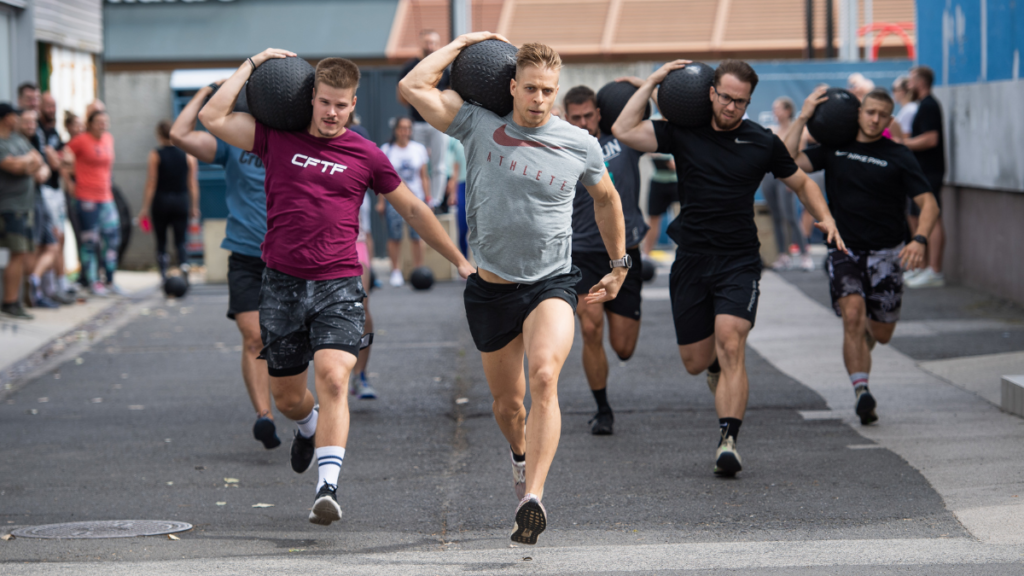
In addition to propulsion and balance, rhythmic contractions of the calf muscles act like a second pump that helps push venous blood from the lower extremities back toward the heart against gravity. Exercise physiology research examining the calf muscle pump confirms that contracting the calf muscles assists venous return and helps counter fluid pooling in the lower legs, especially during prolonged sitting or standing. Because age-related declines in muscle mass and tendon stiffness can gradually erode lower-leg power if left unchallenged, keeping your calves strong supports both daily mobility and lower-limb function.
Why Calf Strength Matters for Mobility, Balance, and Muscle Health
When adults over fifty lose ankle plantarflexor strength and power, everyday movements like climbing stairs briskly, stepping onto a curb, or catching yourself before a trip require extra effort and coordination. Gerontology and biomechanics studies link lower-limb muscle weakness and reduced ankle power with slower walking speed, greater balance challenges, and higher fall risk in middle-aged and older adults. Maintaining strong calves and resilient Achilles tendons helps preserve springy, confident movement so physical tasks around the house, outdoors, and in the gym feel less taxing.
At the same time, exercise science research on resistance training in middle-aged and older adults demonstrates that skeletal muscles remain remarkably adaptable well past fifty when given appropriate mechanical tension. Systematic reviews and meta-analyses on hypertrophy and strength show that older adults can build meaningful muscle size and strength across moderate and higher repetition ranges when exercises are performed consistently close to muscular failure.
Training your calves directly gives you an accessible, joint-friendly way to keep lower-leg strength and muscle tissue thriving.
Practical Ways to Train Calf Strength Safely for Adults Over 50
| Calf Exercise Option | Primary Muscle Emphasis | Equipment and Balance Setup | Best Role After 50 |
| Seated Calf Raise | High emphasis on the soleus because the knee is bent | Seated calf machine or dumbbell on thigh with light hand support | Joint-friendly builder of ankle strength and lower-leg endurance |
| Standing Calf Raise | High emphasis on gastrocnemius and soleus with straight knees | Step, wall, or machine handle for steady balance support | Core movement for pushing strength, ankle control, and calf size |
| Isometric Calf Hold | Sustained tension across calf muscles and Achilles tendon | Flat floor or step holding onto a sturdy support for balance | Low-impact way to build tendon tolerance and steady ankle stability |
| Brisk Walking and Inclines | Repetitive low-load plantarflexion and calf muscle pump activity | Outdoors or treadmill with comfortable, supportive footwear | Everyday aerobic habit that keeps lower-leg circulation moving |
How to Build Stronger Calves Without Beating Up Your Joints
Training your calves after fifty does not require heavy, jarring bounces or high-risk plyometrics that irritate your Achilles tendon or knees. Because the calf muscles and Achilles tendon respond well to controlled movement through a full, comfortable range of motion, slow and deliberate repetitions usually work far better than rushing up and down. Using a wall, countertop, or machine handle lightly for balance lets you focus completely on clean ankle motion rather than wobbling.
1. Choose Both Straight-Knee and Bent-Knee Calf Raises
Because the gastrocnemius crosses the knee while the soleus sits beneath it, including both standing straight-knee calf raises and seated bent-knee calf raises covers the full calf complex thoroughly. Start with a comfortable range of motion on a flat surface or low step, lowering your heels smoothly over two to three seconds without forcing painful stretches at the bottom.
2. Aim for Controlled Sets Close to Muscular Failure
Research on resistance training loads indicates that moderate to higher repetition ranges, such as ten to twenty controlled repetitions per set, stimulate muscle growth effectively when taken close to muscular failure. Performing two to three sets two or three times per week gives your calves plenty of stimulus while leaving ample recovery time between sessions.
Walking Faster vs Walking Longer: Which Is Better for Your Heart?
3. Build Gradual Progression Rather Than Sudden Spikes
Tendons adapt more gradually than muscle fibers, so increasing your repetitions, pausing briefly at the top of each rep, or adding small increments of resistance week by week keeps your lower legs comfortable. Pairing targeted calf raises with regular walking or incline treadmill sessions supports both lower-body resilience and overall cardiovascular fitness.
Key Takeaways
| Decision Area | Evidence-Based Guidance | Why It Matters After 50 |
| Everyday Function | Calves drive push-off power, ankle stability, and venous blood return | Supports smoother walking, balance recovery, and lower-leg circulation |
| Trainability With Age | Adults over 50 still build strength and muscle from consistent lifting | Age does not stop lower-leg adaptation when effort and progression are right |
| Exercise Selection | Combine standing and seated calf raises with light balance support | Targets both gastrocnemius and soleus safely across full ankle motion |
| Weekly Programming | Perform 2 to 3 controlled sets of 10 to 20 reps two to three times weekly | Builds strength and muscle near failure while respecting tendon recovery |
References
- Beijersbergen, C.M.I., Granacher, U., Vandervoort, A.A., DeVita, P. and Hortobágyi, T., 2013. The biomechanical mechanism of age-related gait speed decline in older adults. Ageing Research Reviews, 12(2), pp.618-627.
- DeVita, P. and Hortobágyi, T., 2000. Age causes a redistribution of joint torques and powers during walking. Journal of Applied Physiology, 88(5), pp.1804-1811.
- Lanza, M.B., Rock, K., Marchese, V., Addison, O. and Gray, V.L., 2022. Ankle plantar flexor strength and power: in vivo tendon mechanical properties and function with aging. Sports Medicine, 52(9), pp.2111-2128.
- Laughlin, M.H., 1987. Skeletal muscle blood flow capacity: role of muscle pump in exercise hyperemia. American Journal of Physiology – Heart and Circulatory Physiology, 253(5), pp.H993-H1004.
- Peterson, M.D., Sen, A. and Gordon, P.M., 2011. Influence of resistance exercise on lean body mass in aging adults: a meta-analysis. Medicine and Science in Sports and Exercise, 43(2), pp.249-258.
- Schoenfeld, B.J., Grgic, J., Ogborn, D. and Krieger, J.W., 2017. Strength and hypertrophy adaptations between low- vs. high-load resistance training: a systematic review and meta-analysis. Journal of Strength and Conditioning Research, 31(12), pp.3508-3523.
Robbie Wild Hudson
Editor-In-Chief at BOXROX. I come from a background of rugby and weightlifting. Growing up in the English Lake District, I spent a great deal of time swimming in its stunning lakes and rivers. In 2015 my brothers and I became the first people to swim the 145km length of the River Eden, from source to mouth, in 9 days. We also swam the Corryvreckan whirlpool, the third largest in the world, and Crossfit is a huge part of my training for these events.
More from Robbie Wild Hudson