

If you want bigger triceps, both the close grip bench press and parallel bar dip deserve a place in the conversation. Each movement trains elbow extension under resistance, which is the triceps’ main job. Each can also help beginners build pressing strength that carries over to push ups, regular bench pressing, and more confident upper body training.
However, they are not equally easy to learn, load, or progress. That matters because muscle growth does not come from finding one magic exercise. It comes from performing challenging, repeatable sets with sound technique, gradually increasing the training demand, and recovering well enough to do it again.


For most beginners whose priority is triceps size, the close grip bench press is usually the better starting choice. It is easier to scale, easier to control, and simpler to progress in small increments. Dips can be an outstanding triceps builder too, but they demand more shoulder control and the ability to move a large proportion of your bodyweight.
The best exercise is the one you can perform comfortably, consistently, and hard enough to create a growth stimulus. Here is how the close grip bench press and dips compare, and how to use them to build bigger triceps.
What Your Triceps Need to Grow
The triceps brachii sits on the back of the upper arm and has three heads: the long head, lateral head, and medial head. Together, these muscles straighten the elbow. The long head also crosses the shoulder joint, so its contribution can change depending on your arm position.
Muscle growth is driven largely by mechanical tension. In practical terms, your muscles need to repeatedly produce force against meaningful resistance through a controlled range of motion. Resistance training can build muscle across a wide range of loads when sets are performed with sufficient effort. That means you do not need to lift extremely heavy weights to grow your triceps, but the final repetitions of a set should feel challenging while your technique stays under control.

Weekly training volume also matters. More hard sets can support additional muscle growth up to the point where your ability to recover becomes the limiting factor. Beginners do not need huge amounts of direct triceps work. A few high quality sets performed consistently, alongside regular pressing exercises, can produce excellent results.
The close grip bench press and dips can both supply the tension your triceps need. The key difference is how easily a beginner can manage the movement and add progressive overload over time.
The Case for the Close Grip Bench Press
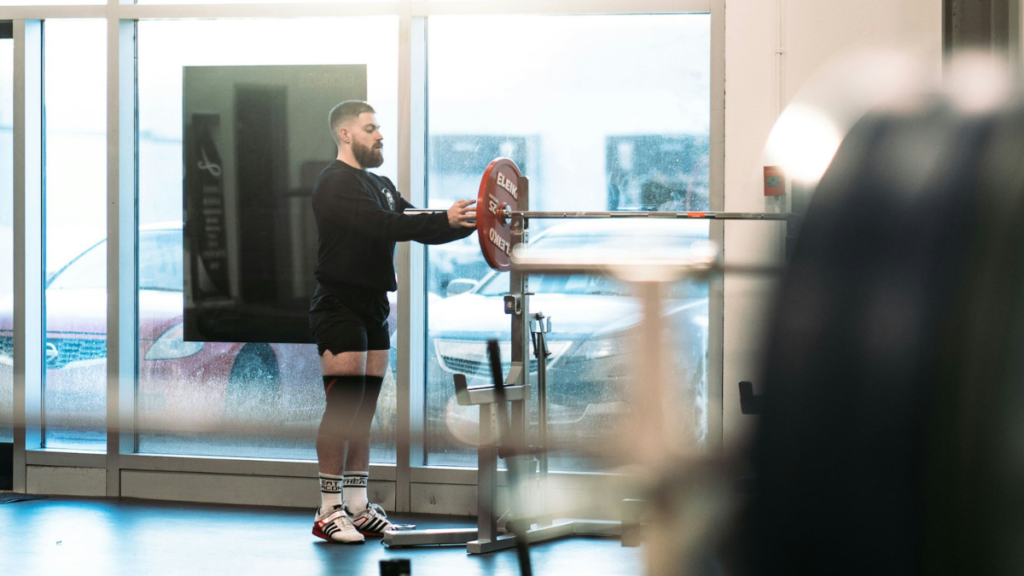
The close grip bench press is a barbell press performed with your hands closer together than in a conventional bench press. Your grip should not be extremely narrow. A grip around shoulder width, or slightly inside shoulder width, usually allows a natural wrist and elbow position while placing a strong emphasis on elbow extension.
Why It Trains the Triceps So Well
During any bench press, the chest, front shoulders, and triceps work together to move the bar. A closer hand position generally shifts more of the work toward the triceps compared with a wider grip. Research measuring muscle activity during bench press variations has found that a close pronated grip produces greater triceps involvement than several other bench press positions.
This does not mean your chest disappears from the exercise. The close grip bench press is still a compound press, and your chest and front shoulders contribute significantly. That is useful for beginners because one exercise can build pressing strength and train several upper body muscles at once. The triceps receive plenty of work, especially as you press the bar away from your chest and straighten your elbows.
The movement is also highly practical for gradual progression. You can start with an empty bar, light dumbbells, a Smith machine, or a machine chest press with a close hand position. As your strength improves, you can add small amounts of weight or perform more controlled repetitions.
Why Beginners Usually Learn It Faster
The bench provides support for your torso, while your feet create a stable base against the floor. This reduces the balance and coordination demands compared with a dip. You still need to learn safe bar control, but the movement is easier to standardize from set to set.
For a beginner, that consistency is valuable. You can place the same grip on the bar, use the same range of motion, and track whether you are making progress. If you perform eight clean repetitions with a certain load this week, you have a clear target for the next session.
A close grip bench press also allows you to reduce the load quickly if the movement is difficult. With dips, your bodyweight is the starting resistance. For many new lifters, that can be too much before they have developed the strength and shoulder control to perform full repetitions well.
How to Perform It
Lie on a flat bench with your eyes under the bar. Plant your feet firmly on the floor and maintain a stable upper back position. Hold the bar with a grip roughly around shoulder width. Your wrists should stay stacked over your forearms rather than bent backward.
5 Secrets Tips for Guys 30+ to Get Jacked Arms
Lower the bar under control toward your lower chest or upper abdomen. Keep your elbows relatively close to your sides, but do not force them into an uncomfortable position. Press the bar back up by driving through your hands and straightening your elbows. Finish each repetition with control rather than aggressively snapping the elbows into lockout.
If you feel pain in your wrists, elbows, or shoulders, adjust your grip slightly wider and lower the weight. A close grip should feel strong and secure, not cramped.
The Case for Dips
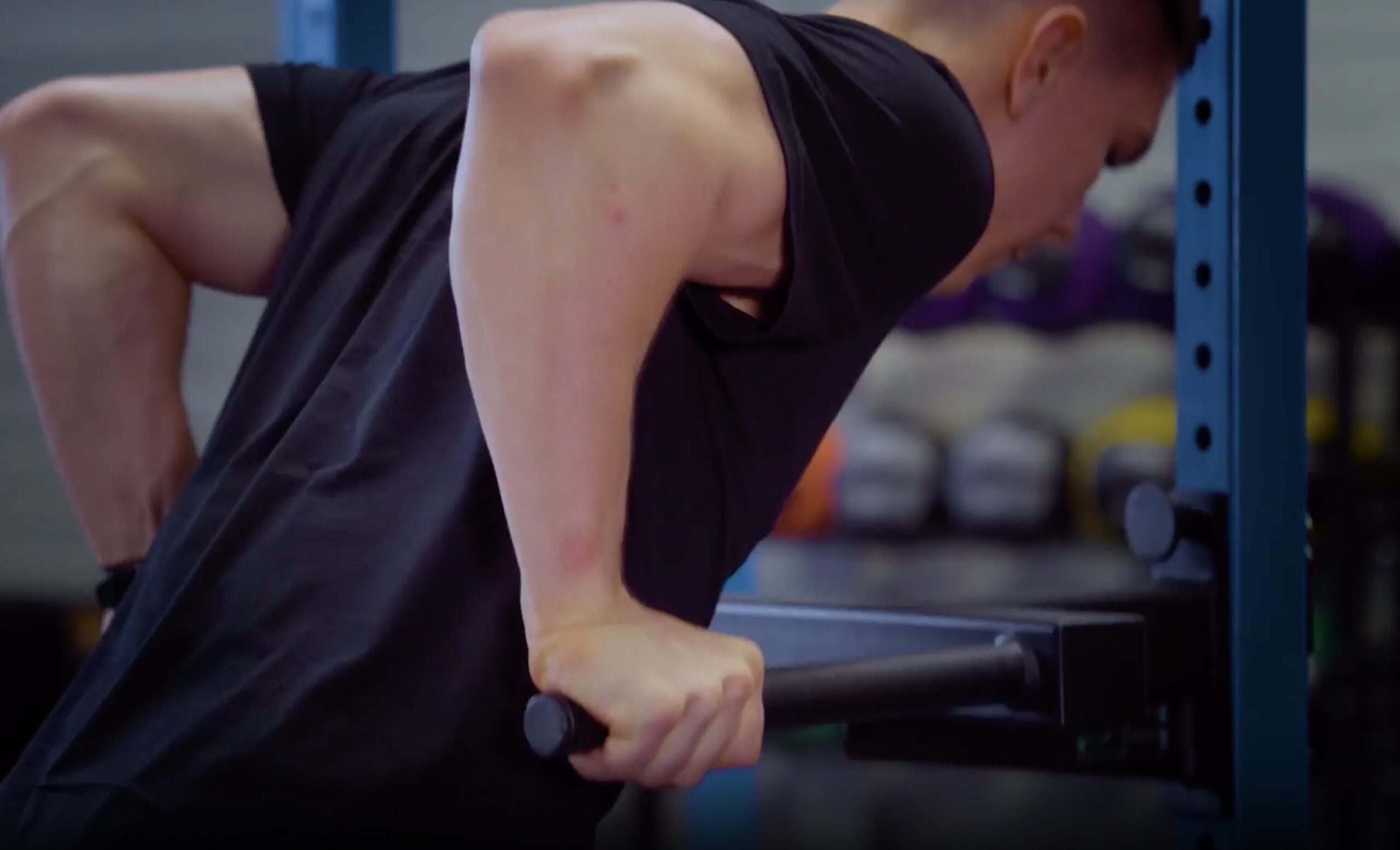
Parallel bar dips are a bodyweight compound exercise. You support yourself on two bars, lower your body by bending your elbows, then press back to the top position. The movement trains the triceps, chest, and front shoulders while requiring substantial control from the upper body.
Why Dips Can Build Impressive Triceps
A full parallel bar dip requires you to move a considerable amount of your bodyweight. That can create a strong training stimulus when you are capable of controlling the exercise well. Research comparing bench, bar, and ring dips found meaningful triceps activity across the variations, with the bar dip producing greater peak triceps activity than the bench dip.
The dip also places your elbows through a substantial range of motion. As you lower under control and press back to the top, the triceps must work hard to extend the elbow. For people who can perform them comfortably, dips are an efficient way to add challenging triceps focused pressing without needing a barbell.
Dips can become progressively harder as your strength increases. Once bodyweight repetitions become manageable, you can add weight with a dip belt or hold a dumbbell between your feet. This gives the movement long term value for both muscle and strength.
Why Dips Are Not Always the Best First Choice
The major issue is that beginners cannot always control their full bodyweight. If you weigh 200 pounds, a dip is not a light introductory exercise. You need enough strength to lower your body smoothly, keep your shoulders stable, and press back to the top without shrugging or losing control.
Shoulder comfort is another important consideration. The bottom position of a dip can place the shoulder in a deep extended position, especially when you descend too far or lose control. This does not make dips inherently unsafe, but it means they are not automatically suitable for every person. Your anatomy, training history, mobility, and existing symptoms all matter.
Bench dips are often presented as an easier alternative, but they are not necessarily the best substitute. They can place the shoulder into a large amount of extension while providing less triceps activation than parallel bar and ring dips. If full parallel bar dips are currently too difficult, assisted dips, close grip bench presses, cable pressdowns, or push ups with a narrow hand position are usually more useful progressions.
How to Perform a Parallel Bar Dip
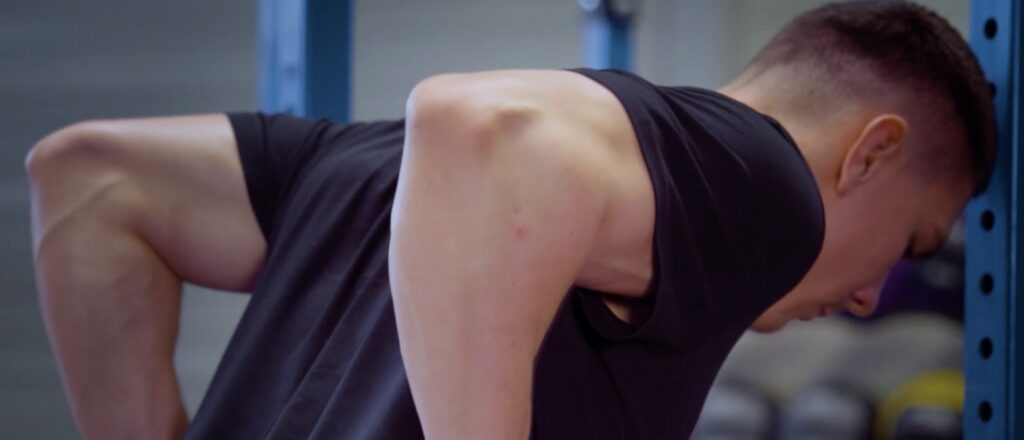
Start at the top with your arms straight, shoulders controlled, and body steady. Bend your elbows and lower yourself slowly. Keep your torso mostly upright if your main goal is triceps emphasis. A larger forward lean can increase the contribution from the chest.
Descend only as far as you can while maintaining control and shoulder comfort. Then press the bars away from you and return to the top position. Keep the movement smooth. Do not bounce at the bottom or let your shoulders collapse forward.
If you cannot perform at least a few controlled repetitions, use an assisted dip machine or resistance band assistance. The goal is not to prove that you can do a dip today. The goal is to use an appropriate resistance that lets you train the movement productively.
Which Exercise Is Better for Bigger Triceps?
For most beginners, the close grip bench press wins.
It is not necessarily a more powerful exercise in every situation. A strong lifter who can perform deep, controlled, pain free dips and progressively add load can build substantial triceps with dips. However, the close grip bench press is more reliable as a first triceps focused compound movement.
It is easier to use a suitable training load from the first session. It is easier to make small increases in weight. It is easier to stop a set safely if your technique starts to deteriorate. It also gives you a simple way to measure strength progress over time.
Dips become a great option when you have built enough pressing strength to control your bodyweight. They can add variety, train the triceps hard, and give you a different challenge from barbell pressing. You do not have to choose one exercise forever. Start with the close grip bench press, then add or substitute dips when they suit your strength level and shoulders.
How to Program Each Exercise for Growth
Use the close grip bench press one or two times per week. Begin with two or three working sets of six to twelve repetitions. Choose a load that makes the last few repetitions challenging but leaves you able to use a controlled range of motion. Rest for at least two minutes between demanding sets so fatigue does not force your technique to break down.
When you can complete the top end of your chosen repetition range with good form, add a small amount of weight during the next session. Even a small increase is meaningful when repeated consistently over months.
For dips, begin with assisted variations if needed. Perform two or three sets of five to ten controlled repetitions. Reduce the assistance gradually as your strength improves. Once you can perform multiple sets of clean bodyweight dips, you can build repetitions before considering added weight.
You can also use both exercises in the same week. For example, perform close grip bench presses early in the week and assisted or bodyweight dips later in the week. Keep your total workload manageable, especially if you also perform regular bench presses, overhead presses, push ups, or chest training.
Do not chase muscle soreness. Your triceps should feel worked, but soreness is not a reliable measure of whether a session will build muscle. Consistent performance, gradual progression, and adequate recovery are more useful markers.
The Bottom Line
The close grip bench press is the better triceps builder for most beginners because it is easier to learn, load, adjust, and progress. It allows you to train hard without needing to support your entire bodyweight, and it develops valuable pressing strength alongside triceps size.
Dips are still an excellent exercise when you can perform them with control and without shoulder discomfort. They can become a powerful addition to your training as your pressing strength improves. Start with the exercise you can perform well now, then earn the right to make your training more demanding over time.
References
- Farias, D.A., Willardson, J.M., Paz, G.A., Bezerra, E.S., Miranda, H., and Bentes, C.M. (2017) ‘Influence of exercise order on electromyographic activity during upper body resistance exercise’, Journal of Human Kinetics, 58, pp. 75 to 84.
- Kubo, K., Ikebukuro, T., and Yata, H. (2023) ‘Lateral force and electromyographic activity in wide and narrow grip bench press in trained and untrained men’, Sports, 11, 154.
- Larsen, S., Jensen, B.R., and Sorensen, H. (2022) ‘Bench, bar, and ring dips: Do kinematics and muscle activity differ?’, International Journal of Environmental Research and Public Health, 19, 13211.
- Schoenfeld, B.J., Ogborn, D., and Krieger, J.W. (2017) ‘Dose response relationship between weekly resistance training volume and increases in muscle mass: A systematic review and meta analysis’, Journal of Sports Sciences, 35, pp. 1073 to 1082.
- Schoenfeld, B.J., Grgic, J., Van Every, D.W., and Plotkin, D.L. (2021) ‘Loading recommendations for muscle strength, hypertrophy, and local endurance: A re examination of the repetition continuum’, Sports, 9, 32.
- Silva, L.H., Neves, E.B., de Souza, R.A., and other authors. (2020) ‘Effect of five bench inclinations on the electromyographic activity of the pectoralis major, anterior deltoid and triceps brachii’, International Journal of Environmental Research and Public Health, 17, 7339.
- Wolf, M., Frizziero, A., Furlan, A., and other authors. (2022) ‘Muscle hypertrophy and strength gains after resistance training with different volume matched loads: A systematic review and meta analysis’, Applied Physiology, Nutrition, and Metabolism, 47, pp. 357 to 368.
Key Takeaways
| Question | Answer |
|---|---|
| Which exercise is usually best for beginners? | The close grip bench press is usually the best starting point because it is easier to scale, control, and progressively overload. |
| Can dips build bigger triceps? | Yes. Controlled parallel bar dips can train the triceps hard, particularly once you can manage your bodyweight comfortably. |
| Should beginners use bench dips? | Bench dips are not the best default progression because they can place the shoulders in substantial extension while offering less triceps activity than bar dips. |
| How many sets should you start with? | Two or three challenging sets once or twice weekly is a productive starting dose alongside your other pressing work. |
| What matters most for triceps growth? | Consistent hard sets, good technique, gradual progression, sufficient recovery, and an exercise you can perform comfortably. |