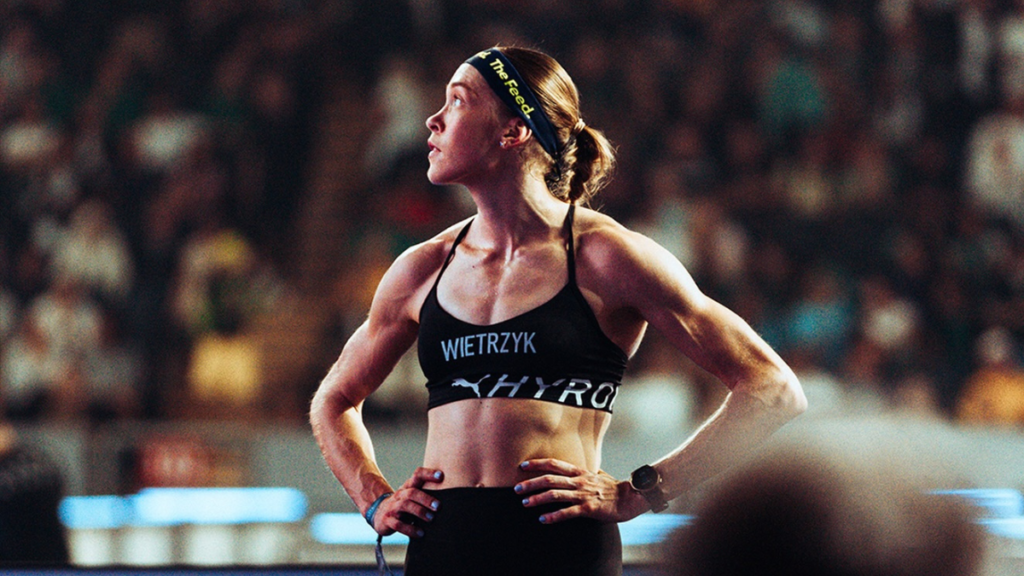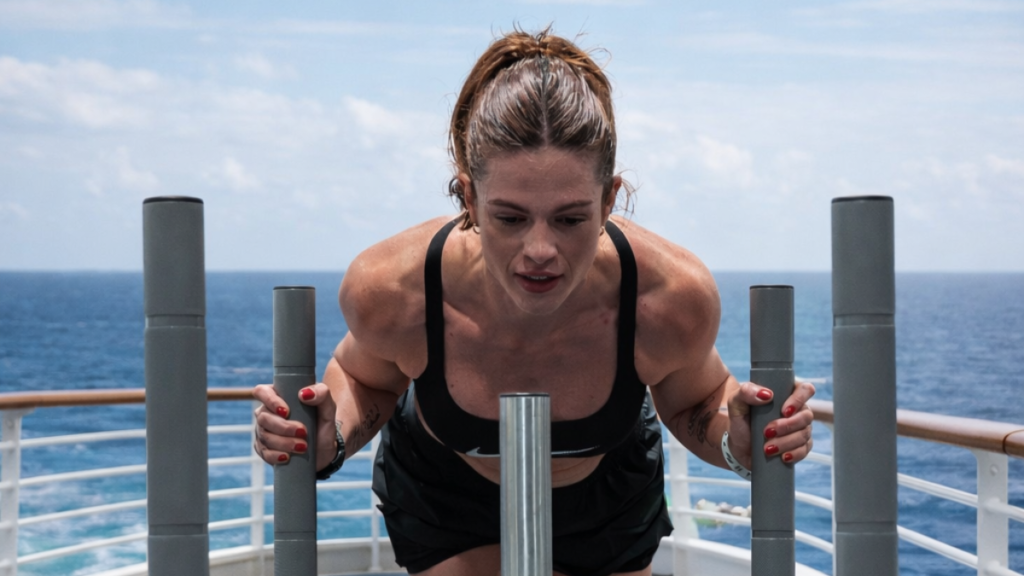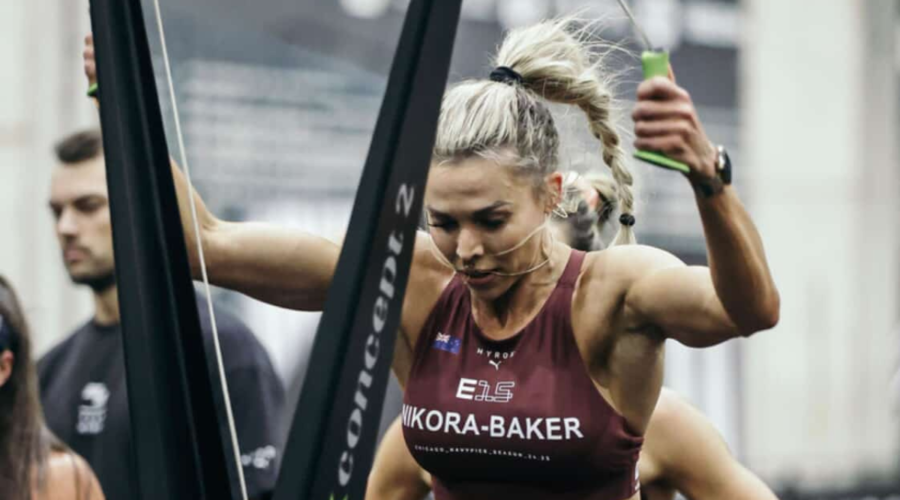


New Zealand athlete Gabrielle Nikora-Baker has established herself as one of HYROX’s top Pro Women, progressing from doubles competition in 2024 to Elite 15 racing and international podium finishes within two seasons. Since entering the HYROX space, she has competed across 24 races and seven divisions.


During that time she has clocked race victories in Pro Doubles events at Auckland, Brisbane, Bangkok, Melbourne and Taipei. She has also achieved podium finishes in Elite competition, with second-place finishes in both the Elite Women and Doubles Elite Women divisions at the HYROX APAC Championships 2026.
I spoke to her recently about her experiences, her strength background, and how she has adapted this foundation into a cornerstone for success at the highest levels in the sport. She offered many highly useful pieces of advice for people with similar backgrounds and trajectories into HYROX training and competition. Use them for yourself and learn how your strength or bodybuilding background can be adapted effectively into HYROX to maximize your advantages.
Nikora-Baker’s Background in Strength Training
“I spent the past 4–5 years focused on getting as strong as possible in the gym before moving into HYROX more seriously. I loved chasing PBs in all my lifts. In August 2025 I made a clear shift where I stopped training like a strength athlete who did a bit of running and HYROX on the side, and started training like a HYROX athlete when I set the goal of wanting to qualify for the Elite 15 Solos.”
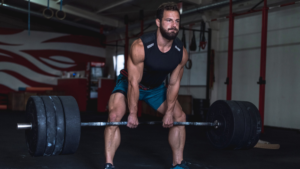
“My background in strength training has definitely been a big advantage in HYROX. I was training 4 times per week, with 3 of those sessions having a lower-body focus and a big emphasis on my posterior chain, especially glutes, hamstrings and back, along with a lot of unilateral work. Over time I built some strong numbers, for example RDLs at 170kg for reps, a 187.5kg deadlift 1RM, and Bulgarian split squats up to 150kg using a safety bar. I spent a lot of time building my squats, hip thrusts, RDLs, deadlifts, split squats, lunges and weighted pull-ups etc so I had a really strong base coming into HYROX.”
Carrying Strength Over into HYROX
Nikora-Baker’s foundation of strength is clearly excellent, but how did she adapt that into HYROX?
“That strength base carries over really well into the HYROX race format, particularly for the stations like lunges, sled push and pull, farmers carries and ergs. Because the race weights are lighter relative to my capacity, I’m able to move more efficiently and with less relative effort, which helps manage fatigue and maintain my run pace throughout the race.”
“HYROX training and racing is also very lower body dominant, which is why I believe my background has transferred so well. Having that level of lower body strength and tissue resilience has allowed me to tolerate a higher training load, even coming into the sport without a running or endurance background. I’ve also been injury free throughout my HYROX journey, which I largely attribute to that strength base and fuelling properly, allowing me to handle volume without breaking down.”
Nutrition
“Alongside that, I’ve consistently fuelled my training, eating at least 3000+ calories daily for years. That allowed me to push hard in sessions, recover well and build and retain muscle, which gave me a really solid foundation to transition into HYROX-specific training.”
Building a New Aerobic Base
This is often a stumbling block for athletes from a strength background, but Nikora-Baker took and intelligent approach to how she handled it.
“I only started running in 2024 and didn’t come from an endurance background at all, so while I had a strong base, I’ve had to recently really focus on building my aerobic capacity and overall fitness. Because of that, my training has shifted quite a lot and I now strength train less than I used to, but that base still carries through and supports my performance.”
The Importance of Progressive Overload Throughout All Parts of Training
“One thing that has stayed consistent is how I approach training. Whether it was strength or HYROX, I’ve always focused on progressive overload and trying to be 1% better each session and each week. That’s been especially important with running and aerobic work because it’s newer to me, so it’s been about building gradually, staying patient and improving over time rather than trying to rush it. Time is passing anyway so it makes sense to do things properly and stack as many small wins as possible.”
Advice for HYROX Athletes
“For athletes coming from a bodybuilding or strength background, my main advice would be not to abandon strength, but to shift how you use it. Strength should support your performance, not dominate your training. Keep it in your program, but focus more on quality, control and movement efficiency rather than chasing max numbers.”
“At the same time, there needs to be a big focus on building your aerobic base and improving your ability to run well under fatigue. That’s usually the biggest gap. A big part of HYROX is compromised running, so learning to control your effort in the stations and then hit your run pace straight after is key. A lot of stronger athletes go too hard on the stations, which impacts their running, so learning that balance is really important.”
“Overall, a strength background gives you a huge advantage in HYROX, particularly in terms of durability and efficiency, but it needs to be paired with the right aerobic work and race-specific training to perform at a high level.”
Key Lessons from Gabrielle Nikora-Baker’s HYROX Journey
- Build a serious strength base before specializing. Gabrielle spent 4 – 5 years focused almost exclusively on strength training before shifting her focus to HYROX. That foundation allowed her to transition into the sport with a major advantage on the stations.
- Prioritize lower-body strength. Her training included heavy squats, deadlifts, RDLs, hip thrusts, split squats and lunges, with a particular focus on glutes, hamstrings and back strength. These muscle groups are heavily taxed during sled pushes, sled pulls, lunges and running.
- Train unilateral movements. Single-leg exercises such as Bulgarian split squats and lunges can improve stability, balance and force production, all of which transfer well to HYROX movements and running mechanics.
- Being stronger makes the race feel easier. When race weights represent a small percentage of your maximum strength, stations require less relative effort. This allows you to conserve energy, manage fatigue better and maintain a faster pace on the runs.
- A strength base can help reduce injury risk. Gabrielle credits years of strength training for building tissue resilience and robustness throughout her lower body. Despite coming into HYROX without a running background, she has remained injury-free while increasing her training volume and race frequency.
- Strength improves your ability to handle training volume. Stronger athletes are often able to recover from high workloads more effectively because their muscles, tendons and connective tissues are better prepared for repeated stress.
- Don’t stop strength training when you start HYROX. Gabrielle reduced her strength training volume as she became more race-focused, but she never abandoned it. The goal shifted from building maximum strength to maintaining strength that supports performance.
- Running under fatigue is a skill that must be trained. One of the biggest challenges in HYROX is leaving a station and immediately settling into race pace. Athletes should regularly practice transitions between stations and running rather than treating them as separate disciplines.
- Avoid attacking every station at maximum effort. Many strength-based athletes lose time because they go too hard on sleds, carries or lunges and then struggle to recover on the run. Learning to pace the stations can lead to a faster overall race.
- Fuel performance, not just body composition. Gabrielle consistently consumed 3,000+ calories per day to support recovery, muscle retention and training quality. Under-fuelling can limit both strength gains and endurance development.
- Progressive overload still matters in HYROX. Whether building strength or aerobic fitness, she focuses on becoming slightly better each week rather than chasing dramatic improvements.
- Patience beats shortcuts. Her approach to endurance development has been gradual and methodical, emphasizing consistency over quick fixes. Small improvements accumulated over months can produce significant race-day results.
Race History
Throughout her HYROX career, alongside her singles performances, Nikora-Baker has competed alongside a range of partners including Mollie Fkiaras, Nicola-Georgia Macbeth and Jordan Nikora-Baker, while also racing successfully in mixed doubles and relay formats. Her results across Australia, New Zealand, Thailand, Taiwan and the United States demonstrate consistent performances at both regional and international HYROX events.
When looking through this list of her achievements, it it also worth noting that she only started running in 2024, and in her words it was “in August 2025 I made a clear shift where I stopped training like a strength athlete who did a bit of running and HYROX on the side, and started training like a HYROX athlete.”
| Event | Time | Place | Division | Partner(s) |
|---|---|---|---|---|
| HYROX APAC Championships 2026 | 1:01:07 | #2 | Elite Women | — |
| HYROX APAC Championships 2026 | 56:12 | #2 | Doubles Elite Women | Mollie Fkiaras |
| HYROX Taipei 2026 | 55:08 | #1 | Pro Doubles Women 30–34 | Mollie Fkiaras |
| HYROX Phoenix 2026 | 1:00:00 | #5 | Elite Women | — |
| HYROX Melbourne 2025 | 53:03 | #4 | Doubles Mixed 30–34 | Tanguy Cruz |
| HYROX Melbourne 2025 | 59:42 | #13 | Doubles Elite Women | Nicola-Georgia Macbeth |
| HYROX Melbourne 2025 | 1:02:05 | #9 | Elite Women | — |
| HYROX Chicago 2025 | 1:00:54 | #2 | Pro Women 30–34 | — |
| HYROX Boston 2025 | 1:00:54 | #1 | Pro Women 30–34 | — |
| HYROX Perth 2025 | 55:27 | #2 | Doubles Mixed 30–34 | Jordan Nikora-Baker |
| HYROX Perth 2025 | 1:02:24 | #2 | Pro Women 30–34 | — |
| HYROX Sydney 2025 | 55:38 | #2 | Doubles Mixed 30–34 | Jordan Nikora-Baker |
| HYROX Sydney 2025 | 1:03:22 | #2 | Pro Women 30–34 | — |
| HYROX World Championships 2025 | 56:36 | #14 | Team Relay Mixed | Abby Stevens, Kane Baigent, Harry Hall |
| HYROX World Championships 2025 | 59:34 | #12 | Pro Doubles Elite Women (HDEW) | Nicola-Georgia Macbeth |
| HYROX Bangkok 2025 | 56:32 | #2 | Doubles Mixed 30–39 | Jordan Nikora-Baker |
| HYROX Bangkok 2025 | 57:53 | #1 | Pro Doubles Women 30–39 | Nicola-Georgia Macbeth |
| HYROX Brisbane 2025 | 59:27 | #1 | Pro Doubles Women 30–39 | Nicola-Georgia Macbeth |
| HYROX Brisbane 2025 | 58:10 | #15 | Doubles Mixed 30–39 | Jordan Nikora-Baker |
| HYROX Auckland 2025 | 59:51 | #1 | Pro Doubles Women 30–39 | Nicola-Georgia Macbeth |
| HYROX Melbourne 2024 | 1:00:55 | #1 | Pro Doubles Women 30–39 | Nicola-Georgia Macbeth |
| HYROX Melbourne 2024 | 1:00:35 | #21 | Doubles Mixed 30–39 | Damian Votta |
| HYROX Melbourne 2024 | 1:02:51 | #13 | Doubles Mixed 30–39 | Damian Votta |
| HYROX Brisbane 2024 | 1:01:04 | #12 | Doubles Mixed 30–39 | Damian Votta |
Wrapping it All Up
Nikora-Baker has one one of the strongest strength backgrounds in HYROX, and she has been intelligent and purposeful about how she adapted, and continued to train, this aspect of her fitness when making the switch to HYROX.
Her journey shows that even without any kind of running, swimming, cycling or aerobic sporting background, you can be an incredible HYROX athlete by utilizing the strength you already have, and gradually building up an aerobic base on top.
I hear many HYROX athletes worry about not having years of running experience under their belt, but she is living proof that this is no excuse when it comes to adaptation and success.
Learn More About Her
Check out GNB Health and Fitness and follow Gabrielle Nikora-Baker on her insta to stay up to date with her races, tips and let her help you become a fitter, healthier and better athlete.
Find out what you can learn from fellow Kiwi Beau Wills and endurance star Alyssa McElheny.