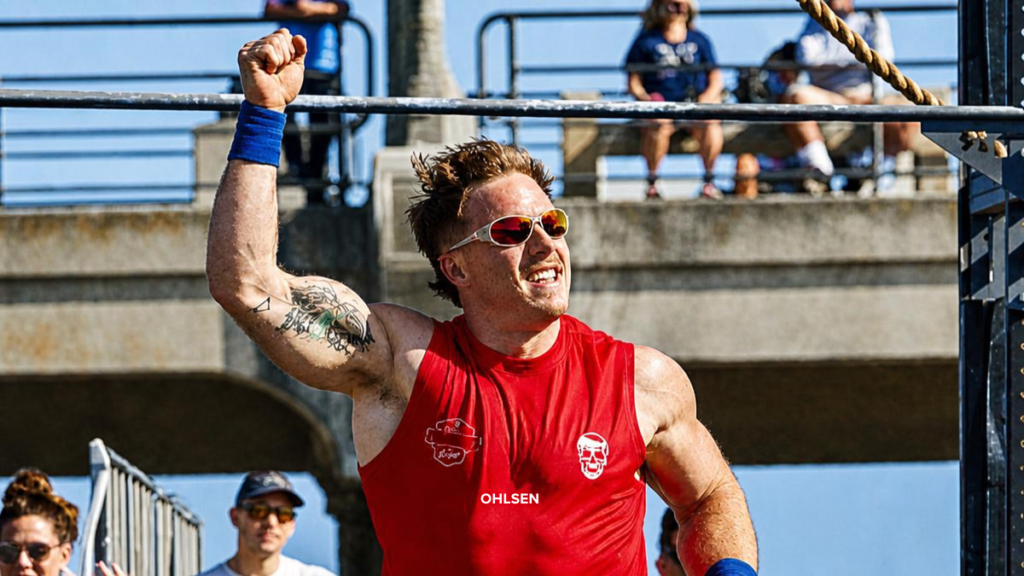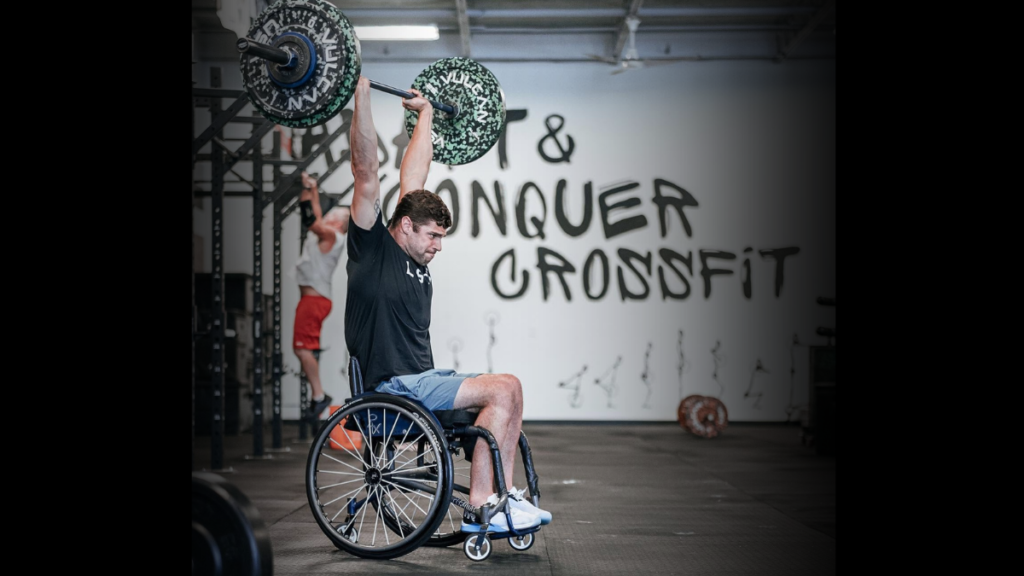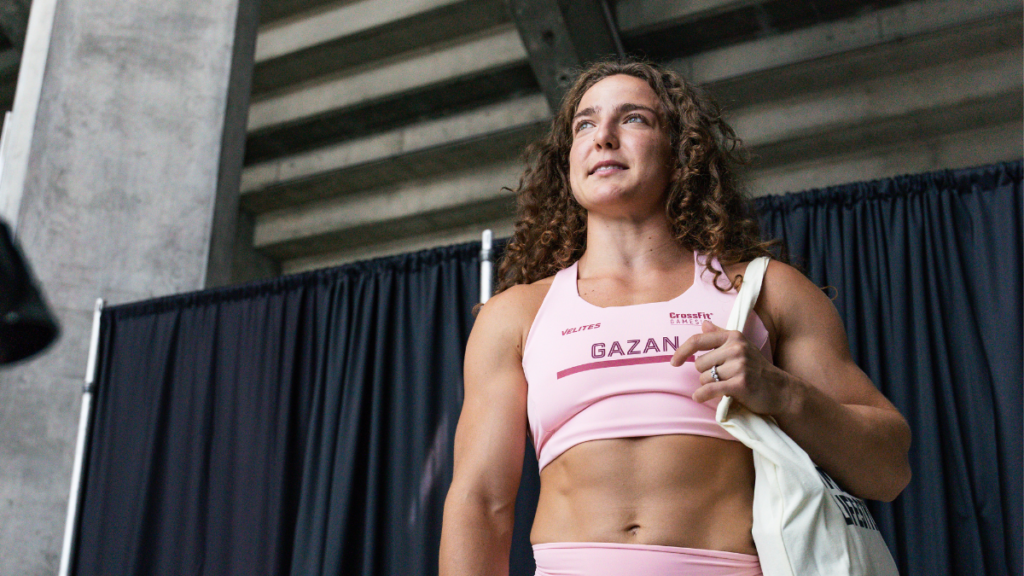
Competitive fitness has always been good at borrowing athletes.
A gymnast could recognize the value of bodyweight control in CrossFit. A weightlifter could bring years of barbell work into a sport that asked for strength under fatigue. A runner could look at HYROX and understand the appeal of a race where pacing still mattered. Team-sport athletes brought conditioning and the habit of competing under pressure.
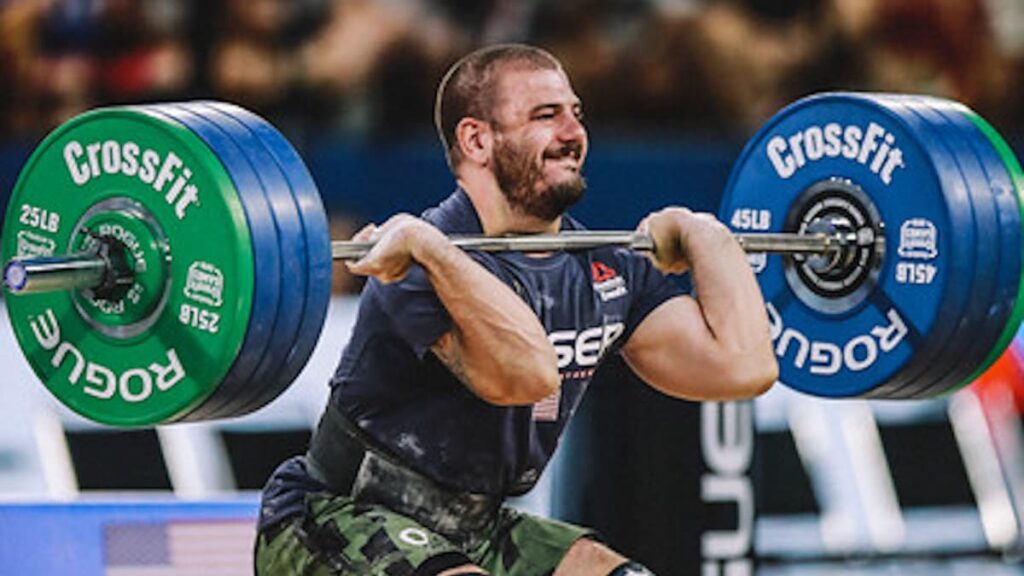
The early elite field was full of that kind of transfer. Before CrossFit, Mat Fraser had already spent years in Olympic weightlifting, and that background became part of the athlete he later became. Tia-Clair Toomey’s path also crossed several competitive worlds, from track and field to CrossFit and elite weightlifting, including the Rio 2016 Olympics and a Commonwealth Games gold medal.
Their backgrounds mattered because they arrived with tools already built: strength, discipline, body awareness and the habit of preparing for competition. CrossFit gave those tools a new test.
The difference now is access.
Functional training is easier to find, hybrid competitions are easier to understand and local events no longer feel reserved for the already initiated. CrossFit has scaled divisions, affiliate competitions and a teen pathway. HYROX has turned fitness racing into a format people can grasp quickly: run, complete stations, get a time. Online qualifiers, beginner categories and community events have made competition feel less distant than it once did.
That changes the age at which the sport becomes imaginable. Children have always exercised, and teenagers have always competed, but the environment around them is different now. A young athlete does not necessarily have to spend years in another sport before discovering functional fitness. Increasingly, they can grow up around it.

CrossFit had a youth layer before it had an official teenage Games pathway. CrossFit Kids was created in the early 2000s for children and teenagers, with the focus placed on age-appropriate movement, confidence and physical literacy rather than competition from day one. That matters because it gave young athletes a way to grow up inside the gym environment before they ever had a leaderboard in front of them.
The competitive structure came later. Teenage divisions were added to the CrossFit Games season in 2015 for athletes aged 14 to 17, giving young competitors their own categories inside the sport’s official pathway. The Open also allows athletes from age 14 to take part, which means teenagers can experience scores, standards and online competition while still in high school.
A teen division does more than create a younger leaderboard. It changes what the sport looks like from the inside. A 15-year-old no longer has to see CrossFit as something they might discover after gymnastics, football, track or weightlifting. It can be the sport itself. It has standards, events, role models and a visible pathway. Athletes such as Haley Adams and Emma Lawson helped make that idea feel real by moving from teen competition into the individual ranks.

HYROX is pushing a similar idea into an even younger age range. Youngstars is designed for children and teenagers from 8 to 15, with a scaled race experience built from the adult format. The language is simple: run, complete stations, reach the finish, get a result. It is meant to be fun and age-appropriate, but it still introduces children to the basic structure of performance culture.
Around the community, it is not hard to hear the natural next question: are some of these kids the future of the Elite 15? HYROX does not need to say that directly for the idea to exist. Once a youth format is connected to a sport with a clear elite tier, people will start imagining the pathway.
This is where the story becomes interesting. If an athlete grows up around functional movement and hybrid racing, they may arrive in adult categories with instincts that previous generations had to build later. They may already understand transitions, pacing, mixed fatigue and movement standards. They may not need to be converted from another sport because they will have learned the demands of this one from the beginning.
That could change the competitive ceiling. The first generation of elite CrossFit athletes often came with strengths formed elsewhere. The next generation may still do that, but some will have spent years learning the exact blend the sport asks for: enough strength to move well under load, enough conditioning to hold pace, enough skill to handle gymnastics or stations, and enough experience to stay composed when the workout starts to unravel.

HYROX could see the same effect. An adult who discovers the sport at 30 may need time to learn how to pace sleds, recover between stations or keep running after heavy legs. A teenager who has grown up around the race format may treat those decisions as normal. They will know where people usually blow up, how much a bad transition costs and why the race is won by connecting the whole thing.
That kind of early exposure does not guarantee better athletes, but it changes the base.
It also changes how young athletes see themselves. Progress means moving better, pacing smarter, staying calm under fatigue or finishing something that felt intimidating at the start. At its best, youth competitive fitness can give children and teenagers a healthy relationship with effort.
The wider culture is starting to notice. A recent New York Times piece about young fitness influencers is part of that broader signal: the conversation is no longer limited to coaches, gym owners or parents inside the sport. Children have always played sports, but fitness performance can now become visible, tracked and tied to identity at an early age.
That visibility is where the caution comes in. Clear feedback can help young athletes improve, but it can also make every result feel heavier than it should.
Mal O’Brien is a useful reminder here. She was one of CrossFit’s brightest young stars, the youngest athlete to win the worldwide Open and a Games podium finisher before stepping away from the sport to focus on balance and mental health. Her story should not be flattened into a warning label, but it does show that early success does not remove the need for space, perspective and a life outside the scoreboard.

That is where the adults around the sport matter. Children are not small elite athletes. They need coaches who understand development, recovery, school, sleep and motivation.
They need parents who can support competition without turning every event into a long-term investment. They need organizers who remember that a good youth format should build confidence before it builds pressure.
Still, the direction is hard to ignore. Competitive fitness is mature enough now to build athletes from the beginning, not just borrow them from other sports. The next generation may arrive with better movement, better pacing and a clearer understanding of mixed-modal competition than any generation before it.
The question is whether the sport can let them develop without rushing them.
Competitive fitness is building its next generation earlier than ever, but age is only part of the story. The bigger change is that young athletes are entering a world that is already structured, visible and measurable. They are not always finding it later through another sport. More and more, they are meeting it as the sport itself.
The goal should not be to create the youngest possible competitor. It should be to build athletes who still want to train, compete and stay in the sport when they are old enough to choose it for themselves.