

The hex press has become increasingly popular among lifters looking for a chest exercise that creates an intense muscle contraction without placing excessive stress on the shoulders. Also known as the squeeze press, the movement involves pressing two dumbbells together throughout the entire exercise while performing a dumbbell bench press. The constant inward pressure creates additional muscular tension that many people describe as one of the strongest chest contractions they have ever experienced.
But does that feeling translate into better muscle growth or greater strength? Is the hex press actually the perfect chest exercise for building bigger and stronger pecs?


The answer is more nuanced than many social media videos suggest. The hex press offers several unique benefits that make it a valuable addition to many training programs, but scientific evidence also shows that no single exercise can completely replace foundational pressing movements like the barbell bench press or traditional dumbbell press. Understanding what the hex press does well, and where its limitations exist, can help you use it more effectively.
What Is the Hex Press?
The hex press is a variation of the dumbbell bench press. Instead of holding the dumbbells shoulder width apart, you press the flat sides of the dumbbells firmly against each other throughout every repetition. This constant squeezing action requires continuous activation of the chest muscles while simultaneously pressing the weights upward.
Most people perform the exercise lying on a flat bench, although it can also be done on an incline bench to emphasize the upper chest. The movement begins with the dumbbells touching directly over the chest. During the lowering phase, the weights remain pressed together until they lightly touch the chest before being driven back upward.
Is the Meadows Row the Perfect Exercise for a Jacked Wider Back?
The defining characteristic is not the pressing motion itself. It is the constant isometric squeezing force between the dumbbells.
Why the Hex Press Feels Different
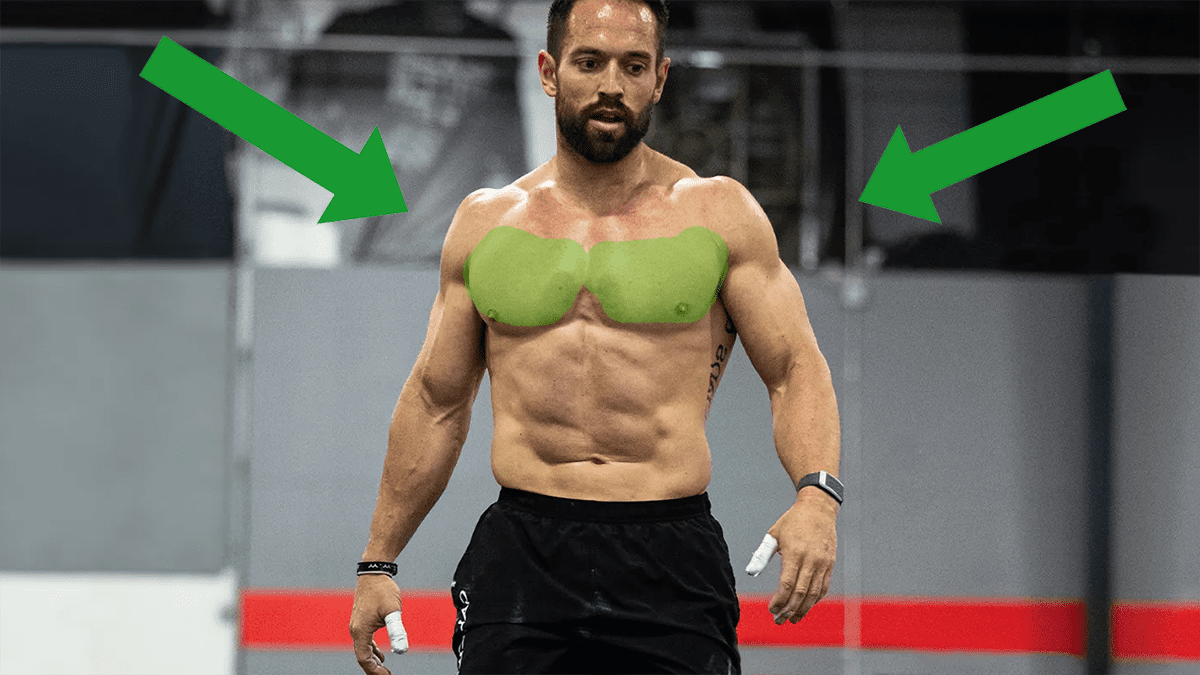
The pectoralis major has two primary functions during pressing exercises. It horizontally adducts the arm by bringing it toward the midline of the body and assists with shoulder flexion during many pressing movements. The hex press intentionally combines these two actions. While the pressing movement creates dynamic muscle contractions, the inward squeezing creates an additional isometric contraction that increases muscular tension.
Research consistently shows that muscle tension is one of the primary drivers of hypertrophy. Mechanical tension stimulates signaling pathways involved in muscle protein synthesis and long term muscle growth. Although the squeezing action does not necessarily increase external load, it increases internal muscular effort, especially within the pectoralis major.
Many lifters therefore experience a stronger mind muscle connection during the hex press than during conventional pressing.
How the Hex Press Activates the Chest
Electromyography research has demonstrated that different pressing variations produce different levels of muscle activation depending on grip width, exercise selection, stability requirements, and movement mechanics.

Studies comparing dumbbell and barbell pressing generally show that dumbbells require greater stabilization while allowing a larger range of motion. This increased freedom often leads to greater activation of stabilizing muscles while maintaining high activation of the pectoralis major. The hex press builds upon this by adding continuous horizontal adduction through the squeezing action.
Although direct research specifically measuring the hex press is currently limited, biomechanical principles strongly suggest that maintaining active inward force increases recruitment of chest fibers because the pectoralis major is responsible for producing horizontal adduction.
That does not necessarily mean greater muscle growth by itself, but it provides a logical explanation for the intense muscular sensation many lifters report.
The Science Behind Muscle Growth
Building bigger pecs depends on more than simply feeling a muscle work. Current evidence identifies three primary factors contributing to hypertrophy. Mechanical tension appears to be the most important, while sufficient training volume and progressive overload remain essential over time. Research also indicates that muscles can grow effectively across a wide range of repetition ranges, provided sets are taken close enough to muscular failure.
This is particularly relevant for the hex press because most people cannot use nearly as much weight as they can with a conventional dumbbell press. The squeezing action limits loading, but the increased muscular effort can still create an effective hypertrophy stimulus when sets are performed with adequate intensity.
Rather than chasing maximum weight, the hex press is better suited for moderate repetitions with controlled technique.
Strengths of the Hex Press
Excellent Chest Isolation
One of the greatest advantages of the hex press is its ability to keep tension focused on the chest. During traditional pressing exercises, stronger triceps or front deltoids often dominate the movement, especially as fatigue develops. Constant inward pressure encourages the lifter to actively recruit the chest throughout every repetition.
Many coaches use the exercise specifically to improve chest awareness in athletes who struggle to feel their pecs during pressing. For beginners, developing this neuromuscular connection may improve exercise technique during more advanced movements later.
Shoulder Friendly Mechanics
Many lifters experience shoulder discomfort during heavy bench pressing. The hex press naturally positions the arms closer to the torso, reducing shoulder abduction compared with wider pressing variations. This often creates a more comfortable pressing position while decreasing stress on the shoulder joint.
Research examining shoulder biomechanics has shown that excessive shoulder abduction during pressing can increase joint stress. Keeping the elbows closer to the body generally improves shoulder comfort for many individuals. This does not make the hex press injury proof, but it may offer a useful alternative for people managing minor shoulder irritation while continuing to train the chest.
Continuous Time Under Tension
Time under tension refers to the duration muscles remain actively working during a set. Because the dumbbells stay squeezed together from beginning to end, the chest never fully relaxes. This continuous contraction creates a large amount of metabolic stress, another factor associated with muscle growth when combined with sufficient mechanical tension.
Many experienced bodybuilders therefore use the hex press toward the end of a chest workout to accumulate fatigue without requiring extremely heavy loads.
Improved Mind Muscle Connection
The concept of the mind muscle connection has gained increasing scientific attention over the past decade. Research suggests that directing attention toward the working muscle can increase activation during resistance exercise.
The hex press naturally encourages this internal focus because the lifter must consciously squeeze the weights together throughout every repetition. While attention alone cannot replace progressive overload, combining focused muscle activation with appropriate training may improve training quality for hypertrophy focused athletes.
Limitations of the Hex Press
Limited Loading Potential
The biggest drawback of the hex press is its inability to accommodate heavy loads. Pressing the dumbbells together reduces stability and grip efficiency, making very heavy weights impractical.
Strength development depends heavily on progressively increasing force production. Exercises like the barbell bench press allow substantially greater loading and therefore remain superior for maximizing absolute upper body strength. Athletes focused on powerlifting or sports performance should view the hex press as an accessory movement rather than a primary strength exercise.
Progressive Overload Becomes Challenging
Progressive overload remains the cornerstone of resistance training adaptation. Since the hex press typically uses lighter weights, progression often depends on increasing repetitions, improving control, slowing tempo, or extending sets closer to failure. These methods remain effective but generally offer less straightforward progression than simply adding weight to a barbell. For long term strength development, heavier compound presses remain essential.
Smaller Contribution From Supporting Muscles
Compound movements train multiple muscle groups simultaneously. Traditional bench pressing develops the chest, triceps, shoulders, upper back stabilizers, and nervous system coordination under heavy loads. The hex press intentionally shifts more emphasis toward the chest while reducing overall loading. This makes it an excellent isolation accessory but a less comprehensive upper body strength builder.
Who Should Use the Hex Press?
The hex press is particularly effective for bodybuilders and recreational lifters whose primary goal is chest hypertrophy.
It also works well for individuals recovering from minor shoulder discomfort because the arm position often feels more comfortable than wide grip pressing.
- Beginners may benefit from learning to actively engage the chest before progressing toward heavier compound lifts.
- Advanced lifters can use the exercise to increase training volume without excessively loading the joints after heavy pressing work.
- Powerlifters, however, should not replace heavy bench pressing with hex presses because maximal strength requires high load training.
How to Program the Hex Press
The hex press works best as a secondary or accessory exercise following heavier compound pressing. Most lifters benefit from performing it after bench presses or incline presses when maximal strength work has already been completed. Moderate repetition ranges between eight and fifteen repetitions generally suit the movement well because they provide sufficient time under tension while maintaining good technique.
Each repetition should be performed with deliberate control while maintaining continuous pressure between the dumbbells. Allowing the weights to separate removes much of the exercise’s defining characteristic. Training close to muscular failure is particularly important since external loading is relatively limited.
Is the Hex Press the Perfect Chest Exercise?
The word perfect rarely applies to resistance training. Scientific evidence consistently shows that muscles respond best to varied training that combines sufficient volume, progressive overload, appropriate intensity, and exercise variety.
The hex press excels at creating continuous chest tension, improving muscle awareness, and providing a shoulder friendly accessory movement. These qualities make it one of the most useful isolation focused pressing exercises available. However, its inability to support heavy loading prevents it from replacing traditional compound presses for strength development.
Instead of searching for one perfect exercise, the most effective chest training programs combine multiple movement patterns. Heavy barbell or dumbbell presses build strength. Incline variations target different fibers of the chest. Fly movements challenge horizontal adduction through a large range of motion. The hex press adds unique continuous tension that complements all of these exercises.
When viewed as part of a balanced training program rather than a replacement for foundational lifts, the hex press becomes an outstanding tool for building stronger, more muscular pecs.
Key Takeaways
| Topic | Key Point |
|---|---|
| Primary benefit | The hex press increases continuous chest tension by combining pressing with constant inward squeezing. |
| Best goal | It is most effective for muscle hypertrophy rather than maximal strength. |
| Loading | Lighter weights are typically required compared with traditional dumbbell pressing. |
| Shoulder comfort | The closer arm position may feel more comfortable for many lifters with minor shoulder irritation. |
| Programming | It works best as an accessory exercise after heavier compound presses. |
| Replacement value | It should complement, not replace, exercises like the bench press. |
References
- American College of Sports Medicine. (2009) ‘Progression models in resistance training for healthy adults.’ Medicine & Science in Sports & Exercise, 41(3), pp. 687 to 708.
- Gentil, P., Soares, S. and Bottaro, M. (2015) ‘Single versus multi joint resistance exercises for muscle strength and hypertrophy.’ Sports Medicine, 45(6), pp. 841 to 851.
- Grgic, J., Schoenfeld, B.J., Orazem, J. and Sabol, F. (2020) ‘Effects of resistance training performed to repetition failure or non failure on muscular strength and hypertrophy.’ Journal of Sport and Health Science, 10(5), pp. 522 to 531.
- Król, H. and Golas, A. (2017) ‘Effect of barbell weight and training experience on electromyographic activity during the bench press.’ Journal of Strength and Conditioning Research, 31(11), pp. 3088 to 3099.
- Lauver, J.D., Cayot, T.E. and Scheuermann, B.W. (2016) ‘Influence of attentional focus on muscle activation during resistance exercise.’ European Journal of Applied Physiology, 116(7), pp. 1499 to 1507.
- Saeterbakken, A.H., van den Tillaar, R. and Fimland, M.S. (2011) ‘A comparison of muscle activity and one repetition maximum strength of three chest press exercises with different stability requirements.’ Journal of Strength and Conditioning Research, 25(2), pp. 533 to 538.
- Schoenfeld, B.J. (2010) ‘The mechanisms of muscle hypertrophy and their application to resistance training.’ Journal of Strength and Conditioning Research, 24(10), pp. 2857 to 2872.
- Schoenfeld, B.J., Ogborn, D. and Krieger, J.W. (2017) ‘Dose response relationship between weekly resistance training volume and increases in muscle mass.’ Journal of Sports Sciences, 35(11), pp. 1073 to 1082.
- Wakahara, T., Fukutani, A., Kawakami, Y. and Yanai, T. (2013) ‘Nonuniform muscle hypertrophy following resistance training.’ Medicine & Science in Sports & Exercise, 45(11), pp. 2151 to 2159.