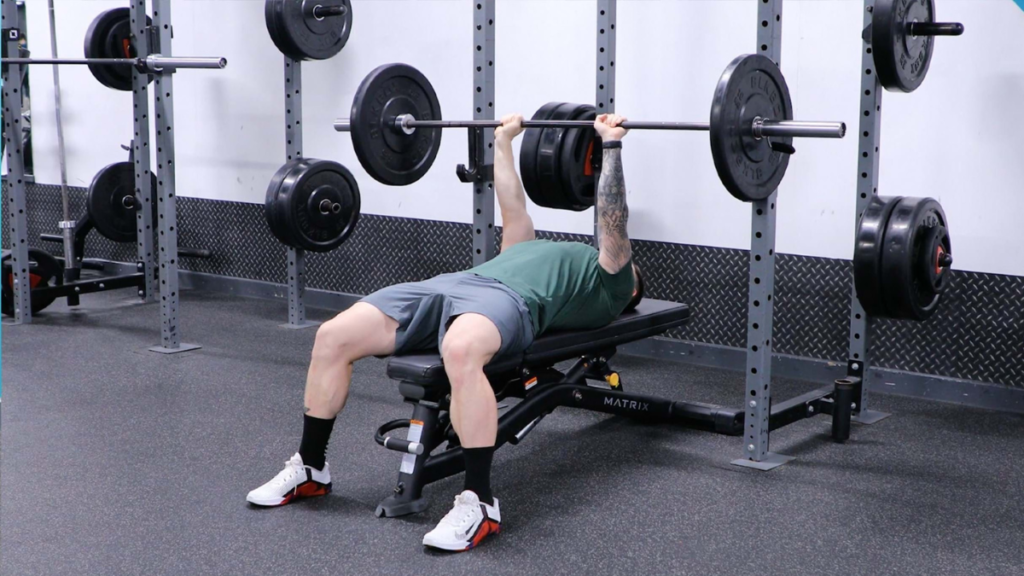
Walk into any gym and you will see the same question playing out in different forms. One beginner is wondering whether their 135 pound bench press is respectable after half a year of training. Another wants to know if a 225 pound deadlift means they’re making good progress. Someone else is comparing their squat numbers against social media influencers and feeling like they’re falling behind.
The truth is that most beginners have no idea what realistic strength progress looks like.


Part of the problem is that the fitness industry tends to focus on extremes. Online, you are far more likely to see a teenager deadlifting 500 pounds than an average person celebrating their first 200 pound squat. As a result, many new lifters develop unrealistic expectations about how quickly strength should improve.
The good news is that beginners generally gain strength faster than they ever will again. The first six months of resistance training often produce dramatic improvements in performance, muscle mass, coordination, and confidence. In fact, this period is so productive that exercise scientists often refer to it as the beginner adaptation phase, during which the body responds exceptionally well to resistance training.
So how strong should a beginner actually be after six months of lifting weights?
Why Strength Improves So Rapidly During the First Six Months
One of the biggest misconceptions in fitness is that strength gains are entirely the result of larger muscles.
Muscle growth certainly contributes, but it is only part of the story. During the first months of resistance training, much of the increase in strength comes from adaptations within the nervous system.
When someone starts lifting weights, their brain and nervous system become significantly better at activating muscles. The body learns how to recruit more motor units, coordinate muscle contractions more effectively, and produce force with greater efficiency. These neural adaptations occur quickly and explain why beginners often add large amounts of weight to the bar before experiencing dramatic physical changes in muscle size.
Researchers have consistently found that neural improvements account for a large portion of early strength gains. Before muscles become substantially larger, the body becomes much better at using the muscle mass it already possesses.
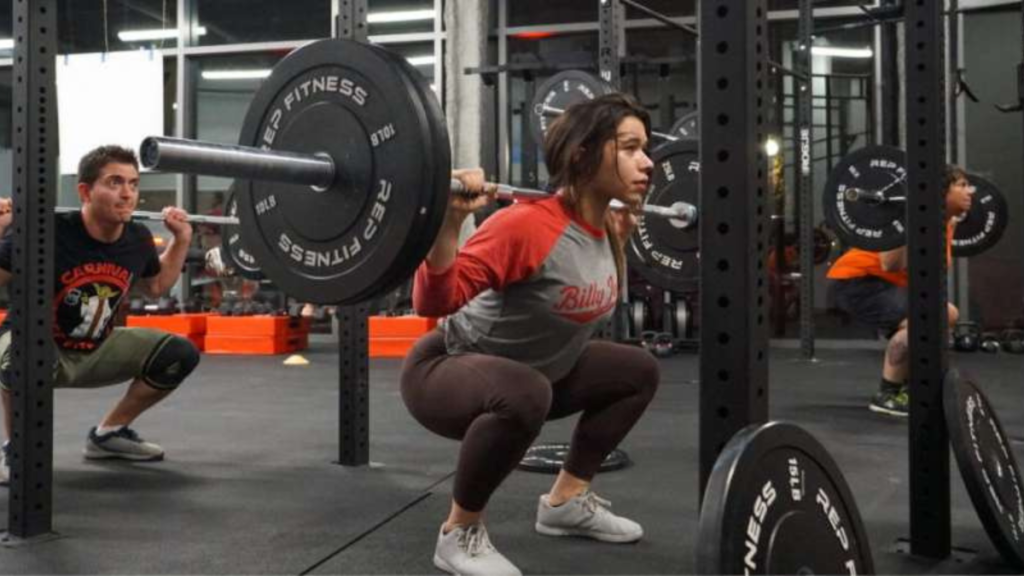
This is why a beginner may double their squat within six months while gaining only a modest amount of muscle. The muscles are stronger, but the nervous system has also become far more effective at directing them.
Exercise technique also improves dramatically during this period. A person performing their first squat is learning balance, coordination, positioning, breathing mechanics, and force production all at once. Six months later, the same movement feels natural and efficient. Better technique alone can contribute significantly to improved lifting performance.
What Research Says About Beginner Strength Gains
The scientific literature consistently shows that untrained individuals can experience rapid improvements in strength when following a structured resistance training program.
Studies examining novice trainees frequently report strength increases of 20 to 40 percent within a few months. In some exercises, particularly compound lifts involving multiple muscle groups, improvements can be even greater.
The magnitude of these gains is one reason resistance training is often recommended for individuals of all ages. The body responds remarkably well to a new strength stimulus.
Research also shows that the largest gains typically occur during the first year of training. After this period, progress continues but usually slows considerably. The difference between a beginner and an intermediate lifter is often the difference between adding weight to the bar every week and adding weight every month.
This is why six months represents such an important milestone. By this point, most lifters have moved beyond the awkward learning stage and have accumulated enough training experience to demonstrate meaningful improvements in strength.
Why Strength Progress Varies Between Individuals
Although benchmarks can be useful, no two people will progress at exactly the same rate. Body weight plays a major role. Larger individuals generally have more muscle mass and greater leverage advantages, allowing them to lift heavier weights in absolute terms. A 220 pound beginner will often lift significantly more weight than a 150 pound beginner, even if both have trained for the same length of time.
Sex also influences strength development. Men typically gain more absolute strength because they possess higher levels of testosterone and greater amounts of muscle mass. However, women often improve at a very similar relative rate. A woman who increases her squat by 50 percent has achieved the same relative improvement as a man who does the same.
Training quality is another major factor. A beginner following a well designed progressive program will usually outperform someone who trains randomly. Structured programs ensure that the body receives a sufficient stimulus while allowing for adequate recovery.
Nutrition matters as well. Building muscle tissue requires energy and amino acids. Individuals who consume sufficient calories and adequate protein generally achieve greater improvements in strength and body composition than those who consistently undereat.
Recovery is equally important. Sleep plays a critical role in muscle repair, hormone regulation, and nervous system recovery. Research consistently shows that inadequate sleep impairs performance and reduces the body’s ability to adapt to training.
Perhaps the most important factor of all is consistency. A moderately effective program followed consistently for six months will almost always outperform the perfect program followed sporadically.
How Strong Should a Beginner Be After Six Months?
There is no universal strength standard that applies to everyone. However, practical benchmarks can help establish what most healthy beginners can reasonably achieve after six months of consistent training.
These standards assume that the lifter trains regularly, follows a structured program, practices good exercise technique, and maintains reasonable nutrition and recovery habits.
Bench Press Standards
The bench press remains one of the most commonly used indicators of upper body strength.
After six months of training, many men can bench press somewhere between 0.8 and 1.1 times their body weight for a single repetition. Women often achieve between 0.5 and 0.75 times body weight.
A 160 pound man who benches between 130 and 175 pounds is generally demonstrating solid beginner progress. A 180 pound male may reach 145 to 200 pounds during the same period. For a 140 pound woman, a bench press between 70 and 105 pounds represents respectable progress after six months. These numbers are not elite, but they reflect meaningful strength development.
Squat Standards
The squat often improves faster than most other exercises because it involves large muscle groups throughout the lower body.
Many men reach a squat equivalent to approximately 1.2 to 1.5 times body weight after six months of consistent training. Women frequently achieve between 0.8 and 1.2 times body weight.
For example, a 160 pound male beginner may squat between 190 and 240 pounds after six months. A 180 pound male may reach 215 to 270 pounds. A 140 pound female commonly develops a squat between 110 and 170 pounds.
Some individuals exceed these numbers substantially due to favorable genetics, previous athletic experience, or exceptional training consistency.
Deadlift Standards
The deadlift often shows the fastest rate of improvement among major compound lifts.
Because the movement recruits large amounts of muscle mass and begins from a mechanically advantageous position, beginners can often add weight rapidly. Many men achieve a deadlift of 1.5 to 2 times body weight within six months. Women frequently reach 1 to 1.5 times body weight.

A 160 pound male beginner may deadlift between 240 and 320 pounds, while a 180 pound male may reach 270 to 360 pounds. A 140 pound female commonly develops a deadlift between 140 and 210 pounds.
For many beginners, reaching a 225 pound deadlift represents an important milestone and demonstrates that training adaptations are occurring successfully.
Overhead Press Standards
The overhead press tends to progress more slowly than the squat or deadlift because smaller muscle groups are involved and technical limitations often become apparent sooner.
After six months, many men achieve an overhead press between 0.5 and 0.7 times body weight. Women often reach between 0.3 and 0.5 times body weight.
A 160 pound male may press between 80 and 110 pounds overhead, while a 180 pound male may reach 90 to 125 pounds. A 140 pound female commonly develops an overhead press between 40 and 70 pounds.
Although the numbers are smaller than those seen in the squat or deadlift, improvements in the overhead press often indicate substantial gains in upper body strength and stability.
How Much Muscle Should a Beginner Gain?
Strength and muscle growth are closely connected, but they are not identical.
During the first six months of training, strength usually increases faster than muscle mass due to neural adaptations. Nevertheless, beginners can often build muscle at a surprisingly fast rate.
Research suggests that many men can gain between 10 and 20 pounds of muscle during their first year of effective resistance training. Women typically gain muscle more slowly in absolute terms, although the relative changes can be equally impressive.
Over six months, a realistic expectation for many men is a gain of approximately 5 to 10 pounds of muscle. Women often gain around 2.5 to 5 pounds during the same period.
These estimates vary considerably depending on genetics, age, nutrition, training quality, and starting body composition. Someone who begins training after years of inactivity may experience more dramatic changes than an individual who already participates in sports or physical activity.
Signs You’re Making Good Progress
Many beginners become obsessed with comparing their numbers against strength standards. While benchmarks can be useful, they are not the only indicators of success.
Consistent increases in training loads are one of the clearest signs that adaptation is occurring. If the weights you lift today are noticeably heavier than the weights you lifted three months ago, progress is happening.
Improved technique is another important marker. A squat that feels smoother, more stable, and more controlled reflects meaningful advancement even if the increase in weight is relatively modest.
Improved recovery also indicates positive adaptation. Many beginners discover that workouts become less physically draining after several months of training. This reflects improvements in work capacity and overall fitness.
Increased confidence is another frequently overlooked benefit. Many new lifters begin their journey feeling intimidated by barbells and weight rooms. Six months later, they often move through workouts with a level of confidence that would have seemed impossible when they started.
The Most Important Comparison
Strength standards can provide useful context, but they should never become the sole measure of success. The most meaningful comparison is between who you are today and who you were six months ago.
If your squat has increased from 95 pounds to 185 pounds, you have achieved excellent progress regardless of what someone else can lift. If your bench press has improved by 40 pounds, your body composition has improved, and you feel healthier and more capable, your training is working.
The purpose of strength training is not simply to move heavier weights. It is to build a stronger, healthier, and more resilient body.
The Bottom Line
After six months of lifting weights, most beginners should be substantially stronger than when they started. Scientific research shows that early strength gains are driven by a combination of neural adaptations, improved movement efficiency, and increasing muscle mass.
For many healthy beginners, realistic benchmarks include a bench press approaching body weight, a squat of roughly 1.5 times body weight, and a deadlift approaching 2 times body weight. These numbers are not requirements, but they provide useful reference points for evaluating progress.
More important than any specific strength standard is consistent improvement over time. Lifters who train regularly, eat enough protein, recover properly, and stay committed to their program almost always become significantly stronger during their first six months.
If your lifts are steadily increasing, your technique is improving, and you are showing up consistently, you are already succeeding.
References
• Ahtiainen, J.P., Pakarinen, A., Alen, M., Kraemer, W.J. and Häkkinen, K. (2003) ‘Muscle hypertrophy, hormonal adaptations and strength development during strength training in strength trained and untrained men’, European Journal of Applied Physiology, 89(6), pp. 555-563.
• American College of Sports Medicine (2009) ‘Progression models in resistance training for healthy adults’, Medicine & Science in Sports & Exercise, 41(3), pp. 687-708.
• Grgic, J., Schoenfeld, B.J., Davies, T.B., Lazinica, B., Krieger, J.W. and Pedisic, Z. (2018) ‘Effect of resistance training frequency on gains in muscular strength’, Sports Medicine, 48(5), pp. 1207-1220.
• Morton, R.W., Murphy, K.T., McKellar, S.R., Schoenfeld, B.J., Henselmans, M., Helms, E., Aragon, A.A., Devries, M.C., Banfield, L., Krieger, J.W. and Phillips, S.M. (2018) ‘A systematic review, meta analysis and meta regression of the effect of protein supplementation on resistance training induced gains in muscle mass and strength in healthy adults’, British Journal of Sports Medicine, 52(6), pp. 376-384.