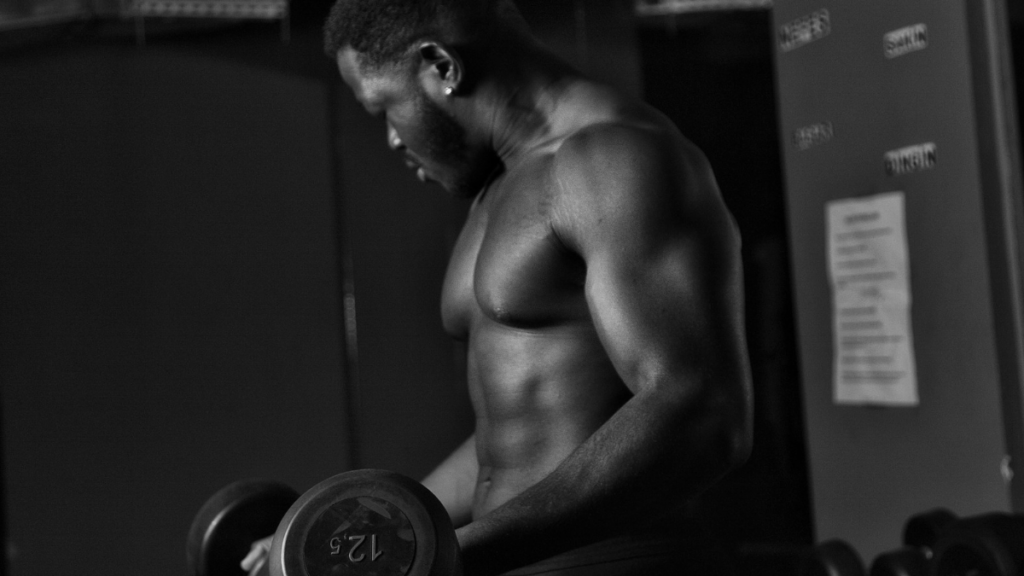
Big, well developed biceps are one of the most recognizable signs of strength and muscularity. Whether you are new to the gym or starting your first structured training program, building your biceps is a great goal because stronger arms improve more than just appearance. Well trained biceps contribute to pulling strength, grip performance, elbow stability, and better performance in dozens of upper body exercises.
Many beginners make the mistake of performing endless curls with poor technique or constantly changing exercises without following a plan. Research consistently shows that muscle growth depends far more on proper training volume, effort, exercise selection, and progressive overload than on finding a secret movement.



The good news is that beginners do not need a complicated routine. Just three carefully selected exercises can effectively train every major function of the biceps while allowing steady progress over months and years.
Understanding the Biceps
The biceps brachii consists of two heads. The long head sits on the outside of the upper arm and contributes to the characteristic peak. The short head sits on the inside and adds overall thickness. The biceps have three primary functions.
- The first is elbow flexion, which means bending the elbow.
- The second is forearm supination, which rotates the palm upward.
- The third is assisting shoulder flexion by helping lift the arm forward.
Another muscle that deserves attention is the brachialis. It sits underneath the biceps and can significantly increase upper arm size when developed. The brachioradialis in the forearm also contributes during many curling movements.
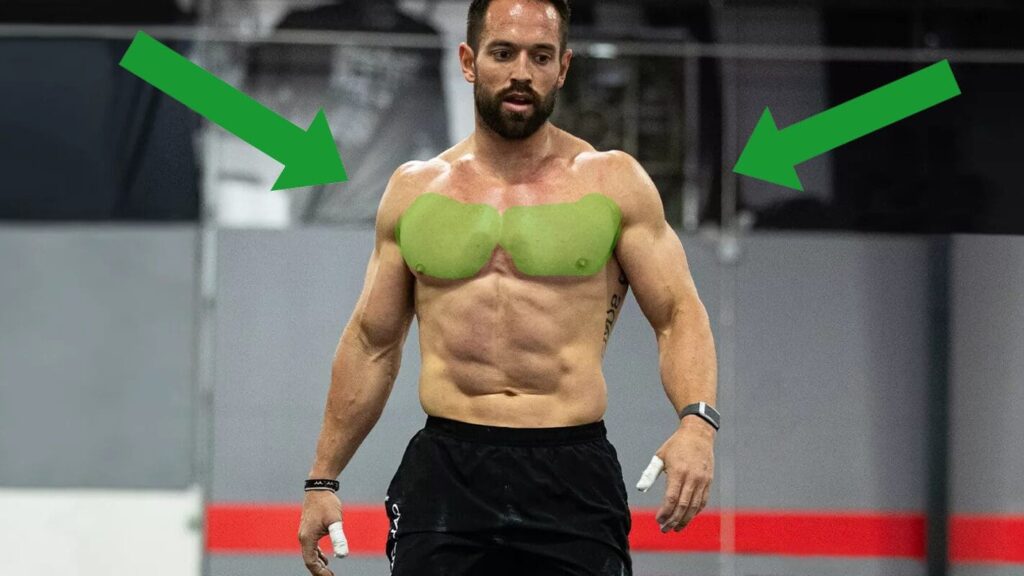
If You Can Bench Press This Much You Are STRONG!
Research using electromyography and muscle imaging has shown that different curl variations can slightly alter muscle activation depending on grip position, shoulder position, and resistance profile. However, the overall evidence suggests that consistently training through a full range of motion while gradually increasing resistance is more important than chasing perfect muscle activation.
What Makes a Good Beginner Exercise?
Beginners benefit most from exercises that are easy to learn, safe to perform, and allow steady progression. A good beginner exercise should provide consistent resistance throughout the movement while allowing excellent technique. It should also make it easy to add weight gradually as strength improves.
The following three exercises meet those requirements while training the biceps from slightly different angles to maximize muscle development.
Exercise One: Standing Dumbbell Curl
The standing dumbbell curl is arguably the best starting point for anyone who wants bigger arms.
Using separate dumbbells allows both arms to work independently, reducing strength imbalances while promoting natural movement. Dumbbells also permit slight adjustments in wrist position, making the exercise comfortable for most people.
Why It Works
The standing dumbbell curl places significant tension on both heads of the biceps while also recruiting the brachialis and brachioradialis.
Unlike machines that lock you into one movement path, dumbbells encourage stabilization throughout the exercise, helping improve coordination while building muscle.

Research comparing different resistance exercises consistently shows that free weight training effectively stimulates muscle hypertrophy when sufficient effort is applied.
How to Perform It
- Stand upright while holding a dumbbell in each hand with your palms facing forward.
- Keep your elbows close to your sides throughout the movement.
- Curl both weights upward without swinging your body or using momentum.
- Pause briefly at the top while squeezing your biceps.
- Lower the weights slowly until your elbows are fully extended.
Control the lowering phase instead of allowing gravity to do the work. Studies suggest that controlled eccentric contractions contribute substantially to muscle growth because they generate high levels of mechanical tension.
Common Beginner Mistakes
Many beginners lean backward to lift heavier weights. This shifts the work away from the biceps and increases stress on the lower back.
Another mistake is shortening the range of motion. Fully extending the elbows before beginning the next repetition increases muscle recruitment and promotes greater hypertrophy.
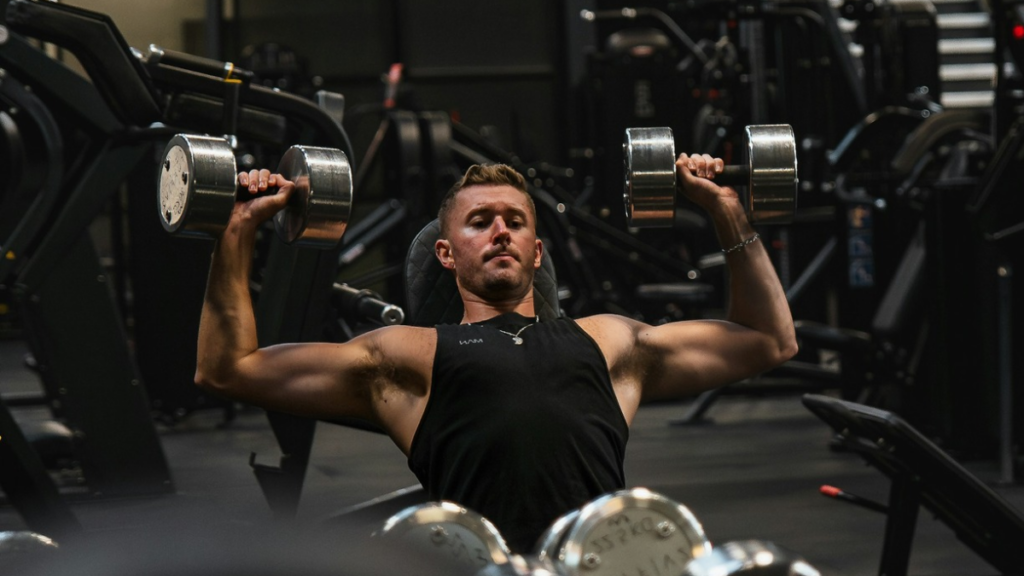
Exercise Two: Incline Dumbbell Curl
The incline dumbbell curl is one of the most effective exercises for emphasizing the long head of the biceps.
Performing curls while sitting on an incline bench places the shoulder in a more extended position, stretching the biceps at the beginning of each repetition.
Why It Works
Muscles often experience greater hypertrophy when trained under tension at longer muscle lengths.
Recent research has shown that exercises emphasizing the stretched position can produce superior muscle growth compared to exercises that primarily load shortened positions.
The incline curl takes advantage of this principle by increasing tension during the initial portion of the movement.
How to Perform It
- Adjust an incline bench to approximately forty five to sixty degrees.
- Sit back with a dumbbell in each hand and allow your arms to hang naturally toward the floor.
- Keep your upper arms fixed throughout the movement.
- Curl the weights upward while rotating your palms fully upward.
- Squeeze the biceps at the top before lowering the weights under control until the elbows are fully extended.
- Because the stretch is greater, beginners should start with lighter weights than they use during standing curls.
Common Beginner Mistakes
Many people allow their elbows to drift forward as they lift the weights. Doing so reduces the stretch that makes this exercise so effective.
Others swing the weights at the bottom instead of controlling the movement. Maintaining constant tension produces better results while reducing injury risk.
Exercise Three: Hammer Curl
Although hammer curls use a neutral grip instead of a supinated grip, they remain one of the best exercises for building bigger upper arms.
The neutral grip shifts more emphasis toward the brachialis and brachioradialis while still heavily recruiting the biceps.
Why It Works
The brachialis sits beneath the biceps. As it becomes larger, it pushes the biceps upward, making the entire upper arm appear thicker and more muscular.
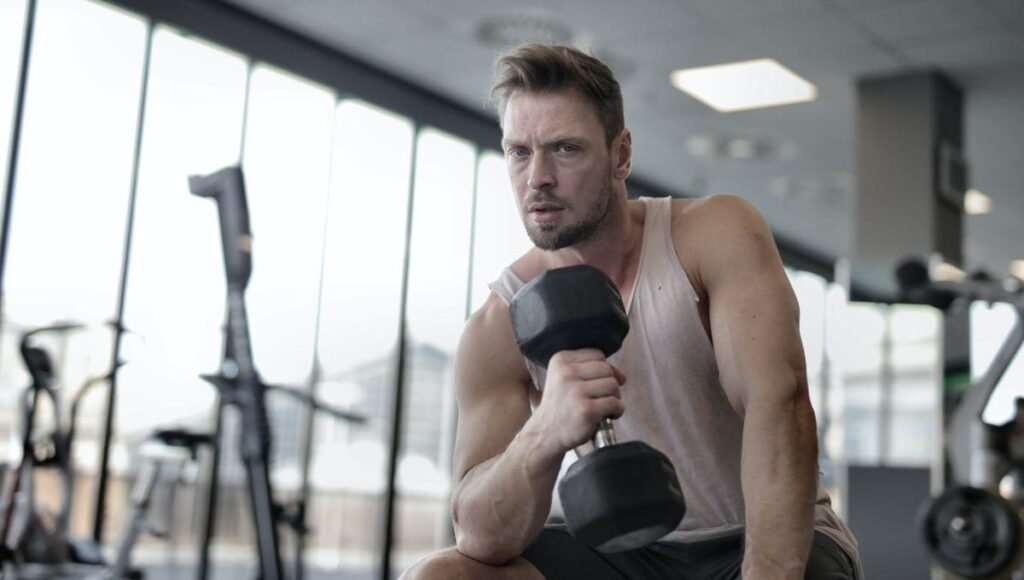
Hammer curls also improve grip strength because the neutral wrist position allows many people to handle relatively heavy weights with excellent control. Research examining forearm muscle activation shows that neutral grip curls effectively recruit multiple elbow flexors, contributing to overall arm development.
How to Perform It
- Stand upright with a dumbbell in each hand and your palms facing one another.
- Keep your elbows close to your torso.
- Curl the weights upward without rotating the wrists.
- Lift until your forearms are nearly vertical.
- Pause briefly before lowering the weights slowly.
- Focus on smooth, controlled repetitions rather than maximum weight.
Common Beginner Mistakes
Some beginners rotate the wrists during the movement, accidentally turning the hammer curl into a standard curl. Others swing the weights using their shoulders instead of allowing the elbow joint to perform most of the work.
Why Progressive Overload Matters
The best exercises in the world will not build muscle unless your training becomes gradually more challenging. Progressive overload means asking your muscles to perform slightly more work over time.
This can happen by increasing weight, performing more repetitions, adding an extra set, improving technique, or increasing training frequency. Research consistently identifies progressive overload as one of the primary drivers of muscle hypertrophy because muscles adapt to increasing mechanical demands. For beginners, adding one or two repetitions before increasing the weight is often the simplest strategy.
How Many Sets and Repetitions Should Beginners Perform?
Current evidence suggests that muscle growth can occur across a wide repetition range provided sets are performed close to muscular failure. For beginners, eight to fifteen repetitions per set is an excellent balance between technique, strength, and muscle growth.
Completing two to four working sets for each exercise twice per week provides sufficient training volume for most new lifters. Recovery remains equally important because muscle adaptation occurs after training rather than during it.
Should Beginners Train to Failure?
Training to complete muscular failure is not necessary for beginners.
Research indicates that stopping one or two repetitions before failure produces similar muscle growth while reducing fatigue and maintaining better exercise technique. As experience increases, occasional sets to failure can become useful, particularly on isolation exercises like curls.
Putting It All Together
Building bigger biceps does not require dozens of complicated exercises or expensive equipment. A combination of standing dumbbell curls, incline dumbbell curls, and hammer curls effectively trains the biceps through multiple movement patterns while also developing the brachialis and forearms.
Each exercise complements the others by emphasizing different aspects of elbow flexion and arm development. Combined with progressive overload, adequate protein intake, consistent recovery, and proper technique, these three movements provide everything most beginners need to build stronger and more muscular arms.
Rather than searching for complicated routines, focus on mastering these foundational exercises and improving your performance over time. That simple approach is supported by decades of exercise science and remains one of the most reliable ways to develop impressive biceps.
Key Takeaways
| Topic | Key Takeaway |
|---|---|
| Best Exercise | Standing dumbbell curls provide an excellent overall stimulus for both heads of the biceps. |
| Best Stretch Exercise | Incline dumbbell curls emphasize the long head through greater muscle length. |
| Best Thickness Exercise | Hammer curls effectively develop the brachialis and brachioradialis for bigger upper arms. |
| Training Frequency | Train biceps about twice per week for optimal beginner progress. |
| Repetition Range | Eight to fifteen repetitions per set works well for hypertrophy. |
| Progressive Overload | Gradually increase weight, repetitions, or sets over time to continue growing. |
| Protein Intake | Aim for approximately 1.4 to 2.2 grams of protein per kilogram of body weight each day. |
| Recovery | Prioritize seven to nine hours of sleep and allow sufficient recovery between hard sessions. |
| Consistency | Long term adherence is more important than constantly changing exercises. |
References
- American College of Sports Medicine. (2009). Progression models in resistance training for healthy adults. Medicine & Science in Sports & Exercise, 41(3), 687 to 708.
- Baz Valle, E., Balsalobre Fernández, C., Alix Fajardo, K. and Santos Concejero, J. (2022). A systematic review of the effects of resistance training performed to repetition failure on muscle hypertrophy. Journal of Science and Medicine in Sport, 25(1), 15 to 23.
- Grgic, J., Schoenfeld, B.J., Orazem, J. and Sabol, F. (2022). Effects of resistance training performed to repetition failure or non failure on muscular strength and hypertrophy: A systematic review and meta analysis. Journal of Sport and Health Science, 11(2), 202 to 211.
- Maeo, S., Ando, Y., Kanehisa, H. and Kawakami, Y. (2021). Muscle hypertrophy induced by resistance training at long muscle lengths. Scandinavian Journal of Medicine & Science in Sports, 31(11), 2066 to 2076.
- Morton, R.W., Murphy, K.T., McKellar, S.R., Schoenfeld, B.J., Henselmans, M., Helms, E., Aragon, A.A., Devries, M.C., Banfield, L., Krieger, J.W. and Phillips, S.M. (2018). A systematic review, meta analysis and meta regression of protein supplementation on resistance training induced gains in muscle mass and strength in healthy adults. British Journal of Sports Medicine, 52(6), 376 to 384.
- Schoenfeld, B.J. (2010). The mechanisms of muscle hypertrophy and their application to resistance training. Journal of Strength and Conditioning Research, 24(10), 2857 to 2872.