

Well developed shoulders can transform the look of your physique. Broad, rounded deltoids create the illusion of a narrower waist, improve upper body proportions, and contribute significantly to strength in pressing, lifting, and athletic movements. While many lifters assume they need barbells, cables, or specialized machines to maximize shoulder growth, research suggests that dumbbells alone can provide everything needed to build bigger, stronger shoulders.
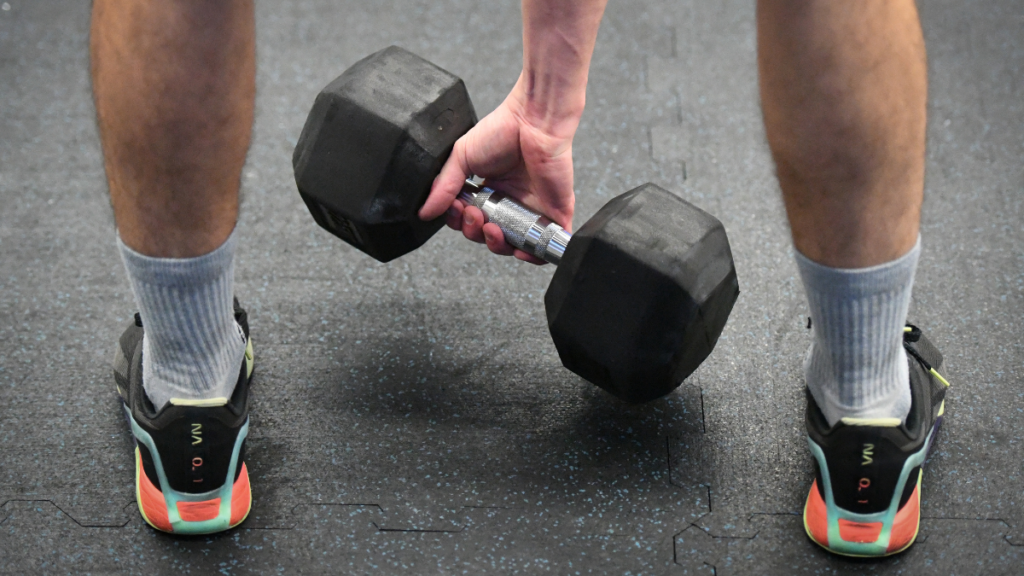
Dumbbells offer unique advantages for hypertrophy. They allow a greater range of motion, require more stabilization, and enable each arm to work independently, helping address strength imbalances while stimulating muscle growth across all three heads of the deltoid muscle.


The key is understanding shoulder anatomy, selecting the right exercises, and applying proven hypertrophy principles consistently. When programmed correctly, a dumbbell only shoulder routine can deliver exceptional muscle building results.
Understanding Shoulder Anatomy
To build muscular shoulders, it is important to understand what you are trying to develop. The shoulder is primarily composed of the deltoid muscle, which consists of three distinct heads.
Anterior Deltoid
The anterior deltoid sits at the front of the shoulder and is heavily involved in pressing movements and raising the arm forward. It receives substantial stimulation from chest exercises and overhead pressing.

Lateral Deltoid
The lateral deltoid is located on the side of the shoulder. It is primarily responsible for lifting the arm away from the body and contributes most to shoulder width. For many lifters, this is the most important area to target when aiming for a broader appearance.
Posterior Deltoid
The posterior deltoid sits at the back of the shoulder and helps extend the arm behind the body and control pulling movements. Well developed rear delts improve posture, shoulder health, and overall upper body balance.
Research consistently shows that balanced development of all three heads is important not only for aesthetics but also for shoulder function and injury prevention.
Why Dumbbells Are Excellent For Shoulder Growth
Many people underestimate how effective dumbbells can be for hypertrophy. One major advantage is the increased freedom of movement compared to barbells and machines. Because the hands are not locked into a fixed position, lifters can adjust movement patterns to suit their anatomy, potentially reducing joint stress while maximizing muscle activation.
Dumbbells also increase stabilization demands. Electromyographic studies have shown that unstable resistance conditions often require greater recruitment of stabilizing musculature, which may contribute to enhanced overall muscular development.
Additionally, unilateral training helps eliminate compensation patterns where one side of the body dominates the movement. Over time, this can lead to more symmetrical muscle growth and improved movement quality.
The Science Of Muscle Growth
Before discussing specific exercises, it is useful to understand the mechanisms that drive hypertrophy. Current evidence suggests that muscle growth is primarily stimulated through mechanical tension, sufficient training volume, and progressive overload.
Mechanical tension occurs when muscles generate force under load through a full range of motion. Training volume refers to the total amount of work performed, usually measured as sets per muscle group per week. Progressive overload involves gradually increasing demands placed on the muscles over time.
Research indicates that most individuals achieve optimal hypertrophy with approximately 10 to 20 challenging sets per muscle group each week. Training close to muscular failure also appears to maximize muscle fiber recruitment and growth.
Importantly, studies show that both heavier loads and lighter loads can produce significant hypertrophy when sets are performed near failure. This means you do not need extremely heavy dumbbells to build impressive shoulders.
The Best Dumbbell Exercises For Bigger Shoulders
Dumbbell Overhead Press

The dumbbell overhead press should form the foundation of most shoulder building programs. This exercise primarily targets the anterior deltoids while also heavily involving the lateral deltoids and triceps.
Compared to barbell pressing, dumbbells allow a more natural movement path and often provide a greater range of motion. Research examining shoulder muscle activation consistently shows high levels of anterior and lateral deltoid recruitment during overhead pressing variations.
To perform the exercise effectively, press the dumbbells overhead while maintaining a stable torso and controlled movement throughout the range of motion. Three to five sets of six to twelve repetitions work well for most trainees.
Dumbbell Lateral Raise
If the goal is wider shoulders, few exercises are more important than the lateral raise. Electromyographic research has repeatedly identified lateral raises as one of the most effective movements for targeting the lateral deltoid.
Because the lateral head contributes significantly to shoulder width, this exercise deserves a central place in any hypertrophy focused shoulder routine. Perform the movement with slight elbow bend and raise the arms until approximately shoulder height. Focus on controlling both the lifting and lowering phases.
Three to five sets of ten to twenty repetitions are highly effective.
Leaning Dumbbell Lateral Raise
A variation of the standard lateral raise, the leaning version increases the resistance profile through a larger portion of the range of motion. By leaning slightly away from a support, the deltoid remains under tension for longer periods during the movement.
This variation can provide a novel stimulus and help overcome plateaus in shoulder development.
Dumbbell Rear Delt Fly
Rear delts are frequently neglected, leading to muscular imbalances and less impressive shoulder development. The rear delt fly directly targets the posterior deltoids and helps create a fuller, more three dimensional appearance.
Studies investigating shoulder muscle activation consistently show strong posterior deltoid recruitment during horizontal abduction exercises such as rear delt flyes. Focus on moving through a controlled range while minimizing momentum. Three to four sets of ten to fifteen repetitions are generally effective.
Incline Rear Delt Raise
Performing rear delt raises while lying chest down on an incline bench minimizes body movement and increases isolation of the posterior deltoids. Many lifters find this variation easier to execute correctly than standing rear delt flyes. The additional stability can improve mind muscle connection and training quality.
Arnold Press
The Arnold press combines pressing and rotational movement into a single exercise. While research does not demonstrate dramatic superiority over traditional pressing variations, the Arnold press allows the shoulder to move through a larger range of motion, potentially increasing muscle recruitment and training variety.
This exercise effectively targets both the anterior and lateral deltoids.
Dumbbell Upright Row
When performed with proper technique and comfortable range of motion, dumbbell upright rows can provide meaningful stimulation for the lateral deltoids and upper trapezius. Using dumbbells allows greater freedom of movement compared to a barbell, which may reduce discomfort for some individuals.
Moderate loads and controlled execution are essential.
Front Raise
Although the anterior deltoid receives substantial stimulation from pressing exercises, front raises can be useful for individuals seeking additional front shoulder development.
Research suggests that isolation exercises can effectively complement compound movements when attempting to maximize regional hypertrophy. However, most trainees should prioritize lateral and posterior delt work before adding large amounts of front raise volume.
The Importance Of Progressive Overload
No exercise program will continue producing results without progression. Progressive overload remains one of the most important principles in resistance training. There are several ways to apply it using dumbbells.
You can increase weight, perform more repetitions with the same weight, improve technique, increase range of motion, or add additional sets over time. Research consistently demonstrates that muscles adapt to increasing demands. Once training stress remains unchanged for extended periods, progress typically slows.

Tracking workouts and striving for small improvements each week can dramatically improve long term gains.
Should You Train To Failure?
Training to muscular failure is often debated. Current evidence suggests that training close to failure is important for maximizing hypertrophy because it increases recruitment of high threshold motor units.
How to Build Bigger Legs Without Squatting Heavy
However, reaching absolute failure on every set is not necessary and may increase fatigue without providing meaningful additional benefits. Most sets should finish with one to three repetitions remaining in reserve. This approach provides a strong hypertrophic stimulus while supporting recovery and long term progression.
Sample Dumbbell Only Shoulder Workout
A highly effective shoulder hypertrophy workout using only dumbbells could include:
- Dumbbell Overhead Press: 4 sets of 6 to 10 repetitions.
- Dumbbell Lateral Raise: 4 sets of 12 to 15 repetitions.
- Arnold Press: 3 sets of 8 to 12 repetitions.
- Rear Delt Fly: 4 sets of 12 to 15 repetitions.
- Leaning Lateral Raise: 3 sets of 12 to 20 repetitions.
This workout targets all three heads of the deltoid while providing sufficient volume to stimulate growth. Performed twice weekly with progressive overload, it can produce significant improvements in shoulder size and shape.
Common Mistakes Limiting Shoulder Growth
Many lifters sabotage shoulder development by focusing almost exclusively on pressing movements. While overhead presses are excellent, they do not fully develop the lateral and posterior deltoids. Neglecting these areas often results in incomplete shoulder development.
Another common mistake is using excessive momentum during lateral raises and rear delt exercises. Swinging the weights reduces tension on the target muscles and diminishes training effectiveness. Insufficient volume is another frequent problem. Many trainees perform only a few shoulder sets each week and then wonder why progress stalls.
Finally, failing to progressively increase training demands over time limits long term hypertrophy.
Final Thoughts
Building muscular shoulders does not require barbells, cables, or expensive gym equipment. Dumbbells alone provide all the tools necessary to develop impressive deltoids when training is based on sound scientific principles.
The most effective approach combines compound presses for overall shoulder mass, lateral raises for width, and rear delt exercises for complete development. Pair these movements with sufficient weekly volume, progressive overload, proper nutrition, and adequate recovery. Over time, consistency with these fundamentals will produce broader, stronger, and more muscular shoulders using nothing more than a pair of dumbbells.
Key Takeaways
| Principle | Practical Application |
|---|---|
| Prioritize all three deltoid heads | Train anterior, lateral, and posterior deltoids each week |
| Use compound and isolation exercises | Combine overhead presses with lateral raises and rear delt work |
| Weekly volume matters | Aim for roughly 12 to 20 total shoulder sets per week |
| Train close to failure | Finish most sets with one to three reps in reserve |
| Progressive overload is essential | Gradually increase weight, reps, or training volume |
| Frequency improves results | Train shoulders two to three times weekly |
| Recovery drives growth | Sleep seven to nine hours and consume adequate protein |
| Dumbbells are sufficient | You can build highly muscular shoulders without machines or barbells |
References
- American College of Sports Medicine. (2009) ‘Progression models in resistance training for healthy adults’, Medicine & Science in Sports & Exercise, 41(3), pp. 687 to 708.
- Brad Schoenfeld, B. (2010) ‘The mechanisms of muscle hypertrophy and their application to resistance training’, Journal of Strength and Conditioning Research, 24(10), pp. 2857 to 2872.
- Grgic, J., Schoenfeld, B.J., Orazem, J. and Sabol, F. (2022) ‘Effects of resistance training performed to repetition failure or non failure on muscular strength and hypertrophy’, Journal of Sport and Health Science, 11(2), pp. 202 to 211.
- Krieger, J.W. (2010) ‘Single versus multiple sets of resistance exercise for muscle hypertrophy: A meta analysis’, Journal of Strength and Conditioning Research, 24(4), pp. 1150 to 1159.
- Morton, R.W., Murphy, K.T., McKellar, S.R., Schoenfeld, B.J., Henselmans, M., Helms, E., Aragon, A.A., Devries, M.C., Banfield, L., Krieger, J.W. and Phillips, S.M. (2018) ‘A systematic review, meta analysis and meta regression of protein supplementation on resistance training induced gains in muscle mass and strength in healthy adults’, British Journal of Sports Medicine, 52(6), pp. 376 to 384.
- Pareja Blanco, F., Rodríguez Rosell, D., Sánchez Medina, L., Gorostiaga, E.M. and González Badillo, J.J. (2017) ‘Effects of velocity loss during resistance training on athletic performance, strength gains and muscle adaptations’, Scandinavian Journal of Medicine & Science in Sports, 27(7), pp. 724 to 735.