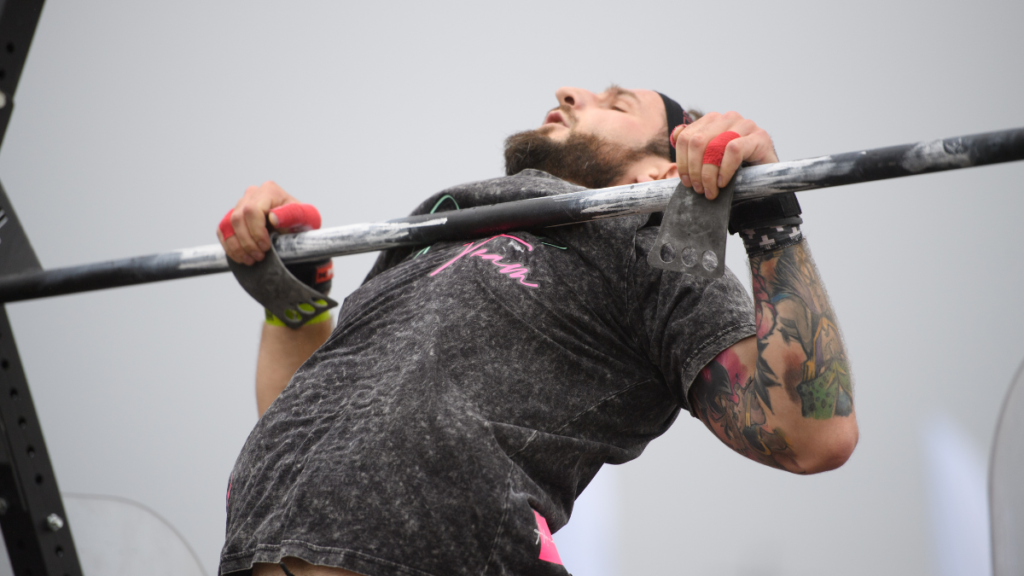


Pull ups have earned a reputation as one of the best upper body exercises you can do. They challenge your lats, biceps, forearms, shoulders, and core while building impressive relative strength. They are also a common benchmark of fitness, especially in CrossFit, calisthenics, and military training.
But there is one problem. Not everyone enjoys doing pull ups, and not everyone responds equally well to them. Some lifters find that elbow or shoulder discomfort limits progress. Others hit frustrating plateaus after years of training. Many simply want more variety in their workouts while still chasing a wider, more muscular back.



Fortunately, you do not have to rely exclusively on pull ups to develop broad lats. Muscle growth depends on progressive overload, sufficient training volume, and proper exercise execution. Multiple exercises can effectively stimulate the latissimus dorsi and surrounding muscles when programmed correctly.
Why Back Width Depends on More Than Pull Ups
Before replacing pull ups, it helps to understand what actually creates the appearance of a wider back.
The primary muscle responsible is the latissimus dorsi. The lats originate across the lower spine, pelvis, and lower ribs before inserting onto the upper arm. Their main functions include shoulder extension, shoulder adduction, and internal rotation. When the lats become larger, they create the classic V taper by increasing the width of the upper torso.
Several other muscles contribute to overall back development. The teres major works alongside the lats during pulling movements. The lower trapezius helps stabilize the shoulder blades. The rhomboids control scapular movement, while the rear deltoids assist during horizontal pulling.
Research consistently shows that muscle hypertrophy is driven primarily by sufficient mechanical tension combined with adequate training volume and recovery. Exercise selection matters because different movements emphasize muscles through slightly different resistance profiles and joint angles. Using several effective exercises can often stimulate more complete development than relying on a single movement.
Another important point is that vertical pulling alone does not maximize overall back development. Combining vertical and horizontal pulling patterns produces more balanced muscular growth across the upper back.
Why Some Lifters Stop Progressing With Pull Ups
Pull ups remain an outstanding exercise, but they have limitations. Your body weight determines the resistance. This is excellent for beginners, but becomes less practical as strength improves. Strong athletes may require significant additional weight to maintain progressive overload.
Body proportions also influence performance. Individuals with longer arms often experience greater difficulty because the movement involves a larger range of motion. Fatigue can also become a limiting factor. Grip strength and forearm endurance often fail before the lats receive sufficient training stimulus.

Finally, repetitive loading through the same movement pattern may contribute to overuse discomfort in susceptible individuals, particularly around the elbows or shoulders. Adding different pulling exercises changes joint angles, resistance curves, and loading strategies while allowing continued progression.
Alternative Number One: Chest Supported Row
The chest supported row is one of the most effective exercises for building upper back thickness while also stimulating the lats.
Unlike bent over rows, chest support removes much of the stress placed on the lower back. This allows greater focus on producing force through the upper body instead of maintaining spinal position. Whether performed with dumbbells, barbells, machines, or cables, the movement allows controlled loading through a full range of motion.
Why It Works
Chest supported rows minimize momentum and reduce the temptation to use excessive body English. That increases muscular tension where you want it.
Electromyography studies consistently show high activation of the latissimus dorsi, middle trapezius, rhomboids, posterior deltoids, and biceps during rowing movements. Because the torso remains fixed, lifters often achieve better scapular control and stronger contractions at the top of each repetition.
Technique Tips
- Set the bench to approximately a thirty to forty five degree angle.
- Allow your shoulders to fully protract at the bottom before initiating each repetition.
- Drive your elbows toward your hips rather than pulling with your hands.
- Pause briefly at peak contraction before lowering under control.
- Avoid shrugging your shoulders toward your ears throughout the movement.
Alternative Number Two: Single Arm Lat Pulldown
The traditional lat pulldown is already a proven pull up substitute, but performing it one arm at a time offers several additional benefits. Training each side independently helps correct muscular imbalances while increasing range of motion and improving mind muscle connection.
Many lifters also experience a stronger lat contraction because the free side of the torso can naturally rotate during the pull.
Why It Works
Research comparing different pulling exercises shows that pulldowns effectively activate the lats while allowing progressive overload through adjustable resistance.
The unilateral variation also challenges trunk stability while improving shoulder mechanics. Because you can select smaller weight increments than with weighted pull ups, progression becomes easier over time.
Technique Tips
- Sit tall with your chest lifted throughout the exercise.
- Begin each repetition by depressing the shoulder blade before bending the elbow.
- Pull the handle toward your upper chest while keeping the elbow close to your side.
- Allow the arm to fully extend at the top without losing shoulder control.
- Resist the temptation to lean excessively backward.
Alternative Number Three: Straight Arm Cable Pulldown
Although this exercise uses lighter weights, it isolates the lats remarkably well. Unlike pull ups and rows, the elbows remain nearly straight throughout the movement. This minimizes assistance from the biceps and shifts more work directly onto the lats.
For lifters who struggle to feel their lats during compound exercises, straight arm pulldowns often solve the problem.
Why It Works
The lats extend the shoulder, which is exactly what occurs during this exercise. Keeping the elbows nearly fixed reduces elbow flexor involvement while maintaining continuous tension throughout the movement.
Cable resistance also provides relatively constant loading across the entire range of motion. Straight arm pulldowns work particularly well as either a warm up exercise or a finishing movement after heavier compound lifts.

Technique Tips
- Stand far enough back to maintain cable tension throughout the movement.
- Keep a slight bend in the elbows without allowing them to flex significantly.
- Drive the hands toward your thighs by moving through the shoulders.
- Pause briefly before returning under control.
- Avoid using body momentum to swing the weight.
Can These Exercises Build More Muscle Than Pull Ups?
In many cases, yes. Muscle hypertrophy depends less on the specific exercise and more on reaching sufficient intensity close to muscular failure while accumulating enough weekly training volume.
Research comparing different resistance training exercises consistently demonstrates that multiple exercises can produce similar hypertrophy when training volume and effort are matched. For some individuals, machine based and cable based exercises even outperform pull ups because they allow more precise loading, better technique consistency, and higher quality repetitions.
That does not mean pull ups are ineffective. They remain one of the best compound pulling movements available. The key takeaway is that they are not irreplaceable.
Programming These Alternatives for Maximum Back Width
A well designed back workout should include both vertical and horizontal pulling. One effective approach combines heavy rows for overall mass with unilateral pulldowns for lat emphasis before finishing with straight arm pulldowns to maximize fatigue in the lats.
For hypertrophy, most evidence supports accumulating approximately ten to twenty challenging sets per muscle group each week. Each working set should finish within one to three repetitions of muscular failure while maintaining proper technique. Progressive overload remains essential. Increase resistance, repetitions, or total training volume gradually over time.
Common Mistakes That Limit Lat Growth
- Many lifters unintentionally shift the workload away from the lats.
- Using excessive momentum reduces muscular tension.
- Pulling primarily with the hands instead of driving through the elbows often increases biceps involvement.
- Failing to control the eccentric phase reduces total time under tension.
- Using partial repetitions limits muscle lengthening, which growing evidence suggests may play an important role in maximizing hypertrophy.
- Finally, neglecting recovery limits progress regardless of exercise selection. Muscle growth requires sufficient dietary protein, total calories, sleep, and recovery between training sessions.
Do You Need Pull Ups at All?
The answer depends on your goals. If improving relative strength or mastering bodyweight skills matters to you, pull ups remain valuable.
If your primary goal is building an impressive, wider back, however, they are simply one effective option among many. A combination of chest supported rows, single arm lat pulldowns, and straight arm cable pulldowns can stimulate the lats through multiple movement patterns while allowing easier progression, reduced joint stress, and greater exercise variety.
For many lifters, replacing or rotating pull ups with these exercises actually leads to renewed progress after long plateaus. The best exercise is ultimately the one you can perform consistently, progressively, and with excellent technique over months and years of training.
Key Takeaways
| Topic | Key Point |
|---|---|
| Primary Goal | Back width comes mainly from developing the latissimus dorsi. |
| Alternative 1 | Chest supported rows build upper back mass while reducing lower back fatigue. |
| Alternative 2 | Single arm lat pulldowns improve unilateral strength, lat activation, and progressive overload. |
| Alternative 3 | Straight arm cable pulldowns isolate the lats while minimizing biceps involvement. |
| Muscle Growth | Progressive overload, training volume, and effort matter more than any single exercise. |
| Weekly Training | Aim for approximately ten to twenty challenging sets per week for the back. |
| Pull Ups | Excellent exercise, but not essential for maximizing lat hypertrophy. |
| Success Factor | Consistent training, proper technique, recovery, and nutrition drive long term results. |
References
- Ahtiainen, J.P., Pakarinen, A., Alen, M., Kraemer, W.J. and Häkkinen, K., 2003. Muscle hypertrophy, hormonal adaptations and strength development during strength training in strength trained and untrained men. European Journal of Applied Physiology, 89(6), pp.555 to 563.
- American College of Sports Medicine, 2009. Progression models in resistance training for healthy adults. Medicine and Science in Sports and Exercise, 41(3), pp.687 to 708.
- Gentil, P., Soares, S. and Bottaro, M., 2015. Single versus multi joint resistance exercises. Effects on muscle strength and hypertrophy. Asian Journal of Sports Medicine, 6(2), e24057.
- Grgic, J., Schoenfeld, B.J., Orazem, J. and Sabol, F., 2022. Effects of resistance training performed to repetition failure or non failure on muscular strength and hypertrophy. Scandinavian Journal of Medicine and Science in Sports, 32(11), pp.1837 to 1851.
- Lusk, S.J., Hale, B.D. and Russell, D.M., 2010. Grip width and forearm orientation effects on muscle activity during the lat pulldown. Journal of Strength and Conditioning Research, 24(7), pp.1895 to 1900.
- Schoenfeld, B.J., 2010. The mechanisms of muscle hypertrophy and their application to resistance training. Journal of Strength and Conditioning Research, 24(10), pp.2857 to 2872.
- Schoenfeld, B.J., Ogborn, D. and Krieger, J.W., 2017. Dose response relationship between weekly resistance training volume and increases in muscle mass. Journal of Sports Sciences, 35(11), pp.1073 to 1082.