

Building an impressive physique does not necessarily require a complicated training program packed with machines, cables and endless exercise variations. Tanner Shuck argues that focusing on a few fundamental movements and getting stronger at them over time can produce significant results.
In a recent YouTube video, Shuck outlined the three lifts he believes can make the biggest difference to how a man looks and carries himself: the squat, a press or dip, and the strict pull-up.


The Squat
Shuck puts the squat first, allowing for back squats, front squats or heavy goblet squats. His reasoning centers on the amount of the body involved in supporting and moving a heavy load.
The squat creates axial loading while demanding core bracing and upper-back stability. Over time, Shuck says this can contribute to thicker legs, fuller glutes, a stronger midsection and a more upright posture.
He also argues that heavy squatting develops the upper back and traps because of the demands of supporting the bar.
“You cannot be a pencil neck with a big squat. It’s impossible,” Shuck said.
The Press or Dip
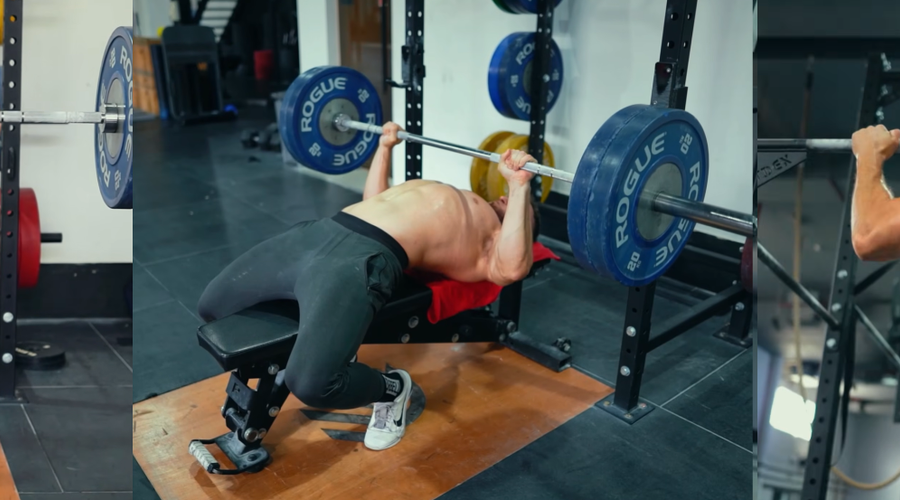
For the upper body, Shuck recommends choosing a major pressing movement, specifically the bench press or weighted dip.
Rather than performing numerous chest exercises, he believes lifters should focus on pressing heavy and progressively adding resistance. These movements train the chest, front delts and triceps while developing pushing strength.
Shuck particularly highlights weighted dips for their combination of upper-body development and relative strength. His broader point is that building real strength can have a greater impact on the physique than constantly chasing a temporary pump.
“Most guys chase pump work. Strong men chase real pushing strength,” he said.
The Strict Pull-Up
The final lift is the strict pull-up, which Shuck describes as an important test of relative strength because the lifter must move their own body weight.
Pull-ups train the lats, upper back, rear delts, biceps and grip while contributing to the width that creates a V-taper.
Once someone can perform 15 to 20 strict bodyweight pull-ups, Shuck recommends adding weight. His benchmark is 10 repetitions with 45 pounds attached or roughly 25% of body weight.
Progression Matters More Than Variety
Shuck’s minimalist approach is not about claiming that other exercises have no value. He acknowledges that deadlifts and accessory movements can still play a role in a complete program.
Instead, he argues that the foundation should remain focused on progressive mechanical tension.
“Most men don’t need more exercises. They need more progression.”
For Shuck, consistently improving the squat, press or dip, and pull-up over three to five years matters more than constantly changing exercises.
Master the Basics
The three-lift approach covers the major push, pull and lower-body patterns while emphasizing strength, relative strength and progressive overload. For lifters tired of constantly changing their routines, Shuck’s message is simple: choose foundational movements, get stronger at them and give the process enough time to work.
About the Author
Jeremiah Oliva

Jeremiah Oliva is a writer passionate about fitness, sports, and active living. He has experience in songwriting and managing content and social media for online radio and magazine platforms.
He covers HYROX, CrossFit®, and competitive fitness, with a focus on performance, mindset, and athlete development.
Outside of writing, Jeremiah trains in boxing, cycles, explores the outdoors with his kids, and plays the guitar.