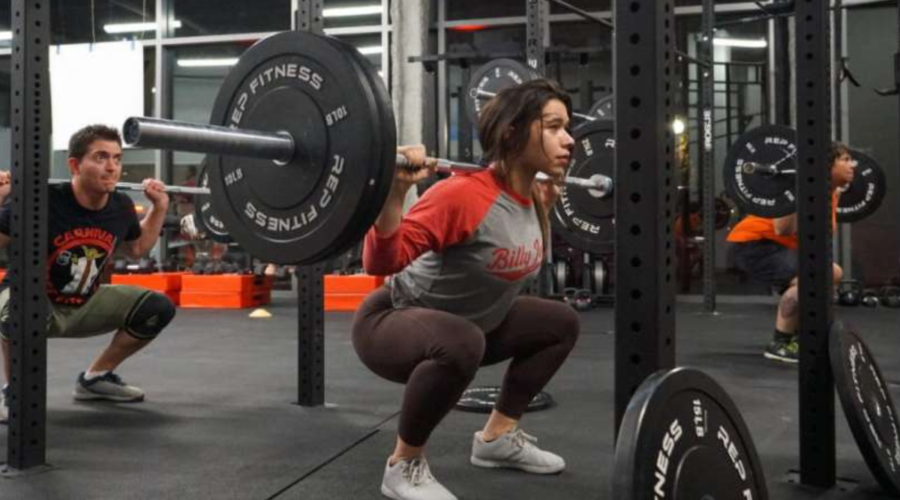


The squat is one of the most effective exercises for building strength, muscle, athletic performance, and long term health. It trains nearly every major muscle in the lower body while also challenging the core and upper back. Because it mimics movements that people perform every day, such as sitting down and standing up, it is often called one of the most functional exercises in strength training. For beginners, however, one question comes up more than any other. How heavy should you squat?
The answer is not a specific number. It depends on your technique, mobility, experience, body weight, confidence, and overall training goals. The good news is that research gives us clear guidelines on how beginners should approach squat loading safely and effectively.


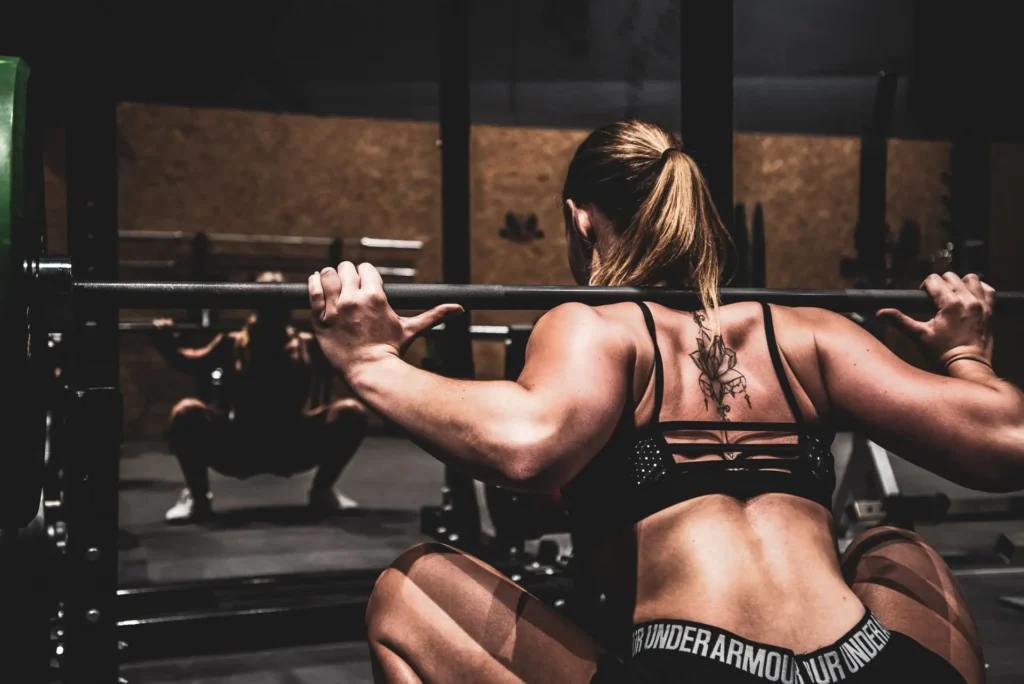
Instead of chasing heavy weights immediately, beginners should focus on mastering movement quality, gradually increasing resistance, and allowing the body enough time to adapt. This approach leads to faster long term progress while dramatically reducing the risk of injury.
This guide explains exactly how heavy beginners should squat, how to know when to increase the load, common mistakes to avoid, and what science says about learning one of the most important exercises in the gym.
Why Weight Should Never Be the First Priority
Many new lifters assume that lifting heavier always produces better results. In reality, beginners respond extremely well to relatively light loads because almost every improvement during the first months comes from learning the movement rather than simply getting stronger.
When someone first learns the squat, the nervous system becomes better at coordinating muscles, improving balance, and producing force efficiently. Researchers have consistently found that early strength gains are largely driven by neural adaptations before significant muscle growth occurs.
5 Best Exercises for Every Beginner Who Wants Bigger Arms
This means beginners do not need heavy weights to become stronger. Instead, they need repeated practice with technically correct repetitions. Studies from the American College of Sports Medicine show that novice lifters can gain substantial strength using moderate loads while emphasizing proper technique and progressive overload. Learning movement first also creates a foundation that allows much heavier lifting later.
What Counts as a Beginner?
A beginner is not simply someone who joined the gym last week.
In strength training, a beginner is generally someone who cannot yet perform the squat consistently with solid technique under moderate loads. This often includes people with less than six months of structured resistance training, individuals returning after a long break, and those who have never received proper coaching.
Even someone who has trained for years may still be considered a beginner at squatting if they have never learned correct mechanics. Being a beginner is not a disadvantage. It is actually the period during which strength tends to improve the fastest.
Start With Body Weight First
The smartest starting point for most beginners is the body weight squat. Although it may seem too easy, body weight squats teach essential movement patterns that transfer directly to loaded squats.

A beginner should learn to maintain a neutral spine, keep the feet firmly planted, control knee movement, and descend to an appropriate depth without losing balance.
Being able to perform multiple controlled repetitions with good posture demonstrates that the movement pattern is developing correctly. Coaches often recommend progressing only after body weight squats feel natural and pain free. This stage may last one session or several weeks depending on the individual.
When Should Beginners Add Weight?
Once body weight squats become technically consistent, external resistance can be introduced gradually. Most beginners benefit from starting with a goblet squat using a light dumbbell or kettlebell. Holding the weight in front of the chest naturally encourages better posture while making it easier to learn proper squat mechanics.
A load between 10 and 25 pounds is often enough for many beginners, although smaller or larger individuals may require lighter or heavier weights. After mastering the goblet squat, many people progress to the barbell back squat.
The empty Olympic bar weighs 45 pounds, or about 20 kilograms. For many beginners, this is already a challenging training weight. There is no requirement to add plates immediately. Some lifters may even begin with a lighter technique bar before using a standard Olympic barbell.
How Heavy Should Beginners Squat?
The best weight is one that allows every repetition to be performed with excellent technique while still feeling challenging. Exercise scientists commonly recommend working with loads between about 60 percent and 70 percent of an individual’s estimated one repetition maximum during the early stages of strength development.
Since beginners usually do not know their maximum strength, a simpler approach works better. Choose a weight that allows approximately 8 to 12 controlled repetitions while finishing the set feeling like two or three more good repetitions would still be possible.
This concept is known as repetitions in reserve and has become one of the most reliable ways to regulate training intensity. Research has shown that stopping slightly before complete muscular failure produces similar improvements in strength and muscle growth while reducing unnecessary fatigue.
If every repetition feels effortless, the weight is probably too light. If technique breaks down before completing the planned repetitions, the weight is too heavy.
The ideal beginner squat should feel challenging without becoming chaotic.
Signs the Weight Is Too Heavy
Many beginners increase weight faster than their technique develops.
Several warning signs indicate that the load should be reduced.
- The heels begin lifting from the floor.
- The lower back rounds excessively.
- The knees collapse inward repeatedly.
- The torso folds forward dramatically.
- The squat becomes shallower with every repetition.
- Breathing becomes completely uncontrolled.
- The lifter cannot maintain balance.
These changes usually mean the muscles responsible for controlling the movement cannot handle the current load safely. Reducing the weight is not a step backward. It creates an opportunity to reinforce good movement patterns.
Motor learning research consistently demonstrates that practicing correct technique leads to better long term performance than repeatedly practicing poor mechanics.
How Fast Should Beginners Increase Weight?
Progressive overload is one of the fundamental principles of resistance training. It simply means asking the body to perform slightly more work over time. For beginners, this often means adding small amounts of weight once technique remains consistent across every repetition.
Most novice strength programs recommend increasing lower body exercises by approximately 5 to 10 pounds when all prescribed repetitions can be completed comfortably with good form. Some lifters may progress faster, while others may need several sessions before increasing the load.
Progress is rarely perfectly linear. Sleep, nutrition, stress, recovery, and previous activity levels all influence daily performance. The goal is steady improvement over months rather than dramatic jumps from workout to workout.
Does Squat Depth Change the Right Weight?
Yes. Many beginners unintentionally reduce squat depth as the weight increases. A partial squat allows more weight to be lifted but places different demands on the muscles and often limits overall training benefits.

Research comparing full squats and partial squats suggests that training through a larger range of motion generally produces greater improvements in muscle development, mobility, and overall strength across multiple joint angles. For beginners, depth should never be sacrificed simply to lift heavier weights. The appropriate weight is the heaviest load that still allows safe and controlled depth based on the individual’s mobility and comfort.
Should Beginners Train to Failure?
Training to failure means continuing until another repetition cannot be completed. Many beginners assume this is necessary for progress. Current evidence suggests otherwise. Numerous studies comparing training to failure with stopping just short of failure show similar gains in muscle growth and strength, particularly among beginners.
Stopping with one to three repetitions left in reserve allows higher training quality while reducing excessive fatigue and soreness. This also makes learning technical exercises like the squat much easier. The goal is to accumulate high quality repetitions rather than simply surviving difficult sets.
How Often Should Beginners Squat?
Most beginners make excellent progress by squatting two or three times each week. This frequency provides enough practice to improve movement quality while allowing sufficient recovery between sessions. Research on resistance training frequency suggests that training each muscle group at least twice weekly supports effective strength and muscle development when total weekly training volume is similar.
Each session does not need to be extremely heavy. Many successful beginner programs include one slightly heavier day alongside one or two lighter technique focused sessions. This combination improves skill development while managing fatigue.
What About Age and Body Weight?
There is no universal squat standard that applies to everyone. A larger individual may naturally squat more weight than a smaller individual. Likewise, someone with a history of sports participation may progress much faster than someone who has lived a mostly sedentary lifestyle.
Older adults also benefit tremendously from squatting, although progression should usually be more gradual. Research consistently shows that resistance training improves muscle mass, strength, bone density, balance, and independence throughout aging.
The correct weight remains the same regardless of age. It is the heaviest load that can be controlled safely with excellent technique.
Common Beginner Mistakes
One of the biggest mistakes is comparing squat numbers with experienced lifters on social media. Elite powerlifters often have years of training experience and highly specialized programming. Their numbers provide little guidance for someone learning basic movement patterns.
Another mistake is skipping the warm up. Dynamic mobility exercises, light body weight squats, and progressively heavier warm up sets prepare both muscles and the nervous system for effective lifting.
5 Best Exercises for Every Beginner Who Wants Bigger Arms
Many beginners also neglect recovery. Strength gains occur after training during the recovery process. Adequate protein intake, sufficient calories, hydration, quality sleep, and rest days all contribute significantly to successful progression. Finally, many people become impatient. Strength development is measured over months and years rather than days. The beginners who focus on consistency usually outperform those constantly chasing heavier weights before mastering technique.
A Simple Progression Strategy
A practical beginner progression is remarkably straightforward.
- Learn the body weight squat until movement feels natural.
- Progress to goblet squats using a manageable load.
- Move to the empty barbell once technique remains consistent.
- Increase weight gradually only after every planned repetition is completed with good control.
- Continue practicing the movement regularly while avoiding unnecessary maximal lifts.
This gradual progression aligns closely with modern resistance training recommendations and creates a strong foundation for long term strength development.
The Bottom Line
So, how heavy should beginners squat? Heavy enough to challenge the muscles, but light enough to maintain excellent technique from the first repetition to the last. For many people, this means beginning with body weight, progressing to light goblet squats, and eventually using an empty Olympic bar before adding additional weight. The exact number matters far less than movement quality.
Research consistently shows that beginners gain strength rapidly through improved coordination, gradual progressive overload, and regular practice. There is no prize for loading the bar too early, but there are enormous long term rewards for mastering the movement correctly.

The strongest lifters in the gym were once beginners who respected the learning process. By focusing on technique, consistency, and patient progression, new lifters can build impressive strength while reducing injury risk and creating habits that support years of successful training.
Key Takeaways
| Key Point | Practical Advice |
|---|---|
| Start with technique | Master the body weight squat before adding resistance. |
| First external load | Progress to light goblet squats before using a barbell. |
| Initial barbell work | The empty 45 pound Olympic bar is enough for many beginners. |
| Training intensity | Choose a weight that allows 8 to 12 controlled repetitions with two or three repetitions left in reserve. |
| Progression | Add 5 to 10 pounds only after completing all repetitions with excellent form. |
| Training frequency | Squat two or three times per week for steady progress. |
| Avoid failure | Stop slightly before muscular failure to maintain technique and recovery. |
| Long term focus | Prioritize movement quality and consistency over lifting heavier weights quickly. |
References
- American College of Sports Medicine. (2009) ‘American College of Sports Medicine position stand. Progression models in resistance training for healthy adults’, Medicine & Science in Sports & Exercise, 41(3), pp. 687 to 708.
- Ahtiainen, J.P., Pakarinen, A., Alen, M., Kraemer, W.J. and Häkkinen, K. (2003) ‘Muscle hypertrophy, hormonal adaptations and strength development during strength training in strength trained and untrained men’, European Journal of Applied Physiology, 89(6), pp. 555 to 563.
- Grgic, J., Schoenfeld, B.J., Orazem, J. and Sabol, F. (2021) ‘Effects of resistance training performed to repetition failure or non failure on muscular strength and hypertrophy’, Journal of Sport and Health Science, 10(3), pp. 263 to 273.
- Hartmann, H., Wirth, K. and Klusemann, M. (2013) ‘Analysis of the load on the knee joint and vertebral column with changes in squatting depth and weight load’, Sports Medicine, 43(10), pp. 993 to 1008.
- Kraemer, W.J. and Ratamess, N.A. (2004) ‘Fundamentals of resistance training. Progression and exercise prescription’, Medicine & Science in Sports &Exercise, 36(4), pp. 674 to 688.
- Mangine, G.T., Hoffman, J.R., Gonzalez, A.M., Townsend, J.R., Wells, A.J., Jajtner, A.R., Beyer, K.S., Boone, C.H., Miramonti, A.A., Wang, R. and Stout, J.R. (2015) ‘The effect of training volume and intensity on improvements in muscular strength and size in resistance trained men’, Physiological Reports, 3(8), e12472.
- Sale, D.G. (1988) ‘Neural adaptation to resistance training’, Medicine & Science in Sports & Exercise, 20(5 Suppl), pp. S135 to S145.