

A barbell is one of the simplest and most effective tools for building a stronger chest. It gives you a stable, measurable way to apply progressive resistance, learn a repeatable pressing pattern, and see your strength improve over time.
For beginners, the goal is not to use every chest exercise in the gym or chase a personal best too soon. The best early training builds skill, confidence, and strength while keeping the movements simple enough to repeat consistently. A well chosen barbell chest routine can train the pectoralis major, triceps, and front of the shoulders while teaching you how to create tension through your whole body.


The three exercises below are built around that idea. They are practical, scalable, and supported by research on resistance training, bench angle, muscle activation, and progressive overload. Master these movements with sensible loads and good control, and you will have a strong foundation for a more muscular chest and a more powerful upper body.
Why Barbell Chest Training Works for Beginners
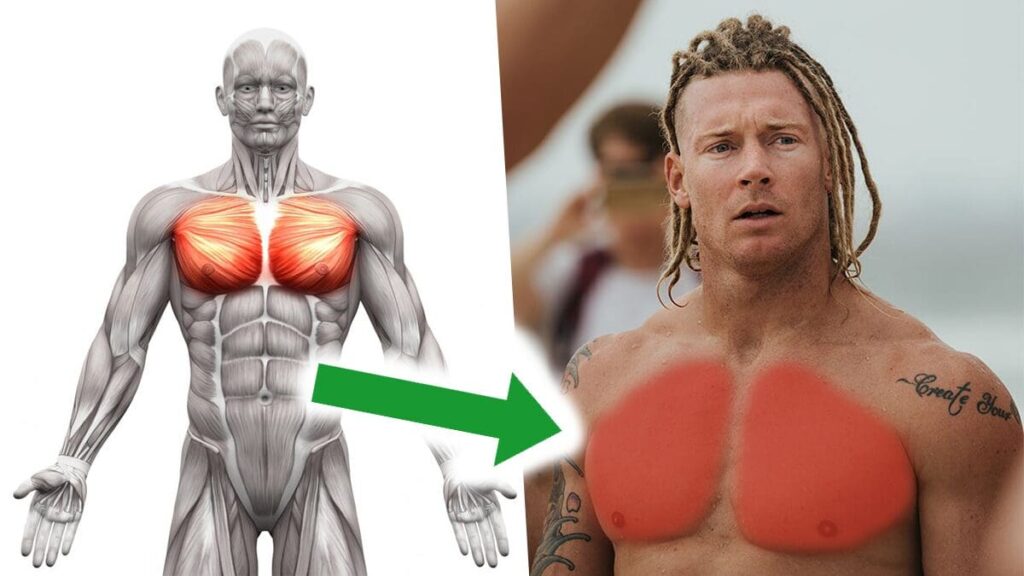
The chest is primarily made up of the pectoralis major, a large muscle that helps bring the upper arm across the body and contributes to pressing movements. When you press a barbell away from your chest, the pectoralis major works alongside the triceps and anterior deltoids to produce force.
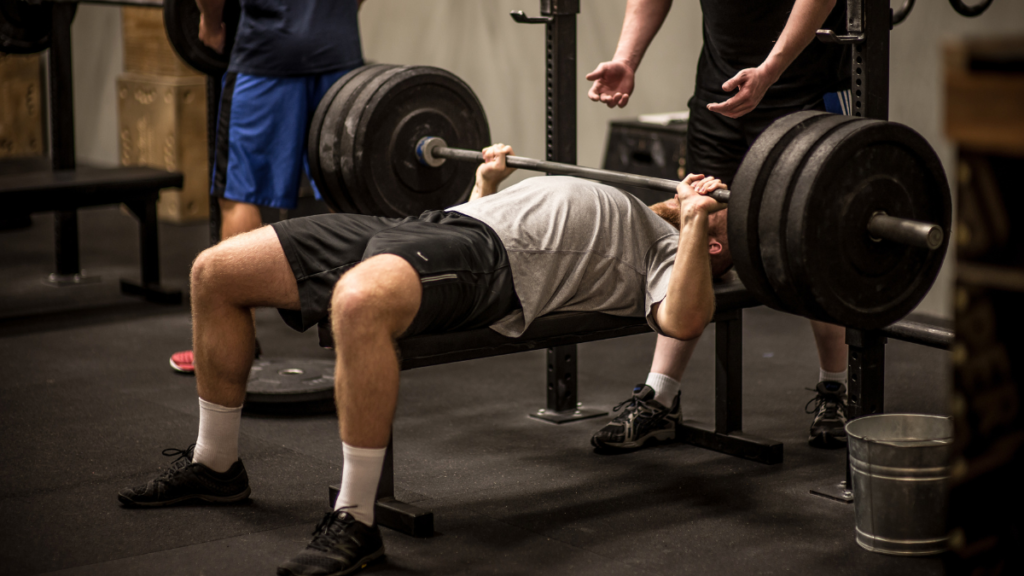
The barbell bench press is especially useful because it allows you to use both arms together and add small amounts of weight over time. This makes progress easy to track. You can begin with an unloaded barbell, learn the technique, then gradually increase the load as your repetitions and control improve.
Research consistently shows that resistance training improves muscular strength and can increase muscle size when training is performed regularly with sufficient effort and progressive overload. You do not need to train to complete failure on every set to make progress. What matters most at the beginning is practicing the movement well, using a challenging but manageable load, and improving gradually over weeks and months.
A chest routine does not need to be complicated. The flat barbell bench press gives you a strong general pressing pattern. The incline barbell bench press changes the angle to place more emphasis on the upper chest region. The paused barbell bench press helps beginners build control, confidence, and strength from the bottom position of the lift.
Exercise 1: Barbell Bench Press
The standard barbell bench press should be the first exercise most beginners learn for chest strength. It is a compound movement, meaning several joints and muscle groups work together. This lets you train the chest with meaningful resistance while also developing the triceps, shoulders, and upper body coordination.
Studies using muscle activity measurements consistently show that the pectoralis major, triceps brachii, and anterior deltoid are highly involved during the flat barbell bench press. Research has also found that regular horizontal bench press training can increase pectoralis major muscle thickness and improve strength in the movement.
How to Perform the Barbell Bench Press
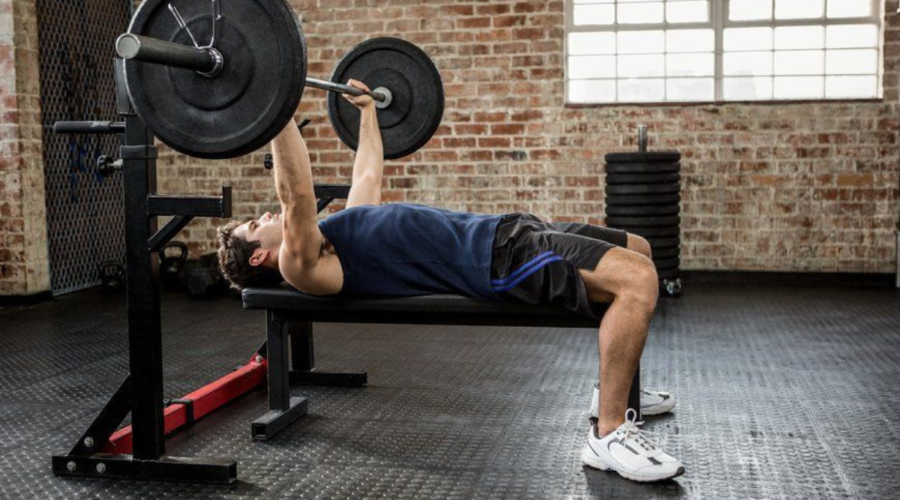
Set the barbell in a rack at a height that allows you to lift it out with straight arms. Lie on the bench with your eyes roughly under the bar. Place your feet firmly on the floor and keep them there throughout the set.
Grip the bar with your hands slightly wider than shoulder width. Your exact grip will vary with your arm length and comfort, but your forearms should be close to vertical when the bar reaches your chest. Pull your shoulder blades gently back and down against the bench. This gives your upper body a stronger and more stable base.
Unrack the bar and hold it above the lower part of your chest with straight arms. Lower it under control until it lightly touches your chest. Press it back up by driving your feet into the floor, keeping your shoulder blades stable, and moving the bar in a controlled path back to the starting position.
Avoid bouncing the bar from your chest, lifting your hips off the bench, or allowing the bar to drift toward your face. Each repetition should look similar.
Why Beginners Should Start Here
The flat bench press teaches the basic skill of horizontal pressing. It provides a reliable reference point for your progress because you can record the load, sets, repetitions, and how the movement felt. This creates a straightforward path to progressive overload.
Start with a load that allows you to complete eight to twelve controlled repetitions while leaving a few repetitions in reserve. If you need to twist, bounce, or lose your shoulder position to complete the final repetitions, the weight is too heavy for the purpose of building good technique.
For many beginners, two or three working sets of six to ten repetitions is a useful starting point. Rest for around two minutes between sets so you can maintain good form and produce enough force on each set.
Exercise 2: Incline Barbell Bench Press
The incline barbell bench press is the best next step once you can perform the flat bench press with good control. Raising the bench changes the pressing angle and can increase the contribution of the clavicular portion of the pectoralis major, often called the upper chest.
The chest is one large muscle, so you cannot completely isolate one section from the rest. However, research comparing different bench angles has found that a moderate incline can increase upper pectoral activity compared with a flat bench. Very steep inclines shift more work toward the front of the shoulders, which is why beginners should avoid turning this into an almost vertical shoulder press.
How to Perform the Incline Barbell Bench Press
Set the bench to a moderate incline, usually around 30 degrees. Position the barbell so you can unrack it safely without losing your shoulder position. Sit back onto the bench with your feet planted on the floor and your shoulder blades pulled back and down.
Take a grip similar to your flat bench press grip. Unrack the bar and hold it above the upper part of your chest. Lower it slowly toward the area between your upper chest and collarbone. Keep your elbows at a comfortable angle rather than flaring them directly out to the sides.
Press the bar upward until your elbows are straight, then repeat with the same controlled path. The bar should move smoothly. If it travels toward your stomach or directly over your face, adjust your starting position and bar path.
Why a Moderate Incline Is Better Than a Steep One
A moderate incline gives you a useful variation without radically changing the movement. It still trains the chest hard while exposing you to a slightly different pressing angle. This can help build a more complete chest and prevent your program from becoming overly dependent on one exact movement pattern.
Research examining five different bench inclinations found that changing the bench angle altered muscle activity in the pectoralis major and anterior deltoid. The practical message for beginners is simple: use a modest incline to train the upper chest, but do not assume that making the bench steeper will always make the exercise better for your chest.
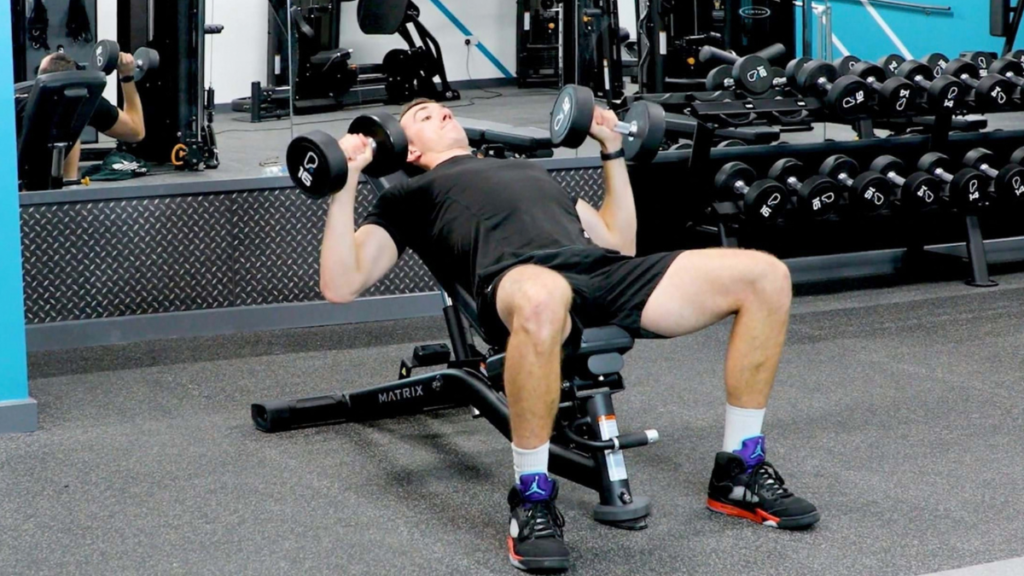
3 Best Tips to Transform Your Chest Using Dumbbells
Use a slightly lighter weight than your flat bench press. The incline variation is usually harder because the shoulders contribute more, and your leverage changes. Two or three sets of eight to twelve controlled repetitions works well for most beginners.
Exercise 3: Paused Barbell Bench Press
The paused barbell bench press is a highly useful beginner variation because it removes momentum from the bottom of the lift. You lower the bar to your chest, hold it still for a brief pause, then press it upward with control.
It may look like a small change, but it teaches important habits. A pause encourages you to lower the bar under control, stay tight on the bench, and produce force from a dead stop instead of relying on a bounce from the chest. It also gives you a clear moment to check that the bar is touching the same place on your chest every repetition.
How to Perform the Paused Barbell Bench Press
Set up exactly as you would for the standard barbell bench press. Unrack the bar, lower it slowly to your lower chest, and let it settle lightly without relaxing your body or allowing the bar to sink into your chest.
Hold the bar still for about one second. Keep your feet pressed into the floor, shoulder blades pulled back, and wrists stacked over your forearms. Then press the bar upward with purpose while keeping the movement controlled.
The pause should be deliberate but short. You are not trying to rest at the bottom. You are practicing a stable position and learning to create force without momentum.
Why This Variation Builds Better Technique
Beginners often rush through bench press repetitions because they are focused on lifting the bar back up. The paused bench press slows down the part of the movement where technical errors often appear. It makes it easier to notice if the bar is touching too high on the chest, if your elbows are moving unpredictably, or if your shoulders are rolling forward.
Resistance training research supports using controlled repetitions and progressively increasing demands as the body adapts. A pause is one way to make a light or moderate load more challenging without immediately adding more weight to the bar. It can be especially helpful when you are still learning the movement and do not yet need heavy loads to make progress.
Use the paused bench press as either a lighter second chest exercise or as a temporary replacement for flat bench pressing while you improve your control. Two sets of six to eight repetitions with a one second pause is enough to provide a strong technical stimulus without turning every session into an exhausting test.
How to Build a Beginner Barbell Chest Workout
You do not need all three exercises in every workout. In fact, beginners often make faster progress when they keep the plan simple enough to recover from and repeat consistently.
A practical approach is to train your chest with barbells twice per week, allowing at least one day between sessions. On the first session, make the standard barbell bench press your main lift. On the second session, use the incline barbell bench press as your main lift and add lighter paused bench press work if your technique remains sharp.
For example, you might perform three sets of six to ten repetitions of the flat bench press on one day. On another day, perform three sets of eight to twelve repetitions of the incline bench press, followed by two sets of six to eight paused repetitions with a lighter load.
Add weight only when you can complete all planned repetitions with clean technique. Small increases are enough. If you add too much weight too quickly, your form usually changes before your chest gets the intended training stimulus.
Important Safety and Technique Rules
The barbell bench press is safe and productive when you set it up properly and use appropriate loads, but it does require attention. Use a rack that allows you to unrack and rerack the bar safely. When possible, have a competent spotter available for heavier sets. If you train alone, use safety arms in a power rack and set them at a height that allows the bar to rest above your chest if you cannot complete a repetition.
Keep your wrists straight rather than letting them bend backward. Maintain contact with the floor through your feet and with the bench through your upper back and glutes. Control the lowering phase rather than dropping the bar quickly. These habits improve consistency and help you learn the movement with less unnecessary risk.
If pressing causes sharp pain in your shoulder, chest, wrist, or elbow, stop the exercise and seek advice from a qualified health professional or strength coach. Muscle effort and mild fatigue are normal. Joint pain is not something to push through.
Build Your Chest Strength One Good Rep at a Time
The strongest beginner chest routine is not the most complicated one. It is the one you can perform with good technique, recover from, and improve over time. The flat barbell bench press gives you the essential strength movement. The incline barbell bench press provides a useful upper chest variation. The paused barbell bench press teaches the control that makes all pressing safer and stronger.
Start conservatively, make every repetition look deliberate, and keep a record of your training. Strength is built through repeated exposure to a manageable challenge. You do not need to rush the process. Learn the lift, earn the load, and let the results build over time.
References
- American College of Sports Medicine (2009) ‘American College of Sports Medicine position stand. Progression models in resistance training for healthy adults’, Medicine & Science in Sports & Exercise, 41(3), pp. 687 to 708.
- Kubo, K., Ikebukuro, T., Yata, H., Tsunoda, N. and Kanehisa, H. (2020) ‘Effects of horizontal and incline bench press on neuromuscular adaptations in untrained young men’, European Journal of Applied Physiology, 120(11), pp. 2507 to 2517.
- López Vivancos, A., González Gálvez, N., Orquín Castrillón, F.J., Vale, R.G. de S. and Marcos Pardo, P.J. (2023) ‘Electromyographic activity of the pectoralis major muscle during traditional bench press and other variants of pectoral exercises: A systematic review and meta analysis’, Applied Sciences, 13(8), 5203.
- Muyor, J.M., Rodríguez Ridao, D., Martín Fuentes, I. and López Miñarro, P.A. (2015) ‘Influence of bench angle on upper extremity muscular activation during bench press exercise’, European Journal of Sport Science, 16(1), pp. 1 to 8.
- Rodríguez Ridao, D., Antequera Vara, A., Martín Fuentes, I. and Muyor, J.M. (2020) ‘Effect of five bench inclinations on the electromyographic activity of the pectoralis major, anterior deltoid and triceps brachii’, International Journal of Environmental Research and Public Health, 17(19), 7339.
Key Takeaways
| Exercise | Main purpose | Beginner focus |
|---|---|---|
| Barbell bench press | Builds general chest and pressing strength | Use controlled repetitions and a stable setup |
| Incline barbell bench press | Adds emphasis to the upper chest region | Use a moderate bench angle and lighter loads |
| Paused barbell bench press | Builds control and strength from the bottom position | Pause briefly without relaxing your body |
| Progression | Makes continued strength gains possible | Add small amounts of weight only after clean repetitions |