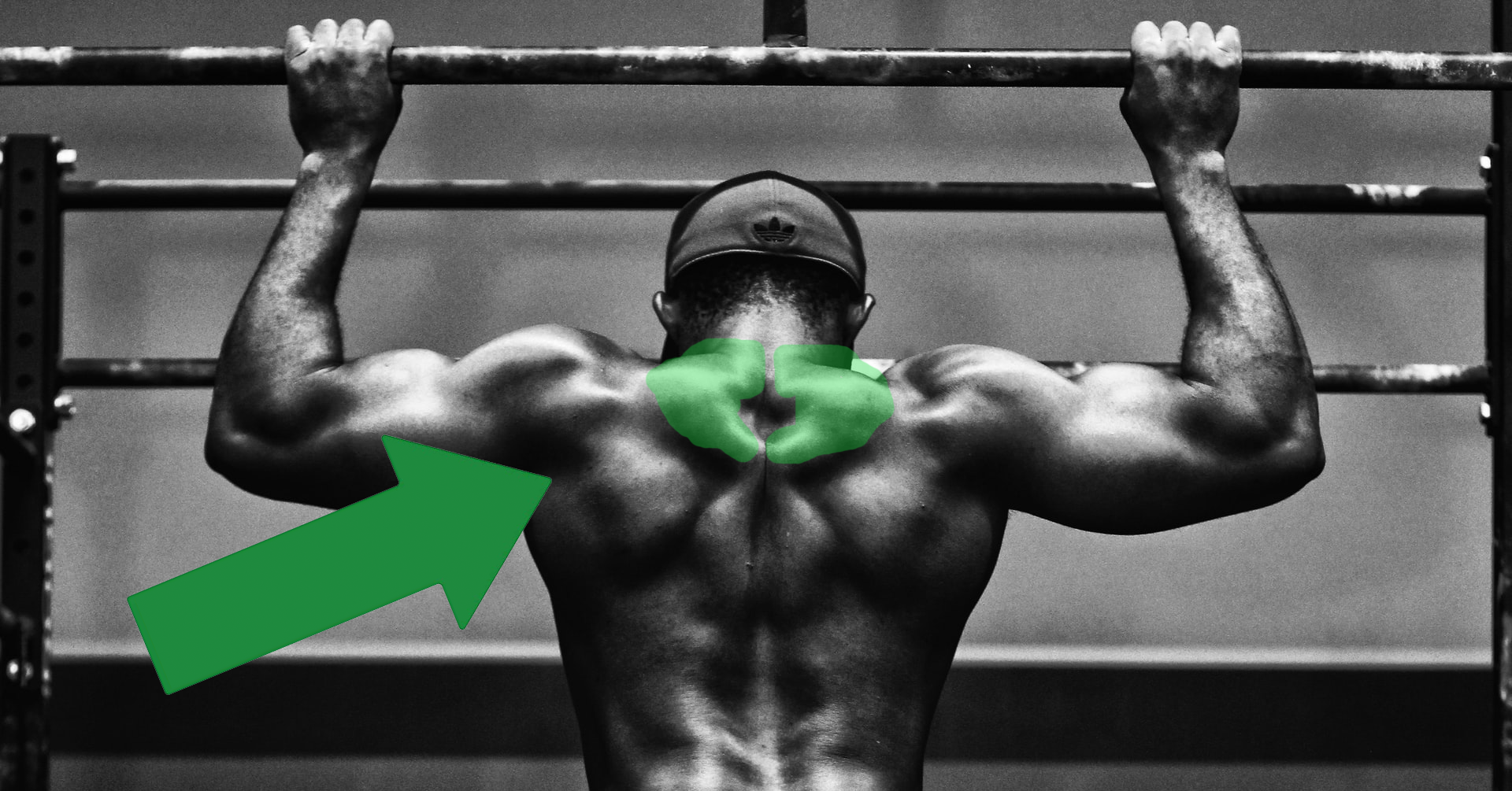


Big, well developed traps make your upper body look thicker, stronger, and more athletic. They frame the neck, add presence to the shoulders, and help create the powerful upper back that stands out in a T shirt. The good news is that beginners do not need an overly complicated routine to build them. A few well chosen movements, performed with control and progressed consistently, can deliver excellent results.
The trapezius is a large, diamond shaped muscle that runs from the base of the skull down through the upper back and across to the shoulder blades. Its upper fibers help elevate the shoulder blades, its middle fibers help pull them back, and its lower fibers help control their position during arm movement. Training all of these functions helps create more complete trap development while also supporting strong, controlled shoulders.


The three beginner exercises below are simple to learn, easy to scale, and supported by research on trapezius muscle activation. They also fit naturally into a broader strength program. You do not need to train traps every day or chase huge weights immediately. Focus on clean repetitions, enough challenging weekly work, and gradual progression.
Why Beginners Should Train Their Traps
Your traps are involved in much more than shrugging your shoulders. They contribute to shoulder blade control during pressing, pulling, carrying, and overhead work. Because the shoulder blade provides a stable platform for the arm, strong and coordinated trapezius muscles are important for efficient upper body training.
The upper trap is the most visible portion for many lifters. It creates the slope between the neck and shoulders and responds well to loaded shoulder elevation. However, only training this area can leave the rest of the upper back underdeveloped. The middle and lower fibers also deserve attention because they help manage shoulder blade position during rows and arm elevation.
The Only 3 Compound Exercises Every Guy Needs for a Jacked and Strong Body
Resistance training can increase muscle size and strength when exercises are performed with enough effort and volume over time. Beginners can make substantial progress with moderate loads, as long as sets are challenging and technique remains solid. You do not need to use a single exact rep range for growth. Research suggests that a range of loads can build muscle when sets are performed close enough to muscular fatigue, although heavier loads tend to improve maximum strength more effectively.
Start with weights that allow you to move smoothly and maintain body position. Add repetitions first when possible, then increase the load in small increments. This is a sustainable way to make the traps grow without turning every workout into a test of your grip or lower back.
Exercise 1: Dumbbell Shrug
The dumbbell shrug is the most direct beginner exercise for building the upper traps. It is simple, effective, and easier to control than many barbell variations. Each arm works independently, which can help you notice and correct obvious side to side differences in movement.
Research using electromyography has found high upper trapezius activity during weighted shrugging movements. The exercise directly trains the main action of the upper traps, which is elevation of the shoulder blades. In plain language, you are lifting your shoulders upward while holding a load.
How to Perform the Dumbbell Shrug
Stand tall with a dumbbell in each hand and your arms hanging by your sides. Set your feet about hip width apart and keep your ribs stacked over your pelvis. Let the dumbbells remain close to the outside of your thighs.
Lift your shoulders straight upward toward your ears. Pause briefly at the top while keeping your neck relaxed and long. Then lower the weights under control until your shoulders return to their natural position.
The movement should be smooth and vertical. Avoid rolling the shoulders forward or backward. This does not improve trap training and can make it harder to control the motion. Also avoid bending the elbows to turn the shrug into a partial curl.
How to Make Shrugs Work
Use a weight that challenges you without forcing you to lean backward, bounce, or shorten the range of motion. A controlled lowering phase matters because muscle growth is supported by consistent tension through a practical range of motion.
For most beginners, two or three sets of eight to fifteen repetitions is a sensible starting point. Aim to finish each set with one to three good repetitions still possible. Once you can complete the upper end of the rep range with strong form, increase the dumbbell weight slightly.
You should feel your upper traps working without sharp neck discomfort. If you find yourself tensing your jaw or pushing your head forward, reduce the load and reset your posture before the next set.
Exercise 2: Farmer Carry
The farmer carry is one of the most useful exercises in a beginner program because it trains more than the traps. It challenges your grip, upper back, trunk, legs, and ability to maintain posture while moving under load. It is also highly practical. You simply pick up two heavy objects, stand tall, and walk with control.
Loaded carry research shows that carrying resistance creates meaningful activity in several trunk and shoulder muscles. The traps work hard isometrically during a farmer carry because they help keep the shoulder blades controlled while the weights pull downward. This makes the exercise an excellent complement to shrugs, which train a more obvious lifting action.
How to Perform the Farmer Carry
Place two dumbbells or kettlebells on the floor beside your feet. Stand between them with your feet around hip width apart. Push your hips back slightly, bend your knees, and grip the handles.
Stand up by pushing through the floor and keeping your spine neutral. Let the weights hang at your sides. Your shoulders should be set naturally, not forced aggressively backward or shrugged all the way to your ears.
Walk forward using short, controlled steps. Keep your chest tall, eyes forward, and ribs down. Avoid leaning to one side as the weights become challenging. At the end of the set distance, lower the weights carefully by using the same controlled position you used to lift them.
How to Make Farmer Carries Work
Begin with two or three carries of around twenty to forty seconds. Choose a load that makes your grip and upper back work hard while allowing you to walk smoothly. You should not need to rush, wobble, or lean backward to finish the set.
The goal is not to make the carry look dramatic. The goal is to maintain a strong walking position under load. That is what makes this movement especially useful for beginners. It teaches your body to create tension through the traps and trunk while the arms remain long and the load stays stable.
Progress by adding a little distance, extending the carry time, or using a slightly heavier pair of dumbbells. Change only one variable at a time. This gives you a clear picture of whether you are actually getting stronger.
Exercise 3: Chest Supported Dumbbell Row
Rows are often viewed as a back exercise, and they are, but they also train the middle and lower portions of the trapezius. A chest supported dumbbell row is particularly beginner friendly because the bench supports your torso. This reduces the temptation to swing, jerk the weight, or turn every rep into a lower back exercise.
Research comparing scapular exercises has found that rowing and retraction movements can produce meaningful activation in the middle and lower trapezius. These fibers help pull the shoulder blades toward the spine and contribute to controlled shoulder blade movement. Developing them makes the upper back look more complete and supports the strength work you do in presses, pulldowns, and pull ups.
How to Perform the Chest Supported Dumbbell Row
Set an adjustable bench to a low incline. Lie face down with your chest supported, feet firmly planted on the floor, and a dumbbell in each hand. Begin with your arms hanging toward the floor.
Before bending your elbows, gently pull your shoulder blades back and down. Then row the dumbbells toward the lower part of your ribs. Keep the elbows traveling at a comfortable angle from your body rather than forcing them directly out to the sides.
Pause briefly when the dumbbells reach the top position. Lower them slowly until your arms are long again and your shoulder blades can move naturally. Do not force your shoulders forward at the bottom, but allow a controlled stretch rather than cutting the repetition short.
How to Make Rows Work
Start with two or three sets of eight to twelve repetitions. Use a load that lets you control both the lift and lowering phase. If the dumbbells move quickly but your shoulder blades do not, the weight is probably too heavy.
Think about pulling your elbows toward your back pockets rather than simply hauling the dumbbells upward. This cue can help you avoid excessive shrugging and keep the middle back involved. You are still training the traps, but you are developing the fibers that create thickness between the shoulder blades rather than only building the area beside the neck.
Chest supported rows are also useful if you are still learning to hinge or if your lower back gets tired before your upper back during bent over rows. The bench makes it easier to put effort into the target muscles.
How to Program These Exercises
A beginner can train these three movements twice per week. You do not need a separate trap day. Add them to two upper body or full body workouts, ideally after your major compound lifts when your technique is still reliable.
On the first day, perform chest supported dumbbell rows earlier in the workout, then finish with shrugs. On the second day, use farmer carries after your main strength work and include rows or shrugs according to what you did not emphasize earlier in the week.
This approach gives you direct upper trap work from shrugs, static loading from carries, and middle to lower trap training from rows. It also avoids excessive overlap. The traps already work during exercises such as deadlifts, pull ups, overhead presses, and many rowing variations, so more is not always better.
Begin with six to eight hard weekly sets across shrugs and rows, plus several loaded carries. Build gradually if you are recovering well, improving your performance, and maintaining good form. Research on resistance training volume suggests that multiple weekly sets per muscle group generally support hypertrophy, but the best amount depends on training experience, exercise selection, effort, and recovery.
Common Mistakes That Limit Trap Growth
The most common mistake is using a weight that is too heavy to control. When shrugs become half reps with bouncing knees, they stop placing consistent tension on the upper traps. When rows become a full body heave, the shoulder blades lose their role in the movement. When carries turn into a sideways stumble, the load is no longer building the posture you want.
Another mistake is treating every trap exercise as a neck exercise. Your head should stay in a neutral position. Do not crane your neck forward during shrugs or look at the floor during carries. The traps attach near the neck, but you do not need to move your neck aggressively to train them well.
Finally, do not expect visible trap growth from a few workouts. Muscle gain is gradual. Take your training log seriously, improve your performance over weeks and months, and eat enough protein and total calories to support your goal. The best trap program is one you can repeat consistently with increasing quality and load.
Building Jacked Traps Takes More Than One Exercise
Dumbbell shrugs, farmer carries, and chest supported dumbbell rows give beginners a complete and practical foundation for bigger traps. Each movement has a different role. Shrugs directly load shoulder elevation, carries challenge the traps to stabilize the shoulders under load, and rows develop the middle and lower fibers that add upper back thickness.
Learn the movements with manageable weights, train them consistently, and make gradual progress. That simple formula is more effective than chasing complicated variations before you have built strength and control in the basics.
Key Takeaways
| Focus | What to do | Why it matters |
|---|---|---|
| Upper trap size | Perform controlled dumbbell shrugs | Shrugs directly train shoulder blade elevation and the upper trapezius |
| Full body strength | Add farmer carries | Carries challenge trap stability, grip, trunk control, and posture under load |
| Complete trap development | Use chest supported dumbbell rows | Rows train the middle and lower trap fibers that support upper back thickness |
| Weekly training | Train the movements twice weekly | Consistent repeated exposure allows beginners to practice technique and progress |
| Progression | Add reps before adding load | Gradual progression helps maintain form while increasing training stimulus |
| Technique | Keep the neck neutral and avoid momentum | Better control keeps tension on the target muscles and reduces unnecessary compensation |
References
- Arlotta, M., Lovasco, G. and McLean, L. (2011) ‘Selective recruitment of the lower fibers of the trapezius muscle’, Journal of Electromyography and Kinesiology, 21(3), pp. 403 to 410.
- Castelein, B., Cools, A., Parlevliet, T. and Cagnie, B. (2016) ‘Modifying the shoulder joint position during shrugging and retraction exercises alters the activation of the medial scapular muscles’, Manual Therapy, 21, pp. 250 to 255.
- Krzyszkowski, J. and Kipp, K. (2024) ‘The quantification of muscle activation during the loaded carry movement pattern’, Journal of Strength and Conditioning Research, 38(5), pp. 855 to 864.
- Schoenfeld, B.J., Ogborn, D. and Krieger, J.W. (2017) ‘Dose response relationship between weekly resistance training volume and increases in muscle mass: A systematic review and meta analysis’, Journal of Sports Sciences, 35(11), pp. 1073 to 1082.
- Schoenfeld, B.J., Grgic, J., Ogborn, D. and Krieger, J.W. (2017) ‘Strength and hypertrophy adaptations between low versus high load resistance training: A systematic review and meta analysis’, Journal of Strength and Conditioning Research, 31(12), pp. 3508 to 3523.
- Schoenfeld, B.J., Ogborn, D. and Krieger, J.W. (2019) ‘Effects of resistance training frequency on measures of muscle hypertrophy: A systematic review and meta analysis’, Sports Medicine, 49(6), pp. 917 to 931.
- Spiegeleire, S., Cools, A., Cagnie, B., Ridder, R., Danneels, L. and Witvrouw, E. (2014) ‘Reliability and validity of upper and lower trapezius muscle activity measurements during isometric muscle testing’, Physical Therapy in Sport, 15(2), pp. 113 to 118.
- Wolf, R.A., Eng, C.M., Nevins, R.M. and Divoky, M. (2023) ‘Resistance training variables for optimization of muscle hypertrophy: An umbrella review’, Sports Medicine, 53(5), pp. 1127 to 1146.