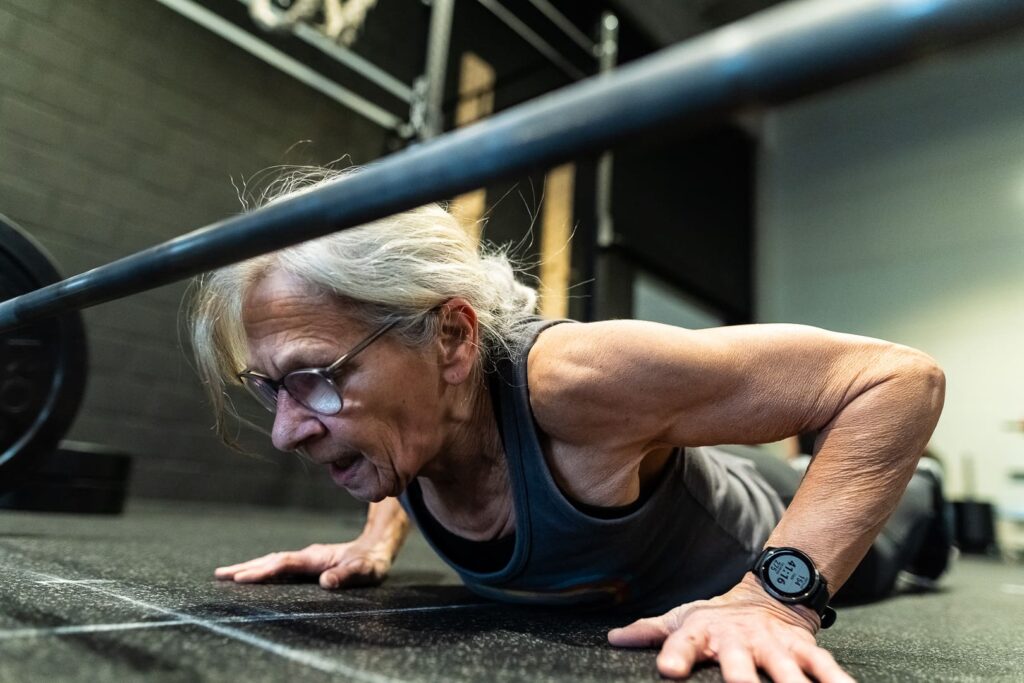


The push up remains one of the most useful bodyweight tests for men over 30. It requires your chest, shoulders, triceps, serratus anterior, abdominals, glutes, and legs to work together. Your upper body must produce force while the rest of your body holds a stable plank. That makes the movement a practical measure of pressing endurance, body control, and the capacity to repeatedly move your own mass.
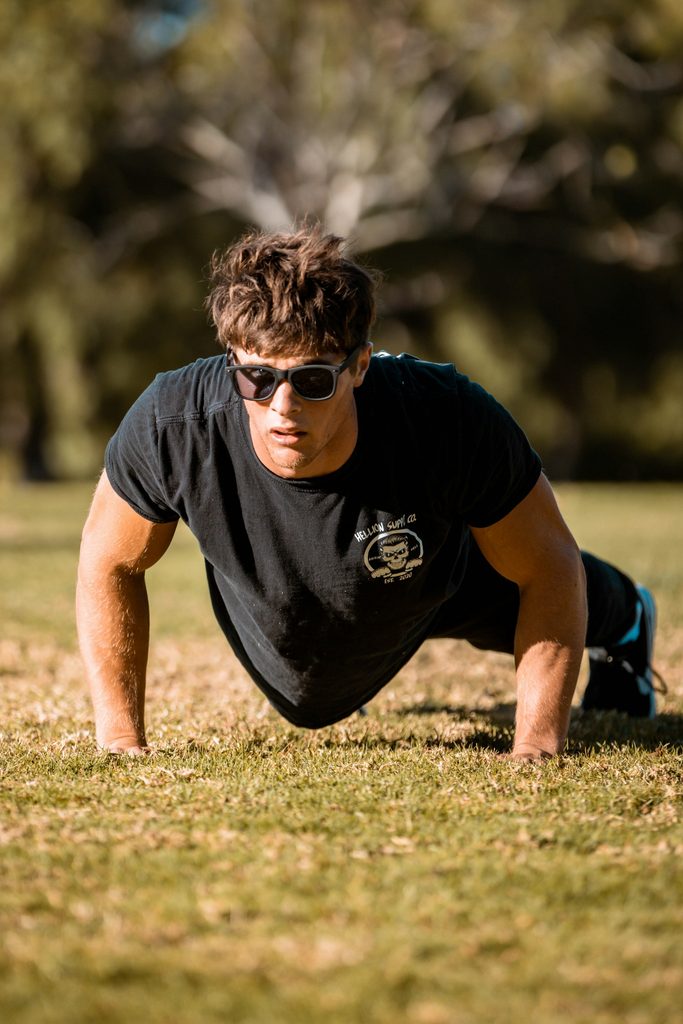
This matters because muscular strength and lean tissue gradually change with age. Those changes are not a reason to accept declining performance. Regular resistance training can improve strength and preserve muscle function across adulthood. A push up test is not a complete health assessment and it cannot diagnose a problem, but it gives you a clear, repeatable performance marker that needs no equipment.


The targets below are practical benchmarks, not pass or fail medical rules. Body mass, arm length, training history, and previous injuries all affect your score. Use them as goals if you can exercise without pain. Seek individualized advice before hard testing if you have chest pain, unexplained breathlessness, a recent injury, or a health condition that changes how you should exercise.
First, Make Every Rep Count
The Strict Rep Standard
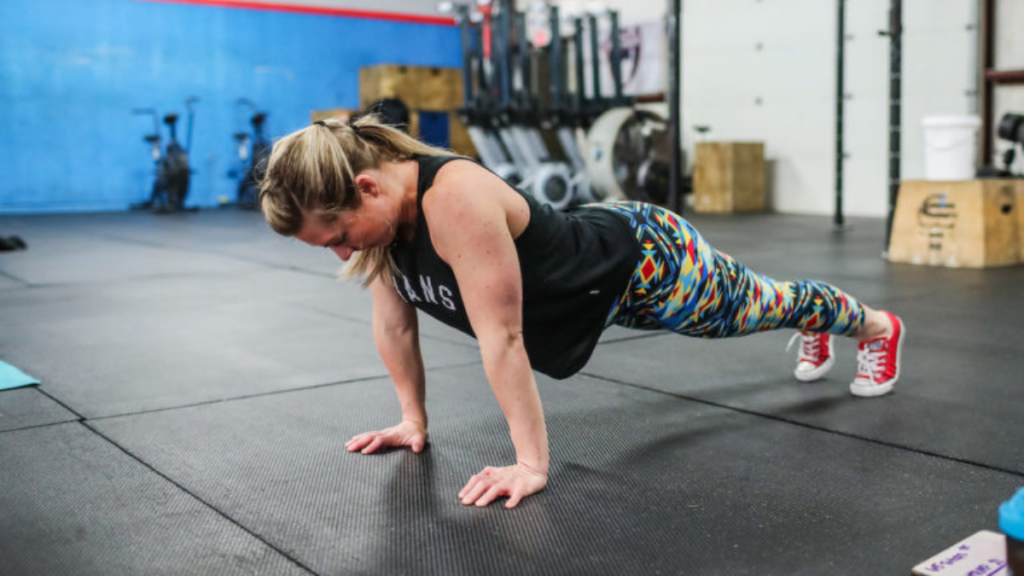
Start in a high plank with your hands slightly wider than shoulder width and your fingers spread. Brace your abs, squeeze your glutes, and create a straight line from head to heel. Lower under control until your chest reaches a consistent depth close to the floor. Press back to straight arms without your hips sagging, rising first, or twisting.
Keep your neck neutral by looking a short distance ahead of your hands. Your elbows do not need to be pinned to your sides, but a moderate angle from your torso is usually more comfortable than aggressively flaring them. Do not count partial repetitions, bounced repetitions, or repetitions completed after a long rest in a broken plank position.
Standardized technique is essential. Push up testing research shows that changes in range of motion and body position change what a repetition demands. Use the same hand placement, depth, and surface every time. Then your result becomes a genuine comparison with your earlier performance rather than a contest in creative rep counting.
How to Test Yourself
Warm up with easy movement, shoulder circles, and a few relaxed incline push ups. Rest for several minutes, then perform as many high quality repetitions as possible in one continuous set. End the test as soon as you cannot preserve the agreed range of motion or a stable body line.
Record the score, date, and any important detail such as poor sleep or a hard workout the previous day. Retest every four to six weeks. A daily maximum attempt creates unnecessary fatigue and produces noisy results. Improvement comes from training and recovery, not from repeatedly proving that you are tired.
Benchmark One: 20 Consecutive Full Range Push Ups
Twenty clean push ups is the first benchmark every healthy man over 30 should work toward. It demonstrates foundational pressing endurance and enough trunk control to keep the body aligned while fatigue rises. For an untrained man, it is an excellent initial goal because it builds the skill and capacity needed for productive upper body training.
The number has useful real world context. In a large prospective study of active adult men, greater baseline push up capacity was associated with lower subsequent cardiovascular event risk. The study does not prove that push ups prevent cardiovascular disease. It does show that the capacity to perform them can act as a simple marker of broader fitness in working age men.
Twenty repetitions also provide a practical base for gym training. When you can complete them with control, you are more likely to tolerate meaningful volume from presses, rows, and other upper body exercises. You have developed enough local endurance that every session no longer becomes a fight against basic fatigue.
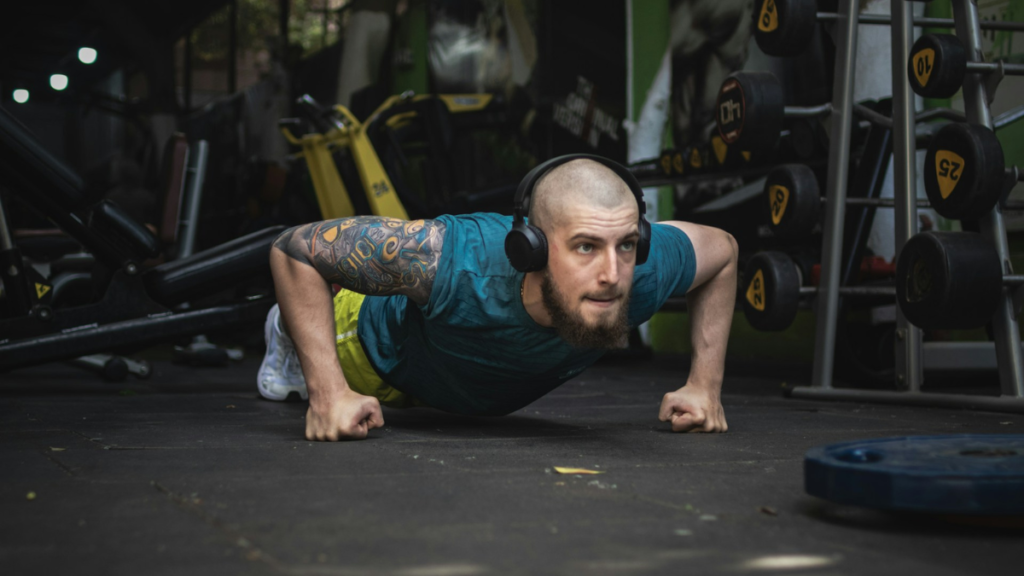
If you cannot yet reach 20 on the floor, use incline push ups. Place your hands on a bar in a rack, a sturdy bench, or a counter, and choose an elevation that allows sets of eight to twelve controlled repetitions. As strength improves, lower the hand position gradually. Research comparing push up variations shows that hand elevation changes the loading demand, which makes incline work a sensible progression.
Benchmark Two: 40 Consecutive Full Range Push Ups
Forty strict repetitions is a strong benchmark for a man over 30. At this point, the test is about more than chest strength. Your triceps must keep producing force, your shoulder blades need to move smoothly, and your abs and glutes must prevent the lower back from extending as the set becomes uncomfortable.
This is why a strict set of 40 has value even for men who bench press. A heavy single repetition tests maximal force under external load. Forty push ups test the ability to repeatedly generate force while controlling your bodyweight. Both qualities matter, and neither one fully replaces the other.
Push ups can also produce useful muscular and strength adaptations when they are challenging enough. Research comparing push up and bench press training has found similar gains in muscle thickness and strength when the exercises are performed with comparable effort and suitable loading. Standard push ups may eventually become too easy to provide a large strength stimulus for a strong man, but they remain highly effective for muscular endurance, warm ups, and movement practice.
To move from 20 to 40, train push ups two or three times per week. In one session, perform several submaximal sets and finish each with two or three repetitions still available. In another, use one harder set followed by easier back off sets. Include rows, pulldowns, or pull ups in similar or greater volume. This supports balanced shoulder development and gives the muscles that position the shoulder blades enough work.
You do not need to take every training set to failure. Resistance training research indicates that strength and hypertrophy can improve over a range of effort levels when training volume is sufficient, while frequent failure work can add fatigue. Keep your maximum attempts for occasional tests. The rest of your work should look controlled.
Benchmark Three: 50 Push Ups in Two Minutes With Strict Form
The final benchmark adds a time constraint. Complete 50 strict push ups in two minutes, without an extended rest and without a breakdown in depth or body position. You may use a steady rhythm, but every repetition must meet the same standard used in the earlier tests.
This target measures a different quality from a slow maximum set. It tests your ability to manage local fatigue, breathing, and pacing while repeatedly producing force. A time limit also makes the test more repeatable once you are already capable of 40 consecutive push ups.
Do not confuse this target with a military selection score or a universal health grade. Formal push up tests vary in hand position, depth rules, time limits, and the populations used to create norms. Your score has the most value when it is compared with your own previous tests completed under identical conditions.
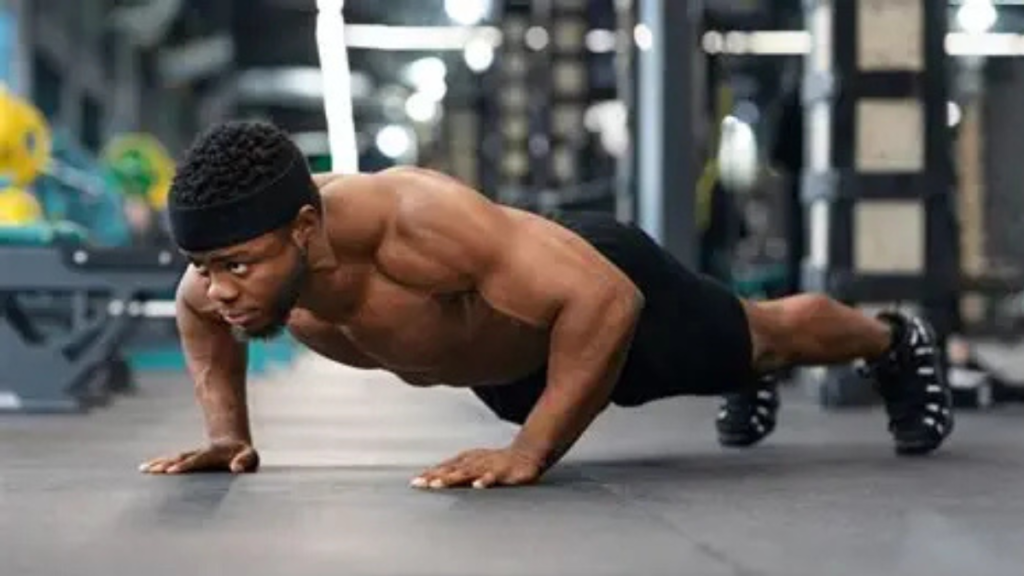
Pacing is the key. Starting too fast can make the final minute dramatically harder because the chest and triceps fatigue faster than they recover. Begin at a cadence that feels almost conservative and protect your body position from the first repetition. Practice timed blocks of 20 or 30 seconds before attempting the full test. Build from 30 repetitions in two minutes, then 40, then 50.
Build the Benchmarks Without Annoying Your Shoulders
Train push ups on two or three nonconsecutive days each week. Add total repetitions gradually rather than suddenly doubling your volume. Muscles often adapt quickly, but tendons and joints commonly need more patient progression. Pair pressing work with pulling exercises, and keep your shoulder blades moving well through rows and pull variations.
If your wrists are uncomfortable, use push up handles or securely placed dumbbells to create a more neutral wrist position. If the front of the shoulder hurts, reduce the range temporarily, use an incline, check your elbow path, and look at whether your pressing volume has risen too quickly. Sharp or persistent pain deserves evaluation from a qualified clinician.
3 Best Cable Back Exercises for a More Attractive V Shaped Torso
For more strength and muscle, keep at least one higher resistance press in your training plan. Weighted push ups, dumbbell presses, barbell bench presses, and machines all work well. The benchmarks then give you a simple check that your ability to move and control your own bodyweight is progressing alongside your external lifting numbers.
The Bottom Line
Twenty strict push ups represent a strong foundation. Forty indicate robust upper body and trunk endurance. Fifty in two minutes show that you can sustain technique while handling fatigue and pace. These targets do not define your health or worth, but they offer an accessible way to monitor progress after 30.
Make every rep honest, progress gradually, and test under the same conditions. A number only becomes meaningful when your technique earns it.
References
- Calatayud, J., Borreani, S., Colado, J.C., Martin, F., Flandez, J., Page, P. and Andersen, L.L. (2015) ‘Bench press and push up at comparable levels of muscle activity results in similar strength gains’, Journal of Strength and Conditioning Research, 29(1), pp. 246-253.
- Lunt, H., Moore, I.S., Pilling, M., Folland, J.P. and Moxon, J.V. (2019) ‘Muscle activation and force production during the push up exercise at different hand heights’, Journal of Strength and Conditioning Research, 33(8), pp. 2155-2163.
- Metter, E.J., Lynch, N., Conwit, R., Lindle, R., Tobin, J. and Hurley, B. (1999) ‘Muscle quality and age: cross sectional and longitudinal comparisons’, Journal of Gerontology: Biological Sciences, 54A(5), pp. B207-B218.
- Schoenfeld, B.J., Grgic, J., Ogborn, D. and Krieger, J.W. (2017) ‘Strength and hypertrophy adaptations between low versus high load resistance training: a systematic review and meta analysis’, Journal of Strength and Conditioning Research, 31(12), pp. 3508-3523.
- Yang, J., Christophi, C.A., Farioli, A., Baur, D.M., Moffatt, S., Zollinger, T.W. and Kales, S.N. (2019) ‘Association between push up exercise capacity and future cardiovascular events among active adult men’, JAMA Network Open, 2(2), e188341.
Key Takeaways
| Benchmark | What it demonstrates | Best next step |
|---|---|---|
| 20 strict push ups | Foundational pressing endurance and trunk control | Build consistent technique and add volume gradually |
| 40 strict push ups | Strong upper body endurance with sustained body position | Progress resistance and match pressing work with pulling |
| 50 push ups in two minutes | Endurance, pacing, and form under time pressure | Practice controlled timed efforts and retest every four to six weeks |