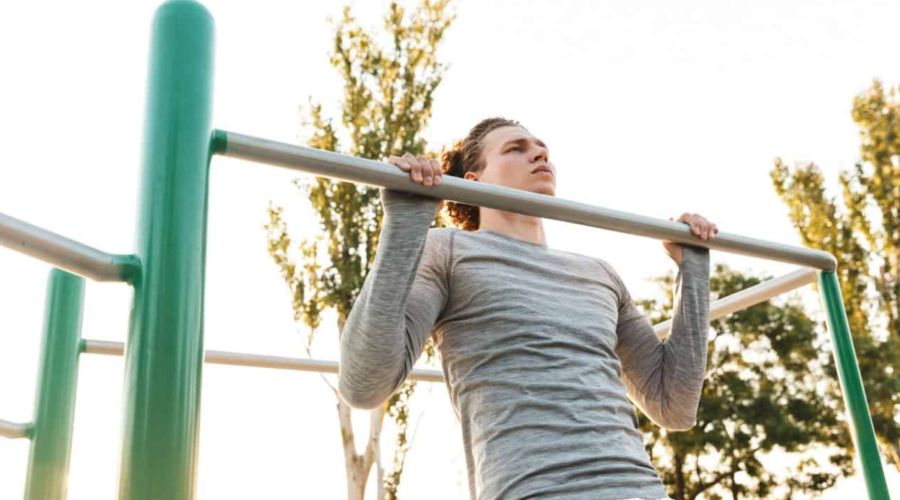


Pull ups are one of the simplest and most revealing tests of upper body strength. Unlike many gym exercises, you cannot cheat your body weight. Every repetition requires your back, arms, shoulders, grip, and core to work together while moving your entire body through space.
That is exactly why pull ups are used by military organizations, firefighters, police forces, and athletic programs around the world. They are an excellent measure of relative strength, which means how strong you are compared to your body weight rather than how much weight you can lift on a machine.


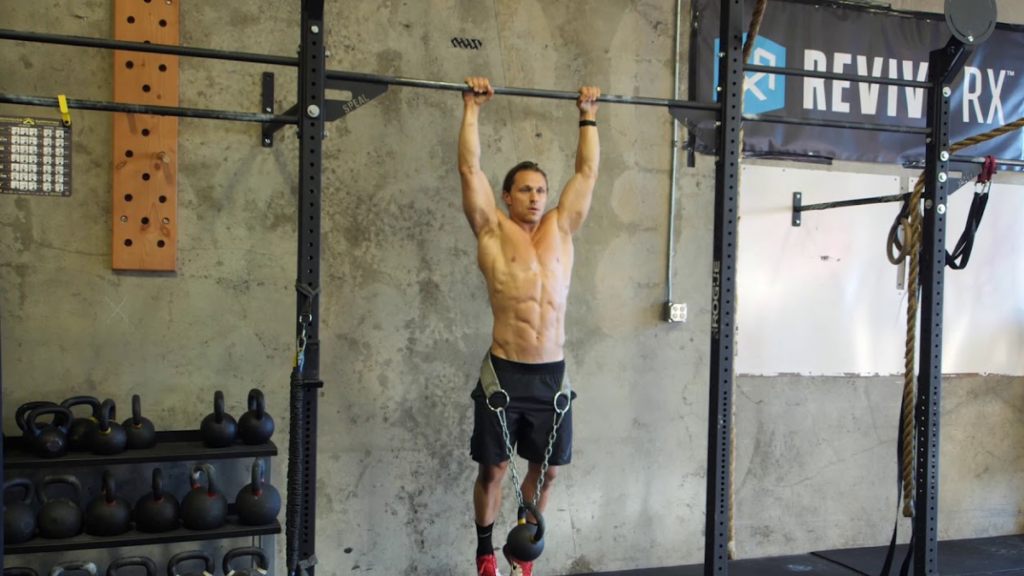
Many people wonder how many pull ups they should be able to perform at different stages of life. The answer depends on age, body weight, sex, training history, and overall health. However, research shows that maintaining the ability to perform pull ups throughout adulthood is associated with better muscular fitness, healthier aging, and improved functional capacity.
Here is what the science says about pull up performance across different age groups and what your score may reveal about your fitness.
Why Pull Ups Matter
A pull up is a compound bodyweight exercise that primarily targets the latissimus dorsi, biceps, trapezius, rhomboids, forearms, and core muscles. Unlike isolated strength exercises, it demands coordination between multiple muscle groups while requiring excellent grip strength and shoulder stability.
Muscular strength is one of the strongest predictors of long term health. Numerous studies have shown that adults with higher levels of muscular strength have lower risks of cardiovascular disease, frailty, disability, and premature death.
Relative strength becomes increasingly important with age because it determines how easily you can perform daily tasks such as climbing stairs, lifting shopping bags, carrying children, or pulling yourself over obstacles. Pull ups challenge nearly every component of upper body function at the same time.
How Aging Affects Pull Up Performance

Muscle Mass Naturally Declines
Beginning around the age of 30, adults gradually lose muscle mass unless they continue resistance training. This process, known as sarcopenia, accelerates after approximately age 60.
Losses in muscle size are accompanied by reductions in strength and power, making pull ups progressively more difficult for people who stop training.
Fortunately, resistance training significantly slows this decline. Studies consistently show that older adults who continue strength training maintain much higher levels of muscular function than sedentary individuals.
Body Weight Also Matters
Because pull ups require lifting your own body weight, increases in body fat can reduce performance even when muscle strength stays relatively constant. Someone who becomes stronger but also gains significant body fat may actually perform fewer pull ups. This explains why many athletes prioritize improving strength while maintaining a healthy body composition.
Grip Strength Plays a Major Role
Grip strength often declines with age alongside overall muscle strength.
Research has repeatedly shown that grip strength is associated with healthy aging, physical independence, and even longevity. Since your hands are the only point of contact during a pull up, poor grip endurance frequently limits performance before larger muscles become fatigued.
Pull Up Standards by Age
The following standards assume strict pull ups performed from a dead hang with the chin clearly passing above the bar. Kipping pull ups or partial repetitions are not included. These ranges represent healthy adults with average body weight. Regular strength athletes will often exceed these numbers.
Ages 20 to 29
This is typically the decade of peak muscular performance.
Men
- Excellent: 15 or more
- Good: 10 to 14
- Average: 5 to 9
- Below average: Fewer than 5
Women
- Excellent: 8 or more
- Good: 5 to 7
- Average: 2 to 4
- Below average: Fewer than 2
Many recreational athletes in this age group can improve dramatically with only a few months of consistent practice.
Ages 30 to 39
Most healthy adults can still maintain nearly identical performance if they continue training.
Men
- Excellent: 13 or more
- Good: 8 to 12
- Average: 4 to 7
- Below average: Fewer than 4
Women
- Excellent: 7 or more
- Good: 4 to 6
- Average: 2 to 3
- Below average: Fewer than 2
Small declines often reflect lifestyle changes rather than aging itself.
Ages 40 to 49
Recovery becomes more important during this decade, although impressive pull up performance remains very achievable.
Men
- Excellent: 11 or more
- Good: 7 to 10
- Average: 3 to 6
- Below average: Fewer than 3
Women
- Excellent: 6 or more
- Good: 3 to 5
- Average: 1 to 2
- Below average: 0
Many master athletes continue performing more than 20 strict pull ups through regular training.
Ages 50 to 59
Natural muscle loss accelerates slightly, but resistance training remains extremely effective.
Men
- Excellent: 9 or more
- Good: 5 to 8
- Average: 2 to 4
- Below average: Fewer than 2
Women
- Excellent: 5 or more
- Good: 2 to 4
- Average: 1
- Below average: 0
Maintaining the ability to perform even several strict pull ups at this age represents excellent upper body function.
Ages 60 to 69
Strength preservation becomes increasingly valuable for maintaining independence.
Men
- Excellent: 7 or more
- Good: 4 to 6
- Average: 1 to 3
- Below average: 0
Women
- Excellent: 3 or more
- Good: 2
- Average: 1
- Below average: 0
Many healthy adults who strength train throughout life comfortably exceed these values.

Age 70 and Beyond
Pull ups become uncommon among the general population, although trained older adults can still perform them.
Men
- Excellent: 5 or more
- Good: 2 to 4
- Average: 1
- Below average: 0
Women
- Excellent: 2 or more
- Good: 1
- Average: Assisted pull ups
- Below average: 0
For many adults in this age group, maintaining the ability to perform even one strict pull up demonstrates exceptional muscular fitness.
What If You Cannot Perform One Pull Up?
Many healthy adults cannot perform a full pull up, especially if they have never specifically trained for one. That does not necessarily indicate poor health. Pull ups require a unique combination of strength, technique, grip endurance, shoulder mobility, and body composition.
Someone who excels at rowing, climbing, or weightlifting usually develops pull ups much faster than someone whose training consists mainly of walking or cycling. The encouraging news is that almost everyone can improve substantially with structured practice.
How to Improve Your Pull Up Numbers
Build Relative Strength
The strongest pull up performers are not always the strongest people in the gym. Instead, they generate high levels of force while carrying relatively little excess body fat.
Improving body composition through consistent nutrition and resistance training often increases pull up performance faster than simply building more muscle.
Train Pull Ups Frequently
Motor learning research shows that practicing a skill several times per week improves performance more effectively than occasional high effort sessions. Most beginners make faster progress training pull ups two to four times weekly. Submaximal practice often produces better long term improvements than constantly training to failure.
Strengthen Supporting Muscles
Exercises such as lat pulldowns, inverted rows, dumbbell rows, biceps curls, and dead hangs strengthen the muscles required for successful pull ups. Scapular pull ups also improve shoulder control and movement quality.
How Long Must You Be Able to Hold a Plank?
Improve Grip Strength
Grip frequently becomes the weakest link. Dead hangs, farmer carries, towel hangs, and heavy carries improve hand endurance while strengthening the forearms. Better grip allows stronger back muscles to express their full potential.
Maintain Shoulder Mobility
Healthy shoulder movement is essential for pain free pull ups. Restricted shoulder mobility or poor thoracic spine movement often reduces efficiency while increasing injury risk. Regular mobility work supports long term performance.
Should Everyone Aim for High Numbers?
Not necessarily. For most healthy adults, reaching the “good” category for their age represents an excellent goal. Beyond that point, improvements become increasingly sport specific. Someone preparing for military service, obstacle course racing, gymnastics, rock climbing, or CrossFit may benefit from pursuing elite pull up numbers.
For everyone else, maintaining consistent strength into older age is far more important than chasing extremely high repetition counts. Being able to perform several clean pull ups at age 60 is far more meaningful than performing twenty at age 25 before abandoning strength training altogether.
Final Thoughts
Pull ups remain one of the most honest tests of upper body fitness because they combine strength, coordination, body composition, grip endurance, and movement quality into one exercise.
Although performance naturally declines with age, much of that decline reflects reduced physical activity rather than aging itself. Adults who consistently perform resistance training often maintain impressive pull up ability well into their sixties and seventies.
If you can comfortably perform pull ups that place you in the good or excellent category for your age, you have developed a level of relative strength that supports everyday function, athletic performance, and healthy aging.
If you cannot yet perform one, do not be discouraged. With progressive training, improved body composition, and patience, most healthy adults can achieve their first strict pull up and continue building from there.
Key Takeaways
| Topic | Main Takeaway |
|---|---|
| Why pull ups matter | Pull ups measure relative strength, grip, coordination, and upper body function. |
| Muscle aging | Muscle mass and strength gradually decline with age but resistance training greatly slows this process. |
| Body weight | Healthy body composition makes pull ups significantly easier because you lift your own weight. |
| Ages 20 to 39 | Healthy men should generally perform at least 8 to 10 pull ups and women 4 to 5 for a good score. |
| Ages 40 to 59 | Maintaining 5 to 10 pull ups for men and 2 to 5 for women represents strong functional fitness. |
| Ages 60 and older | Even one to several strict pull ups indicates excellent upper body function compared with the general population. |
| Best way to improve | Practice pull ups regularly, strengthen the back and grip, and maintain a healthy body weight. |
| Long term goal | Consistent strength throughout life matters far more than achieving extremely high repetition counts. |
References
- American College of Sports Medicine. (2022). ACSM’s Guidelines for Exercise Testing and Prescription. 11th ed. Wolters Kluwer.
- Cruz Jentoft, A.J., Bahat, G., Bauer, J., Boirie, Y., Bruyère, O., Cederholm, T., Cooper, C., Landi, F., Rolland, Y., Sayer, A.A., Schneider, S.M., Sieber, C.C., Topinkova, E., Vandewoude, M. and Visser, M. (2019). Sarcopenia: Revised European consensus on definition and diagnosis. Age and Ageing.
- García Hermoso, A., Ramírez Vélez, R., Sáez de Asteasu, M.L., Martínez Vizcaíno, V. and Izquierdo, M. (2018). Association of muscular strength with mortality in adults. Journal of Cachexia, Sarcopenia and Muscle.
- Leong, D.P., Teo, K.K., Rangarajan, S., Lopez Jaramillo, P., Avezum, A., Orlandini, A. and colleagues. (2015). Prognostic value of grip strength. The Lancet.
- Peterson, M.D., Rhea, M.R. and Sen, A. (2010). Resistance exercise for muscular strength in older adults. Ageing Research Reviews.
- Ruiz, J.R., Sui, X., Lobelo, F., Morrow, J.R. Jr., Jackson, A.W., Sjöström, M. and Blair, S.N. (2008). Association between muscular strength and mortality in men. BMJ.
- Volaklis, K.A., Halle, M. and Meisinger, C. (2015). Muscular strength as a strong predictor of mortality. European Journal of Internal Medicine.
- Westcott, W.L. (2012). Resistance training is medicine. Current Sports Medicine Reports.