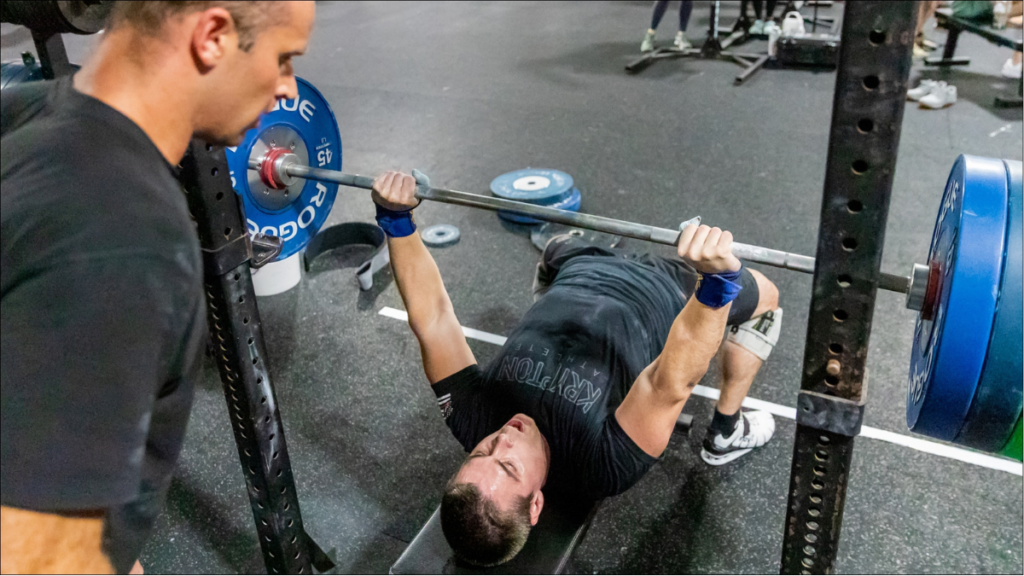
A stronger bench press should be satisfying, but it can also be confusing when the mirror does not show the chest growth you expected. This is common because strength and muscle size are related, yet they are not the same adaptation. You can add weight to the bar through better skill, improved coordination, changes in leverage, and gains in muscle mass. If your chest has stopped visibly growing while your bench keeps improving, the issue is usually not a lack of effort. It is more often a mismatch between what your training is improving and what your chest needs to grow.
The bench press remains a valuable chest exercise, especially when it is performed through a controlled range of motion and loaded progressively. However, it is a compound lift, which means your chest shares the work with the triceps and front deltoids. The way you perform it, the exercises around it, and the amount of work you can recover from all influence where the adaptation goes.


Strength Is Not a Direct Measure of Chest Growth
A one repetition maximum is a performance test. It reflects your ability to produce force in a specific movement under specific conditions. Muscle size contributes to force production, but a stronger lift can also come from neural adaptations. These include improved motor unit recruitment, better coordination between muscles, and greater familiarity with the movement.
Research on resistance training shows that strength can increase substantially before large visible changes in muscle size occur. This is particularly relevant when you are learning a movement, returning after a break, or practicing the bench press frequently. Better bar path, tighter upper back positioning, more effective leg drive, and improved timing can all improve the lift without requiring a proportional increase in chest size.
This does not mean chest hypertrophy is unimportant for bench strength. Larger muscles generally have a greater capacity to produce force. It means that the scale, the mirror, and the barbell can move at different speeds. If your goal is chest development, you need to judge your program by more than the number on the bar.
Reason 1: Your Bench Press Technique Is Shifting Work Away From Your Chest
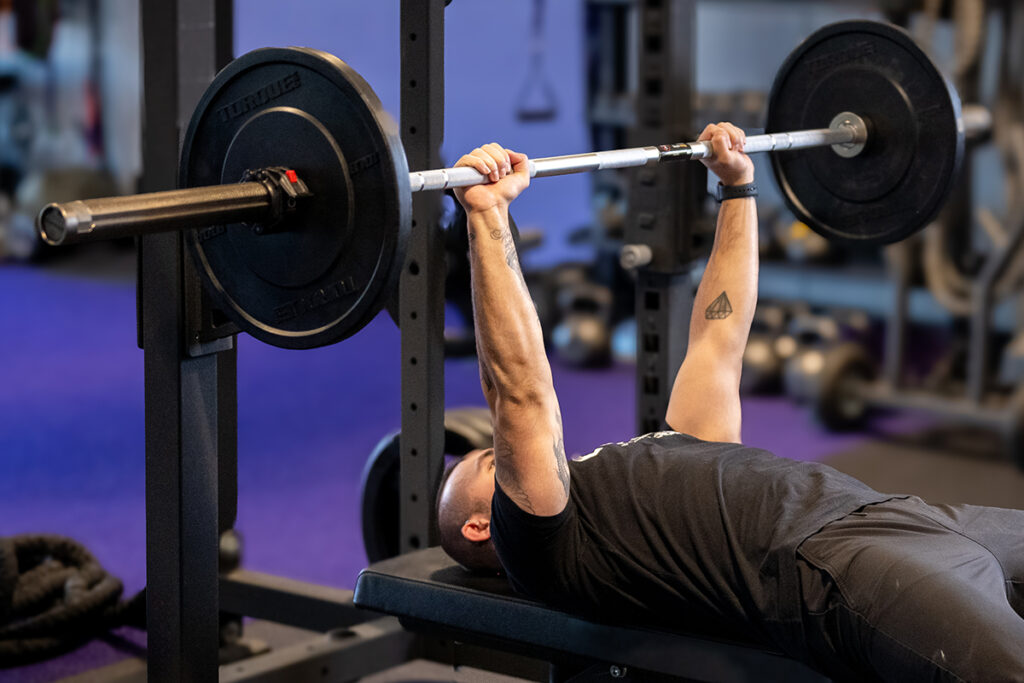
The Bench Press Does Not Load Every Muscle Equally
The pectoralis major, anterior deltoid, and triceps all contribute to the bench press. Small technical changes can alter which muscles do more of the work. A grip that is very narrow tends to increase the relative contribution required from the triceps. A highly arched position can reduce the range of motion, which may help performance but can also reduce the time your chest spends under tension if the movement becomes excessively shortened.
A competition style bench press is not automatically bad for chest growth. It can be very effective when you control the eccentric phase, reach a comfortable depth, and keep the chest engaged. The problem appears when every rep becomes a strategy to move the maximum possible load, regardless of whether the chest receives a challenging stimulus.
3 Best Beginner Exercises for a Wider V-Shaped Back
Your strongest bench may also reflect exceptional triceps and shoulder development. If your lockout is improving quickly while your chest is not changing, that can be a clue that the triceps are contributing a large share of the adaptation. The bench press can still stay in your program, but it may need support from movements that place the chest under tension in positions where it is lengthened.
Use Exercise Selection to Give the Chest a Clearer Job
Adding chest focused work does not mean replacing all pressing with isolation exercises. It means making room for exercises that are less limited by your triceps and less dependent on perfect barbell mechanics. Dumbbell presses can allow a greater range of motion for many lifters. Machine presses can provide stability, letting you take the chest closer to fatigue without the same technical demands. Cable fly variations can challenge horizontal adduction, which is a primary function of the pectoralis major.
Research comparing resistance training exercises suggests that hypertrophy can occur across a range of movements when sufficient effort and volume are present. Using more than one chest exercise is practical because each variation has a different resistance profile and may be more comfortable for different shoulder structures. The goal is not to chase novelty every session. The goal is to select movements that you can load, control, and progress for months.
For most lifters, a productive chest session includes at least one press and one movement where the chest is the limiting muscle. Keep the press challenging, then use a stable exercise to accumulate more high quality chest work. This approach lets the bench remain a strength exercise while ensuring your chest also gets a direct hypertrophy signal.
Reason 2: You Are Practicing Strength More Than You Are Accumulating Hypertrophy Volume

Low Repetitions Build Skill Efficiently
Heavy sets of one to five repetitions are useful for getting stronger. They provide specific practice with heavy loads and can improve your confidence under the bar. However, they can be inefficient for accumulating enough hard chest work, especially if you perform only a few work sets and stop well before muscular fatigue.
Muscle hypertrophy can occur across a wide range of repetition loads when sets are performed with sufficient effort. Lighter and moderate loads often make it easier to accumulate demanding repetitions without placing the same joint and connective tissue stress on every set. For chest growth, many lifters benefit from using their bench press for some heavier work, then performing additional pressing or fly work in moderate to higher repetition ranges.
The important variable is not a magical repetition number. It is whether your chest performs enough difficult work over time. A set that ends with several easy repetitions still available is less likely to provide the same stimulus as a set performed close to momentary failure. Training to failure is not required on every set, and it can create unnecessary fatigue on free weight presses. Still, regularly finishing every chest exercise far from failure makes it difficult to generate a strong hypertrophy stimulus.
Track Hard Sets, Not Just Personal Records
Weekly training volume has a dose response relationship with muscle growth, although individual recovery capacity varies. A lifter doing only three hard sets of bench press once per week may make steady neural and technical progress, especially as a beginner, while accumulating too little weekly chest volume for continued visible growth.
A useful starting point for trained lifters is to perform several challenging chest sets across two or more weekly sessions, then adjust according to progress and recovery. The exact number differs between people because exercise selection, proximity to failure, sleep, nutrition, and training experience all change the effective dose. What matters is that the chest receives repeatable, progressively challenging work.
Record the exercise, load, repetitions, and how close each set was to failure. If your bench improves but your dumbbell press, machine press, or cable fly performance never improves, your chest may not be receiving enough direct overload. Progress can come from more repetitions at the same load, slightly more load, improved range of motion, or better control. These are all valid signs that your training stimulus is increasing.
Reason 3: Your Recovery and Nutrition Do Not Support New Tissue Growth

Training Creates the Signal, Recovery Builds the Result
Resistance exercise stimulates muscle protein synthesis, but muscle growth requires the repeated accumulation of positive adaptations over time. Hard training without adequate energy intake, protein, sleep, or recovery can leave you better at expressing strength without providing the conditions for maximal hypertrophy.
Protein intake is especially important because dietary protein supplies amino acids that support muscle protein synthesis. Evidence from resistance training studies indicates that higher protein intake supports greater gains in fat free mass and strength, with benefits leveling off around an intake that is sufficient for most resistance trained people. Spreading protein across meals can also be a practical way to meet your daily target consistently.
Energy availability matters as well. A prolonged calorie deficit makes substantial muscle gain more difficult, particularly for trained lifters. You can still improve your bench press while dieting because skill and neural adaptations remain available, but a person who wants noticeable chest growth will usually progress more reliably at maintenance calories or in a modest calorie surplus. The appropriate approach depends on body composition goals, training age, and the amount of fat gain you are willing to accept.
Sleep and Fatigue Can Quietly Limit Progress
Sleep restriction can impair the environment that supports recovery and may reduce muscle protein synthesis. Poor sleep also makes training feel harder, lowers motivation, and can reduce the quality of your later work sets. If you are adding heavy bench work, high volume chest training, intense shoulder training, and frequent triceps work without enough recovery, the chest may be carrying fatigue instead of building from it.
Pay attention to patterns rather than isolated bad days. If pressing performance outside the bench is flat for several weeks, your joints ache, your sleep is poor, and your motivation is dropping, adding more chest work may not be the answer. Reduce unnecessary fatigue, keep the best exercises, and give the program time to work. Most hypertrophy programs need several weeks of consistent execution before changes become obvious.
A Practical Way to Combine Strength and Chest Growth
Keep the bench press if you enjoy it and want to get stronger. Start with a few controlled work sets that allow you to practice heavier loading. Then add chest focused work that uses a stable setup and a fuller comfortable range of motion. Aim to take most hypertrophy work close enough to failure that the final repetitions are genuinely demanding while technique stays controlled.
You do not need to overhaul your program every week. Choose a small group of exercises, apply gradual progression, eat enough protein, and recover well enough to repeat quality training. If your chest measurements, photos, and performance on chest focused exercises improve over time, the plan is working even if the scale changes slowly.
Key Takeaways
| Issue | What may be improving | What to change for chest growth |
|---|---|---|
| Bench technique favors lockout | Triceps contribution, bar path, and lifting skill | Use controlled depth and add a chest focused movement |
| Training is mostly heavy low repetition work | Neural adaptations and confidence with heavy loads | Add more challenging moderate or higher repetition chest sets |
| Weekly chest stimulus is too low | Bench specificity rather than muscle size | Track hard chest sets and progress them over time |
| Recovery is limited | Short term strength expression | Improve protein intake, energy intake, sleep, and fatigue management |
References
- Barbalho, M., Coswig, V.S., Steele, J., Fisher, J.P., Giessing, J. and Gentil, P. (2019) ‘Evidence for an upper threshold for resistance training volume in trained women’, Medicine and Science in Sports and Exercise, 51(3), pp. 515–522.
- Dankel, S.J., Mattocks, K.T., Jessee, M.B., Buckner, S.L., Mouser, J.G., Counts, B.R. and Loenneke, J.P. (2017) ‘Frequency: the overlooked resistance training variable for inducing muscle hypertrophy?’, Sports Medicine, 47(5), pp. 799–805.
- Grgic, J., Schoenfeld, B.J., Skrepnik, M., Davies, T.B. and Mikulic, P. (2021) ‘Effects of resistance training performed to repetition failure or non failure on muscular strength and hypertrophy: A systematic review and meta analysis’, Journal of Sport and Health Science, 10(2), pp. 202–214.
- Krieger, J.W. (2010) ‘Single versus multiple sets of resistance exercise for muscle hypertrophy: A meta analysis’, Journal of Strength and Conditioning Research, 24(4), pp. 1150–1159.
- MacInnis, M.J. and Gibala, M.J. (2017) ‘Physiological adaptations to interval training and the role of exercise intensity’, The Journal of Physiology, 595(9), pp. 2915–2930.
- Morton, R.W., Murphy, K.T., McKellar, S.R., Schoenfeld, B.J., Henselmans, M., Helms, E., Aragon, A.A., Devries, M.C., Banfield, L., Krieger, J.W. and Phillips, S.M. (2018) ‘A systematic review, meta analysis and meta regression of the effect of protein supplementation on resistance training induced gains in muscle mass and strength in healthy adults’, British Journal of Sports Medicine, 52(6), pp. 376–384.
- Phillips, S.M. and Winett, R.A. (2010) ‘Uncomplicated resistance training and health related outcomes: Evidence for a public health mandate’, Current Sports Medicine Reports, 9(4), pp. 208–213.
- Schoenfeld, B.J., Grgic, J., Ogborn, D. and Krieger, J.W. (2017) ‘Strength and hypertrophy adaptations between low versus high load resistance training: A systematic review and meta analysis’, Journal of Strength and Conditioning Research, 31(12), pp. 3508–3523.