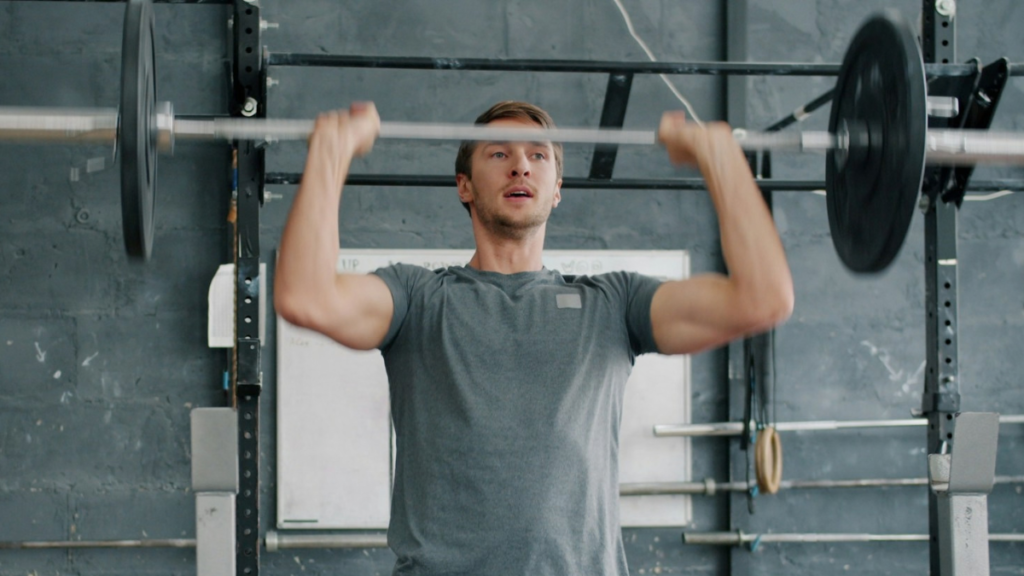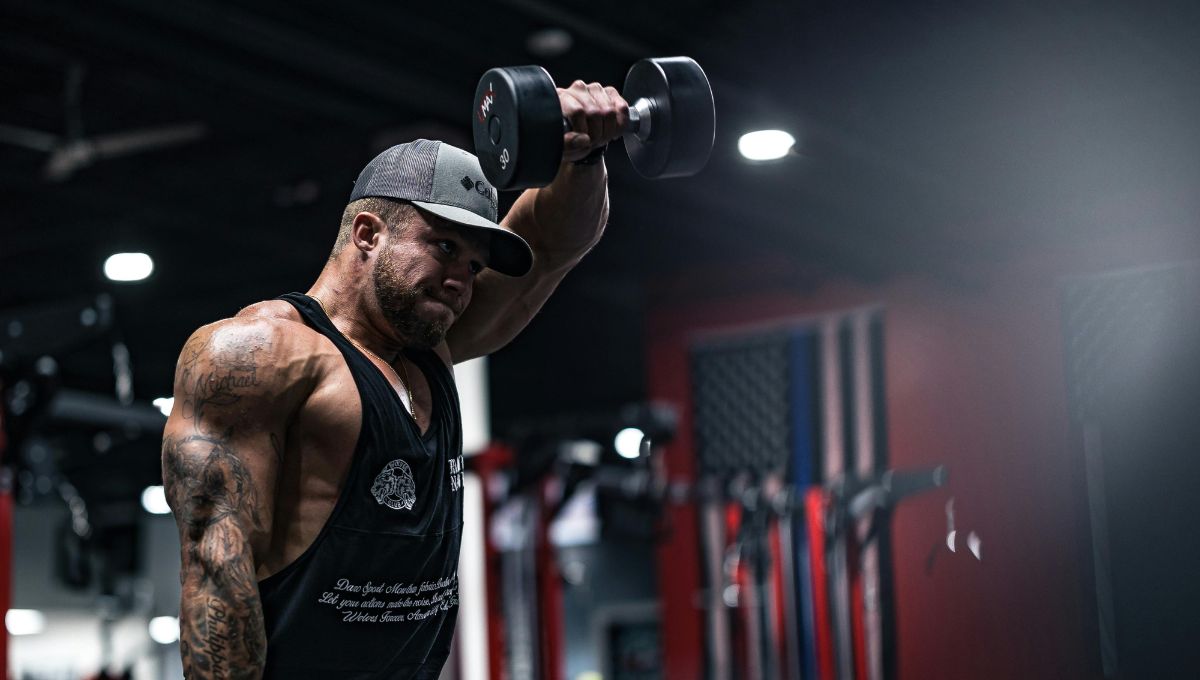


Broad shoulders do more than fill out a T shirt. They change the outline of your upper body by adding visible width between the arms and the neck. The middle, or lateral, deltoid is particularly important for that effect, while the rear deltoid helps give the shoulder a fuller, more three dimensional look from the side and back. The catch is that pressing alone is not a complete answer. Presses can train the front deltoid hard, but lateral and rear deltoid work deserves dedicated attention when shoulder size is the goal.
The three exercises below are not gimmicks. Each changes the line of resistance or the position of the torso to make a familiar shoulder action more useful. They also give you options when ordinary dumbbell lateral raises become stale or uncomfortable. Scientific evidence does not allow anyone to promise that one movement will transform your delts. Muscle growth depends on training effort, sufficient volume, nutrition, recovery, and time. What the evidence can do is help you choose movements that load the target muscles sensibly and program them in a way that supports hypertrophy.


What Actually Builds Wider Delts
The deltoid has three portions. The anterior portion sits at the front of the shoulder and contributes strongly to lifting the arm forward. The lateral portion contributes to lifting the arm out to the side. The posterior portion contributes to moving the arm backward and outward, especially when the torso is hinged forward. These actions overlap, but they matter when exercise selection is the goal. A shoulder press can be useful for overall strength and the anterior deltoid, yet it is not a substitute for direct work that asks the lateral and posterior fibers to do more of the job.
Surface electromyography research provides useful clues about which muscles are active in an exercise, although it cannot prove future muscle growth by itself. In trained men, lateral raise variations produced substantial medial deltoid activity, while the reverse pec deck produced the greatest posterior deltoid activity among several upper body exercises tested.
Another study in competitive bodybuilders found that changes in the direction of a lateral raise changed deltoid activation. Those findings support direct lateral and rear delt work, but the exercise must still be trained with controlled effort and progressed over time.

The strongest practical rule is to accumulate challenging sets. A large systematic review found a dose response relationship between weekly resistance training sets and hypertrophy, with more sets generally producing more growth up to the ranges studied. More recent network meta analysis also found that multiple sets were superior to a single set for hypertrophy. That does not mean you should add endless shoulder work. It means a few hard sets once per week is unlikely to be the whole story if wider delts are a serious priority.
Exercise One: Leaning Single Arm Cable Lateral Raise
Why it deserves a place
The dumbbell lateral raise is effective, but its resistance is lightest when your arm is by your side. That is the bottom of the movement, where the lateral delt is relatively lengthened. A cable changes the force direction, so it can provide meaningful resistance from the start of the lift. Leaning slightly away from a low cable stack can also give the arm a comfortable path while allowing you to keep the torso stable.
3 Top Tips to Build Stronger Hamstrings Without Deadlifts
A 2025 training study compared cable and dumbbell lateral raises in resistance trained men and women. After eight weeks of twice weekly training, both options increased lateral deltoid thickness by roughly 3.3 to 4.6 percent, with no meaningful difference between them. That result is valuable because it removes the temptation to treat the cable as magic. The cable is simply a strong alternative that offers a different resistance profile and may be easier to load consistently for some lifters.
How to do it
Set a cable pulley at its lowest position and stand side on to the stack. Hold the support upright with the free hand and take one or two small steps away until the cable has tension. Keep a soft bend in the working elbow and let the arm rest slightly in front of your body, not pinned behind your hip. Lean only enough to create a firm body position. Raise the arm in the plane of the shoulder until it is near shoulder height, then lower under control.
Think about moving the upper arm outward rather than trying to lift the handle with the hand. Keep your neck relaxed and avoid a violent shrug. A slight bend in the elbow is fine, but changing the elbow angle throughout the repetition usually signals that the load is too heavy. Start conservatively and make the final few repetitions difficult while keeping the torso quiet.
Programming it for growth
Use two to four sets of roughly eight to twenty repetitions per side. The broad repetition range is deliberate. Research indicates that a wide range of loads can produce similar hypertrophy when sets are performed with sufficiently high effort, although heavier loads tend to improve maximal strength more. Choose a load that allows a smooth repetition, then finish each set with one to three repetitions left before technical failure. If the cable stack jumps or your rib cage twists, reduce the load.
Exercise Two: Behind the Back Cable Lateral Raise
Why the setup changes the challenge
This version looks unusual because you hold the cable handle behind your body. The goal is not to force the shoulder into an extreme position. The goal is to alter the cable angle so resistance is present before the arm rises. Compared with a standard dumbbell raise, the cable is pulling sideways from the bottom, not waiting for gravity to create a large turning force higher in the movement.
Direct hypertrophy evidence tells us that a conventional cable lateral raise is comparable with a conventional dumbbell lateral raise, not that this exact setup is superior. That distinction matters. The case for the behind the back version is biomechanical and practical rather than a claim of proven superiority. It gives you another way to load the lateral delt through a controlled range, which can be useful if ordinary raises irritate your shoulder or if you need variation without abandoning a productive movement pattern.
How to do it
Stand just in front of a low cable pulley with your back toward the stack. Reach behind your body to take the handle with the arm farther from the pulley. Begin with the handle slightly behind your hip, but do not twist the torso toward the stack. Keep the chest tall, ribs stacked over the pelvis, and the arm relaxed before initiating the raise.
Lift the upper arm outward and slightly forward until it reaches about shoulder height. The cable should stay clear of your body and the wrist should remain neutral. Lower slowly until the handle returns close to the starting position. The range does not need to be enormous to be productive. Stop before the shoulder rolls forward or you lose the ability to control the descent.
Who should use it
This exercise suits lifters who feel that dumbbell raises only become challenging near the top, or who prefer the cable’s steady tension. It is also a sensible way to make light cable stacks challenging with strict form. Because the handle begins behind the body, use a smaller load than you expect and do not force the shoulder backward. Anyone with current shoulder pain, a recent injury, or symptoms that worsen during the exercise should obtain individual guidance from a qualified clinician before training through it.
Exercise Three: Chest Supported Rear Delt Row
Why a row can build the back of the shoulder
The rear delt is often trained with fly variations, but a row can be an excellent alternative when the arm path is set up properly. A chest supported rear delt row limits momentum and reduces the temptation to turn every repetition into a lower back exercise. When you pull with the elbows wide and guide them out from the torso, the posterior deltoid has a clear role alongside the upper back muscles.
Research comparing upper body exercises found that the reverse pec deck created very high posterior deltoid activation, while the seated row and incline lat pull down also activated the posterior deltoid substantially. This does not prove that every wide elbow row matches a reverse pec deck for hypertrophy. It does show that pulling patterns can train the rear delt, and it supports using a row as one component of a shoulder program rather than treating all rear delt work as a fly.
How to do it
Set an adjustable bench to a low incline and lie chest down with dumbbells hanging beneath the shoulders. Use a neutral or overhand grip. Begin each repetition by letting the shoulder blades move naturally forward without losing chest contact. Then pull the elbows out and back at about shoulder level, aiming to bring the upper arms in line with the torso rather than pulling the dumbbells toward the hips.
Pause briefly when the elbows reach the end of a comfortable range, then lower with control. Keep the upper traps from dominating by resisting the urge to shrug toward your ears. A modest load is usually enough. The exercise should feel like the back of the shoulders and upper back are working together, not like a heavy general row.
Programming it for growth
Perform two to four sets of ten to twenty repetitions. Include it after your heavier horizontal or vertical pulling work, or pair it with lateral raises on an upper body day. For shoulder focused blocks, train lateral and rear delt movements two or more times weekly when recovery allows. Track performance with a simple rule: add a repetition within the target range before adding load. This approach makes progress visible without sacrificing the positions that make the exercise useful.
Putting the Exercises into a Practical Shoulder Plan
You do not need to perform all three exercises in the same session. A productive starting point is to use the leaning cable raise on one upper body day, the behind the back cable raise on another, and the chest supported rear delt row after a pulling movement. That creates direct work for both the lateral and posterior deltoid without filling a session with redundant pressing.
For most recreational lifters, begin with six to ten hard weekly sets that directly target the lateral deltoid and four to eight sets that directly target the posterior deltoid. Add sets gradually only when performance is stable, soreness is manageable, and you are recovering well. Evidence supports higher volumes for hypertrophy on average, but individual tolerance differs. The best dose is the one that you can train hard, recover from, and improve on for months.
Nutrition matters as much as exercise selection. A meta analysis found that protein supplementation can enhance resistance training related gains in fat free mass, with benefits leveling off around a total protein intake of about 1.6 grams per kilogram of body mass per day for many adults. Eat enough total food to support your goal, train consistently, and give the shoulders time to adapt. Wider delts are built by repeating strong basics with precision, not by chasing a complicated movement every week.
Key Takeaways
| Exercise | Primary focus | Best use | Practical loading |
|---|---|---|---|
| Leaning single arm cable lateral raise | Lateral deltoid | Direct width work with tension from the bottom | Two to four sets of eight to twenty repetitions per side |
| Behind the back cable lateral raise | Lateral deltoid | A cable variation when ordinary raises feel stale or poorly loaded at the bottom | Two to four sets of ten to twenty repetitions per side |
| Chest supported rear delt row | Posterior deltoid and upper back | Rear delt work with less momentum | Two to four sets of ten to twenty repetitions |
| Weekly progression | All delt regions | Build training volume only as recovery permits | Add repetitions first, then load |
References
- Botton, C.E., Wilhelm, E.N., Ughini, C.C., Pinto, R.S. and Lima, C.S. (2013) ‘Electromyographical analysis of the deltoid muscle between different strength training exercises’, Medicina Sportiva, 17(2), pp. 67 to 71. doi: 10.5604/17342260.1055261.
- Coratella, G., Tornatore, G., Longo, S. and Esposito, F. (2020) ‘An electromyographic analysis of lateral raise variations and frontal raise in competitive bodybuilders’, International Journal of Environmental Research and Public Health, 17(17), 6015. doi: 10.3390/ijerph17176015.
- Larsen, S., Wolf, M., Schoenfeld, B.J., Sandberg, N.Ø., Fredriksen, A.B., Kristiansen, B.S., van den Tillaar, R., Swinton, P.A. and Falch, H.N. (2025) ‘Dumbbell versus cable lateral raises for lateral deltoid hypertrophy: an experimental study’, Frontiers in Physiology, 16, 1611468. doi: 10.3389/fphys.2025.1611468.
- Morton, R.W., Murphy, K.T., McKellar, S.R., Schoenfeld, B.J., Henselmans, M., Helms, E., Aragon, A.A., Devries, M.C., Banfield, L., Krieger, J.W. and Phillips, S.M. (2018) ‘A systematic review, meta analysis and meta regression of the effect of protein supplementation on resistance training induced gains in muscle mass and strength in healthy adults’, British Journal of Sports Medicine, 52(6), pp. 376 to 384. doi: 10.1136/bjsports 2017 097608.
- Schoenfeld, B.J., Ogborn, D. and Krieger, J.W. (2017) ‘Dose response relationship between weekly resistance training volume and increases in muscle mass: A systematic review and meta analysis’, Journal of Sports Sciences, 35(11), pp. 1073 to 1082. doi: 10.1080/02640414.2016.1210197.
- Wolf, M., Balshaw, T.G., Buckner, S.L., Hall, A., Jeffers, R., Kattar, N., Taylor, J., Zourdos, M.C. and Nuzzo, J.L. (2023) ‘Resistance training prescription for muscle strength and hypertrophy in healthy adults: A systematic review and Bayesian network meta analysis’, British Journal of Sports Medicine, 57(18), pp. 1211 to 1220. doi: 10.1136/bjsports 2022 106283.