

Core training is often misunderstood. Many people equate “abs” with visible six-pack muscles and endless crunches on the floor. In reality, the core is a complex system of muscles that includes the rectus abdominis, transverse abdominis, internal and external obliques, hip flexors, spinal stabilisers, and deep muscles surrounding the lumbar spine and pelvis.
These muscles work together to stabilize the spine, transfer force between the upper and lower body, protect against injury, and enhance athletic performance.


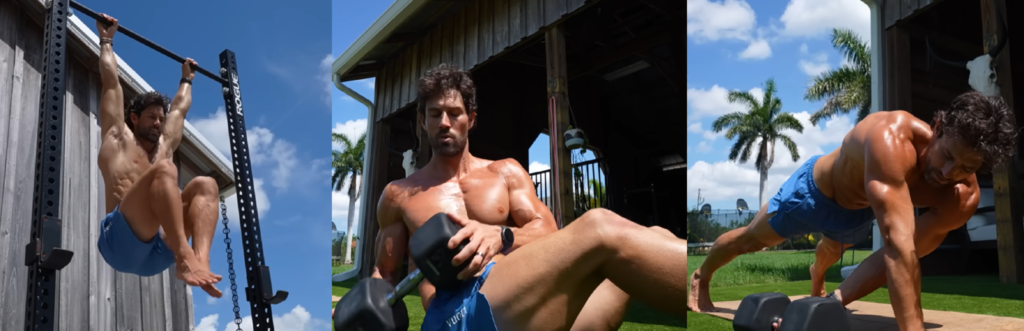
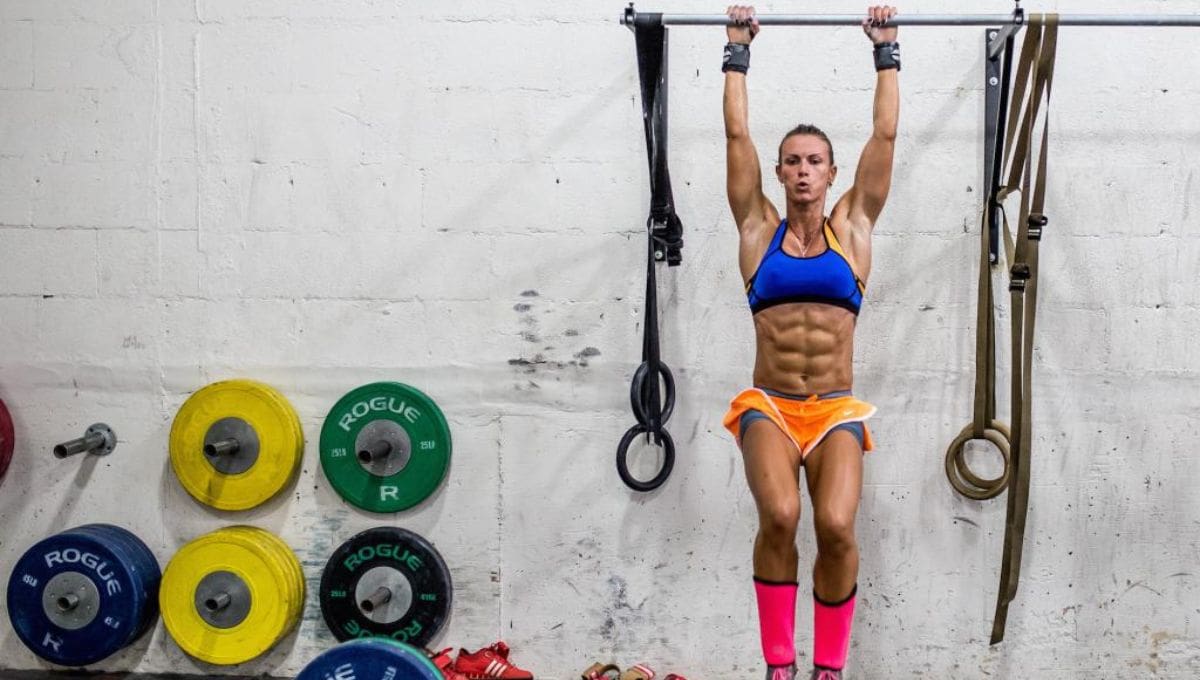
Hanging ab exercises are one of the most effective, yet underused, methods for training this system. When you hang from a bar, your body must fight gravity in a way that floor-based exercises simply cannot replicate. The spine is unloaded, the shoulders must stabilise the body, and the core has to work overtime to control movement and prevent excessive swinging.

Research consistently shows that exercises requiring greater spinal stability and anti-extension control lead to higher activation of key abdominal muscles, particularly the rectus abdominis and obliques. Hanging movements place the core in exactly this situation. Electromyography (EMG) studies have demonstrated that hanging leg raise variations produce significantly higher abdominal muscle activation than traditional crunches and sit-ups, especially in trained individuals.
Beyond aesthetics, hanging ab exercises have real-world benefits. They improve grip strength, shoulder stability, and hip flexor strength while teaching the core to brace dynamically. This has direct carryover to sports, Olympic lifting, gymnastics, CrossFit, and everyday movements that require trunk control.
In this article, you will learn exactly why hanging ab exercises are so effective, how they work from a physiological perspective, and how to perform six of the best hanging ab exercises to truly torch your core. Every claim is backed by scientific evidence, and every exercise is explained in clear, practical terms so you can apply it immediately.
The Science Behind Hanging Core Training
Core Function and Spinal Stability
The primary role of the core is not spinal movement but spinal stability. According to biomechanical research, the core muscles function mainly to resist motion rather than create it. The rectus abdominis and obliques resist spinal extension, rotation, and lateral flexion, while the transverse abdominis increases intra-abdominal pressure to stabilise the lumbar spine.

Stuart McGill’s work on spinal biomechanics has shown that excessive spinal flexion under load increases the risk of disc injury. Exercises that challenge the core to stabilise the spine in a neutral position are therefore considered safer and more functional than repeated spinal flexion movements. Hanging ab exercises align well with this principle, as they emphasise anti-extension and controlled pelvic movement rather than aggressive spinal flexion.
Muscle Activation in Hanging Movements
EMG studies comparing different abdominal exercises consistently show that hanging leg raise variations elicit high activation of the rectus abdominis and obliques. A study comparing hanging leg raises, captain’s chair leg raises, and crunches found that hanging variations produced greater lower abdominal activation, likely due to the increased demand on pelvic control.
Another key finding is the role of the hip flexors. While critics often argue that hanging leg raises are “just hip flexor exercises,” research shows that effective posterior pelvic tilt during these movements significantly increases abdominal activation and reduces excessive hip flexor dominance. In other words, proper technique determines whether the abs or hip flexors do most of the work.
Shoulder and Grip Contributions
Hanging exercises also require isometric activation of the shoulder stabilisers, including the latissimus dorsi, lower trapezius, and rotator cuff muscles. This contributes to overall upper-body stability and reinforces the kinetic chain concept, where force is transferred efficiently through a stable trunk.
Grip strength is another overlooked benefit. Hanging from a bar places sustained demands on the forearm flexors. Studies have shown that grip strength correlates strongly with overall strength, functional capacity, and even long-term health outcomes. Training the core while simultaneously improving grip efficiency is a time-efficient approach supported by exercise science.
Exercise 1: Hanging Knee Raise
Why It Works
The hanging knee raise is one of the most accessible and effective hanging ab exercises. It allows athletes to learn how to control pelvic movement while hanging, making it ideal for beginners and intermediate trainees.
Biomechanically, the movement challenges the rectus abdominis to posteriorly tilt the pelvis, while the obliques prevent excessive swinging and rotation. EMG data indicates that knee raises performed with controlled tempo and posterior pelvic tilt produce significantly higher abdominal activation than fast, uncontrolled repetitions.
How to Perform It Correctly
Hang from a pull-up bar with a shoulder-width grip. Engage your shoulders by pulling them slightly down and back. This creates a stable base and prevents excessive shoulder strain.
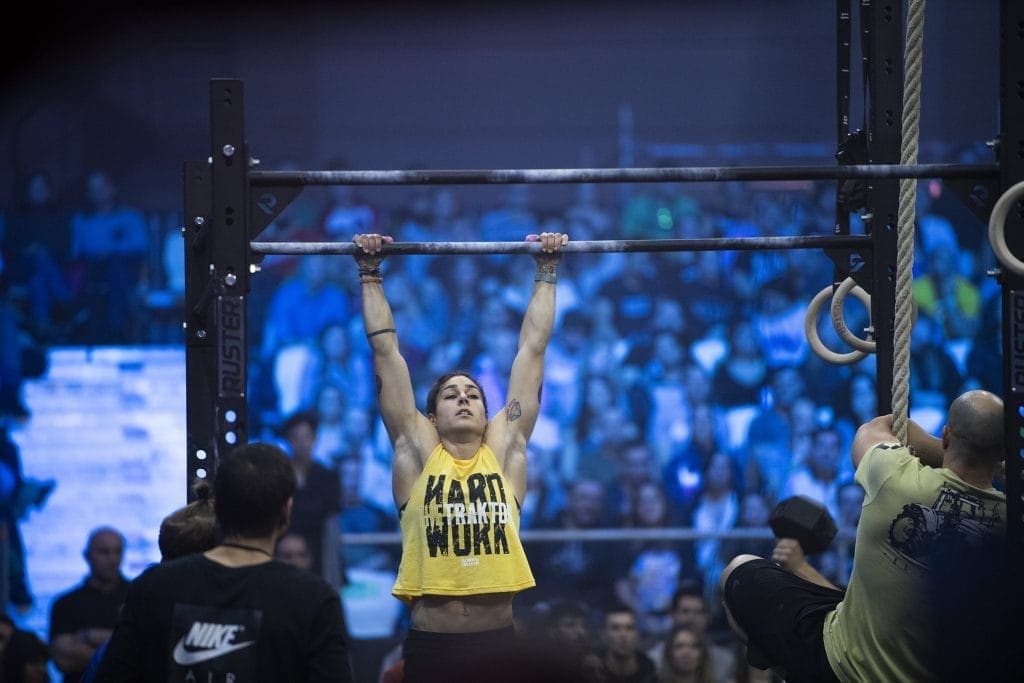
Begin the movement by lightly tucking your pelvis under, flattening your lower back. Slowly raise your knees toward your chest while maintaining control. Avoid swinging or using momentum. At the top, pause briefly and focus on squeezing your abs. Lower your legs slowly back to the starting position.
Programming Considerations
Research suggests that slower eccentric phases increase time under tension and muscle activation. Aim for 8 to 15 controlled repetitions per set, focusing on quality rather than quantity.
Exercise 2: Hanging Straight Leg Raise
Why It Works
The hanging straight leg raise is a progression from the knee raise and significantly increases the lever arm, placing greater demand on the core. This increased moment arm leads to higher torque at the hip and lumbar spine, requiring stronger abdominal engagement to maintain pelvic control.
EMG studies have shown that straight leg raises result in higher rectus abdominis activation compared to bent-knee variations, particularly when the legs are raised to parallel or higher.
How to Perform It Correctly
Start hanging from the bar with legs fully extended. Engage your core by bracing as if preparing for a punch. Initiate the movement by posteriorly tilting the pelvis, then raise your straight legs upward under control.
Avoid excessive lumbar extension at the bottom and prevent swinging. Lower the legs slowly, maintaining tension throughout the range of motion.
Programming Considerations
Because of the increased difficulty, 6 to 12 high-quality repetitions per set are sufficient. Rest periods of 60 to 90 seconds allow for adequate recovery while maintaining training density.
Exercise 3: Hanging Toes-to-Bar

Why It Works
The hanging toes-to-bar is a staple in gymnastics and CrossFit due to its high demand on the anterior core and hip flexors. When performed strictly, it challenges the abs to control a long lever through a large range of motion.
Research on advanced core exercises shows that increased range of motion under control leads to greater muscle activation and neuromuscular coordination. Toes-to-bar also require strong scapular stability, reinforcing the connection between the lats and the core.
How to Perform It Correctly
Hang from the bar with an active shoulder position. Begin by engaging the core and lifting the legs upward until the toes make contact with the bar. Focus on curling the pelvis upward at the top rather than simply lifting the legs.
Lower under control, avoiding a dead hang between repetitions. Strict form is essential to maximise abdominal engagement and minimise reliance on momentum.
Programming Considerations
Due to the high intensity, perform 4 to 10 strict repetitions per set. Quality matters more than volume, especially for long-term joint health.
Exercise 4: Hanging Windshield Wipers
Why It Works
Hanging windshield wipers introduce a strong rotational and anti-rotational component, heavily engaging the internal and external obliques. Rotational core strength is crucial for sports performance and spinal health, as the obliques play a major role in resisting unwanted trunk rotation.
EMG studies show that rotational core exercises significantly increase oblique activation compared to sagittal-plane movements alone. Windshield wipers also challenge shoulder and grip stability due to the shifting center of mass.
How to Perform It Correctly
Hang from the bar and raise your legs to a vertical or near-vertical position. Keeping your legs straight, slowly lower them to one side while maintaining shoulder stability. Use your obliques to control the descent.
Bring the legs back to center, then repeat on the opposite side. Movement should be slow and deliberate, with no swinging.
Programming Considerations
Perform 4 to 8 repetitions per side. This exercise is demanding, so limit volume and focus on strict control.
Exercise 5: Hanging L-Sit Hold
Why It Works
Isometric core training plays an important role in spinal stability. The hanging L-sit is an isometric exercise that challenges the rectus abdominis, hip flexors, and deep stabilising muscles simultaneously.
Research on isometric training shows that sustained contractions can improve motor unit recruitment and core endurance, both of which are essential for athletic performance and injury prevention.
How to Perform It Correctly
Hang from the bar and raise your legs until they are parallel to the floor, forming an L shape with your torso. Engage the core, keep the legs straight, and maintain a neutral spine.

Hold the position while breathing steadily. Avoid shrugging the shoulders or arching the lower back.
Programming Considerations
Hold for 10 to 30 seconds per set. Multiple short holds are often more effective than one long hold, especially for maintaining proper form.
Exercise 6: Hanging Pelvic Tilt Raises
Why It Works
This exercise isolates posterior pelvic tilt, a key component of effective abdominal training. By minimising hip flexor contribution, pelvic tilt raises maximise rectus abdominis activation.
Studies have shown that posterior pelvic tilt significantly increases lower abdominal EMG activity compared to leg movement alone. This makes pelvic tilt raises an excellent option for targeting the deep core muscles.
How to Perform It Correctly
Hang from the bar with legs slightly bent. Instead of lifting the legs high, focus on curling the pelvis upward by contracting the abs. The movement is small but intense.
Pause briefly at the top, then lower under control. Avoid swinging or using momentum.
Programming Considerations
Perform 10 to 15 slow repetitions, emphasising control and muscle contraction over range of motion.
How to Program Hanging Ab Exercises Effectively
Frequency and Volume
Research suggests that core muscles recover relatively quickly compared to larger muscle groups. Training hanging ab exercises 2 to 4 times per week is effective for most athletes.
Total weekly volume should be managed carefully. Overuse of hanging exercises can stress the shoulders and elbows if recovery is inadequate. Balancing hanging work with other core exercises is supported by injury prevention research.
Progression Strategies
Progression can be achieved by increasing time under tension, reducing momentum, increasing range of motion, or advancing to more challenging variations. Scientific literature supports progressive overload as a key driver of strength and hypertrophy adaptations, even for core muscles.
Common Mistakes to Avoid
Swinging, excessive lumbar extension, and passive shoulder positions reduce effectiveness and increase injury risk. Studies on motor control emphasise the importance of intentional movement and muscular engagement, especially in unstable positions like hanging.
The Bigger Picture: Core Training Beyond Aesthetics
Strong abdominal muscles contribute to improved lifting performance, better posture, and reduced injury risk. Research has shown that effective core stability enhances force transfer during compound lifts and athletic movements.
Hanging ab exercises train the core as it functions in real life: stabilising the spine while the limbs move. This functional approach aligns with modern strength and conditioning principles supported by sports science literature.
Conclusion
Hanging ab exercises are one of the most efficient and scientifically supported ways to build a strong, functional core. They challenge the abdominal muscles, improve spinal stability, enhance grip and shoulder strength, and carry over to athletic performance.
By focusing on proper technique, controlled movement, and progressive overload, you can use these six hanging ab exercises to truly torch your core while protecting your spine and joints. The science is clear: when done correctly, hanging ab training is a powerful tool for both performance and long-term health.
References
- Journal of Strength and Conditioning Research – Escamilla, R.F. et al. (2010) ‘Core muscle activation during Swiss ball and traditional abdominal exercises’, Journal of Strength and Conditioning Research, 24(6), pp. 1531–1539.
- Spine – McGill, S.M. (2001) ‘Low back stability: From formal description to issues for performance and rehabilitation’, Spine, 26(1), pp. 1–15.
- Journal of Orthopaedic & Sports Physical Therapy – Axler, C.T. and McGill, S.M. (1997) ‘Low back loads over a variety of abdominal exercises’, Journal of Orthopaedic & Sports Physical Therapy, 26(2), pp. 72–82.
- European Journal of Applied Physiology – Andersson, E.A., Maathuis, J.B., and Thorstensson, A. (1997) ‘Trunk muscle strength in athletes’, European Journal of Applied Physiology, 75(4), pp. 345–352.