

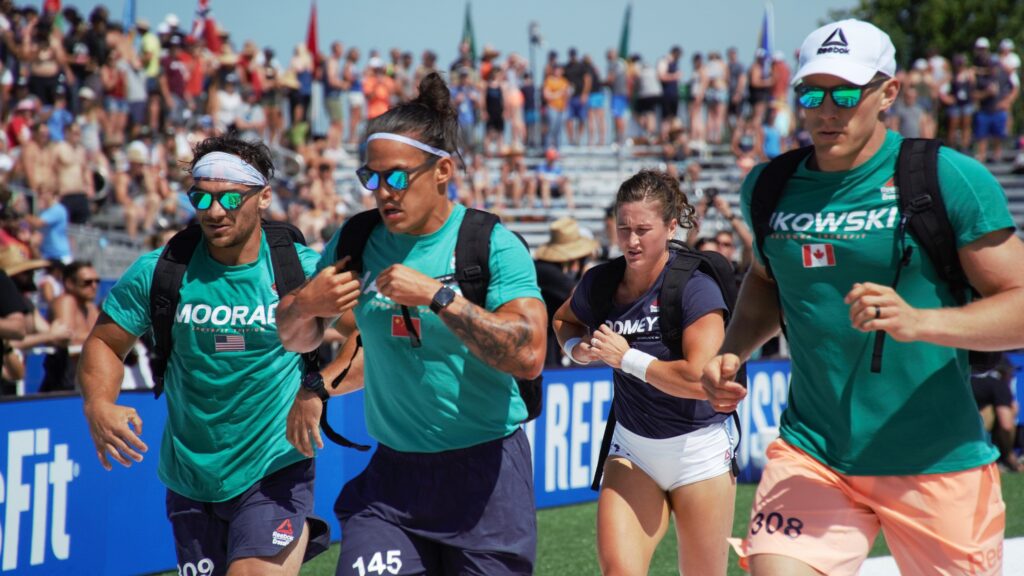
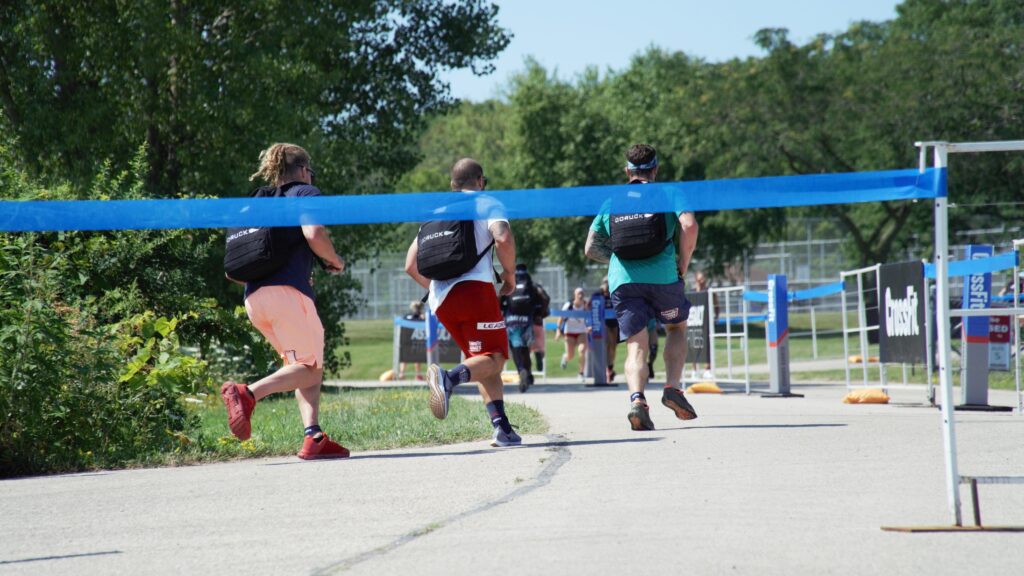
Ruck running — running while carrying a weighted backpack — has quietly moved from military training into the civilian fitness world. It is no longer just a tool for soldiers or tactical athletes. Recreational runners, CrossFit athletes, hikers, and everyday fitness enthusiasts are increasingly using ruck running to build strength and endurance at the same time.
Most people already understand the obvious benefits. Ruck running burns more calories than normal running, strengthens the legs, and improves cardiovascular fitness. Those outcomes are well documented and fairly intuitive. Add weight, work harder, adapt faster.


What is less commonly discussed are the deeper physiological adaptations that occur when you combine load carriage with running. These adaptations affect bones, the nervous system, posture, metabolism, and even long-term resilience to injury and aging.

This article focuses on three lesser known, but scientifically supported, health benefits of ruck running. The goal is not hype. Every claim is backed by peer-reviewed research from exercise physiology, biomechanics, neuroscience, and metabolic health.
Throughout the article, “ruck running” refers to running or fast jogging with an external load carried on the torso, typically in a backpack or rucksack, and generally between 5–25 percent of body weight unless otherwise stated.
Understanding Ruck Running as a Unique Stimulus
Before exploring the benefits, it is important to understand why ruck running is physiologically different from both normal running and walking with weight.
External Load Changes the Entire System
When weight is added to the torso, the body must adapt in several ways at once. Ground reaction forces increase, stride mechanics change, trunk muscles activate more strongly, and energy demands rise. This creates a hybrid stimulus that combines elements of endurance training, resistance training, and impact loading.
Research on military load carriage consistently shows that even modest external loads significantly alter biomechanics and muscle recruitment patterns compared to unloaded locomotion (Knapik et al., 2012). These changes are not simply “more of the same.” They create new adaptations that unloaded running alone does not provide.
Why “Lesser Known” Benefits Matter
Many training benefits that matter for long-term health are not immediately visible. Bone density, neural efficiency, and metabolic flexibility develop slowly, but they strongly influence injury risk, aging, and overall physical independence.
Ruck running uniquely targets these systems.
Benefit 1: Ruck Running Improves Bone Density and Skeletal Strength
Bone health is rarely discussed in running conversations, especially among younger athletes. However, low bone mineral density is not just a concern for older adults. Distance runners are at increased risk of stress fractures and low bone density, particularly when training volume is high and strength training is insufficient.
Ruck running addresses this problem in a unique way.
Mechanical Loading Is Essential for Bone Adaptation
Bone tissue adapts to mechanical stress. According to Wolff’s Law, bones remodel themselves in response to the loads placed upon them. High-impact and high-load activities stimulate osteoblast activity, increasing bone mineral density and structural strength.
Normal running does load the skeleton, but the magnitude of loading may not be sufficient to optimize bone adaptation in all populations, especially experienced runners whose bones have already adapted to repetitive impact.
Adding external load increases peak ground reaction forces and internal bone strain. Studies on load carriage show that even small increases in carried weight significantly raise skeletal loading in the lower limbs and spine (Lloyd and Cooke, 2000).
Evidence From Load Carriage and Weighted Exercise
Military research provides some of the strongest evidence. Soldiers who regularly train with load carriage demonstrate higher bone mineral density in the hips and lower extremities compared to non-load-bearing controls (Lappe et al., 2008).
While these studies often focus on walking or marching, the principles still apply to ruck running. Running produces higher impact forces than walking, and when combined with external load, the osteogenic stimulus is amplified.
Additional research on weighted vests in athletic populations shows similar results. A randomized controlled trial found that athletes who trained with weighted vests experienced greater improvements in bone mineral density compared to those who performed the same movements without load (Turner et al., 2011).
Why Ruck Running May Be Superior to Traditional Resistance Training for Bone Health
Traditional strength training improves bone density, but it is often limited to specific movement patterns. Ruck running, on the other hand, exposes the skeleton to multidirectional, high-frequency loading across thousands of steps.
This repeated exposure is critical. Bone responds not just to load magnitude, but also to loading rate and frequency. Running with load provides all three simultaneously.
Importantly, the load is axial. The spine, pelvis, and hips bear the weight directly, which is particularly beneficial for preventing age-related bone loss in these regions (Kohrt et al., 2004).
Long-Term Implications for Injury Prevention and Aging
Higher bone density reduces the risk of stress fractures, osteoporosis, and fractures later in life. For athletes, this means more consistent training with fewer interruptions. For general populations, it means greater independence and resilience with aging.
Ruck running offers a time-efficient way to stimulate bone adaptation while simultaneously training cardiovascular fitness, something few other modalities can achieve.
Benefit 2: Ruck Running Enhances Neuromuscular Coordination and Cognitive Resilience
One of the most overlooked aspects of fitness is the nervous system. Strength, speed, balance, and even mental resilience are all governed by neural processes.
Ruck running challenges the nervous system in ways that unloaded running does not.
Load Carriage Increases Motor Control Demands
When weight is added to the torso, the body’s center of mass shifts. This requires constant adjustments from the nervous system to maintain balance, posture, and efficient movement.
Electromyography studies show increased activation of stabilizing muscles in the trunk, hips, and lower legs during load carriage (LaFiandra et al., 2003). These muscles are controlled largely through reflexive and subconscious neural pathways.

Over time, repeated exposure improves motor coordination and proprioception — the body’s ability to sense its position in space.
Improved Proprioception and Balance
Proprioception declines with age and inactivity, increasing the risk of falls and injuries. Activities that challenge balance under load are particularly effective at maintaining and improving this system.
Ruck running requires continuous micro-adjustments with every stride. Uneven terrain amplifies this effect, forcing the nervous system to integrate sensory information from the feet, joints, vestibular system, and vision.
Research on balance training shows that dynamic, load-bearing tasks lead to greater improvements in proprioceptive ability than static or unloaded exercises (Behm et al., 2015). Ruck running fits squarely into this category.
Cognitive Load and Executive Function
Carrying weight while running increases not only physical demand but also cognitive demand. The brain must process fatigue signals, adjust movement patterns, and maintain situational awareness.
Studies in military populations demonstrate that load carriage significantly increases cognitive workload, particularly during prolonged tasks (Taylor et al., 2014). While this may sound negative, controlled exposure leads to adaptation.
Regular training under increased cognitive and physical stress improves executive function, attention, and decision-making under fatigue. This has been observed in both tactical athletes and endurance athletes exposed to dual-task training environments (Diamond and Ling, 2016).
Stress Resilience and Mental Toughness
Ruck running is uncomfortable. This discomfort is not merely physical; it challenges perception of effort and stress tolerance.
Repeated exposure to manageable stressors builds resilience through neuroendocrine adaptation. Exercise-induced stress improves regulation of cortisol and catecholamines, which are key hormones involved in stress response (Tsatsoulis and Fountoulakis, 2006).
Athletes who regularly train under load often report improved confidence and mental durability, outcomes supported by research linking physically demanding training with improved psychological resilience (Hegberg and Tone, 2015).
Practical Benefits Beyond Sport
Improved neuromuscular coordination and cognitive resilience translate into everyday life. Better balance reduces injury risk. Enhanced stress tolerance improves work performance and emotional regulation. These benefits persist long after a ruck run ends.
Benefit 3: Ruck Running Improves Metabolic Flexibility and Insulin Sensitivity
Metabolic health is not just about burning calories. It is about how efficiently the body uses different fuel sources and how well it regulates blood sugar over time.
Ruck running provides a powerful stimulus for improving metabolic flexibility — the ability to switch between carbohydrates and fats depending on demand.
Higher Energy Demand Without Extreme Speed
One of the challenges with improving metabolic health through running is that intensity often becomes too high. Very fast running relies heavily on carbohydrate metabolism, limiting fat oxidation.
Ruck running increases energy expenditure without requiring high speeds. This allows athletes to work at moderate intensities while still creating a significant metabolic challenge.
Research shows that walking or running with load increases oxygen consumption and energy expenditure disproportionately compared to speed alone (Abe et al., 2004). This creates an ideal environment for training fat oxidation and aerobic efficiency.
Increased Muscle Recruitment and Glucose Uptake
Adding load increases muscle activation, particularly in the posterior chain and trunk. More active muscle mass means greater glucose uptake from the bloodstream.
Skeletal muscle is the primary site of insulin-mediated glucose disposal. Exercise that engages more muscle groups improves insulin sensitivity more effectively than localized activity (Hawley and Lessard, 2008).
Studies on loaded locomotion show increased activation of gluteal, hamstring, and core muscles compared to unloaded running (Harman et al., 2000). This expanded recruitment enhances whole-body glucose regulation.
Evidence From Weighted Exercise and Insulin Sensitivity
Research on weighted exercise interventions supports these effects. A controlled trial found that participants who trained with weighted vests showed greater improvements in insulin sensitivity and fasting glucose levels compared to those performing identical movements without load (Dunstan et al., 2002).
While ruck running was not specifically studied, the physiological mechanisms are the same. Load increases muscular work, metabolic stress, and hormonal responses associated with improved insulin action.
Hormonal Adaptations and Fat Metabolism
Ruck running elevates levels of growth hormone and catecholamines due to increased mechanical and metabolic stress. These hormones play a role in mobilizing fat stores and improving metabolic health (Kraemer and Ratamess, 2005).
Over time, consistent exposure improves the body’s ability to oxidize fat at higher intensities, a hallmark of metabolic flexibility. This is particularly beneficial for endurance athletes and individuals aiming to reduce cardiometabolic risk.
Long-Term Health Implications
Improved insulin sensitivity reduces the risk of type 2 diabetes, metabolic syndrome, and cardiovascular disease. Metabolic flexibility is also associated with better energy levels, body composition, and exercise performance.
Ruck running offers a practical way to achieve these benefits without excessive training volume or extreme intensities.
Safety Considerations and Load Management
While the benefits of ruck running are substantial, they depend on proper progression and load management.
Load Recommendations
Research suggests that loads between 5–15 percent of body weight provide meaningful physiological stimulus while minimizing injury risk for most individuals (Knapik et al., 2004). More experienced athletes may tolerate higher loads, but increases should be gradual.
Technique and Posture
Maintaining upright posture, short stride length, and controlled cadence reduces excessive stress on the knees and lower back. Core strength and proper backpack fit are essential for safe load carriage.
Frequency and Recovery
Ruck running does not need to replace normal running. One to two sessions per week are sufficient to produce adaptations without excessive fatigue. Recovery demands are higher than unloaded running, so total training load should be adjusted accordingly.
Why Ruck Running Deserves More Attention
Ruck running is often viewed as niche or extreme. In reality, it is a scalable, evidence-based training method with applications far beyond military fitness.
Its ability to simultaneously improve bone health, neuromuscular coordination, cognitive resilience, and metabolic flexibility makes it uniquely valuable. Few forms of exercise provide such broad systemic benefits in a relatively simple format.
For athletes, it enhances durability and performance. For non-athletes, it supports long-term health, injury prevention, and functional capacity.
When approached intelligently, ruck running is not just harder running. It is smarter training.
References
- Abe, D., Muraki, S., Yanagawa, K. and Fukuoka, Y. (2004). Effects of load carriage on energy expenditure and kinematics of walking and running. Journal of Physiological Anthropology and Applied Human Science, 23(3), pp. 139–146.
- Behm, D.G., Muehlbauer, T., Kibele, A. and Granacher, U. (2015). Effects of strength training using unstable surfaces on strength, power and balance performance across the lifespan. Sports Medicine, 45(12), pp. 1645–1669.
- Diamond, A. and Ling, D.S. (2016). Conclusions about interventions, programs, and approaches for improving executive functions. Developmental Cognitive Neuroscience, 18, pp. 34–48.
- Dunstan, D.W., Daly, R.M., Owen, N., Jolley, D., De Courten, M., Shaw, J. and Zimmet, P. (2002). High-intensity resistance training improves glycemic control in older patients with type 2 diabetes. Diabetes Care, 25(10), pp. 1729–1736.
- Harman, E., Han, K.H., Frykman, P. and Pandorf, C. (2000). The effects of backpack weight on the biomechanics of load carriage. Military Medicine, 165(10), pp. 766–771.
- Hawley, J.A. and Lessard, S.J. (2008). Exercise training-induced improvements in insulin action. Acta Physiologica, 192(1), pp. 127–135.
- Hegberg, N.J. and Tone, E.B. (2015). Physical activity and stress resilience. Journal of Behavioral Medicine, 38(5), pp. 820–845.
- Knapik, J., Harman, E. and Reynolds, K. (2004). Load carriage using packs: A review of physiological, biomechanical and medical aspects. Applied Ergonomics, 35(5), pp. 415–427.
- Knapik, J., Reynolds, K. and Harman, E. (2012). Soldier load carriage: Historical, physiological, biomechanical, and medical aspects. Military Medicine, 177(11), pp. 118–127.