

Building strong legs is one of the smartest things any beginner can do for long term fitness, athletic performance, and injury prevention. Strong lower body muscles improve balance, posture, mobility, and overall strength. They also help you move better in everyday life, whether you are climbing stairs, running, carrying groceries, or playing sports.
One of the most effective ways to build lower body strength is through unilateral training. Unilateral exercises train one leg at a time instead of both legs together. This style of training improves muscle balance, coordination, joint stability, and movement quality.


Want to Deadlift 200kg? Here are 4 Numbers You Need to Hit First
Many beginners focus only on bilateral exercises such as squats or deadlifts. While these movements are excellent, unilateral exercises provide unique benefits that are especially useful for new lifters. Training one leg at a time exposes weaknesses and improves balance between the left and right sides of the body.
Research has consistently shown that unilateral lower body exercises can improve strength, balance, neuromuscular coordination, and athletic performance while reducing asymmetries that may increase injury risk.
Why Unilateral Leg Training Matters
Before diving into the exercises themselves, it is important to understand why unilateral training deserves a place in your workouts.
When both legs work together during movements like squats, the stronger side can compensate for the weaker side. Over time, this can lead to muscle imbalances and movement dysfunction. Unilateral exercises force each leg to work independently. This helps identify weaknesses and improve symmetry. Benefits of unilateral leg exercises include:
• Improved balance and coordination
• Increased joint stability
• Better athletic performance
• Reduced muscular imbalances
• Enhanced core activation
• Lower injury risk
• Greater mobility and movement control
Studies have shown that unilateral resistance training can significantly improve dynamic balance and lower limb stabilization, particularly in beginners and recreational athletes. Another advantage is that unilateral exercises often place less compressive load on the spine compared to heavy bilateral movements. This makes them beginner friendly and easier to recover from.
What Makes a Good Beginner Unilateral Exercise?
Not all unilateral exercises are suitable for beginners. Some movements require advanced mobility, balance, or strength. The best beginner exercises should:
• Be easy to learn
• Build confidence
• Improve movement quality
• Strengthen major lower body muscles
• Have a low injury risk
• Require minimal equipment
The three exercises below meet all these criteria.
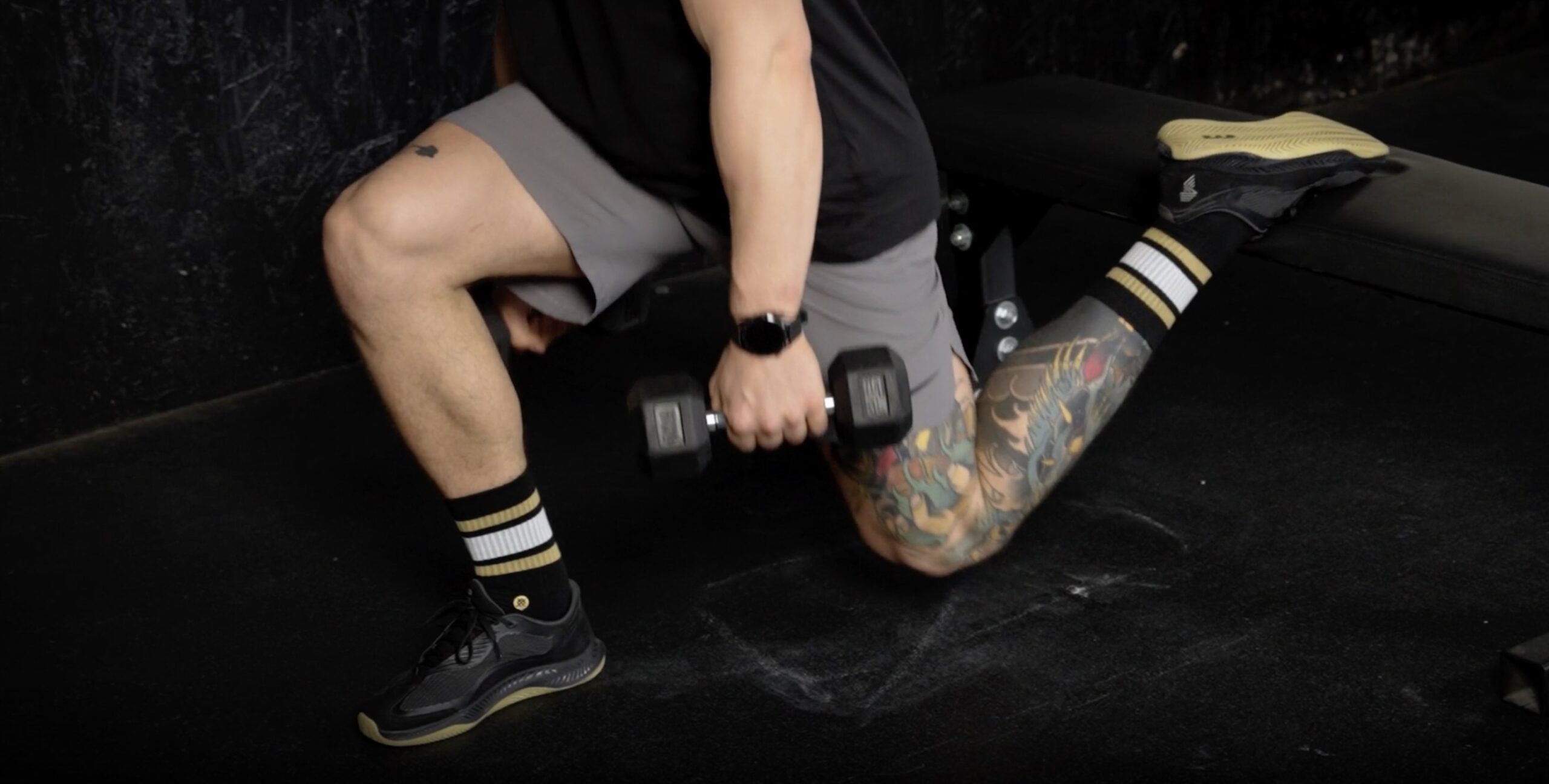
1. Bulgarian Split Squat
The Bulgarian split squat is widely considered one of the best unilateral lower body exercises ever created. It targets the quads, glutes, hamstrings, and core while improving balance and stability. For beginners, it offers tremendous strength building potential without requiring heavy weights.

Why the Bulgarian Split Squat Works
This exercise places most of the load on the front leg while the rear foot remains elevated behind you. Research shows that split squat variations activate the gluteus maximus and quadriceps very effectively while also challenging stabilizing muscles around the hips and knees.
Because the movement trains each leg separately, it helps correct asymmetries and improves coordination. The Bulgarian split squat also increases hip mobility and single leg stability, both of which are essential for long term athletic development.
How to Perform the Bulgarian Split Squat
- Stand about two feet in front of a bench or box.
- Place one foot behind you on the bench.
- Keep your chest tall and core tight.
- Lower your body by bending the front knee.
- Descend until your front thigh is roughly parallel to the floor.
- Push through the front heel to return to standing.
- Repeat on both sides.
Beginner Tips
Start with bodyweight only before adding dumbbells. Use a shorter range of motion if your mobility is limited. Balance improves quickly with practice. Focus on slow and controlled repetitions instead of rushing.
2. Step Up
The step up is one of the most practical and functional lower body exercises available. It closely mimics real life movement patterns such as climbing stairs or hiking uphill.
Despite its simplicity, the step up is highly effective for building lower body strength, improving balance, and enhancing athletic performance.
Why the Step Up Works
The step up trains unilateral leg strength while requiring coordination and stability throughout the movement. Research has demonstrated that step up exercises strongly activate the glutes and quadriceps while also improving balance and lower limb function.
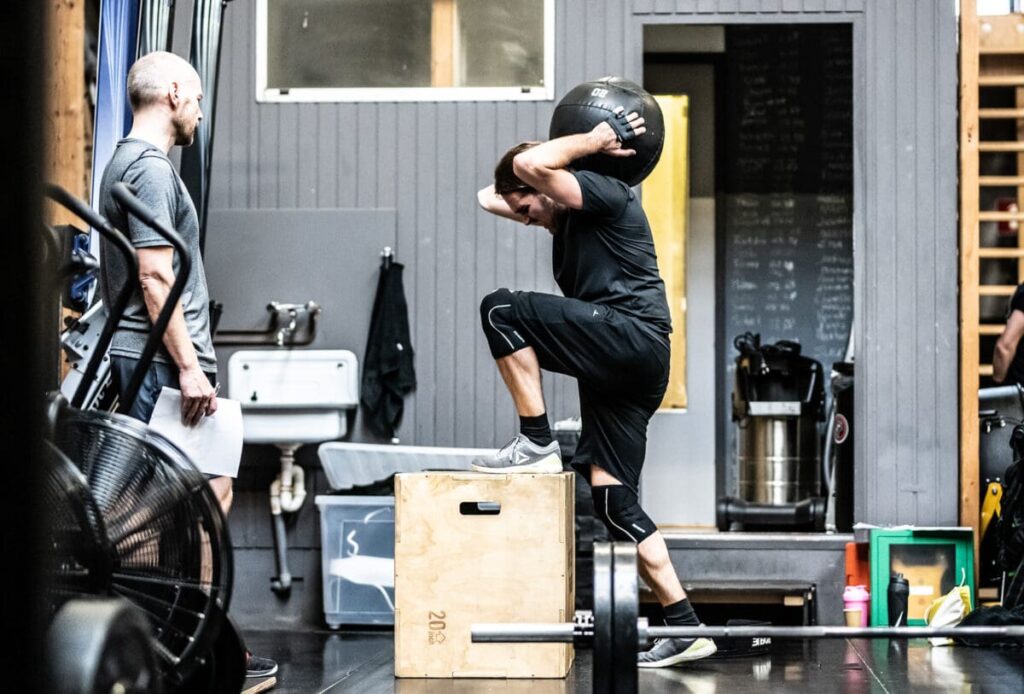
Unlike some advanced unilateral exercises, the step up is easy to learn and highly scalable for beginners. The height of the platform can be adjusted to match your ability level.
How to Perform the Step Up
- Stand in front of a sturdy box or bench.
- Place one foot fully on the platform.
- Drive through the working foot and step upward.
- Bring the other leg up to stand tall.
- Lower under control.
- Repeat all reps on one side before switching.
Beginner Tips
Start with a low step height around knee level or lower. Avoid pushing excessively with the trailing leg. The working leg should do most of the effort. Move slowly during the lowering phase.
3. Reverse Lunge
The reverse lunge is one of the safest and most beginner friendly unilateral exercises available. Compared to forward lunges, reverse lunges typically place less stress on the knees while still building significant lower body strength.
This exercise develops coordination, balance, and unilateral control while training all the major lower body muscle groups.
Why the Reverse Lunge Works
Stepping backward creates a more controlled movement pattern than stepping forward. Research indicates that reverse lunges produce lower knee shear forces than forward lunges, making them more comfortable for many beginners.

The reverse lunge also improves hip stability and single leg strength while reinforcing proper movement mechanics. Because the movement challenges balance and coordination, it activates stabilizer muscles throughout the lower body and core.
How to Perform the Reverse Lunge
- Stand tall with feet hip width apart.
- Step one foot backward.
- Lower until both knees are bent about 90 degrees.
- Keep the front foot planted firmly.
- Push through the front heel to return to standing.
- Repeat on the opposite side.
Beginner Tips
Use bodyweight first before progressing to dumbbells. Keep your torso upright during the movement. Use a smaller step length if balance is challenging.
How to Structure a Beginner Unilateral Leg Workout
You do not need a complicated routine to benefit from unilateral training. A simple beginner workout might look like this:
Sample Workout
- Bulgarian Split Squat
3 sets of 8 reps per leg - Step Up
3 sets of 10 reps per leg - Reverse Lunge
2 sets of 12 reps per leg - Calf Raises
2 sets of 15 reps - Plank
2 sets of 30 seconds
This routine trains the major lower body muscles while also improving balance and coordination.
How Often Should Beginners Train Legs?
Most beginners do well with two lower body sessions per week. Research suggests that training each muscle group at least twice weekly is effective for strength and muscle development. Recovery is equally important. Muscles need time to adapt and grow stronger. Signs you are recovering well include:
• Minimal lingering soreness
• Stable energy levels
• Improved performance
• Good sleep quality
Final Thoughts
Unilateral leg training is one of the most effective tools beginners can use to build strength, improve balance, and move better. The Bulgarian split squat, step up, and reverse lunge are simple but incredibly powerful exercises that train the lower body safely and efficiently.
These movements help correct imbalances, strengthen stabilizing muscles, improve athletic performance, and reduce injury risk. Best of all, they do not require complicated equipment or advanced lifting experience.
Beginners who consistently practice these exercises with good technique can build a strong foundation for long term fitness success. The key is patience, consistency, and attention to movement quality.
Key Takeaways
| Exercise | Main Benefits | Primary Muscles Worked | Beginner Friendly? |
|---|---|---|---|
| Bulgarian Split Squat | Builds strength, balance, and stability | Quads, glutes, hamstrings | Yes |
| Step Up | Improves functional strength and coordination | Glutes, quads, calves | Yes |
| Reverse Lunge | Enhances stability with lower knee stress | Glutes, quads, hamstrings | Yes |
References
• Behm, D.G., Drinkwater, E.J., Willardson, J.M. and Cowley, P.M. (2010) ‘The use of instability to train the core musculature’, Applied Physiology, Nutrition, and Metabolism, 35(1), pp. 91 to 108.
• Bishop, C., Turner, A. and Read, P. (2018) ‘Effects of interlimb asymmetries on physical and sports performance’, Sports, 6(4), pp. 113.
• Boudreau, S.N., Dwyer, M.K. and Mattacola, C.G. (2009) ‘Hip muscle activation during rehabilitation exercises in females with chronic ankle instability’, Journal of Athletic Training, 44(4), pp. 355 to 363.
• Claiborne, T.L., Armstrong, C.W., Gandhi, V. and Pincivero, D.M. (2006) ‘Relationship between hip and knee strength and knee valgus during a single leg squat’, Journal of Applied Biomechanics, 22(1), pp. 41 to 50.
• Contreras, B., Vigotsky, A.D., Schoenfeld, B.J., Beardsley, C. and Cronin, J. (2015) ‘A comparison of gluteus maximus, biceps femoris, and vastus lateralis electromyographic activity in the back squat and barbell hip thrust exercises’, Journal of Applied Biomechanics, 31(6), pp. 452 to 458.
• Escamilla, R.F., Zheng, N., MacLeod, T.D., Edwards, W.B., Hreljac, A., Fleisig, G.S., Wilk, K.E., Moorman, C.T. and Andrews, J.R. (2009) ‘Patellofemoral joint force and stress during the forward and side lunges’, Clinical Biomechanics, 24(7), pp. 615 to 623.