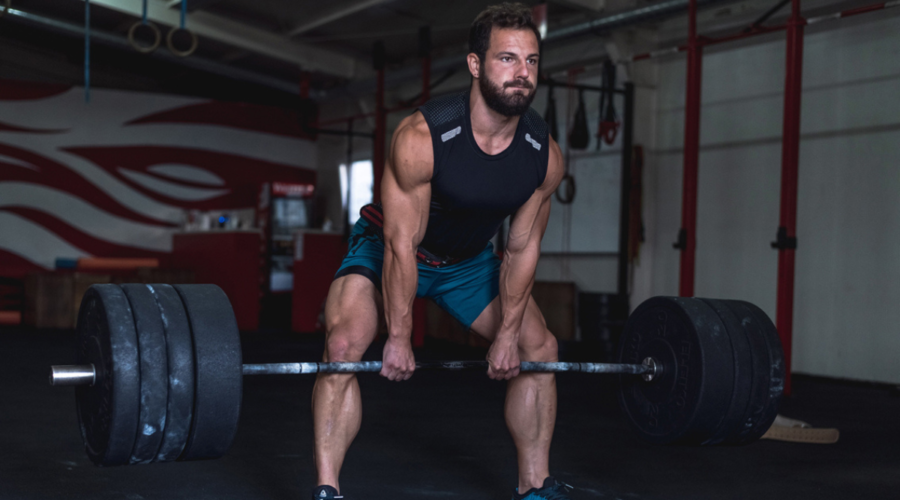


The deadlift has earned a reputation as one of the purest tests of strength in the gym. Unlike many exercises that isolate a specific muscle group, the deadlift demands coordinated force production from nearly every major muscle in the body. It challenges the legs, hips, back, core, grip, and nervous system all at once. Because of this, it has become one of the benchmark lifts used to evaluate overall strength.
But how strong is the average gym-goer actually? If you walk into a commercial gym and load up a barbell for deadlifts, how do you know whether your numbers are average, above average, or exceptional?



The answer is more complicated than many people realize. Strength standards vary according to body weight, sex, age, training experience, and even the population being studied. However, scientific research and large scale strength databases provide enough information to estimate where most recreational lifters fall and what separates average deadlifters from truly strong individuals.
Why the Deadlift Is Such a Good Measure of Strength
The deadlift is often considered one of the best indicators of total body strength because it requires coordinated activation across multiple muscle groups.
The primary movers include the gluteus maximus, hamstrings, quadriceps, and spinal erectors. Secondary contributors include the latissimus dorsi, trapezius, forearms, abdominal muscles, and numerous stabilizing muscles throughout the body.
Electromyography studies consistently show high levels of muscle activation throughout the posterior chain during deadlifting. This extensive recruitment means performance is influenced not only by muscle size but also by neuromuscular efficiency, technique, coordination, and force production capacity.
Research has shown that multi-joint exercises such as the deadlift create substantial mechanical tension and stimulate widespread muscular adaptations. They also provide valuable insight into an individual’s overall strength levels because success depends on integrating force across several joints and muscle groups simultaneously.
Unlike machine exercises, which can artificially stabilize movement, the deadlift requires the lifter to control the load independently. This makes it a particularly useful real world strength test.
What Does “Average” Actually Mean?
One of the biggest mistakes people make when comparing strength levels is misunderstanding the word average.
If we measured every adult who regularly attends a gym, most would not be competitive powerlifters or strength athletes. The majority would be recreational exercisers who lift weights a few times per week, often with goals focused on general fitness, body composition, or health.
This means the average gym-goer is significantly stronger than the average person in the general population but considerably weaker than a dedicated strength athlete.
Studies examining resistance training participation suggest that only a small percentage of gym members consistently follow structured progressive overload programs for multiple years. Many individuals train inconsistently or prioritize cardiovascular fitness over maximal strength development. As a result, deadlift standards must be interpreted within the context of training experience.
Average Deadlift Strength for Men
Large strength databases containing millions of logged lifts provide useful estimates for recreational lifters.
For an adult male weighing approximately 198 pounds (90 kilograms), the average one repetition maximum deadlift among trained gym-goers typically falls around 315 pounds (143 kilograms).
However, this figure changes considerably depending on experience level.
A beginner who has trained for less than one year may deadlift roughly 155 to 225 pounds. An intermediate lifter with several years of consistent training often reaches 275 to 365 pounds. Advanced lifters commonly exceed 450 pounds.
To put these numbers into perspective, many recreational male gym-goers can deadlift between 1.25 and 1.75 times their body weight after several years of consistent training.
Deadlifting twice body weight is generally considered a significant strength milestone. Among recreational lifters, relatively few achieve this benchmark.
A deadlift of 500 pounds remains uncommon even in serious commercial gym environments and usually indicates advanced training status.
Average Deadlift Strength for Women
Women are often stronger than many people assume when properly trained.
Research consistently demonstrates that women can achieve substantial strength gains through resistance training. Relative improvements are often similar to those observed in men.
For an adult female weighing approximately 165 pounds (75 kilograms), the average trained deadlift often falls around 185 to 225 pounds.
Beginner female lifters may deadlift between 95 and 135 pounds. Intermediate lifters commonly reach 185 to 275 pounds depending on body weight and training experience.
A deadlift equal to body weight is generally achievable within the first several months of structured training. Deadlifting 1.5 times body weight represents a strong recreational standard, while double body weight is often considered highly impressive.
Research suggests that sex differences in absolute strength are primarily explained by differences in lean muscle mass rather than fundamental differences in muscle quality.
When strength is normalized for muscle cross sectional area, men and women display surprisingly similar force producing capabilities.
Relative Strength Matters More Than Absolute Strength
Comparing deadlift numbers without considering body weight can be misleading.
A 140 pound individual deadlifting 315 pounds is demonstrating a much higher level of relative strength than a 250 pound individual lifting the same weight.
Sports scientists often evaluate strength relative to body mass because it provides a fairer comparison between individuals of different sizes.
For recreational lifters, the following relative strength categories provide useful benchmarks:
Men who deadlift their body weight are generally considered novice lifters. Those reaching 1.5 times body weight typically fall into the intermediate category. Double body weight often reflects advanced strength levels.
For women, deadlifting body weight represents a solid foundation. Deadlifting 1.5 times body weight is strong, while approaching double body weight is indicative of advanced development.
Relative strength is particularly important in athletic performance because many sports require athletes to move their own body efficiently rather than simply produce high absolute force.
Is a Double Body Weight Deadlift Really Impressive?
Among recreational lifters, yes. While social media can create unrealistic expectations by showcasing elite strength athletes, the reality is that deadlifting twice body weight remains a challenging achievement. Large strength datasets indicate that relatively few gym-goers reach this milestone.
Achieving a double body weight deadlift generally requires consistent training, sound programming, adequate nutrition, and technical proficiency. For many individuals, it represents several years of focused effort.
Research on long term resistance training adaptations suggests that reaching this level requires substantial muscular and neural development. While elite powerlifters may view a double body weight deadlift as routine, it remains a meaningful accomplishment for the average recreational lifter.
Final Thoughts
The average gym-goer is stronger than the average person but far weaker than the elite athletes often highlighted online. Most recreational men deadlift somewhere around 315 pounds after developing moderate training experience, while most recreational women fall near the 185 to 225 pound range.
Body weight, muscle mass, training age, technique, genetics, and consistency all influence performance. Relative strength often provides a more meaningful comparison than absolute numbers. If you can deadlift 1.5 times your body weight, you are likely above average. If you can deadlift twice your body weight, you have achieved a level of strength that relatively few recreational lifters ever reach.
Most importantly, building a stronger deadlift delivers benefits far beyond the gym floor. Improved strength supports health, function, athletic performance, and long term quality of life.
Key Takeaways
| Measure | What It Means |
|---|---|
| Male recreational average | Around 315 lb deadlift |
| Female recreational average | Around 185 to 225 lb deadlift |
| Bodyweight deadlift | Solid beginner benchmark |
| 1.5x bodyweight deadlift | Above average recreational strength |
| 2x bodyweight deadlift | Advanced recreational strength |
| Main strength factors | Muscle mass, neural adaptations, technique, experience |
| Health benefits | Better metabolic health, bone density, longevity, and function |
References
• Aagaard, P., Simonsen, E.B., Andersen, J.L., Magnusson, P. and Dyhre Poulsen, P. (2002) ‘Increased rate of force development and neural drive of human skeletal muscle following resistance training’, Journal of Applied Physiology, 93(4), pp. 1318-1326.
• ACSM (2021) ACSM’s Guidelines for Exercise Testing and Prescription. 11th edn. Philadelphia: Wolters Kluwer.
• Bird, S.P., Tarpenning, K.M. and Marino, F.E. (2005) ‘Designing resistance training programmes to enhance muscular fitness’, Sports Medicine, 35(10), pp. 841-851.
• Delmonico, M.J., Kostek, M.C., Doldo, N.A., Hand, B.D., Walsh, S., Conway, J.M., Carignan, C.R., Roth, S.M. and Hurley, B.F. (2005) ‘Effects of moderate velocity strength training on peak muscle power and movement velocity’, Journal of Gerontology Series A, 60(9), pp. 1224-1230.
• Grgic, J., Schoenfeld, B.J., Davies, T.B., Lazinica, B., Krieger, J.W. and Pedisic, Z. (2018) ‘Effect of resistance training frequency on gains in muscular strength’, Sports Medicine, 48(5), pp. 1207-1220.
• Hughes, D.C., Ellefsen, S. and Baar, K. (2018) ‘Adaptations to endurance and strength training’, Cold Spring Harbor Perspectives in Medicine, 8(6), a029769.
• Janssen, I., Heymsfield, S.B., Wang, Z.M. and Ross, R. (2000) ‘Skeletal muscle mass and distribution in 468 men and women aged 18 to 88 years’, Journal of Applied Physiology, 89(1), pp. 81-88.
• Kraemer, W.J. and Ratamess, N.A. (2004) ‘Fundamentals of resistance training: progression and exercise prescription’, Medicine & Science in Sports & Exercise, 36(4), pp. 674-688.
• Leong, D.P., Teo, K.K., Rangarajan, S., Lopez Jaramillo, P., Avezum, A., Orlandini, A., Seron, P., Ahmed, S.H., Rosengren, A. and Kelishadi, R. (2015) ‘Prognostic value of grip strength: findings from the Prospective Urban Rural Epidemiology study’, The Lancet, 386(9990), pp. 266-273.
• Muehlbauer, T., Gollhofer, A. and Granacher, U. (2012) ‘Associations between measures of balance and lower extremity muscle strength in middle aged adults’, Journal of Strength and Conditioning Research, 26(9), pp. 2401-2407.
• Peterson, M.D., Rhea, M.R. and Alvar, B.A. (2004) ‘Maximizing strength development in athletes’, Sports Medicine, 34(2), pp. 73-81.
• Schoenfeld, B.J. (2010) ‘The mechanisms of muscle hypertrophy and their application to resistance training’, Journal of Strength and Conditioning Research, 24(10), pp. 2857-2872.
• Schoenfeld, B.J., Ogborn, D. and Krieger, J.W. (2017) ‘Dose response relationship between weekly resistance training volume and increases in muscle mass’, Journal of Sports Sciences, 35(11), pp. 1073-1082.
• Suchomel, T.J., Nimphius, S. and Stone, M.H. (2016) ‘The importance of muscular strength in athletic performance’, Sports Medicine, 46(10), pp. 1419-1449.
• Westcott, W.L. (2012) ‘Resistance training is medicine: effects of strength training on health’, Current Sports Medicine Reports, 11(4), pp. 209-216.