

Big biceps are one of the most recognizable signs of strength and muscular development. For many beginners, building bigger arms is one of the main reasons they start lifting weights. Yet despite spending countless hours doing curls, many people struggle to see meaningful growth.
The good news is that building bigger biceps is not complicated. Muscle growth follows well established physiological principles that have been studied extensively. When beginners understand how muscles grow and apply the right training and nutrition strategies, they can make impressive progress.



The biceps brachii is a two headed muscle located on the front of the upper arm. Its primary functions are elbow flexion and forearm supination, which means bending the arm and rotating the palm upward. Although it is a relatively small muscle compared to the chest, back, or legs, it responds very well to progressive resistance training.
5 Signs Your Body Is Aging Better Than Most
Research consistently shows that muscle growth depends on sufficient training volume, progressive overload, proper exercise selection, adequate recovery, and appropriate nutrition. Beginners who focus on these fundamentals will build bigger arms far more effectively than those searching for shortcuts.
Here are the five most important science backed tips for beginners who want bigger biceps.
Tip 1: Prioritize Progressive Overload
One of the most important principles of muscle growth is progressive overload. This simply means gradually increasing the demands placed on a muscle over time.
When you perform the same weight for the same number of repetitions every week, your body quickly adapts. Once adaptation occurs, there is little reason for the muscle to continue growing. Progressive overload creates a new challenge that forces the body to develop greater strength and muscle mass.
Why Progressive Overload Works
Resistance training causes mechanical tension within muscle fibers. This tension triggers cellular processes that stimulate muscle protein synthesis and ultimately lead to hypertrophy. As muscles adapt, greater levels of tension are required to continue the growth process.
Studies examining resistance training consistently show that increases in training load, repetitions, or total volume are associated with improvements in muscle size and strength. Progressive overload remains one of the fundamental principles of successful hypertrophy training.
How Beginners Can Apply It
The easiest way to implement progressive overload is to keep a training log. Record the weight used, the number of repetitions completed, and the number of sets performed.

For example, if you perform dumbbell curls with 20 pound dumbbells for three sets of ten repetitions, your next goal could be three sets of eleven repetitions. Once you reach the upper end of your target repetition range, increase the weight slightly and repeat the process.
Progressive overload does not require dramatic jumps in weight. Small improvements performed consistently over months can produce substantial gains in muscle size.
Avoid Chasing Weight at the Expense of Technique
Many beginners make the mistake of increasing weight too quickly. Swinging the body, using momentum, and shortening the range of motion reduce tension on the biceps and limit growth potential.
A controlled repetition with proper form is far more effective than lifting heavier weights with poor technique. The goal is to challenge the muscle, not simply move the weight from point A to point B.
Tip 2: Train Your Biceps Often Enough
Many beginners underestimate how frequently a muscle can be trained. Because the biceps are a relatively small muscle group, they generally recover faster than larger muscle groups such as the quadriceps or lower back.
Research indicates that training frequency can influence muscle growth, especially when total weekly volume is distributed effectively across multiple sessions.
Understanding Training Volume
Training volume refers to the total amount of work performed. In resistance training, volume is commonly measured as the number of challenging sets completed for a muscle group each week.
Scientific reviews suggest that higher weekly training volumes generally produce greater hypertrophy than lower volumes, up to an individual recovery threshold.
For beginners, approximately 10 to 15 challenging sets per week for the biceps is often an effective starting point. This volume can be achieved through direct arm work and compound pulling exercises.
The Benefits of Training Twice Per Week
Instead of performing all biceps work on a single day, spreading volume across two or three sessions can improve performance quality. For example, a beginner could train biceps on Monday and Thursday. This approach allows the muscle to recover while maintaining a frequent growth stimulus.
A higher frequency also improves exercise technique because movement patterns are practiced more often. Better technique leads to better muscle activation and potentially better long term results.

Remember That Pulling Exercises Count
Many beginners forget that the biceps are heavily involved during back exercises such as chin ups, pull ups, lat pulldowns, and rows.
Electromyography studies show significant biceps activation during many pulling movements. This means your total weekly biceps volume includes both direct arm training and indirect work from back exercises.
Combining compound pulling exercises with targeted curls is often more effective than relying on isolation work alone.
Tip 3: Use Exercises That Train the Biceps Through a Full Range of Motion
Exercise selection matters. While almost every curl variation can contribute to growth, some exercises provide unique benefits because they challenge the muscle at different lengths and angles.
Current hypertrophy research suggests that training muscles through a full range of motion can produce superior growth compared with partial range training.
Why Range of Motion Matters
When a muscle moves through a larger range of motion, more muscle fibers are recruited and tension is applied across a greater portion of the movement.
Recent research has also highlighted the importance of training muscles in a lengthened position. Exercises that challenge the biceps when the arm is extended may provide an especially potent hypertrophy stimulus.
Effective Biceps Exercises for Beginners
The standing dumbbell curl remains one of the best beginner exercises because it is simple, effective, and easy to progress. Incline dumbbell curls are particularly valuable because the shoulder position places the biceps in a stretched state at the bottom of the movement. Preacher curls help reduce momentum and maintain tension throughout the exercise.
Hammer curls target the brachialis and brachioradialis, muscles that contribute significantly to overall arm size. Developing these muscles can make the upper arm appear thicker and more muscular.
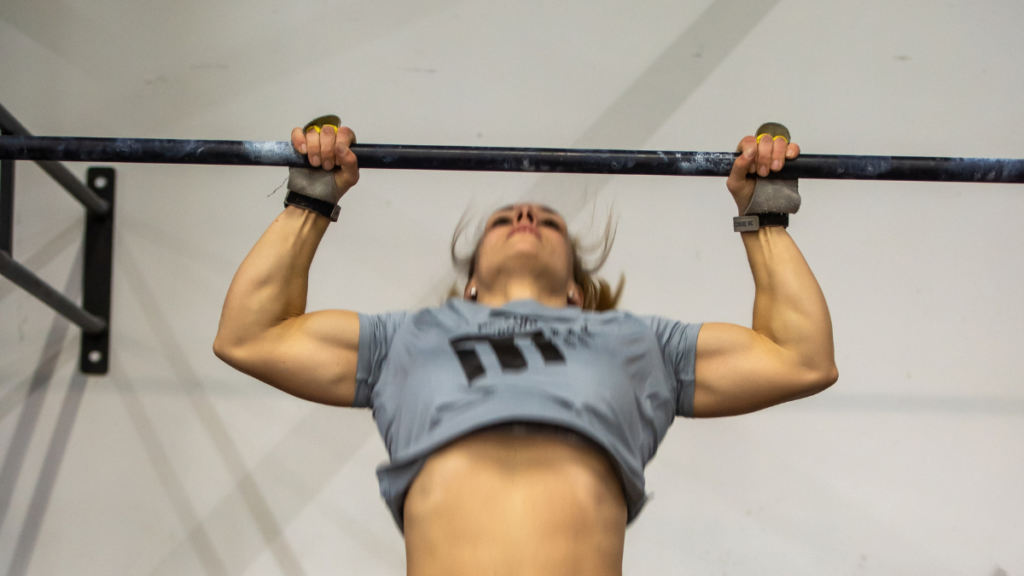
Chin ups deserve special mention. Because they combine heavy loading with substantial biceps involvement, they are one of the most effective compound exercises for arm development.
Focus on Quality Repetitions
The best exercise is not necessarily the one that looks impressive on social media. It is the one that allows you to consistently apply tension to the target muscle while progressing over time.
Use a controlled lowering phase, avoid excessive swinging, and work through a full range of motion whenever possible.
Tip 4: Eat Enough Protein and Calories to Support Growth
Training provides the stimulus for muscle growth, but nutrition provides the building blocks. Many beginners train hard yet fail to gain muscle because they do not consume enough protein or total calories.
The Importance of Protein
Muscle tissue is primarily composed of protein. Resistance training increases muscle protein synthesis, but growth can only occur if sufficient dietary protein is available.
Research consistently supports protein intakes of approximately 1.4 to 2.2 grams per kilogram of body weight per day for individuals seeking to maximize muscle growth. High quality protein sources include lean meat, poultry, fish, eggs, dairy products, and protein supplements when needed.

Consuming protein throughout the day appears to support muscle protein synthesis more effectively than eating the majority of daily protein in a single meal.
Calories Matter Too
Muscle growth requires energy. While beginners can sometimes gain muscle and lose fat simultaneously, especially if they are overweight or previously inactive, a modest calorie surplus generally supports faster muscle growth.
A surplus of approximately 200 to 300 calories per day is often sufficient for beginners. Larger surpluses may accelerate weight gain but also increase fat accumulation. The goal is steady progress rather than rapid weight gain.
Carbohydrates Support Training Performance
Carbohydrates are the primary fuel source for high intensity resistance exercise. Adequate carbohydrate intake helps maintain training performance, supports recovery, and allows higher training volumes. When glycogen stores are depleted, training quality often suffers. Poor training quality means reduced stimulus for muscle growth.
A balanced diet that includes protein, carbohydrates, and healthy fats is usually the most effective approach for long term success.
Tip 5: Recovery Is Where Growth Happens
One of the biggest misconceptions in fitness is that muscles grow during workouts. In reality, resistance training creates the stimulus for growth, but the actual adaptation occurs during recovery. Without adequate sleep and recovery, even the best training program will produce limited results.
The Role of Sleep
Sleep is one of the most powerful recovery tools available. Research shows that sleep restriction negatively affects muscle recovery, hormone regulation, performance, and muscle protein synthesis.
During sleep, the body carries out many of the repair processes that support adaptation to training. Most adults should aim for seven to nine hours of quality sleep per night. Athletes and highly active individuals may benefit from even more.
Managing Fatigue
Beginners often believe more is always better. In reality, excessive training can impair recovery and reduce progress. Signs of inadequate recovery may include persistent soreness, declining performance, low motivation, poor sleep quality, and increased fatigue. The goal is to train hard enough to stimulate growth while allowing sufficient recovery between sessions.
Consistency Beats Perfection
The most successful lifters are rarely those who train the hardest for a few weeks. They are the individuals who train consistently for years. Muscle growth is a gradual process. The body does not build large arms overnight. Small improvements accumulated over months produce dramatic changes over time.
When beginners prioritize recovery, they place themselves in a position to sustain progress for the long term.
Putting It All Together
Building bigger biceps does not require secret techniques, complicated programs, or expensive supplements.
Scientific evidence consistently points toward a handful of fundamental principles. Apply progressive overload, train the biceps with sufficient volume and frequency, use effective exercises through a full range of motion, consume enough protein and calories, and prioritize recovery. For beginners, these basics are responsible for the vast majority of results.
If you consistently follow these five principles, your biceps will become stronger, larger, and more developed over time. The process requires patience, but the science is clear. Muscles respond remarkably well when training, nutrition, and recovery are aligned.
Key Takeaways
| Principle | Why It Matters | Practical Application |
|---|---|---|
| Progressive Overload | Creates the stimulus needed for continued muscle growth | Gradually increase weight, reps, or total training volume |
| Training Frequency | Allows more quality volume and repeated growth stimuli | Train biceps directly 2 to 3 times per week |
| Full Range of Motion | Maximizes muscle fiber recruitment and tension | Use exercises such as incline curls, preacher curls, and chin ups |
| Nutrition | Provides building blocks and energy for hypertrophy | Consume adequate protein and maintain a slight calorie surplus |
| Recovery | Supports adaptation and muscle repair | Sleep 7 to 9 hours and avoid excessive training fatigue |
References
- Ahtiainen, J.P., Pakarinen, A., Alen, M., Kraemer, W.J. and Hakkinen, K. (2003) ‘Muscle hypertrophy, hormonal adaptations and strength development during strength training in strength trained and untrained men’, European Journal of Applied Physiology, 89(6), pp. 555-563.
- Brad Schoenfeld, B.J. (2010) ‘The mechanisms of muscle hypertrophy and their application to resistance training’, Journal of Strength and Conditioning Research, 24(10), pp. 2857-2872.
- Grgic, J., Schoenfeld, B.J., Orazem, J. and Sabol, F. (2018) ‘Effects of resistance training performed to repetition failure or non failure on muscular strength and hypertrophy’, Journal of Sport and Health Science, 10(2), pp. 202-211.
- Helms, E.R., Zinn, C., Rowlands, D.S. and Brown, S.R. (2014) ‘A systematic review of dietary protein during caloric restriction in resistance trained lean athletes’, International Journal of Sport Nutrition and Exercise Metabolism, 24(2), pp. 127-138.
- Krieger, J.W. (2010) ‘Single versus multiple sets of resistance exercise for muscle hypertrophy’, Journal of Strength and Conditioning Research, 24(4), pp. 1150-1159.
- Morton, R.W., Murphy, K.T., McKellar, S.R., Schoenfeld, B.J., Henselmans, M., Helms, E., Aragon, A.A., Devries, M.C., Banfield, L., Krieger, J.W. and Phillips, S.M. (2018) ‘A systematic review, meta analysis and meta regression of the effect of protein supplementation on resistance training induced gains in muscle mass and strength in healthy adults’, British Journal of Sports Medicine, 52(6), pp. 376-384.
- Phillips, S.M. and Van Loon, L.J.C. (2011) ‘Dietary protein for athletes: From requirements to optimum adaptation’, Journal of Sports Sciences, 29(S1), pp. S29-S38.
- Schoenfeld, B.J., Ogborn, D. and Krieger, J.W. (2016) ‘Effects of resistance training frequency on measures of muscle hypertrophy: A systematic review and meta analysis’, Sports Medicine, 46(11), pp. 1689-1697.
- Schoenfeld, B.J., Ogborn, D. and Krieger, J.W. (2017) ‘Dose response relationship between weekly resistance training volume and increases in muscle mass’, Journal of Sports Sciences, 35(11), pp. 1073-1082.
- Simpson, N.S., Gibbs, E.L. and Matheson, G.O. (2017) ‘Optimizing sleep to maximize performance: Implications and recommendations for elite athletes’, Scandinavian Journal of Medicine and Science in Sports, 27(3), pp. 266-274.
- Wakahara, T., Fukutani, A., Kawakami, Y. and Yanai, T. (2013) ‘Nonuniform muscle hypertrophy: Its relation to muscle activation in training session’, Medicine and Science in Sports and Exercise, 45(11), pp. 2158-2165.
- Wolf, M.R., Franchi, M.V., Vann, C.G., Cadore, E.L., Vogt, M., Freitas, T.T., Aube, D., de Oliveira, R.M. and Herzog, W. (2023) ‘Muscle hypertrophy and strength gains after resistance training with different ranges of motion: A systematic review and meta analysis’, Sports Medicine, 53(2), pp. 485-503.