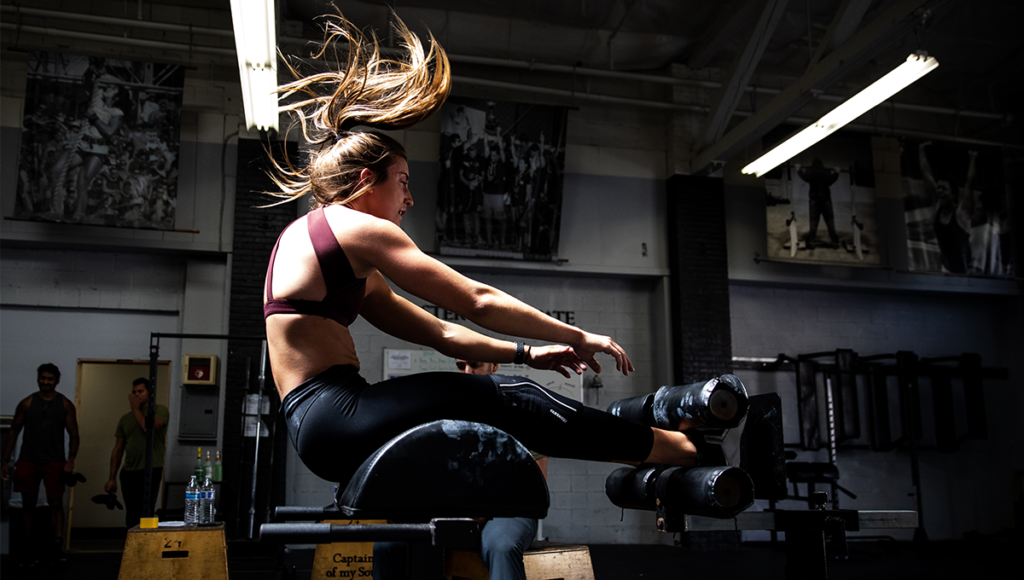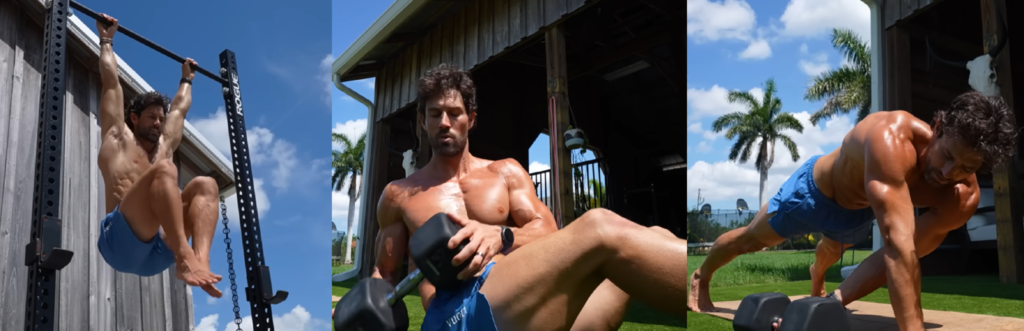


Visible abs are one of the most common fitness goals, yet crunches continue to dominate many workout routines despite offering limited benefits. While crunches can strengthen the rectus abdominis, they are far from the most effective exercise for building a strong, functional core. They also fail to challenge many of the muscles that stabilize the spine, transfer force between the upper and lower body, and protect against injury during everyday movement and athletic performance.

Research over the past two decades has consistently shown that the core works primarily as a stabilizer rather than a muscle group designed for repeated spinal flexion. That means exercises that resist movement instead of creating it often produce greater activation of the abdominal muscles while also improving overall athletic ability.


Why Crunches Are Not the Best Ab Exercise
Crunches mainly target the rectus abdominis, commonly called the six pack muscle. While they certainly create muscular tension, they involve a relatively short range of motion and minimal demand on the deeper core muscles.
The abdominal wall is much more than a single muscle. It includes the transverse abdominis, internal and external obliques, rectus abdominis, diaphragm, pelvic floor, spinal stabilizers, and muscles surrounding the hips. These structures work together to stabilize the spine, resist unwanted movement, and efficiently transfer force throughout the body.
Professor Stuart McGill, one of the world’s leading spine researchers, has demonstrated that the core functions primarily to prevent excessive spinal movement rather than repeatedly flexing the spine. This means exercises emphasizing stability better reflect how the core operates during sports and daily life.
3 Reasons Why Most Men Never Build Big Arms
Another issue with crunches is the amount of repetitive spinal flexion they require. Although healthy individuals can perform crunches safely in moderation, relying on them as the foundation of your abdominal training may expose the spine to repeated loading without providing the greatest return in strength or muscle activation.
For people chasing visible abs, there is another important reality. Even the best abdominal exercise cannot reveal the six pack if body fat remains too high. Nutrition, overall resistance training, cardiovascular exercise, sleep quality, and total energy balance remain the biggest factors determining whether abdominal muscles become visible.
With that in mind, choosing exercises that strengthen the entire core while burning more calories and improving athletic performance makes far more sense than performing hundreds of crunches.
What Makes a Great Core Exercise?
A highly effective abdominal exercise typically meets several important criteria.
- It produces high levels of muscle activation across multiple core muscles.
- It trains the body to resist movement rather than simply create movement.
- It encourages proper spinal stability under load.
- It transfers well to sports, lifting, and everyday activities.
- It allows progressive overload through increased difficulty or resistance.
The following three exercises check every one of those boxes.
Exercise 1: Ab Wheel Rollout

Why It Works
The ab wheel rollout consistently ranks among the highest abdominal activation exercises ever studied using electromyography.
Unlike crunches, the rollout forces your entire anterior core to resist spinal extension as your body lengthens away from its center of mass. The rectus abdominis, transverse abdominis, obliques, lats, shoulders, and hip stabilizers all work together to prevent the lower back from collapsing.
Instead of creating movement through the spine, the abdominal muscles actively resist movement, which is exactly how they function during heavy lifting, sprinting, jumping, and most athletic tasks.
Research comparing common abdominal exercises has repeatedly found the rollout produces significantly greater activation than traditional crunches.
How to Perform It
- Begin kneeling on a soft surface.
- Grip the handles of an ab wheel directly beneath your shoulders.
- Brace your core by tightening your abdominal muscles before moving.
- Slowly roll forward while maintaining a straight line from your shoulders to your knees.
- Only extend as far as you can without allowing your lower back to arch.
- Pull yourself back using your abdominal muscles instead of driving through your hips.
- Move slowly throughout the entire repetition.
Common Mistakes
The most common error is allowing the lower back to sag during the rollout. This shifts stress away from the abdominals and onto the lumbar spine. Moving too quickly also reduces muscular tension and limits the effectiveness of the exercise. Beginners should start with shorter ranges of motion before progressing toward full rollouts.
Exercise Two: Hanging Leg Raise
Why It Works
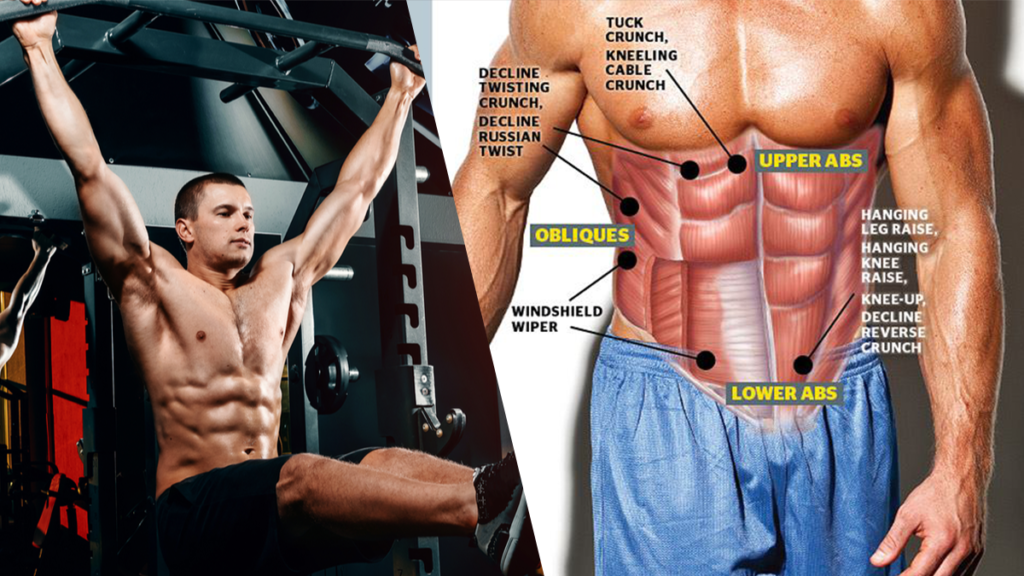
The hanging leg raise is often mistaken for a hip flexor exercise, but when performed correctly it becomes one of the most demanding abdominal movements available.
The rectus abdominis contracts forcefully to posteriorly tilt the pelvis and lift the legs while the obliques stabilize the torso against swinging. Supporting your entire body from the pull up bar also requires significant shoulder stability, grip strength, and scapular control.
Unlike crunches, hanging leg raises challenge the abs throughout a much larger range of motion while requiring continuous stabilization. Advanced versions that raise the feet toward the bar increase abdominal demand even further.
How to Perform It
- Hang from a pull up bar with your shoulders active rather than relaxed.
- Brace your core before initiating the movement.
- Raise your knees or straight legs by curling the pelvis upward rather than simply swinging the legs.
- Pause briefly at the top.
- Lower under complete control.
- Avoid using momentum throughout the repetition.
Common Mistakes
Many people swing excessively, turning the movement into a hip flexor exercise with very little abdominal involvement. Another mistake is stopping once the thighs reach parallel with the floor. Continuing to rotate the pelvis upward is what truly engages the rectus abdominis.
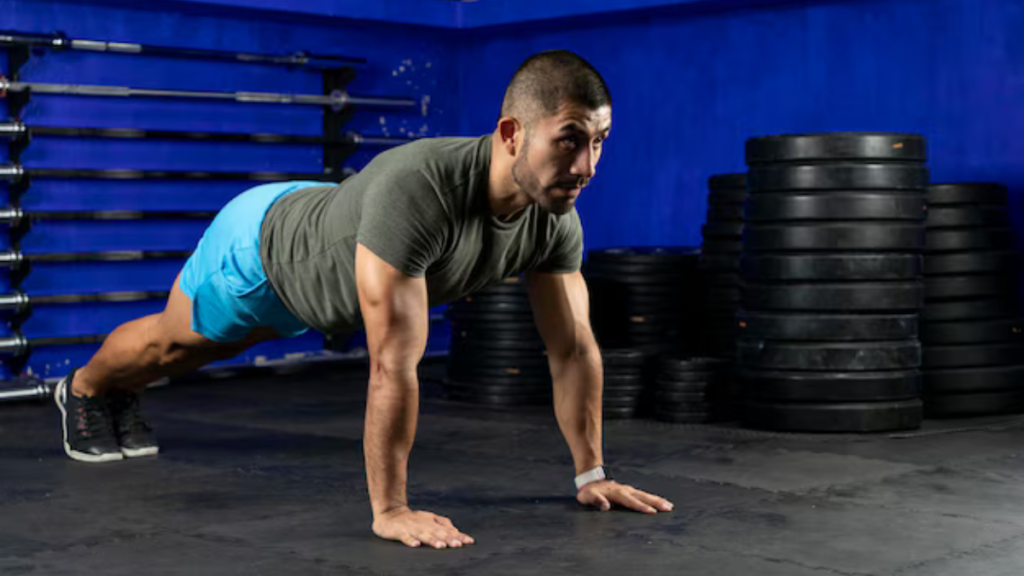
Exercise Three: Front Plank With Progressive Variations

Why It Works
The traditional plank is sometimes criticized for being too easy, but advanced plank variations remain among the most effective methods for developing core endurance and stability.
The key is progression. Rather than holding a standard plank for several minutes, increasing the challenge through load, instability, longer lever arms, or movement dramatically increases abdominal activation.
Research has consistently demonstrated high activation of the transverse abdominis, rectus abdominis, and obliques during properly performed plank variations. The plank also develops endurance in the spinal stabilizers, which is associated with improved spinal health and reduced injury risk.
How to Perform It
- Position your elbows directly beneath your shoulders.
- Create a straight line from your shoulders to your heels.
- Brace your abdominal muscles as though preparing to receive a punch.
- Squeeze your glutes throughout the hold.
- Continue breathing normally while maintaining full body tension.
- Instead of holding the position indefinitely, gradually increase difficulty through harder variations.
- Examples include body saw planks, weighted planks, long lever planks, or stability ball planks.
Common Mistakes
Allowing the hips to sag places unnecessary stress on the lower back. Lifting the hips excessively reduces abdominal demand. Holding the breath decreases stability and limits exercise quality.
You Still Need Progressive Overload
Many people train abs differently from every other muscle group. They increase repetitions instead of increasing difficulty.
Imagine trying to build bigger legs by performing 500 bodyweight squats every workout. Most lifters recognize that eventually heavier resistance becomes necessary. The same principle applies to abdominal muscles. As you become stronger, progress by increasing range of motion, external resistance, leverage, or exercise complexity rather than endlessly adding repetitions.
How Often Should You Train Your Abs?
Because the abdominal muscles recover similarly to other skeletal muscles, training them two to four times per week is sufficient for most people. Each session should include two or three challenging exercises performed with high quality technique.
Most individuals will make excellent progress with six to ten total working sets per week for direct abdominal training, especially when combined with compound lifts such as squats, deadlifts, overhead presses, and carries that already challenge the core. Recovery matters just as much as training volume. If soreness or fatigue begins reducing performance, decreasing frequency or volume may actually improve long term progress.
The Bottom Line
Crunches are not useless, but they should no longer be the centerpiece of your abdominal workouts. Modern research shows that the core performs its primary role by stabilizing the spine and resisting unwanted movement. Exercises that challenge these functions activate more muscle, improve athletic performance, and better prepare the body for real world movement.
The ab wheel rollout builds tremendous anti extension strength while producing exceptionally high abdominal activation. The hanging leg raise develops powerful lower abdominal control, grip strength, and pelvic stability. Progressive plank variations strengthen the entire core while improving endurance and spinal stability.
Combine these exercises with intelligent nutrition, progressive overload, and consistent full body training, and you will build stronger abs that not only look better but also perform better in every aspect of life.
Key Takeaways
| Topic | Key Point |
|---|---|
| Crunches | Primarily train the rectus abdominis and are less effective for complete core development. |
| Ab Wheel Rollout | Produces extremely high abdominal activation while training anti extension strength. |
| Hanging Leg Raise | Challenges the abs through pelvic control while also improving grip and shoulder stability. |
| Progressive Planks | Build core endurance and stability when difficulty is progressively increased. |
| Progressive Overload | Stronger abs require increasing exercise difficulty over time rather than endless repetitions. |
| Visible Abs | Nutrition and overall body fat levels determine whether abdominal muscles become visible. |
| Training Frequency | Two to four sessions per week are sufficient for most people. |
References
- Axler, C.T. and McGill, S.M. (1997) ‘Low back loads over a variety of abdominal exercises: Searching for the safest abdominal challenge’, Medicine & Science in Sports & Exercise, 29(6), pp. 804 to 811.
- Behm, D.G., Drinkwater, E.J., Willardson, J.M. and Cowley, P.M. (2010) ‘Canadian Society for Exercise Physiology position stand: The use of instability to train the core in athletic and non athletic conditioning’, Applied Physiology, Nutrition, and Metabolism, 35(1), pp. 109 to 112.
- Ekstrom, R.A., Donatelli, R.A. and Carp, K.C. (2007) ‘Electromyographic analysis of core trunk, hip, and thigh muscles during nine rehabilitation exercises’, Journal of Orthopaedic & Sports Physical Therapy, 37(12), pp. 754 to 762.
- Escamilla, R.F., Lewis, C., Bell, D., Bramblet, G., Daffron, J., Lambert, S., Pecson, A., Imamura, R., Paulos, L. and Andrews, J.R. (2010) ‘Core muscle activation during Swiss ball and traditional abdominal exercises’, Journal of Orthopaedic & Sports Physical Therapy, 40(5), pp. 265 to 276.
- McGill, S.M. (2010) Core Training: Evidence Translating to Better Performance and Injury Prevention. Strength and Conditioning Journal, 32(3), pp. 33 to 46.
- Schoenfeld, B.J. (2010) ‘The mechanisms of muscle hypertrophy and their application to resistance training’, Journal of Strength and Conditioning Research, 24(10), pp. 2857 to 2872.
- Vispute, S.S., Smith, J.D., LeCheminant, J.D. and Hurley, K.S. (2011) ‘The effect of abdominal exercise on abdominal fat’, Journal of Strength and Conditioning Research, 25(9), pp. 2559 to 2564.
- Willardson, J.M. (2007) ‘Core stability training: Applications to sports conditioning programs’, Journal of Strength and Conditioning Research, 21(3), pp. 979 to 985.