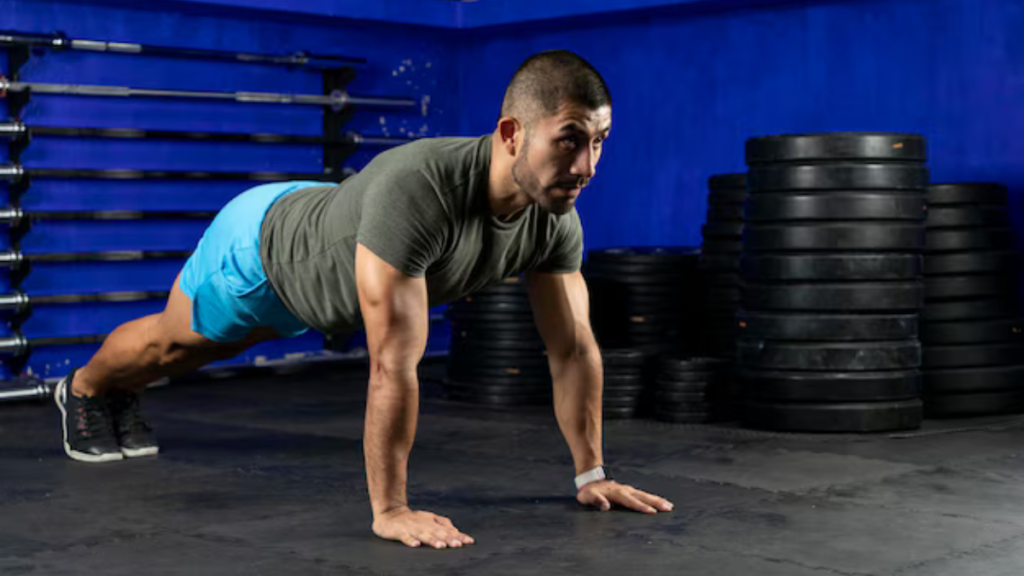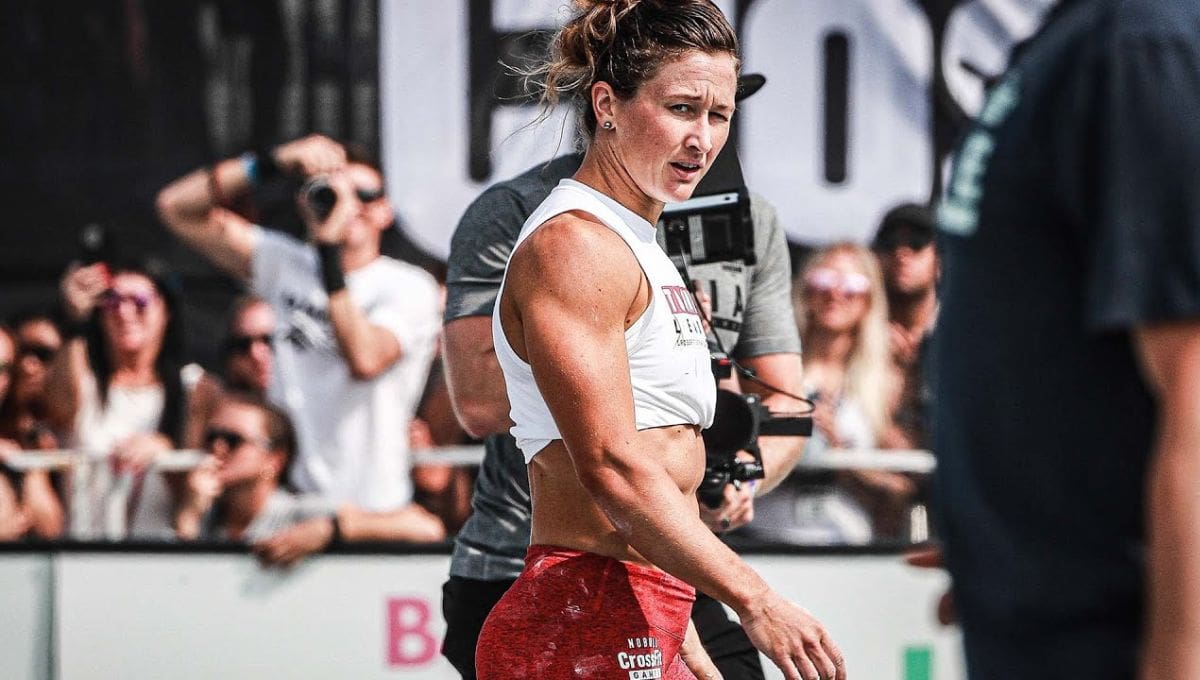


Visible abs might get all the attention, but athletes know that a strong core is about much more than appearance. The muscles around your trunk are responsible for transferring force, protecting your spine, improving balance, and allowing you to produce power during nearly every athletic movement. That is why elite performers spend far less time doing endless crunches than most people imagine.
Crunches mainly train spinal flexion, which is only one small part of what your core is designed to do. During running, jumping, lifting, throwing, climbing, and sprinting, your abdominal muscles work primarily to resist movement rather than create it. They stabilize your spine while your arms and legs generate force.


Research consistently shows that exercises involving heavy loading, full body coordination, and isometric stability produce greater activation of the abdominal wall and deeper core muscles than isolated crunches alone. The result is a stronger, more functional midsection that performs better both in sport and in everyday life.

Three exercises stand out because they challenge the core in completely different ways. Strict toes to bar develops dynamic trunk control. The front squat teaches the core to stabilize heavy loads under pressure. The hollow hold builds the foundational stiffness that makes everything else stronger. Together, they create a level of core strength that traditional ab workouts rarely match.
Why Crunches Are Not Enough
Crunches have their place, especially for beginners learning how to contract the rectus abdominis. However, their limitations become obvious when the goal is building athletic performance.
Your core consists of far more than the visible six pack muscles. It includes the rectus abdominis, transverse abdominis, internal and external obliques, multifidus, spinal erectors, pelvic floor, diaphragm, glutes, and hip musculature. These muscles work together to stabilize the spine while allowing efficient movement throughout the body.
Studies examining spinal biomechanics have shown that repeated spinal flexion under load increases stress on spinal tissues while offering limited carryover to athletic performance. In contrast, exercises that challenge the trunk to resist flexion, extension, rotation, and lateral movement better reflect how the body functions during real world activity.
Electromyography studies also demonstrate that many compound lifts generate abdominal activation equal to or greater than traditional abdominal exercises because the core must stabilize the body against substantial external forces.
This explains why gymnasts, Olympic weightlifters, CrossFit athletes, wrestlers, and climbers often develop exceptional abdominal muscles despite spending relatively little time performing endless crunches.
Exercise One: Strict Toes to Bar
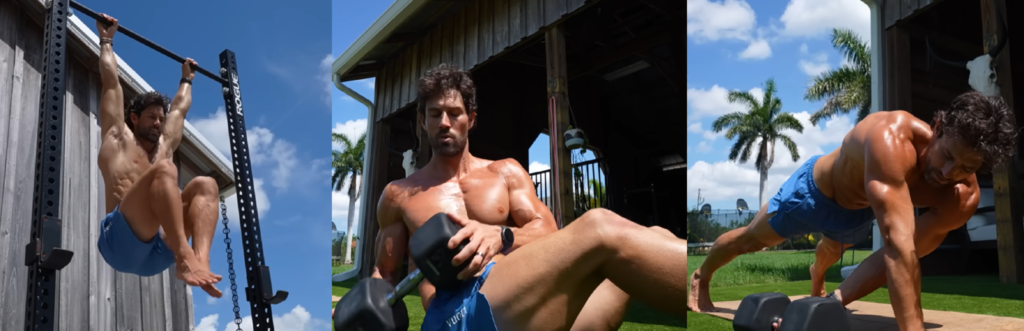
Strict toes to bar is one of the most demanding bodyweight core exercises available. Unlike the kipping version commonly seen in CrossFit competitions, the strict variation removes momentum completely.
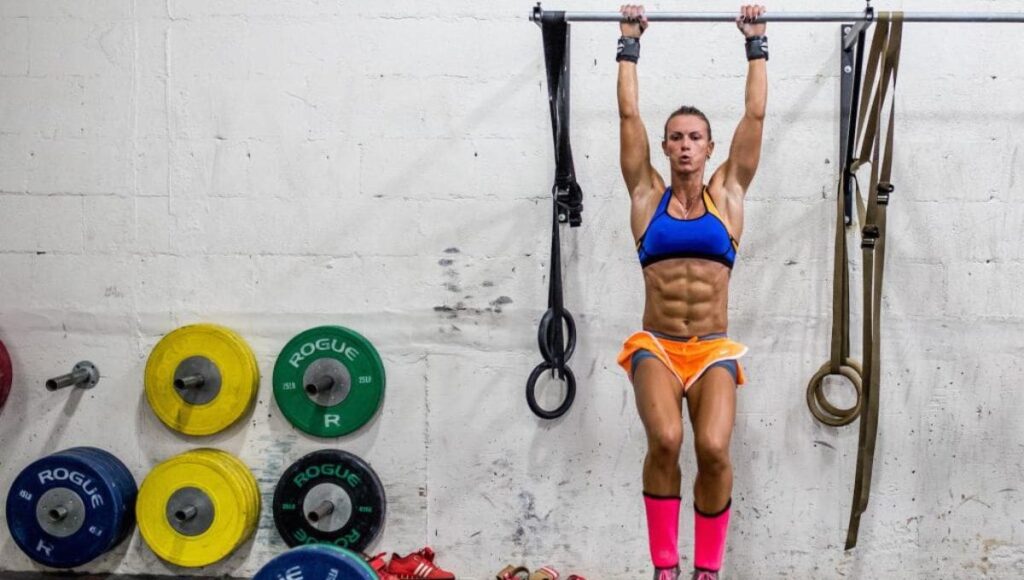
Every repetition must be earned through muscular control.
Why It Works
Strict toes to bar requires the abdominal wall to create posterior pelvic tilt while lifting the legs through a large range of motion. At the same time, the shoulders, lats, grip, and upper back must stabilize the body as it hangs from the bar.
This combination creates enormous tension throughout the anterior chain. The rectus abdominis works powerfully to prevent excessive lumbar extension while the hip flexors assist with leg elevation. Meanwhile, the transverse abdominis helps maintain trunk stiffness throughout the movement.
Because there is no momentum, every phase of the repetition demands active muscular control.
Athletic Benefits
Athletes benefit because strict toes to bar develops strength that transfers into sprinting, climbing, gymnastics, obstacle racing, Olympic lifting, and many field sports.
The exercise also teaches proper pelvic positioning, which improves movement efficiency while reducing unnecessary stress on the lower back. Grip strength, shoulder stability, and upper body endurance improve alongside core strength, making this an exceptional full body exercise.
Common Mistakes
The biggest mistake is allowing the lower back to arch throughout the movement.
Another common error is swinging the body instead of maintaining strict control. Momentum reduces abdominal tension and shifts the work away from the muscles that should be producing the movement.
Quality repetitions are far more valuable than high numbers.
Exercise Two: Front Squat
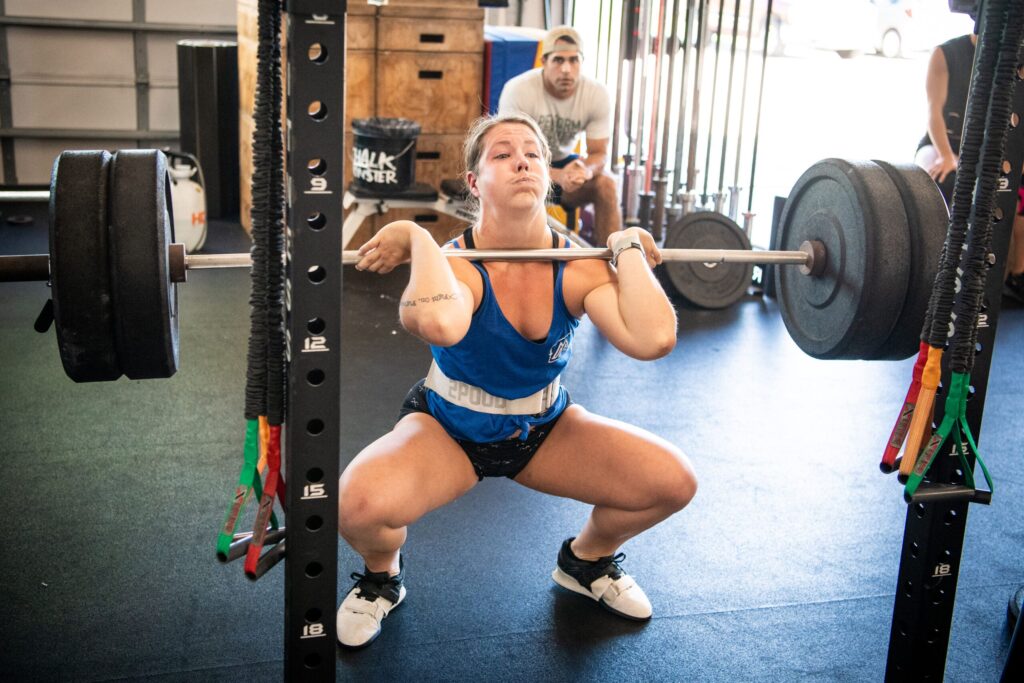
Many people are surprised to see the front squat on a list of six pack exercises. Strength coaches are not. The front squat may be one of the best core developers ever created because your abdominal muscles have to prevent your torso from collapsing under heavy weight.
Why It Works
Unlike the back squat, the front squat positions the barbell across the front of the shoulders. This creates a large forward bending force that tries to pull the torso downward. To stay upright, the rectus abdominis, obliques, transverse abdominis, spinal erectors, and diaphragm must work together to maintain spinal stability.
Research examining muscle activation during squatting has shown high levels of trunk muscle recruitment, particularly when heavier loads are used. The result is a core that becomes stronger while simultaneously developing lower body strength.
Athletic Benefits
The front squat improves force production throughout the entire kinetic chain. Athletes who sprint, jump, tackle, throw, or change direction rapidly all benefit from stronger trunk stability because force generated by the legs can be transferred more efficiently through the torso. Improved posture is another advantage.
Because the exercise rewards an upright torso, many athletes naturally improve thoracic extension, hip mobility, and squat mechanics over time.
Common Mistakes
Allowing the elbows to drop shifts the bar forward and compromises posture. Another mistake is sacrificing depth to lift heavier weight. Full range of motion develops better mobility and more complete muscular development.
Bracing the core before every repetition is critical for maximizing both safety and performance.
Exercise Three: Hollow Hold
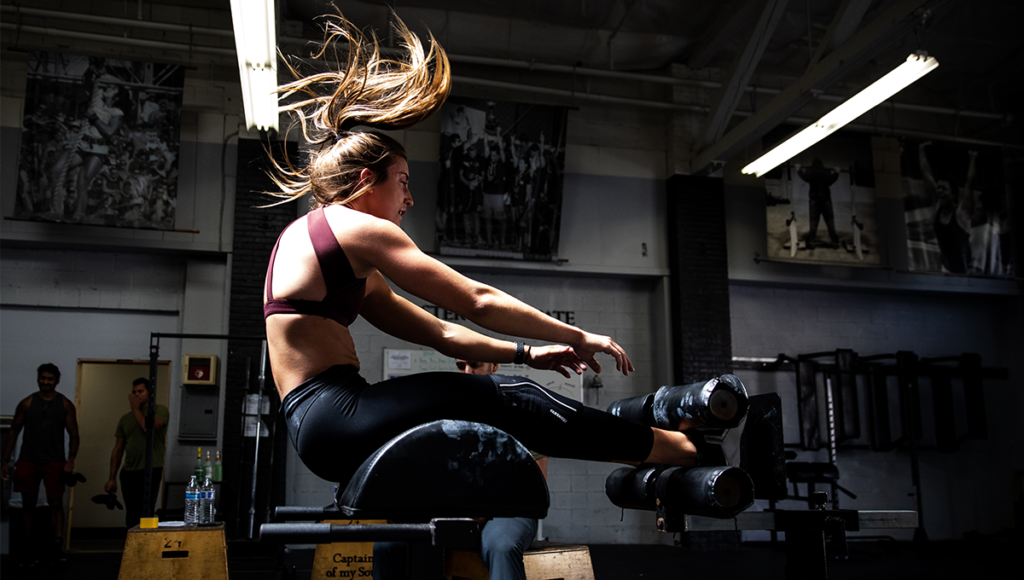
Gymnasts have relied on the hollow hold for decades because it teaches one of the most fundamental body positions in athletic movement. Despite looking simple, it quickly exposes weaknesses throughout the entire anterior core.
Why It Works
The hollow hold trains anti extension, which is the ability to resist excessive arching of the lower back. During the exercise, the abdominal muscles maintain constant tension while the arms and legs create long lever positions that dramatically increase difficulty.
The goal is to keep the lower back gently pressed into the floor throughout the hold. Unlike dynamic movements, isometric contractions allow the nervous system to develop sustained muscular stiffness that transfers directly into athletic performance.
Research suggests that improving trunk endurance through isometric exercises contributes significantly to spinal stability and injury prevention.
Athletic Benefits
The hollow hold creates a foundation for nearly every advanced bodyweight movement. Handstands, pull ups, muscle ups, front levers, planches, and gymnastics progressions all rely on maintaining a strong hollow position.

Even athletes who never perform gymnastics benefit because learning to maintain trunk stiffness improves running efficiency, lifting mechanics, and force transfer.
The exercise also teaches body awareness that carries into almost every movement pattern.
Why These Three Exercises Work So Well Together
Each exercise challenges the core differently.
- Strict toes to bar develops dynamic movement through large ranges of motion while demanding exceptional body control.
- The front squat teaches the core to stabilize heavy external loads.
- The hollow hold builds the endurance and stiffness needed to maintain ideal spinal positioning.
Together, they cover nearly every major function of the core. Instead of simply flexing the spine repeatedly, they train stability, force transfer, anti extension, coordination, balance, and strength. This variety reflects how the core actually functions during athletic performance.
Can These Exercises Build Visible Abs?
The answer is yes, but only if body fat levels are low enough for the abdominal muscles to become visible. Many people have well developed abdominal muscles hidden beneath higher levels of body fat. Resistance training enlarges the abdominal muscles just like any other skeletal muscle. However, nutrition ultimately determines whether those muscles become visible.
Maintaining sufficient protein intake while following an appropriate calorie intake remains essential for reducing body fat while preserving muscle mass. Regular resistance training also helps maintain lean tissue during weight loss, improving overall body composition.
Programming These Exercises
These movements respond well to progressive overload.
For strict toes to bar, begin with controlled repetitions and focus entirely on eliminating momentum. Even sets of three to five perfect repetitions provide a significant training stimulus.
Front squats should generally be trained using moderate to heavy loads with excellent technique. Multiple sets of three to eight repetitions allow both strength and core stability to improve together.
The hollow hold works well for time rather than repetitions. Start with twenty second holds while maintaining perfect spinal positioning. Increase duration gradually until sixty second holds become comfortable before progressing to harder variations.
Recovery also matters. The core contributes to almost every compound lift, so training it intensely every day is unnecessary for most people. Two or three focused sessions each week provide plenty of stimulus while allowing sufficient recovery.
Final Thoughts
If your goal is a stronger, more athletic core, it is time to move beyond endless crunches.
Strict toes to bar, front squats, and hollow holds challenge your core in the same ways it functions during sport and daily life. They improve stability, increase force transfer, build muscular endurance, and strengthen the entire trunk rather than focusing only on the visible six pack. Most importantly, they develop a core that performs as well as it looks.
Visible abs may come from consistent nutrition and low body fat, but an iron strong core is built through intelligent training. These three exercises have earned their place in athletic programs because they produce exactly that.
Key Takeaways
| Exercise | Primary Core Function | Main Athletic Benefit | Key Coaching Focus |
|---|---|---|---|
| Strict Toes to Bar | Dynamic trunk control and anti extension | Improves body control, grip, and anterior core strength | Eliminate momentum and maintain pelvic control |
| Front Squat | Loaded spinal stability | Enhances force transfer and full body strength | Brace the core and maintain an upright torso |
| Hollow Hold | Isometric trunk stiffness | Builds foundational stability and endurance | Keep the lower back pressed into the floor |
| Combined Effect | Trains multiple core functions | Develops a stronger, more resilient athletic core | Progress gradually with excellent technique |
References
- Behm, D.G., Drinkwater, E.J., Willardson, J.M. and Cowley, P.M. (2010). Canadian Society for Exercise Physiology position stand. The use of instability to train the core in athletic and non athletic conditioning. Applied Physiology, Nutrition, and Metabolism, 35(1), pp.109 to 112.
- Cholewicki, J. and McGill, S.M. (1996). Mechanical stability of the in vivo lumbar spine. Implications for injury and chronic low back pain. Clinical Biomechanics, 11(1), pp.1 to 15.
- Escamilla, R.F., Lewis, C., Bell, D., Bramblet, G., Daffron, J., Lambert, S., Pecson, A., Imamura, R., Paulos, L. and Andrews, J.R. (2010). Core muscle activation during Swiss ball and traditional abdominal exercises. Journal of Orthopaedic and Sports Physical Therapy, 40(5), pp.265 to 276.
- Hamlyn, N., Behm, D.G. and Young, W.B. (2007). Trunk muscle activation during dynamic weight training exercises and isometric instability activities. Journal of Strength and Conditioning Research, 21(4), pp.1108 to 1112.
- Hibbs, A.E., Thompson, K.G., French, D., Wrigley, A. and Spears, I. (2008). Optimizing performance by improving core stability and core strength. Sports Medicine, 38(12), pp.995 to 1008.
- McGill, S.M. (2007). Low Back Disorders: Evidence Based Prevention and Rehabilitation. 2nd ed. Champaign: Human Kinetics.
- Schoenfeld, B.J. (2010). The mechanisms of muscle hypertrophy and their application to resistance training. Journal of Strength and Conditioning Research, 24(10), pp.2857 to 2872.
- Vera Garcia, F.J., Grenier, S.G. and McGill, S.M. (2000). Abdominal muscle response during curl ups on both stable and labile surfaces. Physical Therapy, 80(6), pp.564 to 569.