

The Spanish squat has become one of the most talked about lower body exercises among strength coaches, physical therapists, and athletes. It looks simple. You wrap a thick strap or resistance band behind your knees, lean back, and squat while keeping your torso upright. Despite its unusual setup, this exercise has earned a reputation for building stronger quadriceps while reducing stress on the knees and lower back. That combination sounds almost too good to be true. Can one exercise really improve leg strength, protect the knees, and help athletes perform better?
The answer is more nuanced than a simple yes or no. The Spanish squat is an excellent tool that offers unique benefits supported by biomechanics and clinical research. However, it is not a complete replacement for traditional squats, lunges, or other lower body exercises. Understanding how it works, when to use it, and who benefits the most can help you decide whether it deserves a place in your training program.


What Is the Spanish Squat?
The Spanish squat is a squat variation performed with a thick strap, heavy resistance band, or specialized belt secured around a sturdy anchor behind the athlete. The strap sits just below the knees and supports part of the body’s weight as the athlete leans backward while descending into a squat.
Unlike a conventional squat, the torso remains almost vertical throughout the movement. The knees travel forward while the hips stay relatively underneath the body instead of moving far backward. This positioning creates a unique loading pattern. The quadriceps must work extremely hard to extend the knees, while the hips contribute less than they would during a traditional squat.
The exercise is commonly used in rehabilitation settings for people recovering from patellar tendon pain, but it has also become increasingly popular in athletic strength training because of its ability to isolate the quadriceps without requiring heavy external loads.
Why Does the Spanish Squat Feel Different?
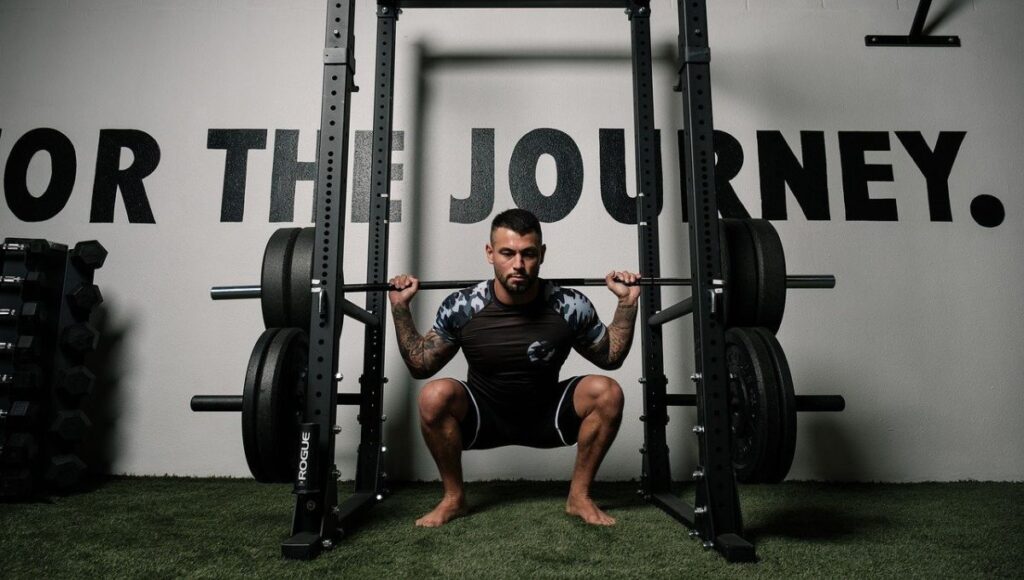
The biggest difference comes from how the body balances itself. During a standard back squat, your hips move backward as your knees bend. Your glutes, hamstrings, quadriceps, and lower back all work together to lift the weight.
During a Spanish squat, the band prevents you from falling backward. Because your hips cannot drift as far behind you, the knees move farther forward while the torso stays upright. This shifts much of the work toward the quadriceps.
Biomechanical research has consistently shown that different squat variations alter muscle activation patterns depending on trunk position, stance width, and knee travel. Exercises that allow greater forward knee movement generally increase quadriceps demand, while exercises with more hip flexion recruit the glutes and hamstrings to a greater degree.
Is the Meadows Row the Perfect Exercise for a Jacked Wider Back?
That does not make one variation better than another. It simply means each exercise develops different qualities.
How the Spanish Squat Builds Strong Quadriceps
The quadriceps are responsible for extending the knee during walking, running, jumping, climbing stairs, and almost every athletic movement involving the lower body. Strong quadriceps improve force production and help stabilize the knee during dynamic movement. One of the biggest advantages of the Spanish squat is that it creates high levels of quadriceps tension even when performed with bodyweight.
This makes it particularly useful for athletes recovering from injury, beginners who cannot yet squat heavy weights safely, and experienced lifters looking for additional quadriceps volume without placing excessive stress on the spine.
Electromyography studies examining squat variations consistently demonstrate high activation of the quadriceps during movements that emphasize knee flexion while maintaining an upright torso. This makes the Spanish squat especially valuable when the goal is targeted quadriceps development.
The ability to challenge the quadriceps without loading a heavy barbell is also useful during periods of high training volume when fatigue management becomes important.
Can the Spanish Squat Reduce Knee Pain?
This is one of the main reasons physical therapists use the exercise. Patellar tendinopathy, often called jumper’s knee, is one of the most common overuse injuries among athletes who jump, sprint, or change direction frequently.
Research has shown that heavy isometric contractions can reduce tendon pain immediately after exercise while also stimulating long term adaptations within the tendon. The Spanish squat is particularly effective because it allows individuals to produce strong quadriceps contractions with relatively little discomfort compared with traditional squat variations.
Several rehabilitation studies have found that isometric quadriceps exercises reduce pain while improving muscle function in individuals with patellar tendon disorders.
The exercise is not a cure by itself. Successful rehabilitation also requires gradual progression, appropriate loading, and management of training volume. However, the Spanish squat provides an effective method for maintaining quadriceps strength while controlling pain.
For people dealing with patellar tendon irritation, this can be an extremely valuable addition to a rehabilitation plan designed by a qualified healthcare professional.
Does the Spanish Squat Protect the Lower Back?
One reason many people enjoy the Spanish squat is that it feels easier on the lower back than heavy barbell squats. That observation makes sense from a biomechanical perspective.
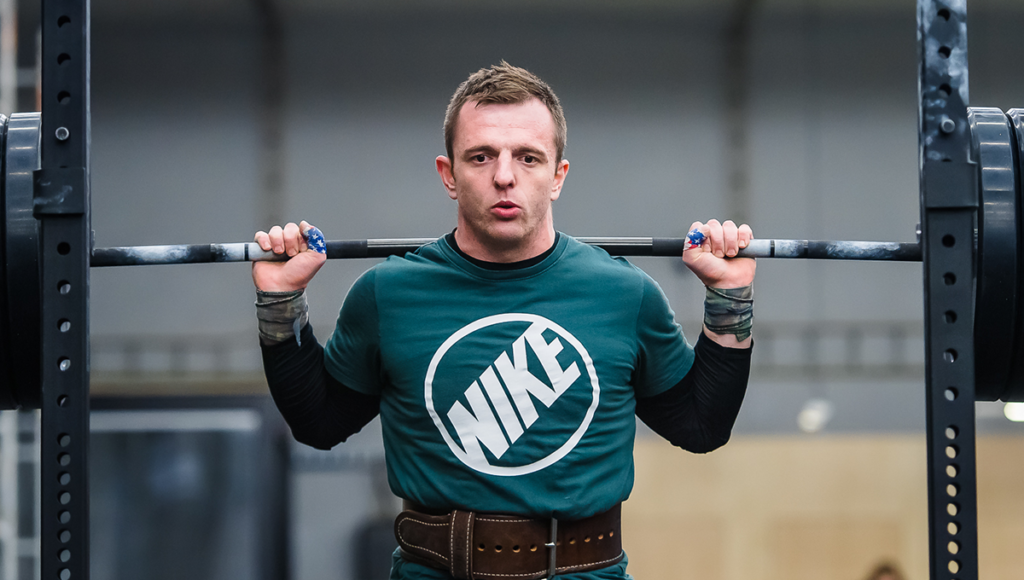
Traditional back squats place substantial compressive and shear forces on the spine because the barbell sits on the shoulders while the torso leans forward to maintain balance. The Spanish squat requires little or no external load while encouraging a much more upright trunk position.
As a result, spinal loading is considerably lower while the quadriceps still receive a significant training stimulus. For athletes managing temporary back discomfort or individuals returning from injury, this can make the exercise an attractive alternative during certain phases of training.
That does not mean traditional squats are unsafe. Healthy lifters generally tolerate spinal loading very well when technique and programming are appropriate. Instead, the Spanish squat offers another option when reducing spinal stress is desirable.
Can the Spanish Squat Improve Athletic Performance?
Athletic performance depends on producing force quickly and efficiently. Strong quadriceps contribute to sprinting, jumping, changing direction, and absorbing landing forces. Although there is no evidence that the Spanish squat alone transforms athletic performance, improving quadriceps strength generally contributes to better lower body function. Resistance training consistently improves sprint speed, jumping ability, and overall athletic performance when incorporated into comprehensive strength programs.
The Spanish squat can help develop one important piece of that puzzle by increasing quadriceps strength while limiting fatigue from heavy spinal loading. This may be especially useful during competitive seasons when athletes need to maintain strength without adding excessive recovery demands.
It should not replace explosive exercises such as jumps, Olympic lift variations, or sprint training, but it can support those activities by improving the muscles responsible for knee extension.
Who Should Use the Spanish Squat?
The Spanish squat is especially useful for several groups of people.
- Athletes recovering from patellar tendon pain often benefit because the exercise allows strong quadriceps contractions while keeping discomfort manageable.
- Lifters experiencing temporary lower back irritation may appreciate the reduced spinal loading compared with heavy barbell squats.
- Older adults may find the exercise easier to perform than heavily loaded squats because it provides additional balance support while strengthening the muscles needed for everyday movement.
- Beginners can also use the Spanish squat to learn proper squat mechanics while building confidence and leg strength before progressing to heavier compound lifts.
- Even advanced athletes often include it as an accessory exercise to increase quadriceps training volume without interfering with recovery from heavy lifting sessions.
How to Perform the Spanish Squat Correctly
Technique determines whether you receive the intended benefits.
- Begin by securing a strong resistance band or specialized squat strap behind your knees at knee height.
- Step backward until the strap supports your body weight as you lean slightly backward.
- Stand with your feet approximately shoulder width apart.
- Keep your chest tall, maintain an upright torso, and allow your knees to travel forward as you descend into the squat.
- Lower yourself until your thighs are roughly parallel to the floor or as deep as your mobility comfortably allows.
- Drive through your feet while extending the knees to return to the starting position.
- Avoid collapsing inward at the knees or allowing your heels to lift from the floor.
- Controlled movement produces better muscle activation than rushing through repetitions.
Is It the Perfect Lower Body Exercise?
No single exercise deserves the title of perfect. The Spanish squat excels at emphasizing the quadriceps while reducing spinal loading and providing an effective option for many people with patellar tendon pain.
Those are meaningful advantages supported by biomechanics and rehabilitation research. However, it cannot fully replace traditional squats, deadlifts, lunges, step ups, or other compound lower body exercises that develop hip strength, balance, coordination, and whole body force production.
The most effective training programs combine multiple movement patterns instead of relying on one exercise. Think of the Spanish squat as a highly specialized tool rather than a miracle solution. If your goal is stronger quadriceps, healthier knees, or additional lower body training with less stress on the back, it deserves serious consideration. Used alongside proven compound lifts and intelligent programming, it can become one of the most valuable exercises in your lower body routine.
Key Takeaways
| Topic | Key takeaway |
|---|---|
| Primary muscles | The Spanish squat strongly emphasizes the quadriceps while reducing hip dominance. |
| Knee health | It can help reduce pain associated with patellar tendinopathy when used within an appropriate rehabilitation program. |
| Lower back | The upright posture reduces spinal loading compared with heavy barbell squats. |
| Muscle growth | It can effectively stimulate quadriceps hypertrophy when performed with sufficient effort and progressive overload. |
| Athletic training | It supports lower body strength but should complement rather than replace compound lifts and sport specific training. |
| Best users | Athletes, rehabilitation patients, beginners, and lifters seeking additional quadriceps work all stand to benefit. |
| Overall verdict | It is an excellent specialized exercise but not a complete replacement for traditional lower body training. |
References
- Alentorn Geli, E., Myer, G.D., Silvers, H.J., Samitier, G., Romero, D., Lázaro Haro, C., Cugat, R. and Hewett, T.E. (2009) ‘Prevention of non contact anterior cruciate ligament injuries in soccer players. Part 1. Mechanisms of injury and underlying risk factors’, Knee Surgery, Sports Traumatology, Arthroscopy, 17(7), pp. 705 to 729.
- Bohm, S., Mersmann, F. and Arampatzis, A. (2015) ‘Human tendon adaptation in response to mechanical loading. A systematic review and meta analysis of exercise intervention studies on healthy adults’, Sports Medicine Open, 1(1), pp. 7 to 24.
- Bryanton, M.A., Kennedy, M.D., Carey, J.P. and Chiu, L.Z.F. (2012) ‘Effect of squat depth and barbell load on relative muscular effort in squatting’, Journal of Strength and Conditioning Research, 26(10), pp. 2820 to 2828.
- Escamilla, R.F. (2001) ‘Biomechanics of the knee during closed kinetic chain and open kinetic chain exercises’, Medicine and Science in Sports and Exercise, 33(1), pp. 127 to 141.
- Fry, A.C., Smith, J.C. and Schilling, B.K. (2003) ‘Effect of knee position on hip and knee torques during the barbell squat’, Journal of Strength and Conditioning Research, 17(4), pp. 629 to 633.
- Kongsgaard, M., Kovanen, V., Aagaard, P., Doessing, S., Hansen, P., Laursen, A.H., Kaldau, N.C., Kjaer, M. and Magnusson, S.P. (2009) ‘Corticosteroid injections, eccentric decline squat training and heavy slow resistance training in patellar tendinopathy’, Scandinavian Journal of Medicine and Science in Sports, 19(6), pp. 790 to 802.
- Rio, E., Kidgell, D., Purdam, C., Gaida, J., Moseley, G.L., Pearce, A.J. and Cook, J. (2015) ‘Isometric exercise induces analgesia and reduces inhibition in patellar tendinopathy’, British Journal of Sports Medicine, 49(19), pp. 1277 to 1283.
- Schoenfeld, B.J., Grgic, J., Ogborn, D. and Krieger, J.W. (2017) ‘Strength and hypertrophy adaptations between low versus high load resistance training. A systematic review and meta analysis’, Journal of Strength and Conditioning Research, 31(12), pp. 3508 to 3523.
- Suchomel, T.J., Nimphius, S. and Stone, M.H. (2016) ‘The importance of muscular strength in athletic performance’, Sports Medicine, 46(10), pp. 1419 to 1449.
- Zink, A.J., Whited, K., Kiesel, K.B. and Plisky, P.J. (2014) ‘Altered sagittal plane trunk kinematics and lower extremity moment changes in bodyweight squats influenced by a heel lift’, International Journal of Sports Physical Therapy, 9(6), pp. 775 to 783.