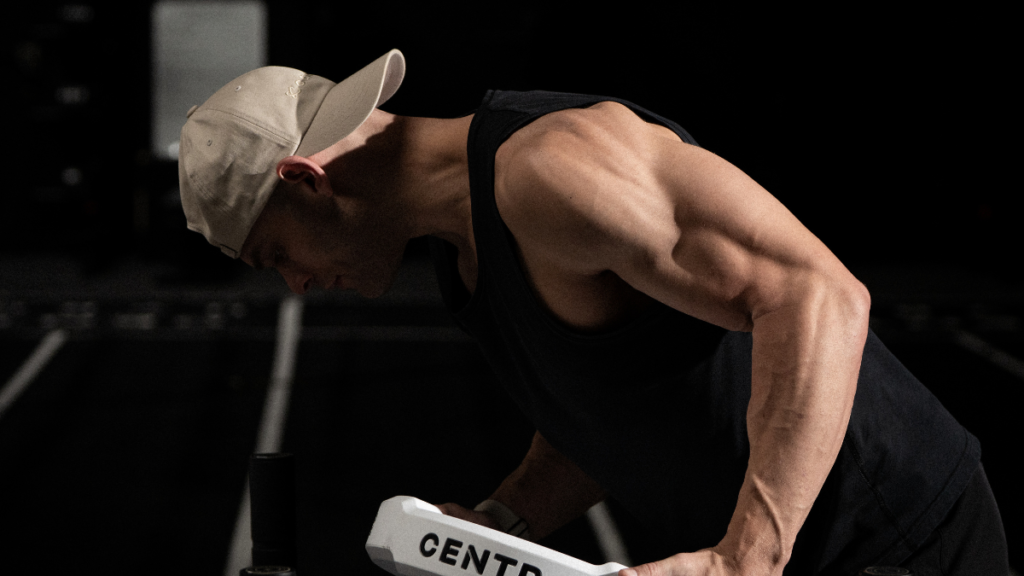


Building a bigger, stronger chest does not require an expensive gym membership or complicated resistance machines. Some of the most effective chest building exercises rely on simple bodyweight movements and free weights that have stood the test of time. For beginners, these exercises are especially valuable because they develop strength, improve coordination, and teach proper movement patterns that carry over into more advanced training later.
The chest is made up primarily of the pectoralis major and the smaller pectoralis minor. While the pectoralis major is responsible for most of the chest’s size and strength, it also works closely with the shoulders, triceps, and muscles that stabilize the shoulder blades. Learning how to train these muscles correctly early on can help build muscle more efficiently while reducing the risk of injury.



Research consistently shows that beginners respond extremely well to resistance training. Significant improvements in muscle size, strength, and neuromuscular coordination can occur within the first few months of consistent training, provided that exercises are performed with good technique and progressive overload is applied over time. If your goal is to build a muscular chest without using machines, these three exercises provide everything you need to get started.
Why Free Weight and Bodyweight Exercises Work So Well
Machine based exercises can certainly build muscle, but they also remove much of the stabilization required during movement. Free weight and bodyweight exercises force the body to coordinate multiple muscles at once, improving balance, joint stability, and overall strength.
Several electromyography studies have shown that traditional compound pressing movements produce very high levels of activation in the pectoralis major while simultaneously recruiting the anterior deltoids and triceps. This means beginners can stimulate multiple muscle groups with fewer exercises.
Compound exercises also allow gradual progression. You can increase repetitions, change leverage, or add weight as strength improves, making long term muscle growth much easier.
Exercise 1: Push Ups
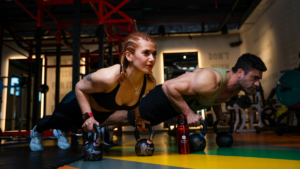
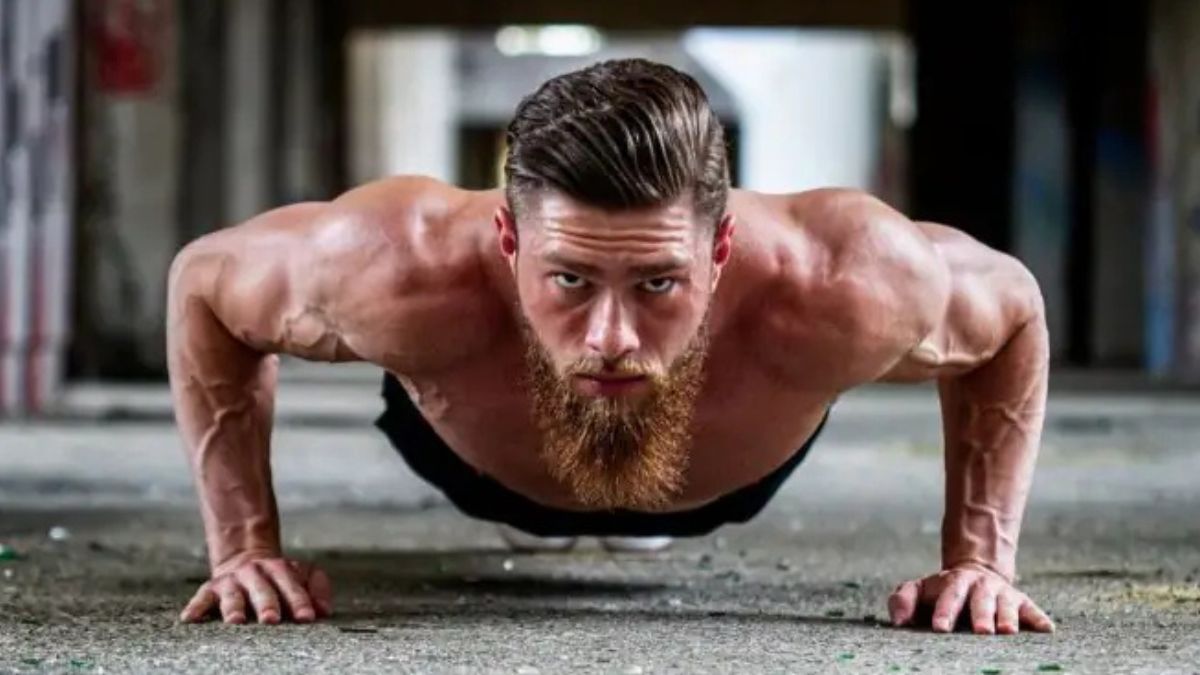
Push ups remain one of the best chest exercises ever created. They require no equipment, can be performed almost anywhere, and effectively target the chest, shoulders, triceps, and core.
Many beginners underestimate push ups because they use only bodyweight. However, research has shown that properly performed push ups can activate the chest muscles at levels comparable to the bench press when relative loading is matched.

Why Push Ups Build Muscle
During a push up, the pectoralis major is responsible for pushing the body away from the floor through horizontal shoulder adduction. The triceps extend the elbows while the shoulders and core stabilize the body throughout the movement.
One major advantage is that the exercise teaches full body tension. Rather than isolating a single muscle, push ups improve coordination throughout the kinetic chain.
Studies comparing push ups with bench pressing have demonstrated similar muscle activation patterns in the chest and triceps when resistance is equivalent.
How to Perform Push Ups
- Begin in a high plank position with your hands slightly wider than shoulder width.
- Keep your body in a straight line from your head to your heels.
- Brace your core and squeeze your glutes.
- Lower your chest toward the floor by bending your elbows.
- Descend until your chest is just above the floor.
- Push yourself back to the starting position while maintaining body alignment.
- Avoid allowing your hips to sag or your elbows to flare excessively.
Beginner Progression
If standard push ups are too difficult, begin with incline push ups using a bench, sturdy table, or countertop. As strength improves, gradually lower the height until standard floor push ups become manageable.
Eventually, elevating the feet or wearing a weighted backpack can continue providing progressive overload.
Exercise 2: Dumbbell Floor Press
The dumbbell floor press is often overlooked, but it is one of the safest and most beginner friendly chest exercises available.
Unlike a traditional bench press, the floor naturally limits shoulder extension. This reduces stress on the shoulder joint while still allowing heavy loading of the chest and triceps.
The movement is particularly valuable for beginners who may not yet possess the shoulder mobility or stability needed for heavy barbell bench pressing.
Why the Floor Press Is So Effective
Because the elbows stop when they reach the floor, excessive stretching of the shoulder capsule is prevented. This creates a safer pressing environment while still allowing substantial muscle activation.
Training with dumbbells also increases stabilization demands compared to machines or barbells. Each arm must control its own weight independently, helping reduce strength imbalances.
Research suggests that unilateral stabilization demands can improve neuromuscular coordination while still producing excellent hypertrophy when sufficient training volume is performed.
How to Perform the Dumbbell Floor Press
- Lie on your back with your knees bent and feet flat on the floor.
- Hold one dumbbell in each hand directly above your chest.
- Lower both dumbbells under control until your upper arms gently touch the floor.
- Pause briefly without relaxing.
- Press the dumbbells back toward the starting position until your elbows are nearly straight.
- Maintain neutral wrists throughout the movement.
- Avoid bouncing your elbows off the floor.
Progression
Once you can comfortably complete three sets of twelve repetitions, gradually increase the weight while maintaining excellent technique.
Exercise 3: Dumbbell Chest Fly
Although pressing movements build most of the chest’s strength, fly variations provide an excellent way to train the chest through horizontal adduction, which is one of its primary functions.
For beginners, dumbbell chest flies performed on the floor provide a safer introduction than full range bench flies.
Why Chest Flies Matter
Pressing exercises involve both the chest and triceps. Fly movements shift more of the workload toward the pectoralis major by minimizing elbow extension.
This creates a different mechanical stimulus that complements pressing exercises and may improve overall chest development.
Research examining resistance training variables consistently shows that exposing muscles to slightly different movement patterns may help maximize hypertrophy over time by recruiting fibers across a broader range of motion.
How to Perform Dumbbell Floor Flies
- Lie on your back with a dumbbell in each hand.
- Press the weights above your chest with a slight bend in your elbows.
- Slowly lower your arms outward in a wide arc.
- Stop when your upper arms lightly touch the floor.
- Bring the dumbbells back together by squeezing your chest.
- Do not allow the elbows to fully straighten during the movement.
- Keep the motion smooth and controlled throughout every repetition.
Common Beginner Mistakes
Using weights that are too heavy often causes excessive shoulder stress and poor technique. The movement should be slow and deliberate rather than explosive. Focus on feeling the chest contract instead of simply moving the weights.
Progressive Overload Is the Secret to Chest Growth
No exercise builds muscle forever if the challenge never changes. Progressive overload simply means asking your muscles to do slightly more work over time.
You can accomplish this by increasing repetitions, adding weight, slowing the lowering phase, improving technique, or reducing rest periods slightly. Research consistently identifies progressive overload as one of the fundamental drivers of muscle growth because it continually challenges muscle fibers to adapt. Without progression, gains eventually plateau regardless of exercise selection.
Recovery Is Where Growth Happens
Muscles become stronger during recovery rather than during the workout itself. Sleep plays a major role in muscle repair, hormone regulation, and athletic performance. Most adults should aim for seven to nine hours of quality sleep every night. Recovery also includes allowing muscles sufficient time between workouts. Training the chest two or three times weekly provides an effective balance between stimulus and recovery for most beginners.
Common Beginner Mistakes
One of the biggest mistakes is chasing heavy weights too early. Poor technique limits muscle activation and increases injury risk. Another common mistake is neglecting full range of motion. Partial repetitions may reduce muscle development compared to controlled repetitions performed through the greatest safe range available.
Many beginners also fail to train consistently. Muscle growth depends on weeks and months of progressive training rather than occasional intense workouts.
Finally, some people constantly change exercises before mastering them. Performing a few effective exercises consistently often produces better long term results than endlessly searching for new movements.
Final Thoughts
Building a stronger and more muscular chest does not require expensive machines or a complicated training program. The push up, dumbbell floor press, and dumbbell floor fly provide everything a beginner needs to stimulate chest growth while developing coordination, strength, and confidence.
These exercises target the chest from slightly different angles while reinforcing fundamental movement patterns that remain useful throughout every stage of training. Combined with progressive overload, adequate protein intake, and consistent recovery, they create an excellent foundation for long term muscle development.
Beginners often experience rapid improvements in strength during their first months of resistance training. Rather than chasing advanced techniques, focus on mastering these basic movements with excellent form. Consistency will almost always outperform complexity, and the results will follow.
Key Takeaways
| Topic | Key Takeaway |
|---|---|
| Best exercise | Push ups are one of the most effective bodyweight chest builders for beginners. |
| Safest pressing movement | Dumbbell floor presses reduce shoulder stress while building strength. |
| Isolation exercise | Dumbbell floor flies emphasize the pectoralis major through horizontal adduction. |
| Training frequency | Train the chest two or three times per week with recovery days between sessions. |
| Sets and reps | Aim for two to three exercises with two to three sets each and eight to fifteen repetitions. |
| Progressive overload | Increase repetitions or weight gradually as exercises become easier. |
| Nutrition | Consume sufficient protein and total calories to support muscle growth. |
| Recovery | Prioritize sleep and rest to maximize muscle repair and strength gains. |
| Biggest mistake | Sacrificing technique for heavier weights slows progress and increases injury risk. |
References
- American College of Sports Medicine. (2009). Progression models in resistance training for healthy adults. Medicine and Science in Sports and Exercise, 41(3), 687 to 708.
- Gentil, P., Soares, S. and Bottaro, M. (2015). Single versus multi joint resistance exercises for muscle strength and hypertrophy. Sports Medicine, 45(6), 841 to 851.
- Grgic, J., Schoenfeld, B.J., Davies, T.B., Lazinica, B., Krieger, J.W. and Pedisic, Z. (2018). Effect of resistance training frequency on gains in muscular strength. Sports Medicine, 48(5), 1207 to 1220.
- Kikuchi, N. and Nakazato, K. (2017). Low load bench press and push up induce similar muscle hypertrophy and strength gain. Journal of Exercise Science and Fitness, 15(1), 37 to 42.
- Morton, R.W., Murphy, K.T., McKellar, S.R., Schoenfeld, B.J., Henselmans, M., Helms, E., Aragon, A.A., Devries, M.C., Banfield, L., Krieger, J.W. and Phillips, S.M. (2018). A systematic review, meta analysis and meta regression of protein supplementation on resistance training induced gains in muscle mass and strength. British Journal of Sports Medicine, 52(6), 376 to 384.
- Schoenfeld, B.J. (2010). The mechanisms of muscle hypertrophy and their application to resistance training. Journal of Strength and Conditioning Research, 24(10), 2857 to 2872.
- Schoenfeld, B.J., Ogborn, D. and Krieger, J.W. (2017). Dose response relationship between weekly resistance training volume and increases in muscle mass. Journal of Sports Sciences, 35(11), 1073 to 1082.
- Wernbom, M., Augustsson, J. and Thomeé, R. (2007). The influence of frequency, intensity, volume and mode of strength training on whole muscle cross sectional area in humans. Sports Medicine, 37(3), 225 to 264.